Install Landscape Fabric: Step-By-Step Guide
Master weed control in your yard with this complete guide to laying landscape fabric for beds, paths, and more—save time and effort long-term.
Install Landscape Fabric Guide
Landscape fabric serves as a reliable foundation for weed-free gardens, flower beds, pathways, and gravel areas. By blocking sunlight to prevent weed growth while permitting water and air to reach the soil, it simplifies yard maintenance and protects mulch or stone investments. This guide details every phase from site preparation to final touches, drawing on proven methods for durable results.
Why Use Landscape Fabric in Your Outdoor Spaces?
Implementing landscape fabric reduces ongoing weeding tasks, conserves mulch by minimizing decomposition from soil contact, and stabilizes ground cover against shifting. It excels in high-traffic paths or expansive beds where manual upkeep proves challenging. Woven varieties offer superior durability and permeability compared to basic plastic sheeting, ensuring healthier plant roots beneath.
Common applications include encircling trees, lining vegetable plots, or underlaying decorative stones. When paired with 2-3 inches of organic mulch, it creates a tidy, low-maintenance aesthetic that endures seasons.
Essential Tools and Materials for Success
Gather these items before starting to streamline the process:
- Landscape fabric roll (3-5 oz woven polypropylene recommended for most uses)
- Landscape staples or pins (6-inch for firm soil, 4-inch for loose)
- Utility knife or heavy scissors
- Rake, shovel, and tamper for soil work
- Mulch, gravel, or stone (3-inch minimum depth)
- Wheelbarrow or buckets for material transport
- Measuring tape and gloves
Opt for UV-resistant fabric to withstand sun exposure. Calculate coverage by adding 10% extra for overlaps and edges.
Preparing Your Site for Optimal Fabric Performance
A smooth, debris-free base prevents tears and ensures even coverage. Begin by mowing or trimming vegetation to ground level, then rake away clippings, rocks, and roots. For stubborn weeds, apply a non-selective herbicide days in advance, allowing it to settle.
Define borders with a flat-edged shovel, excavating 2-4 inches deep along perimeters. This trench anchors fabric edges securely. Roughly level the surface using a bow rake, filling depressions with topsoil but avoiding over-compaction. Aim for variations under 2 inches, as mulch will mask minor imperfections.
| Soil Type | Preparation Tips |
|---|---|
| Clay-heavy | Loosen top 2 inches; add sand if drainage-poor |
| Sandy | Minimal raking; check for sharp objects |
| Loamy | Standard raking suffices; remove sod strips |
Unrolling and Positioning the Fabric
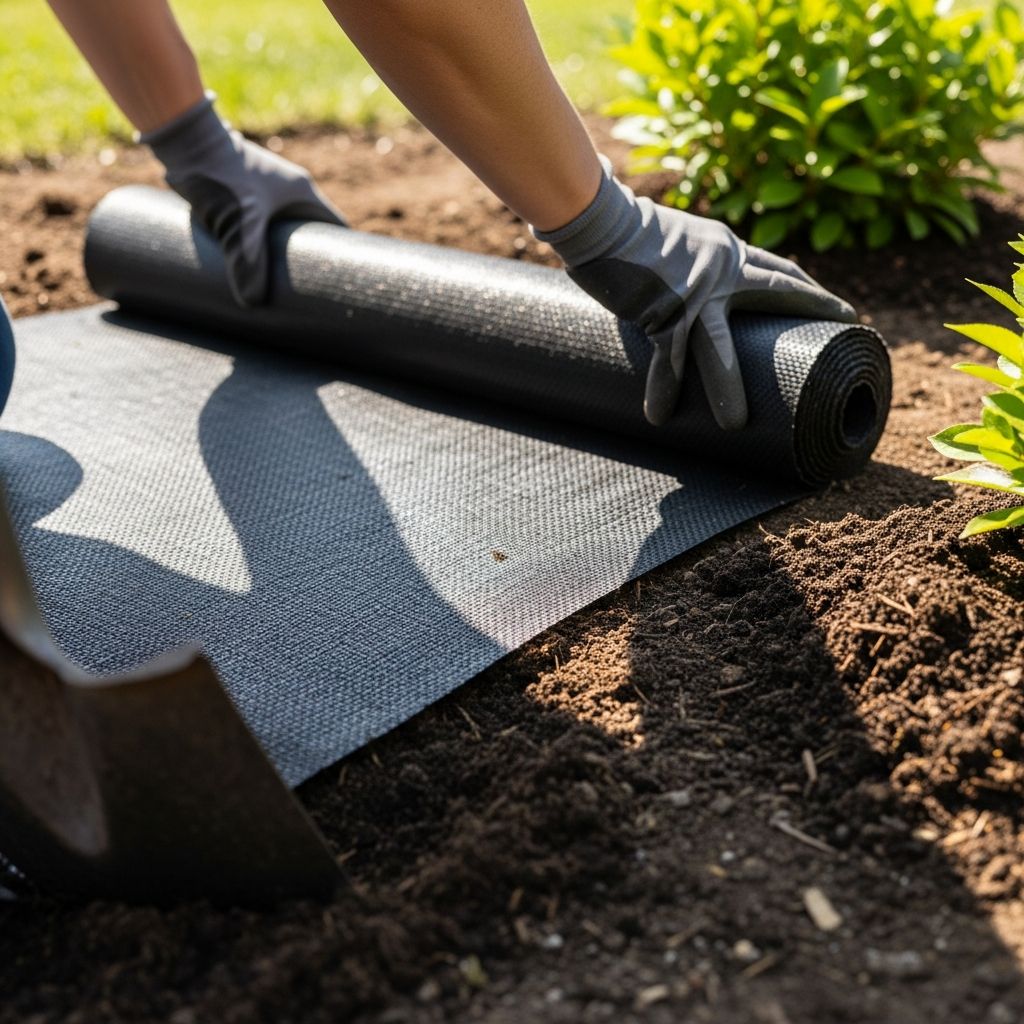
Roll out fabric with the textured side down against soil and smooth side up. Start from the farthest point, working toward your access route to avoid walking on it. Overlap seams 6-12 inches, aligning factory lines if present for straight runs.
Avoid cutting until fully laid, except for major obstacles. Tug gently to remove wrinkles, pulling from corners outward. In windy conditions, weigh down edges with rocks temporarily.
Securing the Fabric Firmly in Place
Anchor immediately to resist wind or foot traffic. Drive staples into corners first, then every 2-3 feet along edges and seams. Use a mallet on hard ground for 6-inch pins, spacing closer (1 foot) in high-wind areas.
For sloped sites, add diagonals every 4 feet. Test security by tugging; fabric should remain taut without lifting. This step prevents shifts during mulching.
Accommodating Plants and Features
Mark plant locations with flags or chalk. Cut X-shapes slightly larger than root balls using a utility knife—about 12-18 inches across for shrubs. Fold back flaps, dig holes to proper depth, insert plants, and refold fabric snugly around stems.
Backfill soil around bases, then re-staple flaps. For trees, make larger circles (2 feet diameter) to allow trunk growth. Existing features like sprinklers require precise slits, sealed with tape if needed.
Applying Mulch or Stone Over the Fabric
Distribute material from edges inward to build a stable bridge over fabric. Dump small piles along perimeters, rake evenly to 3 inches minimum—thicker for paths (4 inches). Smooth wrinkles as you go; they create weed pockets if overlooked.
Shovel from wheelbarrows minimizes tears. For gravel, use finer bases first to lock in place. Water lightly post-application to settle layers.
Finishing Edges for a Polished Look
Tuck excess fabric into border trenches, backfill with soil, and tamp firm. For paths, overlap with pavers or bricks. Against structures, trim flush and bury under rocks. Metal or plastic edging enhances straight lines, pinned through fabric.
Pros and Cons of Landscape Fabric Systems
| Advantages | Disadvantages |
|---|---|
| Blocks 90%+ weeds long-term | Hard to remove after years |
| Saves mulch/rock from sinking | May deter earthworms/beneficials |
| Low initial cost vs. labor | Perforations allow some breakthroughs |
Weigh these for your climate; arid areas benefit most.
Troubleshooting Common Installation Hurdles
- Wrinkles forming: Lift and re-stretch before stapling; use heat from sun to soften.
- Tearing on rocks: Double-layer rough spots or use geotextile pads.
- Poor drainage: Perforate fabric extra or choose permeable weaves.
- Animals digging: Top with chicken wire temporarily.
Monitor first season; top up mulch annually.
Maintenance Tips for Longevity
Inspect seams yearly, re-stapling loose areas. Refresh mulch to 3 inches as it decomposes. Cut back plants encroaching fabric. Avoid heavy equipment; hand-pull stray weeds promptly through slits.
Cost Breakdown for Typical Projects
| Project Size | Fabric Cost | Staples/Tools | Mulch (10 cu yd) | Total Est. |
|---|---|---|---|---|
| 100 sq ft bed | $20-40 | $15 | $300 | $350 |
| 500 sq ft path | $80-150 | $25 | $800 | $950 |
Prices vary by region; bulk buys save 20%.
Frequently Asked Questions
Can landscape fabric go under gravel driveways?
Yes, for weed control, but use heavy-duty 5 oz+ fabric and 4-inch gravel depth to prevent rutting.
Is plastic sheeting better than woven fabric?
No—woven allows better drainage; plastic suffocates soil long-term.
How long does it last?
5-10 years with UV protection; degrade faster in direct sun.
Will it kill existing grass?
Not instantly; smother fully by covering thickly, or remove sod first.
Best for raised beds?
Limited use—line bottoms for drainage/weeds, but skip sides to avoid rot.
Advanced Techniques for Pros
For slopes, terrace with timbers pinned through fabric. In orchards, integrate drip lines under fabric pre-install. Combine with cardboard layers for organic double-barrier in veggie areas.
References
- Landscape Fabric Installation Guide — ECOgardener. 2023. https://ecogardener.com/pages/landscape-fabric-installation-guide
- How to Install Landscape Fabric for a Flower Bed — YouTube (Vigoro). 2022-10-15. https://www.youtube.com/watch?v=p8SNTmNL1AQ
- How to Install Landscape Fabric Like a Pro — YouTube. 2023. https://www.youtube.com/watch?v=Yd3F-9rWLu0
- How to Install Weed Barrier Landscape Fabric the RIGHT Way — YouTube. 2024-01-20. https://www.youtube.com/watch?v=pYdRkDJCjCE
- Installing Weed Barrier Fabric — DeWitt Company (PDF). 2021-07. https://www.dewittcompany.com/wp-content/uploads/2021/07/Landscape-fabric-installation-guide2.pdf
- The Essential Guide to Installing a Weed Barrier for Your Garden — Tomahawk Power. 2023-05-12. https://tomahawk-power.com/blogs/articles/the-essential-guide-to-installing-a-weed-barrier-for-your-garden
Similar Articles








Read full bio of Sneha Tete