Lawn Edging Installation: 5-Step DIY Guide For 2025
Transform your yard with professional lawn edging: complete DIY guide covering tools, techniques, and maintenance for lasting results.
Mastering Lawn Edging Installation
Installing lawn edging creates sharp, professional boundaries between turf, flower beds, and walkways, enhancing your yard’s visual appeal and functionality. This comprehensive guide provides everything needed for a successful DIY project, from selecting materials to long-term upkeep.
Why Add Lawn Edging to Your Landscape
Lawn edging serves multiple purposes beyond aesthetics. It prevents grass from encroaching into mulched areas, reduces weed growth by forming a physical barrier, and directs water flow to protect plant roots. Well-defined edges make mowing easier and give landscapes a manicured look that boosts property value.
Common benefits include minimized maintenance time, as edges stay neat longer, and improved soil retention in sloped gardens. For families, rounded-top edgings like plastic or composite options eliminate sharp hazards, making them safer around play areas.
Choosing the Right Edging Materials
Select materials based on durability, flexibility, and site conditions. Here’s a comparison:
| Material | Pros | Cons | Best For |
|---|---|---|---|
| Plastic/PVC | Flexible for curves, affordable, lightweight, no rust | Can become brittle in extreme cold | Organic gardens, tight curves |
| Metal (Steel/Aluminum) | Strong, long-lasting, clean lines | Prone to rust if not coated, rigid | Straight borders, modern designs |
| Stone/Concrete | Natural appearance, highly durable | Heavy, labor-intensive install | Permanent features, patios |
| Wood/Composite | Warm aesthetic, easy to cut | Rot-prone unless treated | Rustic gardens |
Measure your borders first to calculate linear footage, adding 10% extra for overlaps and cuts. Flexible types suit winding paths, while rigid ones excel in straight runs.
Essential Tools and Supplies
Gather these before starting:
- Edging material and stakes/connectors
- Spade or half-moon edger for trenching
- Rubber mallet or hammer for driving stakes
- Tape measure and string line for straight edges
- Hacksaw or garden shears for cutting
- Level for even installation
- Gloves, wheelbarrow for soil removal
For no-dig options, prioritize mallet and gloves; deeper installs need a trenching shovel.
Preparation: Planning Your Edging Layout
Success begins with precise planning. Sketch your design on paper, noting curves and obstacles like trees or sprinklers. Use landscape paint or flour to mark the path on the ground, ensuring it aligns with existing features.
Clear debris: Remove grass, weeds, rocks, and mulch to expose bare soil. Compact the path with your foot or a tamper for stability. This prevents shifting over time, especially in freeze-thaw regions.
Step-by-Step Installation Guide
Step 1: Dig the Trench
Dig a trench 4-6 inches deep and as wide as your edging plus space for backfill. For V-shaped trenches, angle the shovel at 45 degrees from the bed side for better soil retention. Aim for the edging top to sit 1/2 inch above grade.
Step 2: Position and Cut Edging
Unroll flexible edging in sunlight to soften it. Lay it in the trench, trimming excess with a hacksaw. Leave stake slots accessible. Temporarily secure with a few stakes every 3-5 feet to test the layout.
Step 3: Secure with Stakes
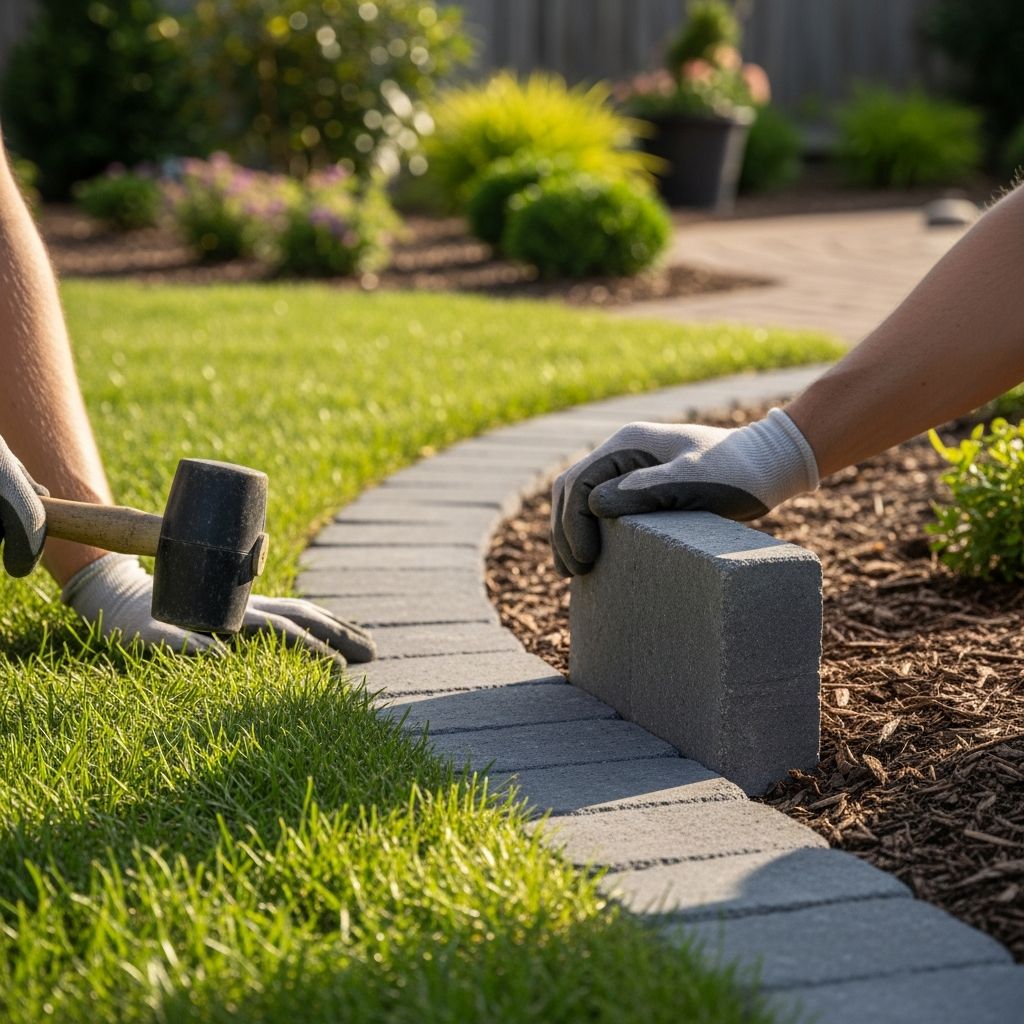
Drive 10-14 inch steel stakes through slots at a 45-degree angle toward the trench wall, leaving 2 inches exposed for adjustments. Space stakes 2-3 feet apart on straights, closer on curves (every foot). Hammer until flush but not overdriven.
Step 4: Connect Sections
For joints, cut ends leaving a stake slot 3 inches from the edge. Apply PVC cement if required, overlap or use H-clips, then stake through both. This ensures seamless, weed-proof connections.
Step 5: Backfill and Level
Refill soil on both sides, compacting firmly with a tamper. Top with mulch or sod, keeping the edging bead visible for easy maintenance. Check levelness and adjust as needed.
Special Techniques for Curves and Corners
Curves demand flexibility: Soften plastic edging in sun, then gently bend while staking frequently. For 90-degree corners, miter-cut ends at 45 degrees or use corner connectors. In paver edges, set low so bricks align flush.
No-Dig Edging: Simplest Option for Beginners
No-dig systems use tabs or spikes for ground insertion without trenching. Clear to bare soil, lay edging, and tap stakes into place. Ideal for rentals or quick updates, though less stable in heavy clay soils.
Common Mistakes and How to Avoid Them
- Shallow trenches: Always go 3-4 inches minimum to anchor properly.
- Insufficient staking: Use extras on joints/curves to prevent heaving.
- Poor connections: Glue and clip for watertight seals.
- Skipping compaction: Firm soil prevents settling.
Maintenance for Long-Lasting Edges
Inspect annually for shifts, re-stake as needed. Trim grass along edges with a string trimmer. Refresh backfill yearly to combat erosion. In cold climates, avoid over-staking to allow frost movement.
Cost Breakdown and Time Estimates
| Project Size | Material Cost | Time (Solo DIY) |
|---|---|---|
| 50 ft straight | $50-100 | 2-4 hours |
| 100 ft with curves | $100-200 | 4-8 hours |
| Full yard border | $300+ | 1-2 days |
Costs vary by material; plastic is cheapest, stone priciest.
Frequently Asked Questions
Can I install edging over existing grass?
No, clear to soil first for stability. Slice sod thin and remove.
How deep should stakes go?
Drive until only 1-2 inches show, fully embedding for hold.
Will edging stop all weeds?
It barriers most, but pair with fabric underneath for best results.
Is metal edging safe for pets?
Choose rounded-top versions; avoid raw steel edges.
How to remove old edging?
Dig out stakes, pull sections, fill trench.
Advanced Tips from Landscaping Pros
For patios, add sand base under stone edging for drainage. Integrate with lighting by notching slots. Sustainable choice: Recycled plastic lasts decades without leaching.
References
- How to Install Landscape Edging: Step-by-Step Guide & Expert Tips — Poynter Landscape. Accessed 2026. https://www.poynterlandscape.com/how-to-install-landscape-edging/
- Edging Install Basics – Lawn Edging, Paver Edging & Green Roof — Oly Ola. Accessed 2026. https://www.olyola.com/install-lawn-edging/
- How to Install No-Dig Edging: An Easy DIY Guide — Frame It All. Accessed 2026. https://frameitall.com/blogs/frame-it-all/how-to-install-no-dig-edging
- How to Install Plastic Edging — The Home Depot. Accessed 2026. https://www.homedepot.com/c/ah/how-to-install-plastic-edging/9ba683603be9fa5395fab90e272e453
Similar Articles




Read full bio of Sneha Tete