How to Install Surge Protection: Complete Guide
Learn how to protect your home and electronics from power surges with professional installation methods.
Power surges pose a significant threat to your home’s electrical system and valuable electronics. Whether caused by lightning strikes, utility company issues, or appliance malfunctions, these sudden voltage spikes can damage or destroy your televisions, computers, refrigerators, and other essential devices. Installing proper surge protection is one of the most effective ways to safeguard your home and its contents. This comprehensive guide covers the various methods of surge protection installation, from whole-house systems at the main electrical panel to point-of-use solutions for individual devices and outlets.
Understanding Surge Protection
Surge protection works by monitoring incoming electricity and diverting excess voltage safely to the ground. When a voltage spike occurs, the surge protection device detects the increase and redirects the dangerous excess electricity into the ground rather than allowing it to travel through your home’s electrical system and damage connected devices. This protective mechanism operates almost instantaneously, protecting everything on the circuit during the event.
Types of Surge Protection Systems
There are three primary methods for installing surge protection in your home, each serving different needs and protection levels:
Whole-House Surge Protectors
A whole-house surge protector is mounted directly at your main electrical panel and provides protection for your entire home’s electrical system. This device monitors all electricity entering your residence and diverts any power surges before they can travel through the panel’s circuit breakers to individual circuits. By installing protection at this central location, you ensure that every outlet, appliance, and electronic device in your home benefits from the same level of protection. This represents the most comprehensive approach to surge protection and should be the foundation of any complete surge protection strategy.
Power Strips with Built-in Surge Protection
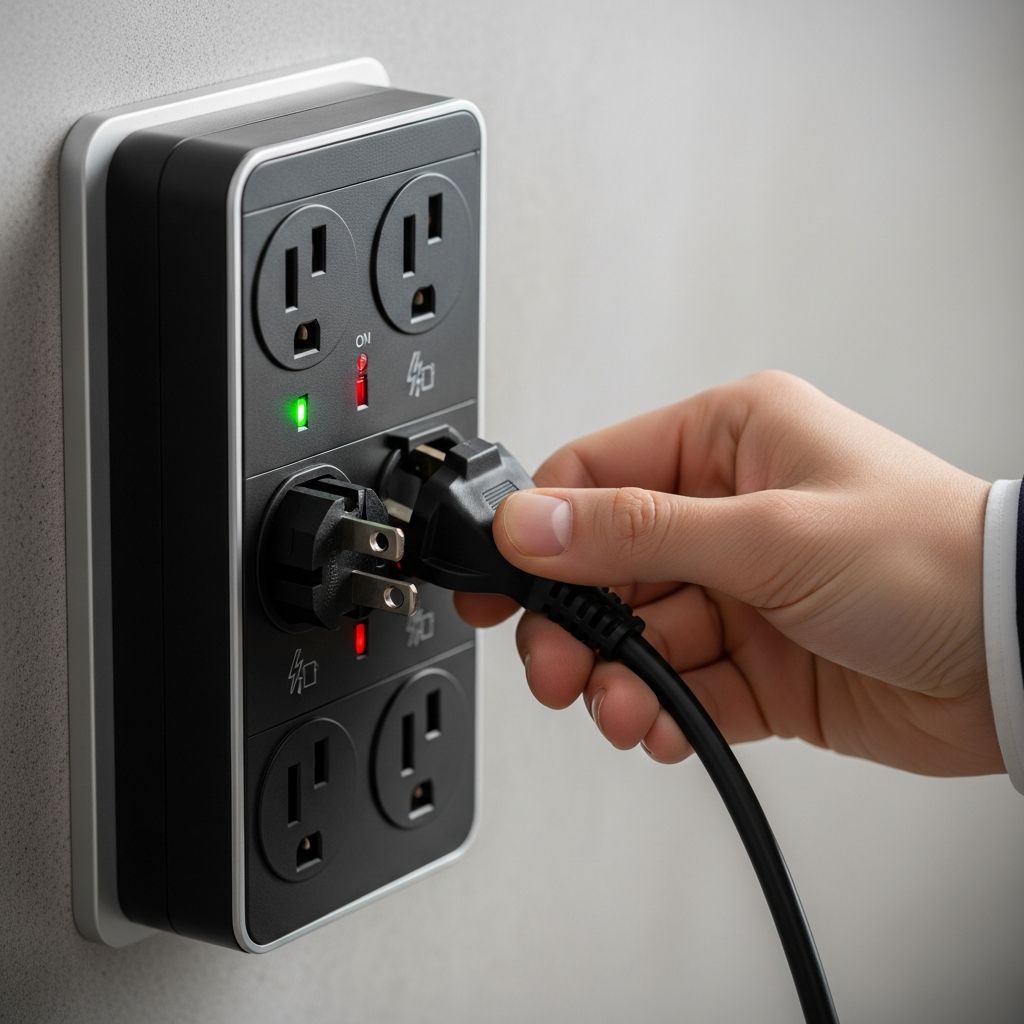
Surge-protecting power strips offer point-of-use protection for sensitive electronics in specific locations throughout your home. These devices contain multiple outlets and incorporate surge protection circuitry that protects any device plugged into them. They’re particularly valuable for protecting computers, televisions, entertainment systems, and other sensitive electronics that are vulnerable to power surges. Power strips with surge protection often include additional features such as outlets for larger transformer-type plugs and connections for ethernet, telephone, and television cables.
Individual Surge-Protected Outlets
In situations where power strips aren’t practical—such as when televisions are mounted directly on walls without accessible outlets nearby—individual surge-protected outlets can be installed to replace standard electrical outlets. These outlets provide surge protection directly at the point where devices are connected, offering a clean and permanent solution for protecting specific high-value electronics or hard-to-reach locations.
Installing a Whole-House Surge Protector
A whole-house surge protector provides the most comprehensive protection for your home. This installation should always be performed by a licensed electrician, as it involves working with your main electrical panel, which contains live electrical current even when individual circuits are turned off.
Installation Steps
Step 1: Safety First
Before beginning any work, turn off the electricity to the house at the main electrical panel. This is a critical safety measure, though it’s important to note that the main power lines entering the panel remain energized even after the main breaker is switched off.
Step 2: Access the Panel
Unscrew and remove the front cover of the electrical panel, exposing the circuit breakers inside. This provides access to the internal components where the surge protector will be installed.
Step 3: Prepare the Panel
Locate and remove the knockout plug from the side of the electrical panel. This creates an opening where the surge protector’s connection wires will enter the panel.
Step 4: Install the Device
Position the whole-house surge protector at the side of the electrical panel. The device will be mounted securely to the panel’s exterior.
Step 5: Make Electrical Connections
A licensed electrician must connect the surge protector to the circuits within the electrical panel. This typically involves connecting a white neutral wire to the neutral bus bar and black circuit wires to a dedicated circuit breaker positioned as close as possible to the main power lines. These connections ensure that the surge protector can effectively monitor and protect all incoming electricity.
How Whole-House Surge Protectors Work
Electricity naturally seeks the fastest path to ground with the least resistance. When a surge protector detects a voltage spike, it immediately diverts the excess electricity down through a ground path and safely into the earth rather than allowing it to travel through your home’s circuits. By mounting the device directly at the main electrical panel and connecting it close to the main power lines, you create the shortest possible path for excess voltage to reach ground, maximizing protection effectiveness.
Point-of-Use Surge Protection with Power Strips
For protecting specific electronics and appliances, a surge-protecting power strip provides an accessible and straightforward solution that doesn’t require professional installation.
Selecting the Right Power Strip
When choosing a surge-protecting power strip, look for the following features:
– Multiple outlets for standard plugs- Dedicated outlets or adapter spaces for larger transformer-type plugs- Connections for ethernet, telephone, and television cables- LED indicator lights showing when surge protection is active- Adequate length cord to reach your outlet comfortably- Appropriately sized for your intended use area
Installation Steps
Step 1: Plug Devices into the Power Strip
Connect your sensitive electronics—including televisions, computers, printers, modems, and other valuable devices—directly into the surge-protected power strip outlets.
Step 2: Connect the Power Strip to an Outlet
Plug the power strip itself into a standard electrical outlet that is properly grounded. Make sure the outlet you select is easily accessible and not hidden behind furniture or appliances.
Step 3: Verify Protection
Check for a green LED indicator on the power strip, which confirms that surge protection is active and functioning properly.
Installing Individual Surge-Protected Outlets
When a wall-mounted television or other permanent installation makes a power strip impractical, individual surge-protected outlets offer an elegant permanent solution.
Installation Steps
Step 1: Turn Off Power
Switch off power to the specific circuit at the main electrical panel before beginning any work on the outlet.
Step 2: Remove the Old Outlet
Unscrew and remove the existing standard outlet from the wall box.
Step 3: Disconnect Wires
Carefully disconnect the electrical wires from the old outlet. Typically, black wires connect to brass terminals, white wires to silver terminals, and bare copper or green wires to the green terminal.
Step 4: Connect New Outlet
Insert the wires into the back of the surge-protected outlet and secure them by tightening the terminal screws. Alternatively, you can insert wires into the back push terminals and clamp them down with screws.
Step 5: Install in Wall Box
Carefully push the surge-protected outlet into the wall box and secure it with mounting screws.
Step 6: Restore Power
Turn power back on at the circuit breaker and test the outlet to confirm proper operation.
Alternative Solution for Full Panels
If your electrical panel is full and you cannot accommodate a standard whole-house surge protector, an alternative solution exists. A combination circuit breaker surge protector can replace two existing circuit breakers of the same amperage (commonly 20-amp breakers). This device provides whole-house surge protection while maintaining the same number of circuits available for your home’s electrical needs. The installation process involves removing two existing breakers, installing the combination unit in their place, and reconnecting the branch circuit wires to the new device—resulting in whole-house protection with no loss of circuit capacity.
Cost and Considerations
Surge protection installation costs vary depending on the type and complexity of installation. Basic power strips with surge protection are typically the most affordable option, while whole-house surge protectors installed at the electrical panel represent a larger investment but provide comprehensive protection. Professional installation by a licensed electrician is recommended for all electrical panel work and individual outlet installations to ensure safety and code compliance.
Layered Protection Strategy
For maximum protection, consider implementing a layered approach combining multiple surge protection methods. Start with a whole-house surge protector at your main electrical panel to provide baseline protection for your entire home. Then, add surge-protecting power strips in locations where you have valuable or sensitive electronics such as entertainment centers, home offices, and computer areas. This multi-level approach ensures that even if a surge bypasses one level of protection, subsequent layers remain available to protect your electronics.
Signs Your Surge Protector Needs Replacement
Surge protection devices do wear out over time and after protecting against power surges. If you notice that the LED indicator on a power strip has stopped glowing, the device may no longer be providing protection. Similarly, whole-house surge protectors should be inspected periodically by a professional electrician to ensure they remain functional. Many surge protectors will fail safely, but they do require eventual replacement to maintain protection.
Frequently Asked Questions
Q: Is a whole-house surge protector necessary if I use power strips?
A: While power strips provide point-of-use protection, a whole-house surge protector offers superior comprehensive protection. Power surges entering through utility lines can still potentially damage devices before reaching your power strips. A whole-house system intercepts surges at the source, protecting all devices simultaneously.
Q: Can I install a whole-house surge protector myself?
A: No, whole-house surge protector installation must be performed by a licensed electrician. Working with the main electrical panel involves safety risks and requires professional expertise and knowledge of electrical codes and regulations.
Q: How often should I replace my surge protector?
A: Power strips typically last 3-5 years depending on usage and the number of surges they encounter. Whole-house surge protectors should be inspected every 2-3 years by a professional electrician to ensure continued functionality.
Q: Can surge protectors prevent all electrical damage?
A: While surge protectors provide excellent protection against most power surges, extremely severe events like direct lightning strikes may potentially overcome any single protective device. This is why a layered approach with both whole-house and point-of-use protection offers the best defense.
Q: What should I do if my surge protector fails?
A: If a power strip surge protector fails, replace it immediately with a new unit. For whole-house surge protectors, contact a licensed electrician to inspect and replace the device. Never continue using a failed surge protector, as it provides no protection against power surges.
References
- How to Install Surge Protection — This Old House. 2024. https://www.thisoldhouse.com/electrical/21016791/how-to-install-surge-protection
- The Importance of Surge Protection — This Old House. 2024. https://www.thisoldhouse.com/electrical/21124632/the-importance-of-surge-protection
- Lightning and Surge Protection Installation Guide — This Old House. 2024. https://www.thisoldhouse.com/videos/brightcove/6325295765112
- National Electrical Code (NEC) Article 285: Surge Protective Devices (SPDs) — National Fire Protection Association (NFPA). 2023. https://www.nfpa.org/Codes-and-Standards/All-Codes-and-Standards
- Electrical Safety Foundation International: Surge Protection — ESFI. 2024. https://www.esfi.org/
- Underwriters Laboratories (UL) Standard 1449: Standard for Surge Protective Devices — UL. 2023. https://www.ulprospector.com/en/Profile/UL1449
Similar Articles



Read full bio of medha deb