How To Install A Vinyl Privacy Fence: Step-By-Step Guide
Master vinyl privacy fence installation with expert step-by-step guidance and professional tips.
How to Install a Vinyl Privacy Fence: A Complete Installation Guide
A vinyl privacy fence offers homeowners an excellent combination of durability, low maintenance, and aesthetic appeal. Whether you’re looking to enhance your property’s privacy, increase security, or improve curb appeal, a vinyl fence is an ideal choice. Unlike traditional wood fences that require regular staining and sealing, vinyl fences are designed to withstand the elements while maintaining their appearance for years to come. This comprehensive guide will walk you through every step of the vinyl privacy fence installation process, from initial planning through final installation of gates and hardware.
Project Overview and Requirements
Before diving into the installation process, it’s important to understand the scope and requirements of this project. Installing a vinyl privacy fence is a moderately challenging DIY undertaking that requires careful planning, proper tools, and physical effort.
Skill Level and Time Investment
This project is rated as a moderate difficulty level (3 out of 5), requiring DIY experience and comfort with power tools. The most physically demanding aspects involve digging holes and mixing concrete, which can be exhausting work. Depending on the size of your yard and the length of fence being installed, the project typically takes several days to complete. The total cost varies significantly based on your yard size, fence height, and the specific vinyl materials you choose.
Tools You’ll Need
Proper equipment is essential for a successful installation. Before beginning, gather the following tools:
- Posthole digger for digging precise, narrow holes
- Level to ensure posts are plumb and panels are even
- String line for establishing straight fence lines
- Landscape paint for marking posthole locations
- Wheelbarrow for mixing and transporting concrete
- Shovel for mixing concrete and moving soil
- Rubber mallet for tapping components into place
- Circular saw or miter saw for cutting vinyl components
- Power drill and drill bits
- Measuring tape and carpenter’s square
Laying Out Your Fence Line
Proper layout is the foundation of a professional-looking vinyl fence installation. Taking time to establish accurate fence lines ensures that all posts and panels align correctly, which contributes to both the durability and visual appeal of your finished fence.
Step-by-Step Layout Process
Begin by identifying your fence corners and the overall path your fence will follow. Use wooden or metal stakes driven firmly into the ground at each corner location. Once your corner stakes are in place, run a string line between them, pulling it taut to create a straight reference line. This string line serves as your guide for marking posthole locations.
Using landscape paint, mark the exact locations where each post should be installed. Consult your vinyl fence manufacturer’s specifications to determine the correct spacing between posts—typically this ranges from 6 to 8 feet depending on the specific product. Mark these locations clearly on the ground, as accurate post spacing is critical for proper panel fit and fence stability.
Verifying Layout Accuracy
Before proceeding to dig any holes, double-check your layout by walking the fence line and ensuring the painted marks are evenly spaced and follow a straight path. Measure between adjacent marks to verify spacing is consistent throughout the fence line. Take time to correct any discrepancies at this stage—adjustments are much easier before digging begins.
Installing Vinyl Fence Posts
The posts form the structural backbone of your vinyl privacy fence, and their proper installation is crucial for the long-term stability and performance of the entire system. Posts must be set deep enough to provide adequate support and meet local frost line requirements in your area.
Digging Postholes
Using your landscape paint marks as guides, begin digging postholes with your posthole digger. Create narrow, precise holes that are 3 feet deep to ensure your posts extend well below the frost line. The frost line depth varies by geographic location, so check with local building officials to confirm the minimum depth required in your area. Frost line depth is important because it prevents posts from shifting due to freeze-thaw cycles in winter.
A posthole digger is the preferred tool for this task because it creates the narrow, precise holes needed for vinyl post installation. Avoid oversized holes, as these waste concrete and don’t provide optimal post support. If you’re installing a particularly long fence, consider renting a power auger, which can significantly reduce the physical effort required for this stage.
Setting Posts in Concrete
For maximum post stability that will ensure your fence withstands weather and maintain its integrity for decades, set your vinyl fence posts in concrete. Prepare the concrete according to the manufacturer’s instructions, mixing it to the proper consistency in a wheelbarrow or concrete mixer.
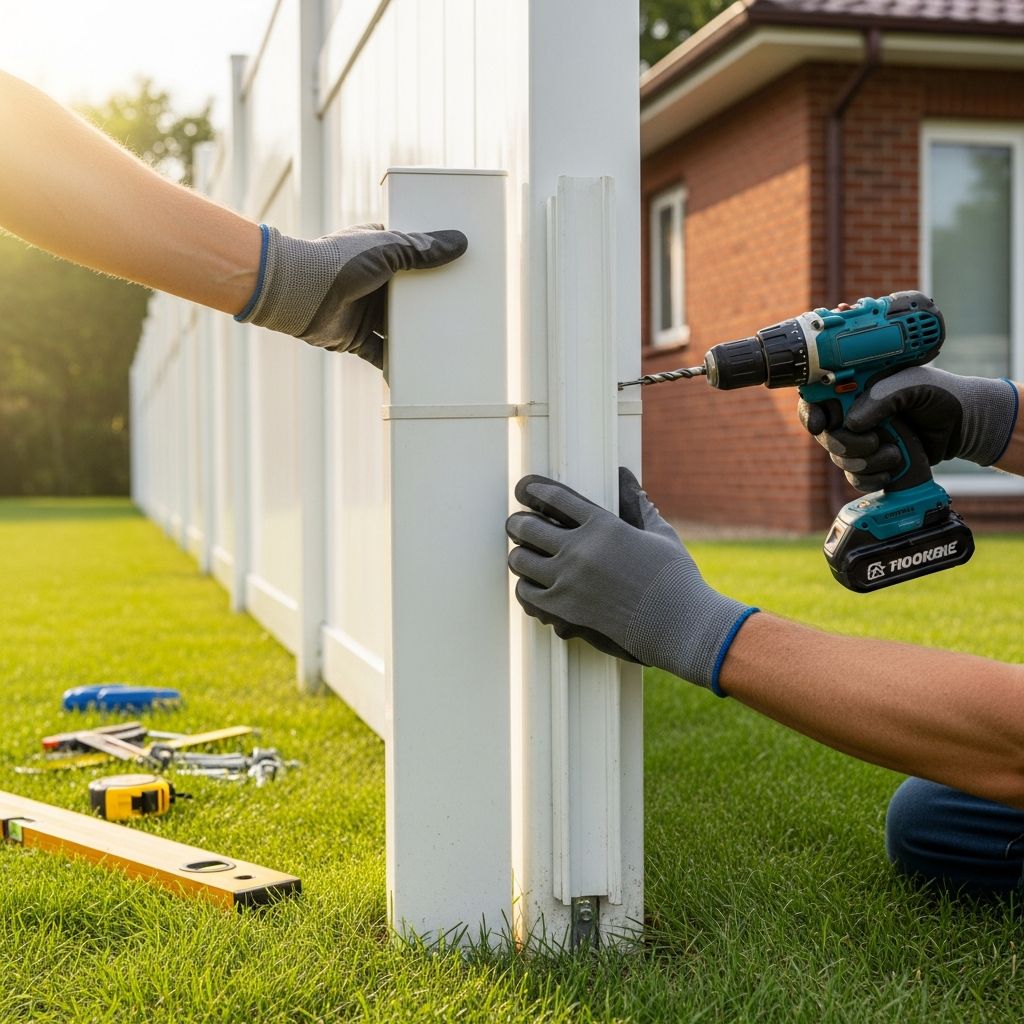
Fill each posthole about two-thirds full with concrete mix. Slowly slide the vinyl post into the wet concrete, being careful to keep it straight and centered in the hole. Use a level to verify that the post is perfectly plumb (vertically straight) in all directions. Make any necessary adjustments while the concrete is still workable.
Pay special attention to post height—adjust the post so that the bottom rail mortise (the slot where the bottom rail will connect) is positioned slightly above ground level. This positioning prevents water from pooling around the base of the post and extends the life of your fence. Once the post is properly positioned, backfill the hole with excavated dirt around the concrete, and allow the concrete to cure for one to two days before proceeding with panel installation. This curing time is essential for the concrete to reach full strength.
Installing Vinyl Fence Panels
Once all posts are properly set and the concrete has fully cured, you can begin installing the fence panels. Panel installation typically proceeds in three stages: installing bottom rails, adding pickets, and attaching top rails.
Installing Bottom Rails
Begin panel installation by inserting the steel-reinforced bottom rails between adjacent posts. These rails slide into the post mortises—the pre-formed slots in the vinyl posts designed to receive the rail components. Insert the rail carefully, ensuring it seats fully in both post mortises. Once positioned, secure the rail using locking rings that slip over the rail within the post mortises, preventing the rail from moving.
The steel reinforcement in these bottom rails is critical to the fence’s structural integrity, as it provides rigidity to the bottom of each panel and prevents sagging over time. Secure bottom rails properly at this stage to provide a stable foundation for the pickets and top rail that will be added next.
Adding Pickets
With the bottom rails in place, begin sliding the vertical pickets into the channel formed by the bottom rail. Work methodically along the fence line, spacing each picket evenly and ensuring each one is perfectly plumb (vertically straight). Most vinyl fence designs allow for uniform spacing between pickets, which creates a neat, professional appearance while maintaining privacy.
Before permanently securing pickets, verify that they’re properly spaced and plumb using a level. If necessary, trim individual pickets to fit your fence line, particularly if the terrain is uneven or if you need to fit pickets around corners or obstacles. Use a miter saw or circular saw with a fine-tooth blade for clean, precise cuts. The even spacing and plumb installation of pickets enhance both the visual appearance and the security provided by your fence.
Attaching Top Rails
Complete each panel by sliding the top rail over the installed pickets and into the post mortises. The top rail locks all the pickets in place, preventing them from shifting and ensuring the panel maintains its structural integrity. Once the top rail is fully seated in both post mortises, secure it using a screw installed from inside the post through the top rail, holding it firmly in position.
Many vinyl fence systems feature decorative snap caps for the top rails that provide a finished appearance while protecting the post tops from weather damage. Install these caps according to the manufacturer’s instructions. Top rails are essential structural components—they tie the entire panel together and distribute stress evenly across all pickets.
Installing Vinyl Fence Gates
If your fence design includes gates for yard access, install these final components after all straight fence sections are complete. Installing gates last ensures proper alignment and allows you to make adjustments based on the actual opening dimensions.
Gate Installation Steps
Begin by attaching gate hardware—hinges and latches—to the designated gate posts. Position hardware carefully to ensure it’s level and properly aligned. Hang the gate on the hinges, then check that it operates smoothly through its full swing. The gate should open and close easily without binding or catching.
Use a level to verify that the gate hangs straight and that its bottom edge is even. Adjust hinges and latches as needed to achieve proper alignment and smooth operation. A properly installed gate provides secure and convenient access to your enclosed yard while maintaining the aesthetic consistency of your vinyl fence installation.
Materials and Shopping List
Having all necessary materials on hand before beginning installation ensures the project proceeds smoothly without interruptions.
| Material Category | Specific Items |
|---|---|
| Vinyl Components | Vinyl fence posts, panels (privacy or semi-private style), pickets, top rails, bottom rails, post caps |
| Hardware | Gate hinges, gate latch hardware, locking rings, screws (3/4-inch self-tapping and 2 1/2-inch deck screws), plastic caps |
| Concrete and Anchoring | Ready-mix concrete, pressure-treated 6×6 lumber (if reinforcing gateposts), aluminum I-beams (for additional reinforcement) |
| Layout and Marking | Wooden or metal stakes, mason line, landscape paint |
| Finishing Materials | PVC adhesive for securing rails, sealant for cut edges |
Professional Installation Tips
While this is a DIY-friendly project, experienced fence installers follow certain best practices that result in superior installations. Starting your fence installation at the high point of your property, if terrain is uneven, makes the work easier as you progress downhill. Additionally, consider whether you’ll step panels down hillsides or rack them to follow the grade—racking accommodates sloped terrain more smoothly.
Take time to verify that bottom holes are positioned slightly above grade to prevent water accumulation. Use quality concrete mixed to proper consistency, and apply it around all four sides of each post for optimal stability. These professional touches ensure your vinyl fence installation will provide years of reliable performance and attractive appearance.
Maintenance and Long-Term Care
One of the primary advantages of vinyl privacy fences is their minimal maintenance requirements. Unlike wood fences that require annual staining and sealing, vinyl fences typically only need occasional cleaning with mild soap and water. Inspect your fence periodically for any damage, and address any issues promptly to maintain long-term structural integrity.
Frequently Asked Questions
Q: How deep should vinyl fence posts be set?
A: Vinyl fence posts should be dug 3 feet deep to ensure they extend below the frost line, which prevents shifting due to freeze-thaw cycles. However, always check local building codes as frost line depth varies by geographic location.
Q: Can I install a vinyl fence on sloped terrain?
A: Yes, vinyl fences can be installed on slopes in two ways: stepping panels down in level sections or racking panels to follow the grade. Racking creates a smoother visual appearance on moderate slopes.
Q: How long should concrete cure before I install fence panels?
A: Allow concrete to cure for one to two days before proceeding with panel installation. This ensures the concrete reaches sufficient strength to properly support the fence structure.
Q: What tools are absolutely essential for vinyl fence installation?
A: Essential tools include a posthole digger, level, string line, landscape paint, wheelbarrow, shovel, rubber mallet, saw, and power drill. A power auger can be rented to make posthole digging less physically demanding.
Q: How do I ensure vinyl fence posts remain perfectly vertical?
A: Use a level to check posts in multiple directions while the concrete is still wet. Make adjustments as needed before the concrete sets to ensure perfect plumb alignment.
Q: Is vinyl fencing suitable for yards with pools?
A: Yes, vinyl fences are particularly suitable for pool areas as they meet most local pool code requirements and provide excellent privacy and safety without the maintenance issues of wood fencing.
References
- How To Install a Vinyl Fence — This Old House. Accessed December 2025. https://www.thisoldhouse.com/fences/21017340/how-to-install-a-vinyl-fence
- How to Install a Vinyl Privacy Fence: Dig and Prepare the Post Holes — Fine Homebuilding. April 2, 2019. https://www.finehomebuilding.com/2019/04/02/install-vinyl-privacy-fence-dig-prepare-post-holes
- Fencing Overview — This Old House. Accessed December 2025. https://www.thisoldhouse.com/fences/21071775/fencing-overview
Similar Articles





Read full bio of medha deb