How To Install A Window Air Conditioner: Step-By-Step Guide
Master the art of installing a window air conditioner with our complete step-by-step guide.
How to Install a Window Air Conditioner: A Complete Guide
As summer temperatures rise, many homeowners turn to window air conditioners as an affordable and efficient way to cool their living spaces. Installing a window AC unit doesn’t require professional help if you follow the right procedures and understand the key steps involved. This comprehensive guide will walk you through everything you need to know to successfully install your window air conditioner and enjoy cool, comfortable summers.
Understanding Window Types and AC Unit Compatibility
Before you purchase a window air conditioner or begin the installation process, it’s essential to understand which window types work best with these cooling units. Not all windows are created equal, and choosing the wrong window type can lead to installation problems, gaps, and reduced cooling efficiency.
Double-hung and single-hung windows are ideal for window air conditioners. These windows open vertically and provide the perfect fit for standard AC units. The bottom sash lifts up, allowing the air conditioner to rest securely within the window opening. This design ensures stability and allows for proper sealing around the unit.
However, casement windows and slider windows are not suitable for traditional window air conditioners. Casement windows crank outward, and slider windows open horizontally, making it difficult to secure an AC unit properly. If you attempt to install an AC unit in these window types, you’ll need to fill in significant gaps, which compromises both energy efficiency and security. These gaps also make it challenging to seal the unit properly, allowing warm air and insects to enter your home.
If you have a storm window installed, you may need to remove the screen or slide open the lower window before installation. Take a few moments to assess your window type and ensure it’s compatible with a standard window air conditioner before proceeding.
Pre-Installation Preparation
Proper preparation is the foundation of a successful window air conditioner installation. Taking time to prepare your window and gather necessary materials will make the entire process smoother and more efficient.
Gathering Your Tools and Materials
Before you begin, assemble the following items:
- Your window air conditioner unit
- Peel-and-stick weather stripping
- Wooden blocking material (typically 2×4 lumber)
- Level tool
- Measuring tape
- Screws and fasteners (if securing the unit)
- Drill or screwdriver
- Extension cord or appliance cord (if needed)
- A helper or assistant (for heavier units)
Assessing Your Window and Sill
Examine your window sill carefully. Look for any dirt, debris, or damage that could interfere with proper sealing. Clean the sill thoroughly and ensure it’s in good condition. Check that the window opens and closes smoothly, as you’ll need full mobility during installation. Inspect the window frame for any gaps or cracks that might affect the installation.
Achieving Proper Leveling
One of the most critical aspects of window air conditioner installation is ensuring the unit is properly leveled. An improperly leveled AC unit won’t function efficiently and may fail to drain condensation correctly, potentially causing water damage.
Why leveling matters: Window air conditioners are designed with a slight slope toward the outside to facilitate condensation drainage. If the unit tilts inward, water may accumulate inside your home instead of draining externally. Additionally, an unlevel unit may not cool your space efficiently and could be uncomfortable to operate.
To achieve proper leveling, you may need to install blocking material on either the front or back of the air conditioner. Wooden 2×4 blocks work well for this purpose. Measure the gap between your window sill and the bottom of the AC unit opening to determine the appropriate blocking height. The unit should sit level or with just a slight downward slope toward the outside of your home.
Use a level tool to check the orientation both horizontally and front-to-back. Make fine adjustments by adding or removing blocking material until the unit is perfectly positioned. This step may take a few minutes, but it’s absolutely worth the effort for proper drainage and cooling performance.
Installing Weather Stripping
Weather stripping is your key defense against air leaks and energy loss. Proper sealing ensures that cool air stays inside your home and warm air stays out, maximizing your air conditioner’s efficiency and minimizing your energy bills.
Before placing the AC unit in the window, apply peel-and-stick weather stripping to critical areas. Apply the weather stripping to the blocking or your window sill and to the underside of your window. This creates an effective seal that prevents air from escaping around the edges of the unit.
Weather stripping also helps prevent insects from entering your home and reduces noise transmission from outside. When applying the adhesive strips, ensure you press firmly to create a strong bond. Take your time with this step, as good sealing now will provide benefits throughout the entire cooling season.
Placing Your Air Conditioner Unit
Now comes the physical installation of the air conditioner itself. Depending on your unit’s size and weight, you may need assistance from another person.
The Installation Process
Step 1: Preparation – Open your window completely to provide full access to the opening. If you have a storm window or screen, remove or adjust it as necessary. Make sure your blocking material is securely in place and weather stripping is applied.
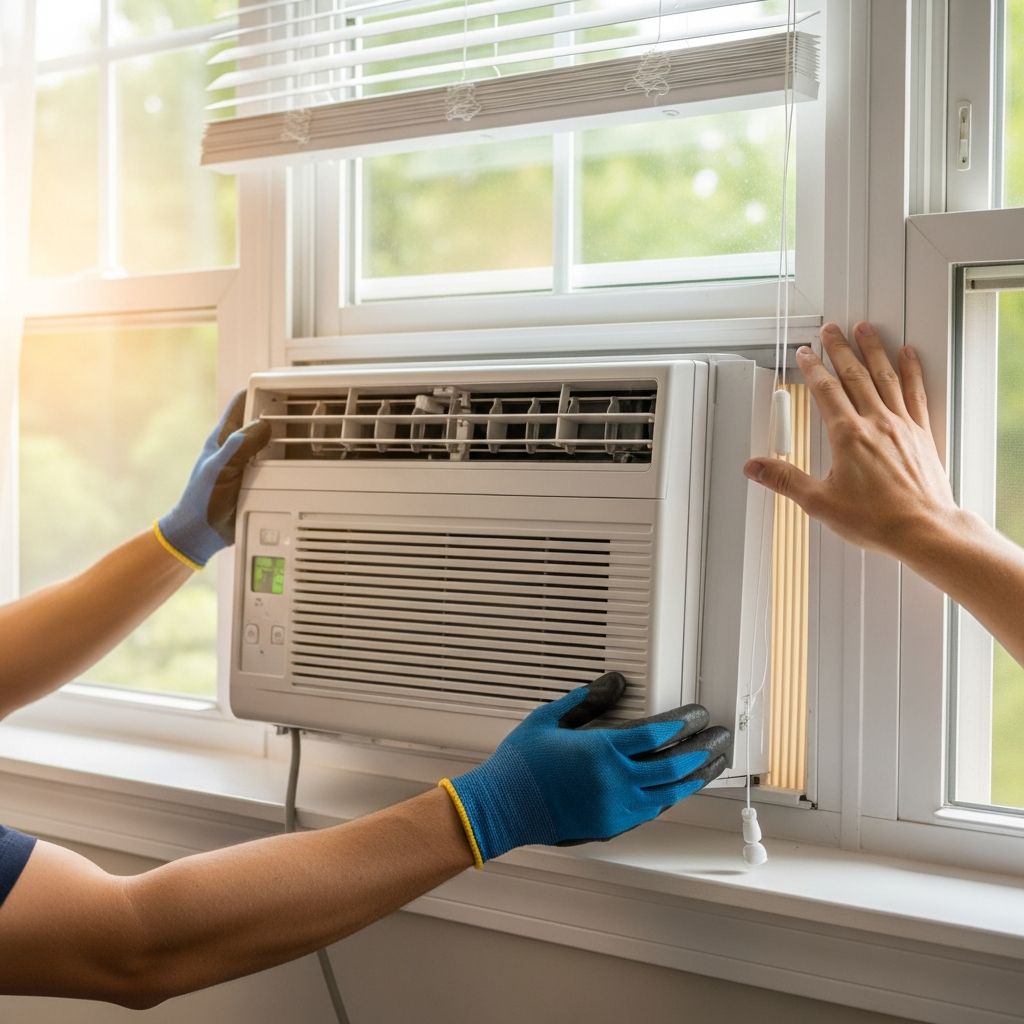
Step 2: Lifting the unit – Position yourself and any helper at the sides of the air conditioner. Using proper lifting technique, carefully lift the unit into the window opening. Some window AC units can be quite heavy, so don’t hesitate to ask for help or use mechanical advantages like dollies or hand trucks for larger models.
Step 3: Centering – As you lift the unit, ensure it’s centered in the window opening. Proper centering is important for both aesthetics and function, as it ensures even weight distribution and proper sealing on both sides.
Step 4: Lowering into position – Carefully lower the window down onto the top of the air conditioner, allowing the window to hold the unit securely in place. The weight of the window helps keep the unit from falling out, but you should verify this before releasing your grip entirely.
Expanding the Side Wings
Most window air conditioners feature expandable side wings or panels. These components extend from each side of the unit to fill the gap between the AC unit and the window frame. Expand these wings fully to close the gaps on both sides of the unit. This is crucial for preventing warm air from entering and cool air from escaping.
Make sure the wings are secured in their extended positions. They typically have locking mechanisms that hold them in place. Double-check that they’re fully expanded and locked to maximize your cooling efficiency.
Securing the Unit
While the window’s weight provides significant support, additional securing measures can prevent accidental removal and improve stability.
Optional Fastening Methods
If you don’t mind drilling holes into your window frame, you can secure the air conditioner wings to the face of your window using appropriate fasteners. This provides extra security and peace of mind, particularly in older homes or if you live in a windier climate.
Alternatively, some homeowners use brackets or L-supports to provide additional stability from underneath the unit. These can be installed on the exterior of your home to prevent the unit from tilting or falling, especially for heavier models.
For windows on upper floors or in high-wind areas, securing the unit is particularly important for both safety and reliability.
Handling Power and Cord Considerations
Proper electrical setup is essential for both performance and safety when operating your window air conditioner.
Extension Cord Selection
If your air conditioner’s power cord doesn’t reach a nearby outlet, you’ll need an extension cord. Always use an appliance-grade or air conditioner-specific extension cord rather than a standard household extension cord. These specialty cords are designed to handle the high amperage requirements of air conditioning units and provide better protection against overheating and electrical hazards.
Check your air conditioner’s specifications to determine the required cord gauge and length. Using an undersized cord can damage your unit and create fire hazards.
Outlet Requirements
Always plug your air conditioner into a grounded outlet (a three-prong outlet). Never use adapters to force your cord into a two-prong outlet, as this eliminates critical electrical safety features. Grounded outlets provide an essential path for electrical faults, protecting both you and your equipment.
If your home doesn’t have a grounded outlet near your window, consider hiring a licensed electrician to install one. This is a worthwhile investment in safety and convenience.
Final Verification and Testing
Before you sit back and enjoy your newly cooled space, perform a final inspection:
- Verify that the unit is level using your level tool
- Check that all gaps around the unit are sealed with weather stripping
- Ensure the side wings are fully extended and locked
- Confirm that the unit is stable and doesn’t shift when you gently push on it
- Test the power cord connection and verify the unit operates properly
- Check that air is blowing from the unit and cooling your space
- Ensure that condensation is draining to the outside of your home
Maintenance and Seasonal Care
Proper maintenance extends the life of your window air conditioner and ensures optimal performance throughout the cooling season.
Regular cleaning: Clean or replace the filter regularly according to your unit’s specifications. A dirty filter reduces cooling efficiency and forces the unit to work harder.
Seasonal preparation: Before summer begins, test your unit to ensure it’s working properly. Before winter arrives, consider removing the unit or covering it to protect it from the elements and reduce drafts.
Annual inspection: Each year before the cooling season, inspect the seal, weather stripping, and securing fasteners to ensure everything is still in good condition.
Frequently Asked Questions (FAQs)
Q: Can I install a window air conditioner in a casement window?
A: It’s not recommended. Casement windows crank outward, making it difficult to secure an AC unit properly and seal gaps effectively. Window air conditioners work best in double-hung or single-hung windows that open vertically.
Q: Do I need two people to install a window air conditioner?
A: It depends on the size and weight of your unit. Lighter units can often be installed by one person, but heavier models (typically 50+ pounds) are much easier and safer to install with a helper.
Q: What’s the importance of weather stripping?
A: Weather stripping seals gaps around the AC unit, preventing warm air from entering and cool air from escaping. This improves energy efficiency, reduces energy costs, and prevents insects and outdoor noise from entering your home.
Q: How do I prevent the window air conditioner from falling out?
A: The window’s weight provides significant support, but you can enhance security by using side brackets or fasteners to secure the unit to the window frame. For upper-floor windows, this extra security is especially important.
Q: What type of extension cord should I use?
A: Always use an appliance-grade or air conditioner-specific extension cord rated for the amperage your unit requires. Never use a standard household extension cord, as it may not safely handle the power demands.
Q: How should I winterize my window air conditioner?
A: Before winter, either remove the unit completely or cover it with a protective cover designed for window AC units. This prevents damage from freezing temperatures and reduces drafts from entering your home.
Q: Why is leveling so important?
A: Proper leveling ensures that condensation drains correctly toward the outside of your home rather than pooling inside. An improperly leveled unit may not cool efficiently and could cause water damage to your window sill or interior walls.
Conclusion
Installing a window air conditioner is a straightforward DIY project that can save you money and provide cool comfort throughout the summer months. By following these steps—choosing the right window type, properly preparing your installation area, achieving correct leveling, sealing gaps with weather stripping, and securing the unit appropriately—you’ll ensure efficient operation and years of reliable cooling. With proper maintenance and seasonal care, your window air conditioner will provide dependable comfort when you need it most. Take your time during installation, don’t rush through critical steps like leveling and sealing, and enjoy the cool, comfortable home you’ve created.
References
- How to Install a Window Air Conditioner — Family Handyman. 2022-06-23. https://www.familyhandyman.com/project/how-to-install-a-window-air-conditioner/
- The EASIEST Way to Install a Window Air Conditioner — Word of Advice TV. 2024-08-10. https://www.youtube.com/watch?v=Lq8jA2uYaFE
- Installing a Window AC Unit — The Handy Home Blog. https://www.handy.com/blog/pros/installing-a-window-ac-unit
Similar Articles



Read full bio of Sneha Tete