How To Jump Start Your Car Safely: 9-Step Guide
Master safe jump-starting techniques to revive your dead car battery in minutes.
How to Jump Start Your Car Safely
A dead battery is one of the most common vehicle emergencies that drivers face. Whether you left your lights on, the battery has reached the end of its lifespan, or you simply haven’t driven your car in a while, knowing how to safely jump-start your vehicle can get you back on the road quickly. Jump-starting your car is a straightforward process when you understand the proper techniques and take the necessary safety precautions.
The process involves using jumper cables and another vehicle with a working battery to transfer electrical power to your dead battery. While it may seem intimidating to the uninitiated, following the correct procedures will help you avoid damage to both vehicles and potential injury to yourself. This comprehensive guide will walk you through everything you need to know about jump-starting your car safely.
Understanding Your Car Battery and Common Causes of Dead Batteries
Before attempting to jump-start your vehicle, it’s important to understand what’s happening under the hood. Your car battery is a rechargeable power source that stores electrical energy needed to start your engine and power various electrical components. A typical car battery produces around 12 volts of direct current (DC) electricity.
Several factors can cause a battery to die:
- Leaving lights on: Forgetting to turn off headlights, interior lights, or other electrical devices while the engine is off will drain your battery over time.
- Age and wear: Car batteries typically last between three to five years. As they age, their ability to hold a charge diminishes.
- Extreme temperatures: Both very cold and very hot weather can reduce battery performance and lifespan.
- Defective alternator: If your vehicle’s alternator isn’t functioning properly, it won’t recharge your battery while driving.
- Parasitic drain: Some vehicles have electrical systems that continue drawing power even when the car is off.
- Corroded battery terminals: Corrosion can prevent proper electrical connection between the battery and the rest of your vehicle.
Essential Equipment and Tools Needed
To successfully jump-start your car, you’ll need specific equipment. Having these items readily available can save you time and frustration during an emergency.
Jumper Cables
Jumper cables are essential electrical conductors that allow you to connect two car batteries together. When selecting jumper cables, quality matters significantly. Look for cables with the following characteristics:
- Thick gauge wire (typically 2 or 4 gauge) that allows for efficient current flow
- Heavy-duty clamps that create secure connections without slipping
- Insulation that protects against electrical shock
- Length of at least 12 to 16 feet to accommodate various vehicle sizes and positions
- Color-coded ends (red for positive, black for negative) to prevent confusion
Investing in high-quality jumper cables is worthwhile since they can last for many years and may save you money on roadside assistance calls.
A Donor Vehicle
You’ll need another vehicle with a working battery and similar voltage (typically 12 volts for most modern cars). The donor vehicle should be in good working condition and parked close enough to your vehicle for the jumper cables to reach between the two batteries.
Safety Equipment
Consider having safety gloves and protective eyewear available. These items offer additional protection in case of unexpected sparks or battery acid exposure, though such incidents are rare when proper procedures are followed.
Pre-Jump-Start Safety Precautions
Before connecting anything, take time to assess the situation and ensure your safety. These preliminary steps are critical:
Assess Your Battery’s Condition
Look at your battery for visible damage, such as cracks, leaks, or extreme corrosion. If you notice any physical damage, the battery may be defective and unsafe to jump-start. In these cases, it’s better to call for professional help or replace the battery.
Check for Corrosion
Battery terminals can accumulate a blue, white, or green crusty substance called corrosion. While light corrosion won’t prevent jump-starting, heavy corrosion may require cleaning first. If you notice significant corrosion, you may need to clean the terminals with a wire brush before attempting to jump-start.
Ensure Both Vehicles Are Off
Both the vehicle with the dead battery and the donor vehicle should have their engines turned off before you connect the jumper cables. This prevents electrical damage to sensitive electronic components in both vehicles.
Position Vehicles Properly
Park the donor vehicle as close as safely possible to the disabled vehicle without allowing them to touch. You want the jumper cables to reach comfortably between the batteries without being stretched to their limit.
Check Cable Condition
Inspect your jumper cables for any damage, such as cuts in the insulation, corroded clamps, or cracked rubber coating. Damaged cables can create safety hazards and should not be used.
Step-by-Step Jump-Starting Process
Once you’ve completed all safety checks, you’re ready to proceed. Follow these steps carefully:
Step 1: Locate Both Batteries
Open both vehicle hoods and locate the batteries. Most batteries are located in the engine compartment, but some vehicles may have batteries in the trunk or other locations. Consult your owner’s manual if you’re unsure.
Step 2: Identify Positive and Negative Terminals
Car batteries have two terminals: positive and negative. The positive terminal is typically marked with a plus sign (+) or red covering, while the negative terminal is marked with a minus sign (−) or black covering. Correct identification is crucial for safe jump-starting.
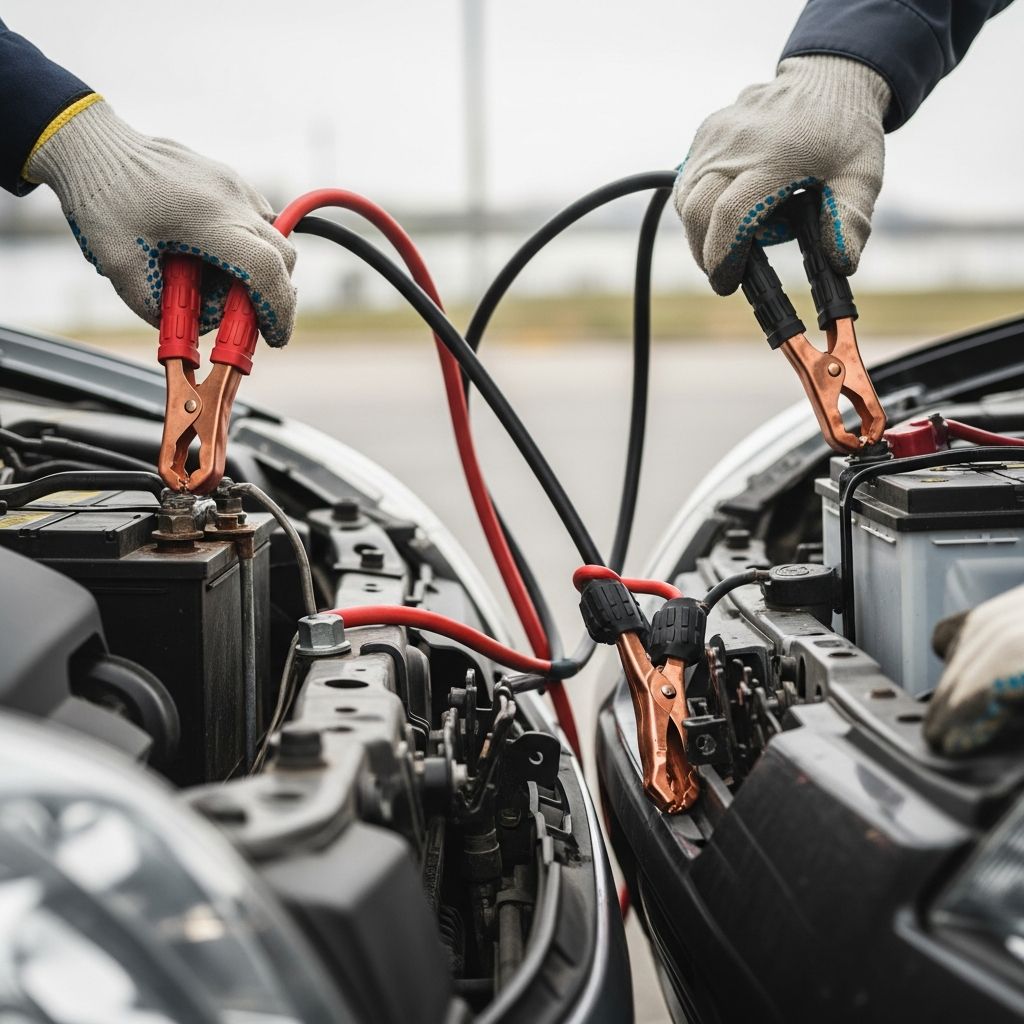
Step 3: Connect the Red Cable to the Dead Battery
Attach the red (positive) clamp to the positive terminal of your dead battery. Make sure the clamp is secure and won’t slip during the process.
Step 4: Connect the Red Cable to the Good Battery
Attach the other red clamp to the positive terminal of the donor vehicle’s battery. Again, ensure a tight connection.
Step 5: Connect the Black Cable to the Good Battery
Attach the black (negative) clamp to the negative terminal of the donor vehicle’s battery.
Step 6: Connect the Black Cable to an Unpainted Metal Surface
This is a critical safety step. Instead of connecting the black clamp directly to the negative terminal of the dead battery, connect it to an unpainted metal surface on the disabled vehicle’s engine block or frame. This prevents sparks near the battery, which could be hazardous. Look for a clean, bare metal bolt or surface away from the battery.
Step 7: Start the Donor Vehicle
Start the engine of the vehicle with the good battery. Let it run for a few minutes to allow the healthy battery to charge the dead battery.
Step 8: Start Your Vehicle
Attempt to start your vehicle. If it doesn’t start immediately, wait a few more minutes and try again. Don’t continuously crank the engine, as this can damage the starter motor.
Step 9: Remove the Cables in Reverse Order
Once your vehicle starts successfully, carefully remove the jumper cables in the reverse order of connection:
- Remove the black clamp from your vehicle’s metal surface
- Remove the black clamp from the donor vehicle’s negative terminal
- Remove the red clamp from the donor vehicle’s positive terminal
- Remove the red clamp from your vehicle’s positive terminal
Removing cables in this specific order prevents electrical damage and reduces the risk of sparks.
What to Do After Jump-Starting Your Car
Getting your car started is only half the battle. Proper aftercare ensures your battery stays charged and helps you identify any underlying issues.
Keep the Engine Running
Don’t immediately turn off your engine after a jump-start. Allow your vehicle to run for at least twenty to thirty minutes. This gives your alternator time to recharge the battery and ensures the battery has sufficient power for the next start.
Avoid Unnecessary Electrical Loads
During this charging period, minimize the use of electrical components like air conditioning, headlights, and the radio. These drain power and prevent your battery from charging fully.
Drive Your Vehicle
After the initial idling period, take your vehicle for a drive. Highway driving is preferable as it allows your alternator to charge the battery more efficiently than stop-and-go city driving.
Test Your Battery
If your battery dies again shortly after jump-starting, you likely have a deeper issue. This could indicate a faulty battery that needs replacement or a problem with your vehicle’s electrical system, such as a malfunctioning alternator.
Common Mistakes to Avoid
Even experienced drivers sometimes make errors when jump-starting. Being aware of common mistakes helps you avoid them:
- Connecting cables in the wrong order: Always follow the proper sequence to avoid electrical damage and sparks.
- Attaching the negative cable to the dead battery’s negative terminal: This can cause sparks near the battery. Use an unpainted metal surface instead.
- Attempting to jump-start a damaged battery: If the battery is cracked or leaking, don’t attempt a jump-start. Seek professional help.
- Using the wrong gauge jumper cables: Thin cables can overheat and pose a fire risk. Always use appropriate gauge cables.
- Leaving engines running while connecting cables: Both engines should be off to prevent electrical damage.
- Not waiting long enough before starting: Give the healthy battery adequate time to begin charging the dead one.
- Driving with lights off after jump-starting: Your lights help your alternator recognize that the battery needs charging.
When to Call for Professional Help
While jump-starting is generally straightforward, some situations warrant professional assistance:
- Your vehicle still won’t start after two jump-start attempts
- Your battery shows visible signs of damage or leakage
- You notice a burning smell or smoke from the battery
- Your vehicle has electrical problems that persist after jump-starting
- You’re uncomfortable performing the procedure yourself
- Your battery repeatedly dies shortly after charging
Maintaining Your Car Battery for Longevity
Proper battery maintenance can prevent dead battery situations from occurring in the first place:
- Keep terminals clean: Regularly inspect and clean battery terminals to prevent corrosion buildup.
- Check battery age: If your battery is over three years old, have it tested regularly.
- Avoid excessive electrical drain: Don’t leave lights on or use electrical components with the engine off for extended periods.
- Park in shade when possible: Extreme heat accelerates battery degradation.
- Drive regularly: Frequent driving helps keep your battery charged and in good condition.
- Have your alternator checked: A faulty alternator won’t charge your battery properly while driving.
Frequently Asked Questions
Q: How long does it take to jump-start a car?
A: The process typically takes 15-30 minutes from start to finish. This includes positioning vehicles, connecting cables, waiting for the battery to charge, and starting your vehicle.
Q: Can I jump-start my car alone?
A: You need another vehicle with a working battery, so you cannot jump-start completely alone. However, you can perform most of the procedure yourself if you have access to another vehicle. If you’re in an unsafe location, consider calling roadside assistance.
Q: Will jump-starting damage my car?
A: Jump-starting done correctly will not damage your vehicle. However, improper procedure can damage electronic components, so always follow the correct cable connection sequence.
Q: Can I jump-start a car in the rain?
A: Yes, you can jump-start a car in light rain, but avoid doing so in heavy rain or thunderstorms. Water can conduct electricity and pose a shock hazard. Keep the engine compartment as dry as possible.
Q: What if my jumper cables are too short?
A: If your cables are too short to reach between batteries safely, reposition the vehicles closer together. Never stretch cables to their absolute limit, as this creates stress on the connections.
Q: How often should I replace my car battery?
A: Most car batteries last between 3-5 years depending on climate and driving habits. If your battery repeatedly dies, it may need replacement sooner.
Q: Is it safe to jump-start a hybrid or electric vehicle?
A: Some hybrid and electric vehicles have different electrical systems. Consult your owner’s manual before attempting to jump-start these vehicles, as they may require special procedures or equipment.
References
- Lead-Acid Battery Safety — Occupational Safety and Health Administration (OSHA). U.S. Department of Labor. https://www.osha.gov/chemicaldata/battery/lead-acid-battery-safety
- Vehicle Battery Maintenance and Jump-Starting Guide — National Highway Traffic Safety Administration (NHTSA). U.S. Department of Transportation. https://www.nhtsa.gov/
- Understanding Automotive Electrical Systems — Society of Automotive Engineers (SAE). https://www.sae.org/
- Battery Technology and Performance Standards — International Organization for Standardization (ISO). https://www.iso.org/
- Vehicle Maintenance Best Practices — American Automobile Association (AAA). https://www.aaa.com/
Similar Articles




Read full bio of Sneha Tete