How To Paint A Ceiling: Step-By-Step Guide
Master ceiling painting with expert techniques, tools, and step-by-step instructions for perfect results.
How to Paint a Ceiling: A Complete Guide to Professional Results
Painting a ceiling is one of the most challenging yet rewarding DIY projects you can tackle. A fresh coat of paint can completely transform a room, updating its appearance and covering imperfections. However, ceiling painting requires careful planning, the right tools, proper technique, and patience to achieve professional-looking results. Whether you’re refreshing a single room or tackling your entire home, this comprehensive guide will walk you through every step of the ceiling painting process, from preparation to final cleanup.
Why Start With the Ceiling?
The golden rule of room painting is always to start at the top and work your way down. This means painting the ceiling should be your first priority when painting a room. The reason is simple: paint drips and splatters are inevitable, and you want any accidents to land on surfaces you haven’t finished yet. If you paint walls first and then tackle the ceiling, any drips or splatters will ruin your freshly painted walls. By starting with the ceiling, you can simply let drips fall onto the floor, which is protected with drop cloths and plastic sheeting. This approach ensures a cleaner, more professional-looking final result and saves you from redoing work.
Preparing Your Space for Ceiling Painting
Proper preparation is absolutely critical to the success of your ceiling painting project. Taking time to prepare correctly will make the actual painting process smoother and help you achieve better results.
Clearing and Protecting Your Room
Begin by removing as much furniture as possible from the room. If you cannot remove larger pieces, move them to the center of the room and cover them with plastic sheeting or old blankets. Next, protect your floors by laying down drop cloths or plastic sheeting that extends well beyond where you’ll be working. This prevents paint splatter from reaching your flooring and makes cleanup significantly easier. Use painter’s tape to secure the edges of drop cloths and to protect the area where the floor meets the wall. This creates a clean barrier and prevents paint from seeping underneath.
Removing Fixtures and Hardware
Remove light fixtures, ceiling fans, smoke detectors, and any other items hanging from or attached to the ceiling. If you cannot remove fixtures, use plastic bags and painter’s tape to carefully cover them, creating a secure seal that prevents paint from getting into electrical components or mechanical parts. This step takes extra time but protects your home’s safety and functionality.
Cleaning and Inspecting the Ceiling
Before painting, thoroughly clean the ceiling to remove dust, cobwebs, and any loose paint or texture. Use a vacuum with a soft brush attachment or a feather duster to gently clean the surface. For popcorn ceilings, be especially gentle to avoid damaging the texture. Inspect the ceiling carefully for water stains, cracks, peeling paint, or damaged areas. Address any damage before painting: fill cracks with spackling compound, sand the area smooth once dry, and repair any major damage or water-stained areas. If your ceiling was installed before 1980, have it tested for asbestos before disturbing it.
Selecting the Right Tools and Materials
Using quality tools and materials makes an enormous difference in your final results. Investing in good equipment is worth the extra cost.
Paint Selection
Choose a flat or matte interior ceiling paint specifically formulated for ceiling application. These paints are designed to minimize drips and provide excellent coverage over various ceiling surfaces. Ceiling paints typically have a thicker consistency than wall paints, which helps them adhere better and reduces dripping. If your ceiling is textured, such as popcorn, select paint formulated for textured surfaces. Many ceiling paints now include primer, which saves time and improves adhesion. When estimating paint quantity, purchase approximately 15-20% more than you would for a smooth ceiling to account for the extra surface area created by texture. For a typical 12-by-12-foot room with an 8-foot ceiling, one gallon usually covers about 400 square feet, so calculate accordingly.
Essential Tools and Equipment
To paint your ceiling properly, you’ll need the following tools:
Roller and Extension Pole: Use a roller with a 3/8-inch to 1/2-inch nap, depending on your ceiling texture. The nap thickness affects how much paint the roller holds and how it applies to textured surfaces. Attach an extension pole to your roller, allowing you to reach the ceiling without constantly climbing a ladder. A pole typically extends 4 to 8 feet, giving you comfortable reach and control.
Paintbrushes: Use a 2-3 inch angled brush for cutting in along edges, perimeters, and around ceiling fixtures. Quality brushes with natural or high-quality synthetic bristles provide better paint control and a smoother finish than cheap brushes.
Paint Tray and Screen: A paint roller tray or bucket with a paint screen helps you load paint onto your roller evenly. A paint screen allows you to remove excess paint from the roller before applying it to the ceiling, reducing drips.
Ladder or Scaffolding: Choose a sturdy, stable ladder that allows you to work comfortably. An extension ladder or step ladder works for most rooms, but for large areas or high ceilings, consider renting scaffolding for safety and accessibility.
Protective Equipment: Wear safety glasses to protect your eyes from drips and dust, and use a dust mask to avoid inhaling dust or paint particles. Many painters also wear a hat or headband to keep paint out of their hair.
Painter’s Tape: Quality painter’s tape creates clean lines and prevents paint bleed. Low-quality tape often fails to adhere properly and allows paint to seep underneath.
Drop Cloths and Plastic Sheeting: Canvas drop cloths are preferable to plastic because they don’t slip as easily. Combine drop cloths with plastic sheeting for maximum floor protection and easy cleanup.
Priming Your Ceiling
In most cases, if your ceiling is not heavily stained or damaged, you can use a ceiling paint that includes primer to save time. However, if your ceiling has water stains, smoke damage, or you’re covering a dark color with a lighter one, apply a separate primer first. Use a roller with a nap that matches your ceiling’s texture, apply primer in one consistent direction, and avoid oversaturating the surface. Allow primer to dry completely, usually 2-4 hours depending on humidity and temperature, before applying paint. If stains still show through after the first primer coat, apply a second coat before painting.
Painting Techniques for a Professional Finish
Cutting In Around Edges
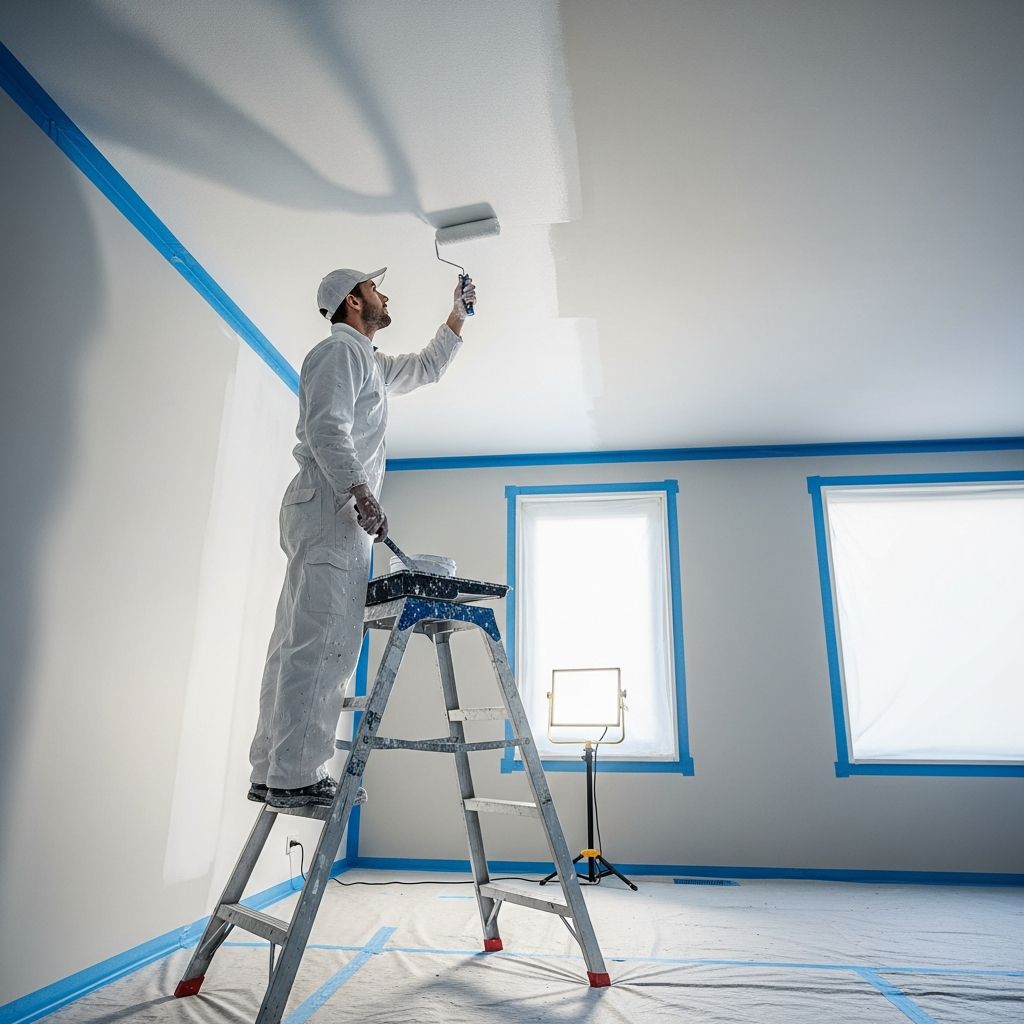
Begin your painting by using a brush to cut in around the perimeter of the ceiling, creating a 3-inch wide border along all edges where the ceiling meets the walls, trim, and any fixtures. Cutting in first prevents you from trying to maneuver a roller around these tight spaces, which would be awkward and result in uneven coverage. Load your brush with an adequate amount of paint and use smooth, deliberate strokes. Maintain a wet edge to prevent lap marks and ensure consistent color throughout the cut-in areas. This step requires patience and careful brushwork, but it’s crucial for a professional appearance.
Rolling the Ceiling
After cutting in, use your extension pole and roller to paint the main ceiling area. Load your roller generously with paint to ensure good coverage of textured or uneven surfaces. Start in one corner and work in systematic overlapping strips across the ceiling. The key to avoiding lap marks and uneven coverage is maintaining a wet edge—never let the leading edge of your paint dry before the next strip overlaps it. Apply paint in one direction using gentle, consistent pressure. Avoid overworking the paint or using excessive pressure, which can create thin spots or damage textured surfaces. For best results, work in small sections at a time, moving methodically across the entire ceiling.
Applying Multiple Coats
Most ceiling painting projects require two coats for even coverage and rich color saturation. After the first coat dries completely, typically 2-4 hours, apply a second coat in the opposite direction. This cross-hatching approach ensures that any thin spots or uneven areas from the first coat are covered. For textured ceilings or when painting with bold or dark colors, you may need three coats to achieve uniform coverage. Patience between coats is essential; rushing and applying wet paint over incompletely dried paint can result in streaks, drips, and poor adhesion.
Special Ceiling Painting Techniques
Painting with Accent Colors
Adding color to your ceiling can completely transform a room’s appearance. According to color experts, a splash of color can make small rooms seem larger and add visual interest. When selecting an accent ceiling color, choose a shade that complements your wall colors and overall room decor. Consider how natural and artificial lighting affects the color’s appearance throughout the day. If the color on your wall seems too saturated, select a lighter shade for the ceiling—typically one or two shades lighter on the paint strip. This creates a finished, intentional look while maintaining visual harmony in the room. Apply multiple coats to achieve even coverage and rich saturation when using bold or dark colors.
Highlighting Architectural Features
Many ceilings feature architectural elements such as coffering, beadboard, planks, or exposed beams. Highlighting these features with complementary colors or finishes creates stunning focal points. You can paint recessed or flat areas in a contrasting color to showcase the treatment, or cover the entire ceiling in one bold shade to command attention. Architectural ceiling features naturally draw the eye upward, and strategic color choices can emphasize these elements and create visual interest.
Creating Seamless Color Flow
For a soft, cohesive look, consider painting both the ceiling and walls in the same color without contrasting molding. This technique is particularly effective in dining rooms and creates a unified, sophisticated appearance. The matching color scheme can create a cocooning effect that feels intimate and welcoming, perfect for spaces designed for relaxation and gathering.
Common Mistakes to Avoid
Understanding common pitfalls helps you avoid them. Do not pour paint directly into the ceiling paint roller tray from the original can. Always pour paint into a separate container first, which reduces contamination risk and makes cleanup easier. Do not neglect to protect adjacent surfaces adequately; inadequate protection leads to paint splatter on floors, walls, and trim. Avoid using old, worn rollers with matted nap, as they do not hold paint properly and result in poor coverage. Never paint without adequate ventilation; this helps paint dry faster and reduces fume exposure. Do not rush between coats; insufficient drying time compromises adhesion and durability. Finally, avoid using low-quality paint or tools; while they cost less initially, they require more coats and provide inferior results.
Cleanup and Finishing Touches
Once your final coat is dry, remove painter’s tape from the walls and trim before paint fully dries to avoid peeling off fresh paint from walls. Remove plastic covers from fixtures and replace any items you removed before starting. Allow paint to cure fully, typically 48 hours, before replacing ceiling fans or doing anything else that could disturb the fresh paint. Clean your tools immediately after finishing; dried paint on rollers and brushes ruins them. Store leftover paint properly for future touch-ups, ensuring the lid is sealed tightly and the can is stored in a climate-controlled location.
Frequently Asked Questions About Ceiling Painting
Q: How long does it take to paint a ceiling?
A: For an average 12-by-12-foot room, preparation typically takes 1-2 hours, cutting in takes 30-45 minutes, and rolling takes another 45 minutes to an hour per coat. Total project time is usually 6-10 hours including drying time between coats.
Q: Can I paint a popcorn ceiling?
A: Yes, you can paint popcorn ceilings with flat interior ceiling paint specifically formulated for textured surfaces. Use a roller with appropriate nap thickness, apply gentle pressure to avoid damaging the texture, and expect to use 15-20% more paint than for smooth ceilings.
Q: What paint finish should I use for ceilings?
A: Use flat or matte ceiling paint for most applications. These finishes minimize glare and hide imperfections better than glossy finishes. Avoid high-gloss ceiling paint, which highlights imperfections and creates harsh reflections.
Q: Do I need to prime my ceiling before painting?
A: If using a ceiling paint with integrated primer on an undamaged ceiling, priming is optional. However, prime first if covering water stains, smoke damage, dark colors with light colors, or when painting textured surfaces for the first time.
Q: How do I prevent paint drips when ceiling painting?
A: Load your roller properly by removing excess paint on the paint screen, use consistent pressure, and avoid overloading the roller. Apply paint in one direction and maintain a wet edge to prevent lap marks and ensure even coverage.
Q: Should I use a brush or roller for ceiling painting?
A: Use both: a brush for cutting in around edges and perimeters (2-3 inches wide), and a roller for the main ceiling area. The combination ensures even coverage and professional results.
References
- All About Painting: A Comprehensive Guide — This Old House. Accessed 2025-12-03. https://www.thisoldhouse.com/21072501/all-about-painting
- How to Paint a Popcorn Ceiling — This Old House. Accessed 2025-12-03. https://www.thisoldhouse.com/painting/21097076/how-to-paint-a-popcorn-ceiling
- How to Paint a Room Like a Pro | Ask This Old House — This Old House. Accessed 2025-12-03. https://www.thisoldhouse.com/video/21014847/how-to-paint-a-ceiling
- Reinvent a Room by Painting the Ceiling With Color — This Old House. Accessed 2025-12-03. https://www.thisoldhouse.com/painting/21018876/reinvent-a-room-by-painting-the-ceiling-with-color
Similar Articles








Read full bio of Sneha Tete