How To Paint A Garage Floor With Epoxy: Step-By-Step Guide
Transform your garage with a durable epoxy floor coating. Step-by-step guide for a professional finish.
How to Paint a Garage Floor with Epoxy
A garage floor endures constant wear and tear from vehicles, foot traffic, and exposure to oil, salt, and moisture. Applying an epoxy coating transforms a dull, deteriorating concrete surface into a durable, attractive, and easy-to-maintain floor. Epoxy garage floor coatings provide superior protection against stains, moisture damage, and chemical spills while enhancing your garage’s aesthetic appeal. Whether you’re a seasoned DIYer or tackling this project for the first time, this comprehensive guide will walk you through every step to achieve professional results.
Why Choose Epoxy for Your Garage Floor?
Epoxy flooring has become the preferred choice for garage owners seeking long-term durability and performance. Unlike traditional paint, epoxy creates a chemical bond with the concrete surface, resulting in a coating that resists chipping, peeling, and fading. The benefits extend beyond aesthetics—epoxy protects your concrete from moisture infiltration, which can cause deterioration and structural damage over time. Additionally, epoxy floors are remarkably easy to clean, requiring only a simple sweep or mop to remove dust and debris. For those experiencing frequent oil spills or chemical exposure, epoxy’s resistance to these substances makes it an invaluable investment.
Pre-Application Requirements
Before you begin the epoxy application process, several critical factors must be addressed to ensure success. The concrete must be at least 60 days old, as freshly cured concrete contains excessive moisture that can compromise adhesion. Working conditions are equally important—apply epoxy when temperatures remain between 50 and 80 degrees Fahrenheit, and ensure no rain is forecasted for at least 24 hours after application. High humidity and cold temperatures extend drying times and can cause bubbling and peeling, so plan your project accordingly.
Step 1: Clean and Prepare Your Garage Floor
Proper surface preparation is the foundation of a successful epoxy application. Begin by removing all items from your garage to create an open, unobstructed workspace. Using a stiff-bristled broom, thoroughly sweep the entire floor to remove loose dirt and debris. Pay special attention to corners and seams where dust accumulates.
Next, address stubborn contaminants that require more aggressive cleaning. If your garage floor has existing paint residue or adhesive, use a floor maintenance machine equipped with a light-sanding pad to scuff the surface. This promotes better adhesion of the epoxy coating. After sanding, sweep or vacuum away all dust generated during this process.
For degreasing the concrete, apply an all-purpose cleaner and scrub vigorously with a bristle broom. Work in manageable sections rather than attempting the entire floor at once. Continue rinsing while scrubbing to ensure all pollutants, including oil and grease stains, are completely removed. The surface should feel textured, similar to medium-grit sandpaper, enhancing paint adhesion. If your garage floor shows signs of significant oil staining, consider using a concrete degreaser specifically formulated for petroleum-based contamination.
Finally, ensure the floor is completely dry before proceeding. Allow at least four hours of drying time after rinsing, though overnight drying is preferable. You can verify cleanliness by applying painter’s tape to the floor and peeling it away—if dust or particles remain on the tape, the floor requires additional cleaning.
Step 2: Etch the Concrete Surface
Etching is a crucial preparatory step that opens the pores of the concrete, allowing the epoxy to form a chemical bond with the surface. Most etching solutions contain mild acid that reacts with the concrete, creating a receptive surface for coating adhesion.
Prepare the etching solution according to product instructions, typically mixing 12 ounces of etch with one gallon of warm water. Apply the solution using a pump sprayer, covering the entire floor evenly. When properly applied, you’ll observe the solution bubbling as it contacts the concrete—this chemical reaction indicates the etching process is working.
Using a stiff-bristled broom, work the etching solution into the concrete surface. Pay particular attention to high-traffic areas and parking spots where vehicles typically rest. Allow the solution to sit for approximately 15 minutes, enabling it to penetrate and open the concrete pores fully. After the designated time, rinse the floor thoroughly with clean water, removing all etching residue and ensuring no acid remains on the surface. Allow the concrete to dry overnight before proceeding to epoxy application, as trapped moisture can create bubbles and cause premature peeling.
Step 3: Fill Cracks and Repair Damage
Before applying epoxy, address any visible cracks or damage in the concrete. Using a putty knife or concrete scraper, remove any loose material from cracks. Clean out debris using a shop vacuum to ensure cracks are completely empty. Fill significant cracks with a concrete crack filler or concrete patching compound, following product instructions for drying time. Small hairline cracks don’t require filling, as the epoxy will bridge them effectively. Smooth any repairs flush with the surrounding concrete surface to prevent uneven epoxy application.
Step 4: Protect Surrounding Areas
Before mixing your epoxy, protect walls, baseboards, and any items you want to keep free from coating. Apply painter’s tape along the foundation edge or at the height where you intend the epoxy to end on the walls. Use plastic sheeting to cover lower wall areas and any fixtures that might receive overspray. This preparation prevents cleanup complications and ensures clean edges around your epoxy-coated floor.
Step 5: Mix Your Epoxy Coating
Epoxy products consist of two components: resin and hardener. These components must be mixed precisely to activate the epoxy and initiate the curing process. Open both containers and read the product label and technical data sheet carefully, as mixing ratios can vary between manufacturers.
Pour Part B (hardener) into Part A (resin) as directed by the product instructions. Using a drill mixer on a low setting, blend the components thoroughly for three to five minutes until completely uniform. After initial mixing, pour the blended material into a clean bucket and mix again to ensure complete incorporation and uniform consistency. This double-mixing process eliminates any pockets of unmixed resin or hardener that could result in soft spots or curing failures.
After mixing, you’ll typically have 45 minutes to one hour to work with the material before it begins to set. Plan your application strategy before opening the epoxy, and have all tools ready to proceed immediately after mixing. If using decorative epoxy pigments or color additives, incorporate them into the mixed epoxy before applying to the floor.
Step 6: Apply the First Epoxy Coat
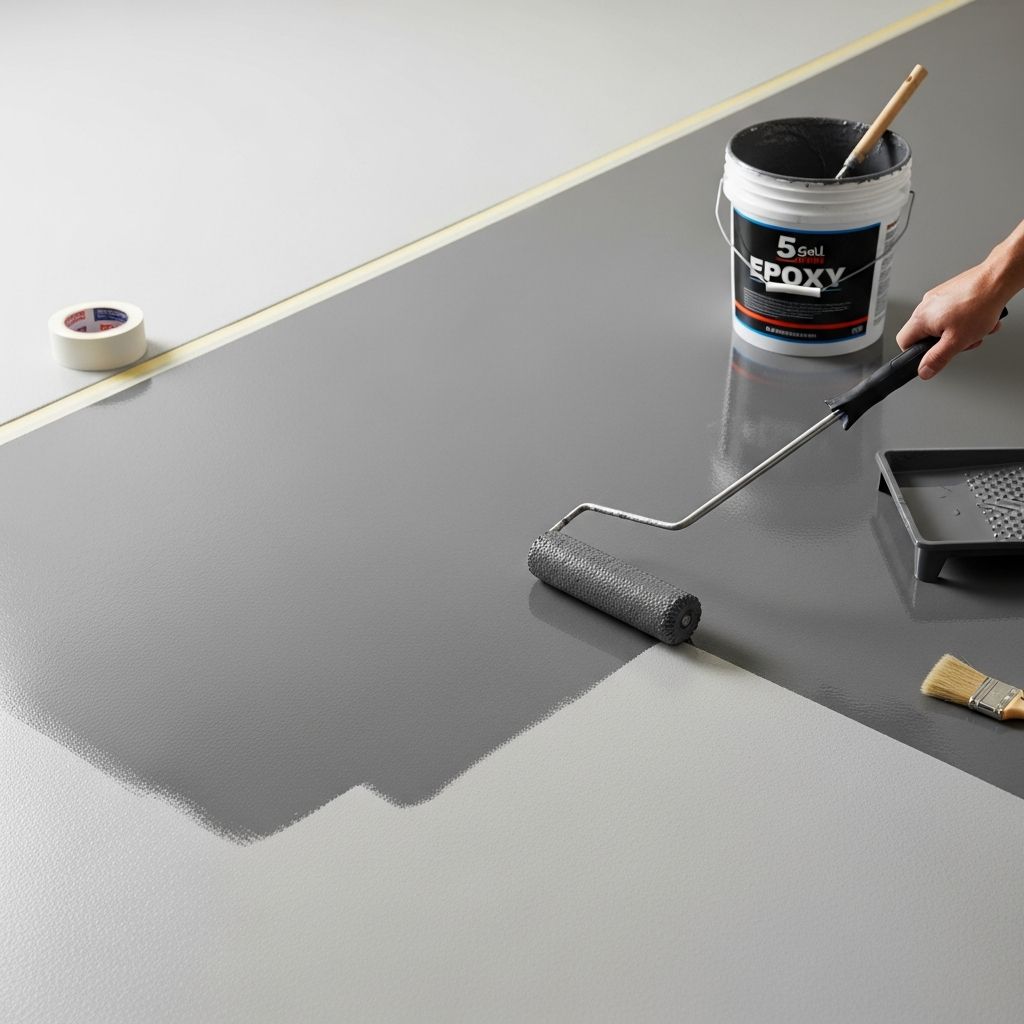
Pour the mixed epoxy onto your garage floor in a ribbon pattern. Begin by cutting in the borders using a paintbrush, applying epoxy around the edges and corners where a roller cannot reach effectively. Ensure complete coverage along walls, door frames, and any fixtures at ground level.
Transition to a 3/8-inch nap roller fitted with an extension handle for efficient coverage of larger floor areas. Working in 10-by-10-foot sections simplifies the process, particularly for first-time applicators. Start at the corner farthest from your garage exit, ensuring you don’t paint yourself into a corner. Apply epoxy in long, overlapping strokes, working toward the exit with each subsequent section.
Maintain a wet edge by keeping the roller rewetted and overlapping previous strokes. This technique prevents visible seams and ensures uniform coverage. Apply the epoxy in one direction initially, then go over each section perpendicularly to achieve consistent finish and thickness. Epoxy feels thicker and stickier than conventional house paint, so adjust your rolling technique accordingly. Allow the first coat to dry for 12 to 24 hours before applying the second coat.
Step 7: Add Decorative Color Flakes (Optional)
For enhanced visual appeal and additional texture, consider adding decorative color flakes to your epoxy floor. While the first coat is still wet, broadcast the color flakes across the surface before the epoxy begins to set. Grab handfuls of color flakes and toss them into the air as if scattering chicken feed, ensuring even distribution across the floor. Alternatively, scatter flakes by shaking them through your fingers as though spreading grass seed.
After the color flakes have settled, allow them to cure into the epoxy for several hours. Any excess flakes that haven’t adhered can be scraped away and vacuumed up once the epoxy has partially cured. This step adds visual interest and can help disguise minor imperfections in the concrete surface.
Step 8: Apply the Second Epoxy Coat
After allowing the first coat to cure for 12 to 24 hours, apply a second coat of epoxy for maximum protection and durability. Mix a fresh batch of epoxy following the same procedures as the first coat. Apply the second coat perpendicular to the first, working in the same 10-by-10-foot sections and following the same technique. This perpendicular application ensures uniform finish and helps eliminate any patterns or directional marks from the first coat.
Most epoxy systems recommend limiting applications to two coats. If your product requires or allows additional coats, mix all containers together before application to ensure consistent color throughout the floor. Maintain proper ventilation during application and allow adequate drying time between coats.
Step 9: Apply the Clear Protective Topcoat
After the second epoxy coat has cured for approximately 24 hours, apply a clear protective topcoat to seal and protect the decorative layer beneath. Using a clean paintbrush, apply the clear coat along all perimeters, corners, edges, and seams. Roll the topcoat across the floor using a 3/8-inch-nap roller, working in 10-by-10-foot sections once again.
Apply the clear coat in one direction, then go over the floor perpendicularly to ensure complete coverage and uniform finish. The clear topcoat provides additional protection against UV fading, chemical exposure, and physical wear. This final layer significantly extends the lifespan of your epoxy floor coating, making it a worthwhile step in the application process.
Drying Times and Usage Guidelines
Proper curing time is essential for achieving maximum durability and performance from your epoxy floor. Light foot traffic is generally safe after 24 hours of drying. However, vehicle parking should be postponed for a minimum of 72 hours to allow complete curing. In humid or cold conditions, extend these drying times accordingly. Full chemical cure typically takes 7 days, though the floor reaches functional hardness much sooner. Avoid parking heavy vehicles or applying excessive weight to the floor until full curing has been achieved.
Maintenance and Care
Your newly epoxied garage floor requires minimal maintenance to preserve its appearance and protective properties. Regular sweeping removes dust and debris before they can scratch or dull the surface. Occasional mopping with a mild detergent and water keeps the floor clean and hygienic. Spills should be cleaned promptly, though the epoxy coating’s chemical resistance makes cleanup remarkably easy. Avoid using harsh chemicals or abrasive cleaners that could damage the topcoat. With proper maintenance, your epoxy garage floor will maintain its appearance and functionality for many years, easily justifying the initial application effort.
Frequently Asked Questions
Q: Can I apply epoxy over an existing garage floor paint?
A: No, epoxy must be applied directly to concrete for proper adhesion. Any existing paint must be completely removed through sanding or grinding before epoxy application begins.
Q: What temperature is best for epoxy application?
A: The ideal temperature range for epoxy application is between 50 and 80 degrees Fahrenheit. Outside this range, curing times extend and application quality may suffer.
Q: How long does an epoxy garage floor last?
A: With proper application and maintenance, epoxy garage floors typically last 10 to 15 years or longer, depending on traffic levels and environmental conditions.
Q: Can I apply epoxy on a newly poured concrete floor?
A: No, concrete must cure for at least 60 days before epoxy application. New concrete contains excessive moisture that prevents proper epoxy adhesion.
Q: Is ventilation necessary during epoxy application?
A: Yes, adequate ventilation is essential during application and curing. Open garage doors and windows or use fans to ensure proper air circulation and minimize fume exposure.
Q: Can I use epoxy in a garage that stays very cold?
A: Epoxy can be used in cold garages, but application must occur when temperatures are 50 degrees or above. Cold temperatures extend drying times and may compromise adhesion quality.
References
- How to Paint a Garage Floor – Epoxy Garage Floor — Benjamin Moore. 2024. https://www.benjaminmoore.com/en-us/interior-exterior-paints-stains/how-to-advice/interiors/painting-garage-floors-with-epoxy
- How to Apply Epoxy Concrete Floor Paint: the Definitive Guide — Drylok. 2024. https://www.drylok.com/learn/blog/how-to-apply-epoxy-concrete-floor-paint
- How to Epoxy a Garage Floor — Xtreme Polishing Systems. 2024. https://xtremepolishingsystems.com/blogs/decorative-concrete-and-epoxy-blog/how-to-epoxy-coat-a-garage-floor
- Garage Floor Epoxy: How to Do it Yourself — Plank and Pillow. 2024. https://plankandpillow.com/how-to-epoxy-coat-a-garage-floor/
- How to Paint a Garage Floor with Epoxy — Home Depot. 2024. https://www.homedepot.ca/en/home/ideas-how-to/decor/how-to-paint-garage-floors.html
- Epoxy Flooring: The Complete Guide — Sherwin-Williams Industrial. 2024. https://industrial.sherwin-williams.com/na/us/en/resin-flooring/resources/systems-chemistry/Epoxy-Flooring.html
Similar Articles



Read full bio of Sneha Tete