How to Paint a Popcorn Ceiling: Step-by-Step Guide
Master popcorn ceiling painting with expert techniques and professional tips for flawless results.
How to Paint a Popcorn Ceiling: A Complete Guide
Popcorn ceilings, also known as textured or acoustic ceilings, have been a common feature in homes for decades. While they can accumulate dust and become dated-looking over time, painting them offers an affordable way to refresh your space and brighten up your home. Painting a popcorn ceiling is a manageable DIY project that doesn’t require extensive experience, but it does demand careful preparation and the right technique to achieve professional-looking results. This comprehensive guide will walk you through everything you need to know about transforming your popcorn ceiling with a fresh coat of paint.
Why Paint a Popcorn Ceiling?
There are several compelling reasons to consider painting your popcorn ceiling. Over time, textured ceilings accumulate dust, cobwebs, and discoloration that can make your room look dingy and neglected. Painting refreshes the appearance of your space while also providing an opportunity to brighten dark rooms by selecting lighter paint colors. Additionally, painting is significantly more cost-effective than removing a popcorn ceiling entirely, making it an attractive option for homeowners on a budget. A fresh coat of paint can dramatically transform the overall aesthetic of any room while protecting the existing texture.
Essential Tools and Materials
Before you begin your popcorn ceiling painting project, gather all necessary tools and materials to ensure a smooth workflow and professional results.
Painting Tools
- High-quality paintbrushes (angled for cutting in)
- Paint roller with thick nap (1 inch or thicker) to reach into texture
- Roller extension pole to reach high ceilings
- Paint tray or roller bucket
- Paint can opener
- Paint stirrer or mixer
Protective Equipment and Supplies
- Drop cloths to protect floors and furniture
- Painter’s tape for clean edges
- Safety goggles to protect eyes from falling particles
- Dust mask or respirator
- Plastic sheeting for covering furniture
- Newspaper for extra protection
Paint Selection
Choose a high-quality ceiling paint specifically formulated for textured surfaces. Matte or flat finish paints work best for ceilings as they hide imperfections and reduce glare. Avoid glossy finishes which highlight surface irregularities. Consider using paint with primer included to reduce the number of coats needed. For popcorn ceilings, quality matters—investing in better paint ensures better coverage and longevity.
Preparation: The Key to Success
Proper preparation is absolutely critical for achieving excellent results when painting a popcorn ceiling. Rushing through this stage will result in paint drips, uneven coverage, and unnecessary cleanup later.
Clear the Room
Remove as much furniture as possible from the room or move everything to the center and cover it thoroughly. This provides you with maximum working space and prevents accidental paint splatters on your belongings.
Protect Floors and Furniture
Cover the entire floor with plastic sheeting or heavy-duty drop cloths, securing edges with painter’s tape. Extend the sheeting at least a foot beyond where you’ll be working to catch any falling texture particles or paint drips. This creates a sealed work area that makes cleanup significantly easier. Consider using multiple layers of protection for added safety.
Mask the Ceiling Edges
Apply painter’s tape along the line where the ceiling meets the wall, running it around the entire perimeter of the room. Use high-quality painter’s tape and press it firmly to create a secure seal. This step is especially important if your walls are a different color from your ceiling, as it prevents paint from bleeding onto the wall surface and eliminates the need for extensive touch-ups later. A good seal along the edge gives you a crisp, professional-looking line.
Cover Light Fixtures and Vents
Remove ceiling light fixtures if possible, or cover them carefully with plastic bags secured with tape. Cover air vents, ceiling fans, and any other fixtures to prevent paint from dripping on them.
Step-by-Step Painting Process
Step 1: Cut In Around the Edges
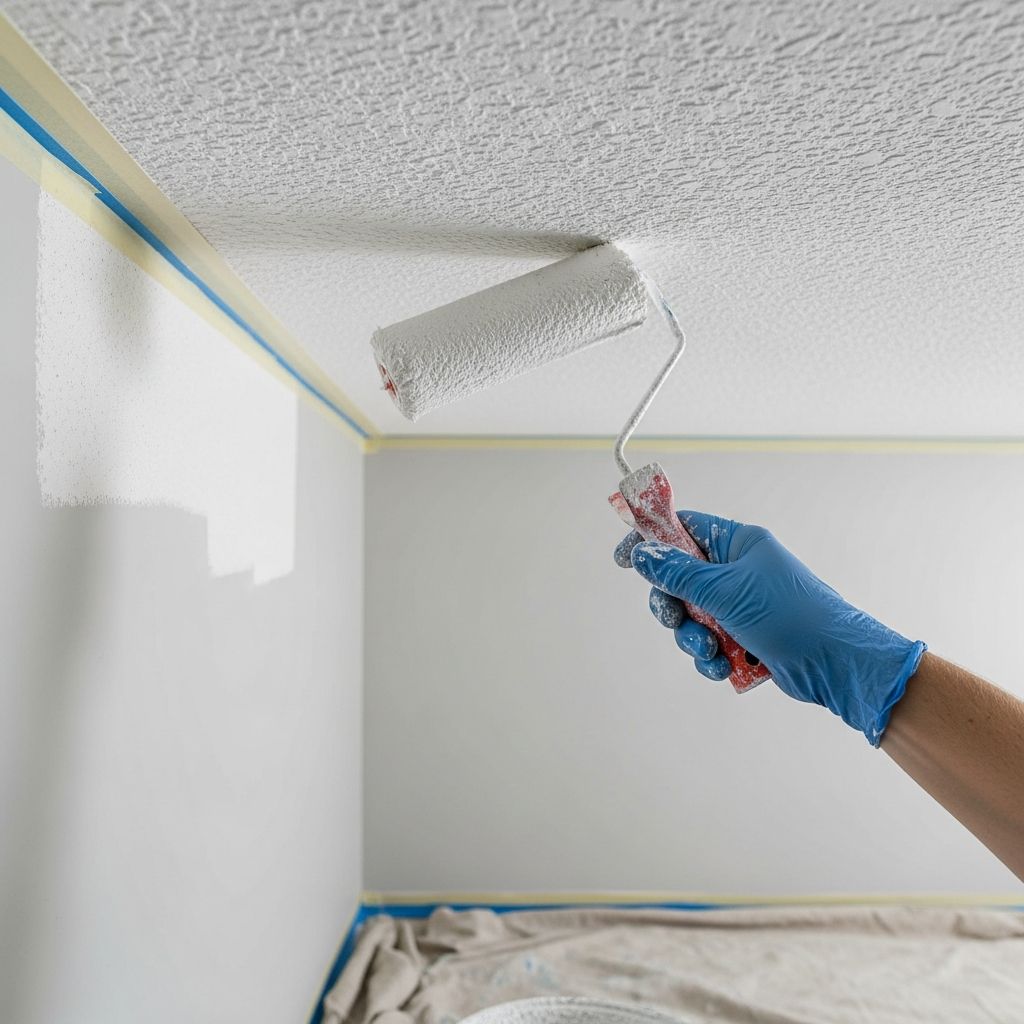
Begin by cutting in around the perimeter of the ceiling with a brush. Pour some paint into a small container for easier handling and use an angled brush to paint a 2–3 inch wide strip along where the ceiling meets the wall. This border creates a pathway for your roller and allows you to carefully paint into corners where a roller cannot reach. Work in small sections, maintaining a wet edge to avoid visible lines or lap marks. Professional painters recommend looking slightly away from your brush line rather than directly at it, which helps you cut straighter lines. A couple inches out from the edge should be sufficient for the roller to easily meet up with the cut-in line.
Step 2: Prepare Your Roller
Before introducing the roller to paint, defuzz it thoroughly. The texture of the popcorn ceiling will grab loose fibers from the roller, resulting in fuzz embedded in your paint and ceiling. Roll the dry roller over a lint roller or along a clean surface multiple times to remove as much loose material as possible. This small step prevents a major problem later.
Step 3: Load Your Roller with Paint
The secret to successful popcorn ceiling painting is using a nice heavy load of paint on your roller. Pour paint into the roller tray and load the roller evenly by rolling it back and forth until it’s fully saturated. A heavily loaded roller ensures the paint penetrates into all the highs and lows of the textured surface, providing complete and even coverage.
Step 4: Paint Using the X and W Pattern
Begin painting in a corner and work in 4-by-4-foot sections. Instead of rolling back and forth in straight lines, which will miss the nooks and crannies of the texture, use an X or W pattern. These crossing patterns force paint into all the peaks and valleys of the popcorn texture, ensuring thorough coverage. After covering a section with the X or W pattern, use long, smooth strokes to even out the paint. Slightly overlap each section to blend the edges smoothly.
Step 5: Remove Tape and Inspect
Once the paint has dried sufficiently, carefully pull down the painter’s tape by peeling it away at a slight angle. This prevents the tape from pulling off any paint. Inspect the edges and corners for any missed spots or areas needing touch-ups. Use your brush to fill in any gaps or thin areas.
Professional Tips for Flawless Results
Choosing the Right Equipment
Invest in a quality thick-napped roller (at least 1 inch nap) specifically designed for textured surfaces. Some professionals recommend using an airless sprayer for the most efficient coverage, as thick-napped rollers can sometimes leave patterns on popcorn ceilings. An airless sprayer distributes paint evenly and reaches into texture crevices effectively. However, for most DIY projects, a quality roller works perfectly well.
Paint Application Technique
Apply paint in overlapping sections and maintain a wet edge at all times to avoid visible lap marks. Work systematically across the ceiling in one direction, completing each 4-by-4-foot section before moving to the next. Never paint haphazardly or attempt to complete the entire ceiling before finishing edges.
Temperature and Humidity Considerations
Paint popcorn ceilings in optimal conditions—ideally between 50–85°F with moderate humidity. Extreme temperatures or high humidity can affect drying time and paint adhesion. Ensure adequate ventilation throughout the project to promote proper drying.
Avoid Common Mistakes
Don’t skimp on cutting in—rushing this step leads to poor coverage and visible roller marks. Avoid using thin-napped rollers, which won’t adequately cover the texture. Never apply paint too thinly; popcorn texture requires adequate paint thickness for complete coverage. Don’t forget to stir your paint thoroughly before beginning, and stir periodically throughout the project to maintain consistent color and texture.
Second Coat Considerations
In most cases, popcorn ceilings require two coats of paint for complete, uniform coverage. After the first coat dries completely, assess coverage. If the original texture still shows through or you notice thin spots, apply a second coat following the same technique. The second coat typically dries faster than the first and provides the final professional appearance.
Cleanup and Maintenance
Allow paint to cure for 24–48 hours before removing all protective coverings and reopening the room to normal use. Clean paint tools and equipment immediately after finishing while paint is still wet. Store remaining paint properly in sealed containers for future touch-ups. Once painted, popcorn ceilings require minimal maintenance—simply dust occasionally with a soft cloth or vacuum with an upholstery brush attachment to maintain appearance.
Frequently Asked Questions
Q: Can I paint over existing paint on a popcorn ceiling?
A: Yes, you can paint over previously painted popcorn ceilings. Simply clean the surface thoroughly, ensure it’s dry, and follow the same painting process. You may need only one coat if the existing paint is in good condition.
Q: How long does it take to paint a popcorn ceiling?
A: Preparation typically takes 1–2 hours depending on room size. Actual painting takes 2–4 hours for an average bedroom, plus drying time between coats. A complete project usually requires a full day or two including drying time.
Q: What paint color works best for popcorn ceilings?
A: White or off-white paint is most popular and provides a clean, bright appearance while hiding imperfections. Lighter colors make rooms feel larger and brighter. You can use bolder colors for dramatic effect, but they may show imperfections more readily.
Q: Is it safe to paint a popcorn ceiling containing asbestos?
A: Homes built before 1978 may contain asbestos in popcorn ceilings. Painting over asbestos is generally considered safe as long as it remains undisturbed. However, have it professionally tested first, and avoid scraping or sanding which could release asbestos fibers. When in doubt, consult a professional.
Q: Do I need primer before painting a popcorn ceiling?
A: It depends on the current condition. If painting over existing paint, you may not need primer. For new or heavily stained ceilings, a primer-paint combination or separate primer followed by paint provides better coverage and stain blocking.
Q: Can I use a regular ceiling paint on a popcorn ceiling?
A: Yes, but ceiling paint works best—it’s formulated to resist sagging and dripping while providing optimal coverage on textured surfaces. Avoid wall paint which isn’t designed for overhead application.
References
- How to Paint a Popcorn Ceiling in 5 Easy Steps — Family Handyman. August 10, 2025. https://www.familyhandyman.com/project/how-to-paint-a-popcorn-ceiling/
- How To Paint a Ceiling — This Old House. https://www.thisoldhouse.com/painting/21014847/how-to-paint-a-ceiling
- 3 Ways To Remove Popcorn Ceiling — This Old House. https://www.thisoldhouse.com/ceilings/21015203/3-ways-to-remove-popcorn-ceiling
- How to paint a ‘popcorn’ ceiling — SFGATE. https://www.sfgate.com/homeandgarden/sweatequity/article/How-to-paint-a-popcorn-ceiling-3189784.php
- Painting techniques for textured surfaces — Fine Homebuilding. https://www.finehomebuilding.com/forum/painting-upto-popcorn-ceiling
Similar Articles








Read full bio of Sneha Tete