How To Remove Moss From Your Roof: 5 Safe, Easy Steps
Complete guide to safely remove moss and prevent it from returning to your roof.
How to Remove Moss From Your Roof
Moss growth on your roof is more than just an aesthetic concern. When moss takes hold on your roofing materials, it traps moisture against the surface, creating an environment conducive to rot, mold, and other structural damage that can compromise your home’s integrity. Over time, this moisture retention can lead to costly repairs and even structural issues if left unaddressed. Understanding the best methods to remove moss safely and effectively is essential for any homeowner looking to maintain their roof’s longevity and protect their investment.
The key to successful moss removal lies in using gentle methods that won’t damage your roofing materials while still achieving thorough cleaning. This comprehensive guide walks you through each step of the process, from preparation through application of cleaning solutions, and includes proven prevention strategies to keep moss from returning.
Understanding the Problem: How Moss Damages Your Roof
Moss thrives in damp, shaded environments, and your roof can provide the perfect conditions for growth. When moss establishes itself on your shingles or tiles, it acts like a moisture-trapping blanket, preventing water from evaporating naturally. This constant moisture exposure accelerates the deterioration of roofing materials, breaks down protective granules on asphalt shingles, and creates conditions where rot and mold can flourish. Beyond structural concerns, heavy moss growth can add significant weight to your roof, potentially straining the underlying structure.
The problem becomes increasingly severe in areas with overhanging trees, shaded roofs, and climates with high humidity or frequent rainfall. Left unchecked, moss can spread rapidly across your roof, making removal more difficult and increasing the risk of damage.
The Best Approach: Gentle Methods First
The most effective approach to moss removal combines low-pressure water rinsing with targeted cleaning solutions. However, it’s important to recognize that not every homeowner needs to complete every step outlined below. The key principle is to start with gentler methods and progress to more intensive treatments only if necessary. This approach minimizes the risk of damaging your roofing materials while still achieving excellent results.
Step-by-Step Guide to Removing Moss From Your Roof
Step 1: Prepare for Roof Cleaning
Before you begin any roof cleaning, proper preparation is essential for both safety and environmental protection. Start by draping plastic sheeting over any trees, bushes, or landscaping near your home’s foundation, particularly if you plan to use a bleach-based solution. This protective barrier prevents cleaning solutions from damaging your vegetation as they run off the roof.
Next, focus on safety. Set up your ladder on level, stable ground and ensure it’s properly positioned before climbing. If your ladder doesn’t have roof hooks or attachment points, have another adult hold the ladder firmly while you climb. Never attempt roof work alone, and always prioritize safety over speed. Wear slip-resistant footwear and consider using a safety harness if you’re working on a steep roof.
Step 2: Spray the Roof With Water
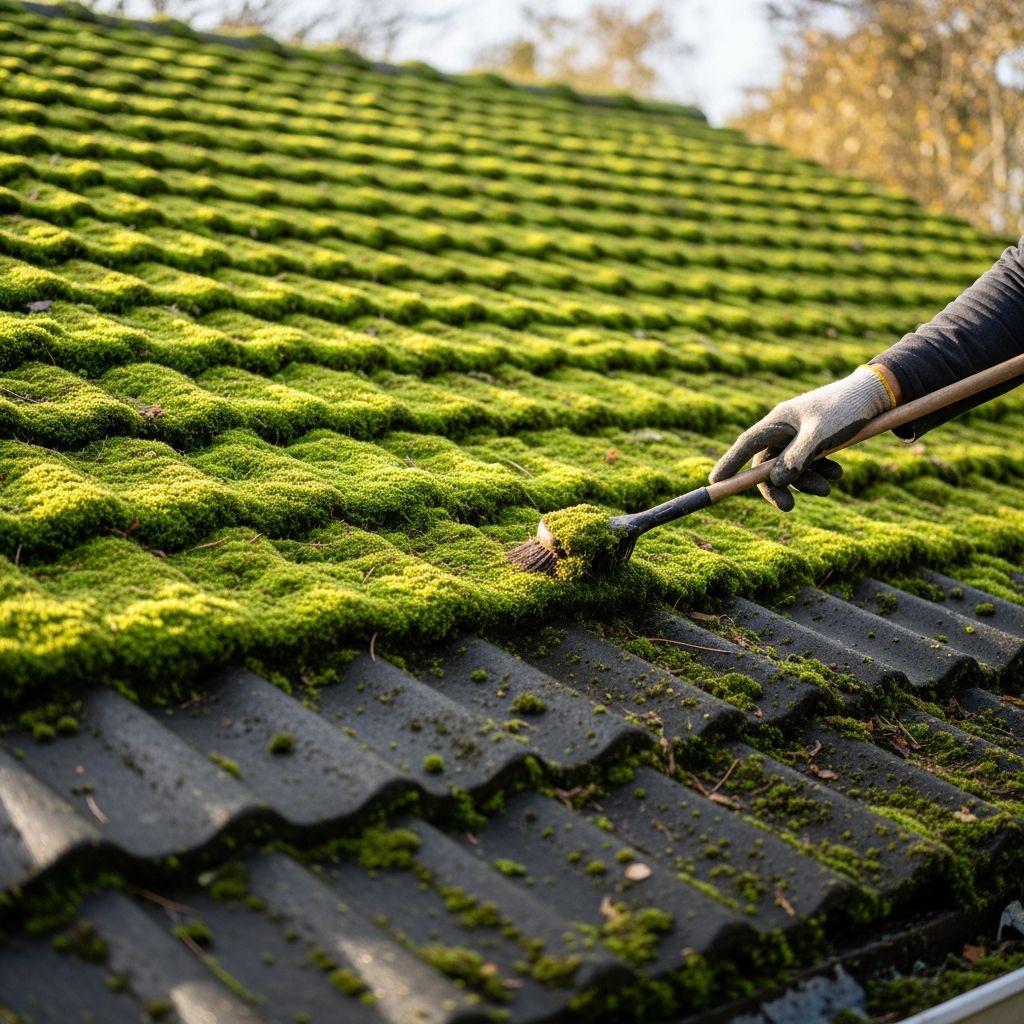
Begin the actual moss removal by gently brushing loose moss away with a soft-bristled broom. Alternatively, you can use a garden hose with a gentle spray nozzle to rinse away loose moss. The critical principle here is to always work from the roof’s peak downward, following the direction of the shingle or tile grain.
Why is direction important? Working upward, against the grain of your roofing materials, can damage the roof and actually force moss deeper into cracks and crevices, worsening the problem. Additionally, working downward uses gravity to your advantage, making the process more efficient.
Important Warning About Pressure Washers: Never use a pressure washer on your roof. Pressure washing can cause significant damage, including stripping protective granules from asphalt shingles, displacing tiles, and ultimately weakening your roof’s structural integrity and water-shedding ability. The force of pressurized water can create openings for leaks and accelerate deterioration.
Step 3: Scrub the Roof To Remove Additional Moss
After removing loose moss with water, use a soft-bristled brush or long-handled scrub brush to remove remaining moss. Work in small sections at a time, again proceeding from the roof’s peak downward. Take extra care while walking on the wet roof, as it becomes extremely slippery when wet, significantly increasing the risk of falls.
When scrubbing, use gentle, controlled motions rather than aggressive scrubbing, which can damage roofing materials. The goal is to loosen the moss without harming your shingles or tiles.
Step 4: Apply Cleaning Solution
Once the bulk of the moss has been removed mechanically, applying a targeted cleaning solution helps eliminate remaining moss and prevents regrowth. You have several options for moss-removal solutions, each with different advantages.
Commercial Products
Premixed liquid cleansers such as Wet & Forget typically come ready to use in pump sprayers. These commercial products are formulated specifically for roof moss removal and often include additional benefits like prevention compounds. Some commercial options focus on eco-friendly formulations that minimize environmental impact while still effectively eliminating moss.
DIY Moss Removal Solutions
Many homeowners prefer mixing their own cleaning solutions using common household items. The most effective DIY approach uses a basic bleach solution. Mix 1 to 3 cups of bleach with 2 gallons of water in a pump sprayer or garden sprayer. Some recipes also include a small amount of dish soap, though soap alone is unlikely to effectively kill moss.
For environmentally conscious homeowners, oxygen bleach offers an effective alternative that breaks down into harmless compounds. Vinegar mixed with water can also work, though it’s typically less powerful than bleach-based solutions. Before applying any solution, spray plants and grass around your home’s foundation with water. This helps protect them from bleach runoff that will wash off your roof during the application process.
Step 5: Rinse the Roof With Water (If Necessary)
The rinsing requirement depends on your cleaning solution type. Powder solutions typically don’t require rinsing to be effective, while liquid solutions need thorough rinsing after they’ve had time to work. Allow the solution to sit for several days to take full effect, then rinse by spraying downward gently from your roof’s peak downward.
Don’t be discouraged if some moss lingers after the initial treatment. Part of completing the moss removal job sometimes involves manually removing dead moss that remains after the cleaning solution has done its work. You may need to use your brush again to remove stubborn remnants.
Prevention: Installing Preventative Measures
Installing Zinc Strips
One of the most effective long-term prevention methods is installing a zinc strip near the ridge of your roof. This preventative solution works through a simple but effective process: when rain falls on the roof, water picks up particulates from the zinc strip and distributes them across the roof surface as it runs down. These zinc particles create an environment where moss cannot easily establish or grow.
To install a zinc strip, simply lift the top row of shingles and secure the metal strip underneath with roofing nails, allowing roughly half the strip to remain exposed and half to be tucked under the shingles. Complete this step after removing large moss pieces but before applying your cleaning solution. Copper strips serve as an effective alternative if zinc isn’t available at your local hardware store.
Pruning Overhanging Tree Limbs
Moss grows most readily in areas where moisture becomes trapped and sunlight is blocked. Overhanging tree branches compound the problem by creating shade that prevents the roof from drying properly and by dropping damp leaves onto shingles. Prune back any tree limbs that extend over your roof to increase sunlight exposure and reduce leaf debris accumulation.
Regular maintenance of gutters also plays an important role in prevention. Clean gutters promote proper water drainage, preventing standing water that creates ideal moss-growing conditions. Removing leaves, branches, and other debris from your roof helps reduce moisture retention and prevents the buildup of organic material that supports moss growth.
Frequently Asked Questions About Roof Moss Removal
Q: What is the best way to remove moss from a roof?
A: The best approach combines rinsing with low-pressure water and applying targeted moss-removal solutions. Starting with gentle methods and progressing to stronger treatments as needed minimizes roof damage while effectively eliminating moss.
Q: Is it OK to scrape moss off a roof?
A: Yes, you can carefully scrape moss off your roof if you use appropriate tools and materials that won’t damage the roofing surface. Soft-bristled brushes work better than scraping tools for most roofing materials.
Q: Can I use a pressure washer to remove roof moss?
A: No. Pressure washing is not recommended and will almost certainly damage your roof. It strips protective granules from asphalt shingles, displaces tiles, and weakens the roof’s overall integrity.
Q: How long does moss removal solution take to work?
A: Most liquid moss-removal solutions require several days to fully take effect. Allow the solution to sit for the time recommended on the product label before rinsing.
Q: Will moss return after removal?
A: Moss can return if conditions remain favorable. Installing preventative measures like zinc strips, maintaining proper drainage, and pruning overhanging branches significantly reduce the likelihood of regrowth.
Q: How much does professional moss removal cost?
A: DIY moss removal typically costs around $100 in materials and takes 2-3 hours. Professional services vary by location and roof size but generally range from $300 to $800 depending on moss coverage and roof complexity.
Safety Considerations and Best Practices
Always prioritize safety when working on your roof. Wear slip-resistant shoes and consider using a safety harness on steep roofs. Never work alone, and avoid working during wet or rainy conditions when your roof is slippery. Never lean back on your ladder while reaching for high spots; instead, reposition the ladder.
Be aware that wet roofs present significant fall hazards. If you’re uncomfortable working at heights or have a particularly steep roof, consider hiring professional roof cleaners who have proper equipment and insurance.
Conclusion
Removing moss from your roof doesn’t require harsh chemicals or risky procedures when you follow the proper gentle methods outlined in this guide. By starting with low-pressure water and soft-bristled brushes, progressing to targeted cleaning solutions only as needed, and implementing preventative measures like zinc strips and branch pruning, you can keep your roof moss-free and in excellent condition for years to come. Regular maintenance and prompt attention to early moss growth will help protect your roof’s integrity and extend its lifespan significantly.
References
- How To Remove Moss From a Roof — This Old House. 2025. https://www.thisoldhouse.com/roofing/how-to-remove-moss-from-roof
- How to Clean and Prevent a Mossy Roof — This Old House. 2025. https://www.thisoldhouse.com/roofing/21123053/how-to-clean-and-prevent-a-mossy-roof
- How to Clean and Prevent a Mossy Roof | Ask This Old House — This Old House. YouTube. https://www.youtube.com/watch?v=f_jbaGCR6oo
Similar Articles








Read full bio of medha deb