How to Remove Paint from Clothes: Complete Guide
Master the art of paint stain removal with our comprehensive cleaning guide for all paint types.
How to Remove Paint from Clothes: A Complete Cleaning Guide
Whether you’re tackling a home improvement project, refreshing furniture, or engaging in creative activities with the kids, paint accidents on clothing are almost inevitable. One moment you’re carefully applying paint to a wall or cabinet, and the next, you’ve brushed against a doorframe or knocked over a paint can, leaving unsightly stains on your favorite shirt or jeans. The good news is that paint stains don’t have to be permanent, especially if you act quickly and use the right removal techniques.
The key to successful paint stain removal is understanding that timing is critical. Fresh paint stains are significantly easier to remove than dried ones, so immediate action can mean the difference between saving a garment and losing it forever. Different types of paint require different removal methods, and knowing which approach to use for your specific situation can help you achieve the best results.
Why Quick Action Matters
One of the most important principles in paint stain removal is acting immediately. When paint is still wet, the pigments haven’t had time to bond permanently with fabric fibers, making removal much easier. As paint dries, it hardens and becomes increasingly difficult to extract from clothing. The longer you wait to treat the stain, the more challenging the removal process becomes, and once paint is completely dried, removal may no longer be possible.
This urgency underscores the importance of keeping paint removal supplies readily available when you’re working with paint. Having basic items like putty knives, dish soap, and appropriate solvents on hand allows you to address accidents immediately rather than spending time searching for supplies while the paint sets into the fabric.
Removing Water-Based Paint Stains
Water-based paints include latex paints commonly used for walls and ceilings, as well as acrylic and craft paints. These types of paint are generally easier to remove than oil-based alternatives because they dissolve in water. If you’ve gotten water-based paint on your clothing, follow these steps for the best results.
Step 1: Remove Excess Paint
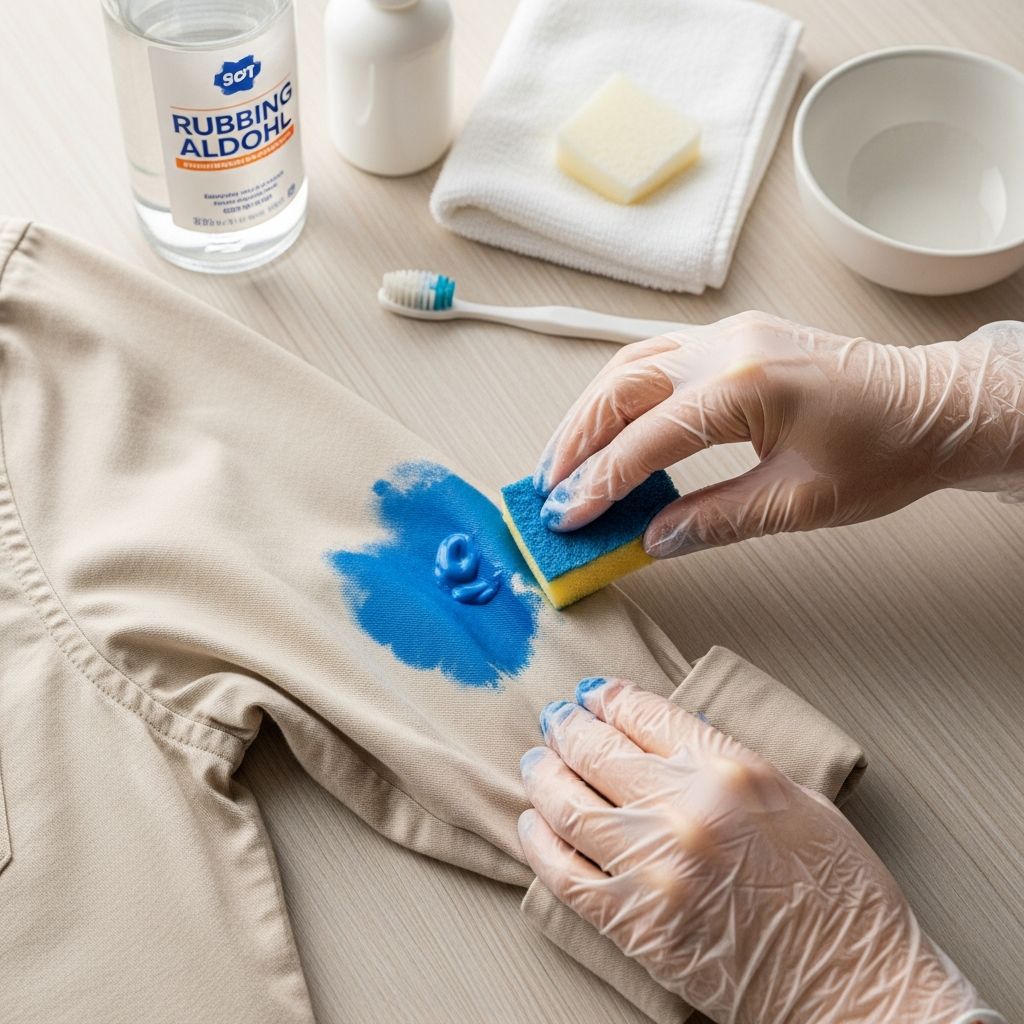
Begin by removing any blobs or clumps of paint from the fabric’s surface. Use a flat-edged tool such as a putty knife, butter knife, or old credit card to gently scrape away excess paint. Be careful not to rub the paint into the fabric, as this can push it deeper into the fibers and make removal more difficult. Work from the center of the stain outward to prevent spreading the paint to clean areas of the garment.
Step 2: Flush with Water
Once you’ve removed the bulk of the paint, rinse the stain from the back side of the garment using warm running water. Working from the reverse side of the fabric helps push the paint out of the fibers rather than deeper into them. Use a utility sink or outdoor faucet if possible, as this process can be messy. Continue flushing the fabric for several minutes; you should notice the paint stain beginning to dissipate as water works through the fibers.
Keep in mind that different fabric weights respond differently to this process. Lightweight garments like t-shirts typically rinse clean relatively quickly, while heavier fabrics such as jeans may require extended rinsing time.
Step 3: Apply Dish Soap
After initial rinsing, apply a few drops of mild dish soap directly to the stain on the front side of the garment. Dawn and similar gentle dishwashing liquids work particularly well for this purpose. Rather than rubbing the soap into the fabric, simply dab it onto the stain, as scrubbing can actually make the stain worse by pushing paint deeper into the fibers. Continue rinsing from the back side while the soap works on breaking down any remaining paint particles.
Step 4: Repeat as Needed
Continue the dabbing and rinsing process until no more paint transfers to your cloth or rinse water. Once you’ve removed all visible paint, rinse the entire garment thoroughly to remove all soap residue. At this point, you can wash the garment separately from other clothing to ensure any remaining paint particles don’t transfer to other items.
Important Drying Considerations
Resist the urge to place the garment in the dryer immediately after washing. Heat from the dryer can set any remaining paint stains permanently into the fabric. Instead, hang the garment to air dry and inspect it carefully. If even a faint shadow of the paint stain remains, you can attempt the removal process again before drying. Only use the dryer once you’re completely confident the stain has been fully removed.
Removing Oil-Based Paint Stains
Oil-based paints present a greater challenge than water-based varieties because they don’t dissolve in water. These paints are typically used on trim work, moldings, and other surfaces requiring extra durability, and they’re considerably tougher to remove from fabric. However, with the right approach, successful removal is still possible.
Step 1: Scrape and Blot
Start by removing excess paint using a flat-edged scraper or knife, being careful not to spread the paint. Then use a clean white rag or paper towel to blot up as much paint as possible from the stain. Avoid rubbing, which can work the paint deeper into the fibers. For garments with multiple layers or thicker fabrics, place a piece of cardboard between the layers while blotting to prevent the paint from transferring to the reverse side of the garment.
Step 2: Apply Paint Thinner
The next step involves using paint thinner, which breaks down oil-based paint. Always use the type of paint thinner recommended on your specific paint can’s label, as different formulations work with different paint varieties. Dab the stain gently with paint thinner using a clean rag or white paper towel, working from the back side of the fabric. Never use paint thinner on acetate fabrics, as the solvent will cause the material to melt and dissolve.
Perform this treatment outdoors or over a dishpan to contain the mess and allow proper ventilation. Paint thinner has strong fumes, so ensure adequate airflow while working. Continue dabbing with fresh paper towels or rags until no more paint transfers to the cloth.
Step 3: Apply Soap and Water
After the paint thinner has removed as much oil-based paint as possible, apply a few drops of dish soap directly to the remaining stain. Gently flush the area with water from the back side of the fabric to remove the thinner and any remaining paint particles, along with the soap residue. This step helps ensure complete removal of both the paint and the potentially irritating paint thinner.
Step 4: Pre-Wash Treatment
If any stain remains after these steps, apply a commercial pre-wash stain treatment according to the product’s instructions. Then launder the garment separately in your washing machine. Separating the garment prevents any residual paint or chemicals from transferring to other clothing items.
Dried Paint Stains: Can They Be Removed?
Dried paint presents a significantly greater challenge than fresh paint, as the pigments have bonded with the fabric fibers. However, removal may still be possible. For dried water-based paint, repeat the soap and water process, possibly multiple times, to gradually break down and rinse away the hardened paint. For oil-based dried paint, you may need to apply paint thinner repeatedly, allowing it to soak slightly between applications to gradually soften and remove the paint.
Unfortunately, complete removal of dried paint stains is not always possible, particularly with older or more set stains. However, attempting removal is always worthwhile, especially if the garment is already compromised and you have nothing to lose by trying.
When Paint Removal Isn’t Possible
Sometimes, despite your best efforts, paint stains simply won’t come out. Before discarding a garment, consider creative alternatives. If a piece is already heavily stained and removal efforts have failed, you might embrace the artistic appearance by intentionally adding more paint splatters to create a custom tie-dye or paint-splattered effect. This trendy look has become popular in fashion, and designer brands charge premium prices for intentionally painted clothing. Transforming an accident into an intentional design statement can give new life to an otherwise ruined garment.
Prevention Tips for Future Projects
While knowing how to remove paint is valuable, preventing stains in the first place is ideal. Always designate specific clothing for painting projects—old items you don’t mind potentially ruining. Keep clothes at a safe distance from active painting areas, and consider wearing protective gear like aprons or painting smocks. Tying back long hair and securing loose clothing can help prevent accidental contact with wet paint.
Essential Supplies for Paint Stain Removal
Keep these items on hand for quick paint stain response:
- Flat-edged scraping tools (putty knife, butter knife, or old credit card)
- Clean white rags and paper towels
- Mild dish soap
- Paint thinner (appropriate type for your paint)
- Access to running water
- Cardboard pieces for layering protection
- Commercial pre-wash stain treatment
Comparison: Water-Based vs. Oil-Based Paint Removal
| Factor | Water-Based Paint | Oil-Based Paint |
|---|---|---|
| Ease of Removal | Easier | More Difficult |
| Primary Solvent | Water and Dish Soap | Paint Thinner |
| Time to Act | Moderate Window | Critical Window |
| Best Method | Flush and Rinse | Scrape, Thinner, Then Soap |
| Success Rate Fresh | Very High | High |
| Success Rate Dried | Moderate | Low |
Frequently Asked Questions
Q: How long do I have to remove fresh paint before it becomes too difficult?
A: The timeframe depends on paint type, temperature, and humidity. Acting within the first few hours is ideal, but water-based paint can sometimes be removed within 24 hours. Oil-based paint becomes increasingly difficult after just a few hours as it hardens.
Q: Can I use hot water for paint stain removal?
A: No, use warm or cool water instead. Hot water can actually set some paint stains and may damage delicate fabrics.
Q: Is it safe to use paint thinner on all fabric types?
A: No, never use paint thinner on acetate fabrics, as the solvent will dissolve the material. Test on an inconspicuous area first with unfamiliar fabrics.
Q: Should I wash the stained garment with other clothes?
A: No, always wash stained garments separately to prevent paint particles from transferring to other items in the load.
Q: What should I do if the stain persists after washing?
A: Air dry the garment and inspect the stain carefully. If it remains, repeat the appropriate removal process for your paint type before using heat, which can set the stain permanently.
Q: Can dried paint ever be completely removed?
A: Removal of dried paint is challenging but sometimes possible through repeated treatment. However, there’s no guarantee of complete removal once paint has fully hardened into the fabric.
References
- How to Remove Paint from Clothes — Country Living. 2024. https://www.countryliving.com/home-maintenance/a34439972/how-to-remove-paint-from-clothes/
- Effective Methods to Remove Acrylic Paint from Clothing Without Damaging Fabric — DHgate Smart. 2024. https://smart.dhgate.com/effective-methods-to-remove-acrylic-paint-from-clothing-without-damaging-fabric/
Similar Articles


Read full bio of Sneha Tete