How to Remove a Tile Floor: A Complete Guide
Learn the step-by-step process to safely remove tile flooring from any room.
Removing an old tile floor is an essential step in many home renovation projects. Whether you’re looking to replace worn-out tiles, update your home’s aesthetic, or repair underlying damage, knowing how to properly remove tile flooring can save you both time and money. This comprehensive guide will walk you through everything you need to know about tile removal, from preparation to cleanup, ensuring your project goes smoothly and safely.
Understanding the Tile Removal Process
Before diving into your tile removal project, it’s important to understand what the process involves. Tile removal typically requires breaking up existing tiles, scraping away adhesive and grout, and potentially addressing any damage to the underlayment or subfloor. The difficulty level depends on several factors, including the size of the area, the type of tile installed, and how securely it was adhered to the surface.
Most homeowners can successfully complete this project with the right tools and a reasonable amount of time. The process is straightforward but physically demanding, requiring patience and attention to detail. Understanding each step will help you avoid costly mistakes and potential damage to your subfloor.
Essential Tools and Materials
Gathering the right equipment before you begin is crucial for both safety and efficiency. Having all necessary tools on hand will prevent interruptions and ensure you can complete the job effectively.
Safety Equipment
Safety should always be your top priority when removing tile. Here are the essential protective items you’ll need:
- Heavy-duty work gloves to protect your hands from sharp tile edges and debris
- Safety glasses or protective eyewear to shield your eyes from flying tile fragments
- Dust mask or respirator to prevent inhalation of fine dust and particles
- Steel-toed boots for foot protection in case of dropped tools or tiles
- Hearing protection if using power tools for extended periods
Primary Removal Tools
The following tools will form the core of your tile removal arsenal:
- Hammer and cold chisel for manual tile breaking and scraping
- Hammer drill with a wide spade bit attachment for faster tile removal
- Long-handled floor scraper for removing adhesive and grout residue
- Pry bar or flat bar for lifting tiles and boards
- Reciprocating saw or circular saw for removing damaged subfloor sections
Additional Materials
Depending on your specific project, you may also need:
- Heavy-duty trash bags for debris disposal
- Tarps or plastic sheeting to protect adjacent areas
- Drywall dust containment systems for managing airborne particles
- Shop vacuum or industrial vacuum for continuous dust management
Step-by-Step Tile Removal Instructions
Step 1: Preparation and Safety Setup
Begin by clearing the work area of furniture and personal items. Close doors to adjacent rooms to prevent dust from spreading throughout your home. Set up your safety equipment station near the work area so you can easily don protective gear. Cover doorways with plastic sheeting or tarps to contain dust. If possible, open windows for ventilation and consider using a fan to direct air flow out of the space rather than into other areas of your home.
Step 2: Breaking Up the Tile
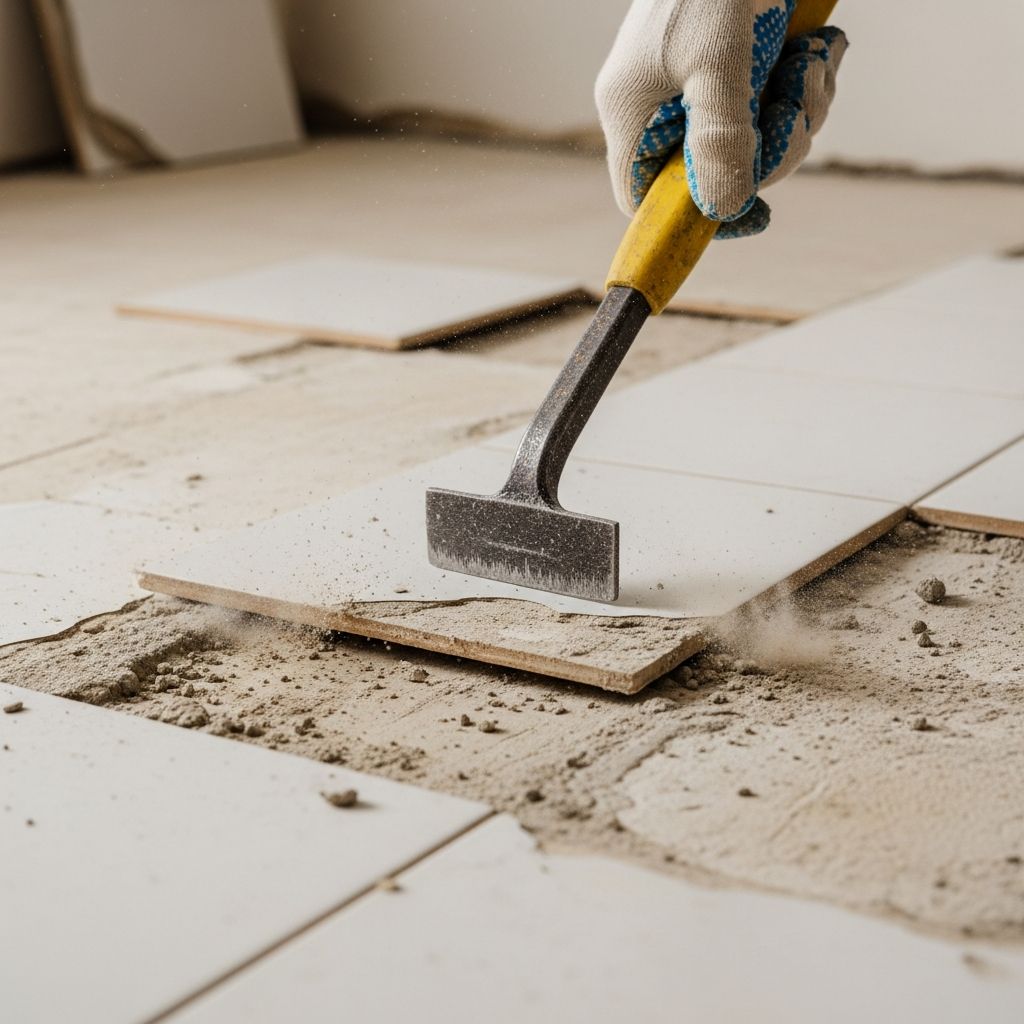
Start the actual removal by focusing on the grout lines first. The grout is typically weaker than the tile itself, making it the ideal starting point. Using a hammer and cold chisel, carefully chip away at the grout lines between tiles. Once you’ve created gaps in the grout, insert your chisel under the edge of a tile and strike it sharply with your hammer to break it up.
For larger projects, a hammer drill with a wide spade bit makes this process significantly faster and less physically demanding. Use the hammer drill’s chiseling function—not the drilling function—to rapidly break up tiles. Work at an angle, starting steep and gradually lowering the angle as you progress to get underneath the tiles effectively. Be prepared for a lot of dust and noise; this is why proper safety equipment is so important.
Step 3: Scraping and Cleaning
After removing the bulk of the tile, you’ll have a surface covered with old mortar, adhesive, and tile fragments. Using a long-handled floor scraper, work systematically across the entire floor to remove all remaining debris. Pay special attention to areas where adhesive is still firmly bonded to the subfloor. Scraping may take considerable time and effort, but thorough removal is essential for proper installation of new flooring.
As you work, collect all debris into heavy-duty trash bags. Use a shop vacuum frequently to manage dust accumulation and maintain visibility of your work area. This not only helps you work more safely but also makes it easier to identify areas you’ve missed.
Step 4: Sanding the Subfloor
Once you’ve removed all visible tile and adhesive, sand the subfloor to create a smooth, even surface. This helps ensure proper adhesion for new flooring and eliminates any rough spots or remaining adhesive residue. Use medium-grit sandpaper to start, then progress to fine-grit for a smoother finish. Vacuum thoroughly after sanding to remove all dust.
Step 5: Inspecting and Repairing the Subfloor
Before installing new flooring, carefully inspect the subfloor for any damage. Look for soft spots, cracks, warping, or water damage. If you find damaged areas, you’ll need to remove and replace those sections. Use a circular saw set to the correct plunge depth to carefully cut around damaged areas, cutting them into small manageable sections. Remove these sections using a pry bar, and replace them with new subfloor material of the same thickness and type.
Handling Damaged Underlayment and Subfloor
Damaged underlayment or subfloor requires special attention. If the subfloor is soft, discolored, or shows signs of water damage, removal and replacement is necessary. Moisture damage can compromise the integrity of new flooring and create conditions favorable for mold growth.
To remove damaged subfloor sections, mark the area clearly with chalk lines. Set your circular saw to cut only through the subfloor without damaging floor joists below. Make your cuts in a grid pattern to create small, manageable sections. Pry up each section carefully using a flat bar, working from the center toward the edges. Remove any remaining fasteners like nails or screws. Measure the removed sections and cut replacement material to match exactly, ensuring it’s the same thickness as the original. Install new subfloor material with appropriate fasteners as recommended by the manufacturer.
Removing Cement Board and Backing Materials
In bathrooms and other wet areas, you may encounter cement board or similar moisture-resistant underlayment beneath your tile. If you need to remove this, the process is similar to tile removal but requires some additional consideration. You can remove the tile first to access fasteners holding the cement board, or remove everything together—it’s primarily a matter of preference and how well you can reach screws and fasteners.
Once you’ve removed the tile layer, use your hammer drill or pry bar to carefully lift the cement board sections. Look for and remove all visible screws before attempting to pry up boards. Cement board may come up in larger pieces than tile, making removal somewhat easier. After removing the cement board, inspect the wooden subfloor beneath and address any damage or moisture issues as described above.
Advanced Tip: Using Wedges for Large Boards
For extensive subfloor removal, a clever technique involves using wooden wedges. Cut 2×4 lumber into 18 to 24-inch lengths and snap chalk lines across them, then rip them lengthwise to create wedge-shaped pieces. Position these wedges under the edges of large subfloor sections and use a long bar or digging bar as leverage to flip boards over. This method is particularly effective for removing multiple large boards efficiently and reduces the physical strain of manual prying.
Cleanup and Debris Management
Tile removal generates substantial amounts of heavy debris. Plan for proper disposal before you begin. Contact your local waste management facility to understand disposal options for construction debris. Many areas require separate handling of materials like concrete and heavy tile debris.
Throughout the removal process, use heavy-duty trash bags and keep work areas organized. Sweep or vacuum frequently to prevent dust from settling on surfaces outside your work zone. Once removal is complete, do a thorough final cleanup, ensuring all tile fragments, nails, staples, and screws are removed from the subfloor. A clean surface is essential for successful installation of new flooring.
Timeline and Difficulty Assessment
Most tile removal projects take anywhere from several hours to a full day or two, depending on the room size and floor condition. A typical bathroom floor (5×8 feet) might take 4-6 hours with manual tools or 2-3 hours with power tools. Larger areas like kitchens or entire floors require proportionally more time.
Difficulty varies based on how securely the original tile was installed. Tiles embedded in thick mortar beds take longer to remove than those set on thin-set adhesive. Previous poor installation can complicate the process by creating uneven surfaces or hidden damage. Despite these variables, most homeowners can successfully complete this project with patience and proper tools.
Common Mistakes to Avoid
Understanding common pitfalls helps ensure project success. Many people underestimate the time required and end up rushed during critical stages. Others skip proper safety equipment and suffer minor injuries. Inadequate dust control can create cleanup challenges and health concerns. Failing to thoroughly inspect the subfloor before new installation often leads to premature failure of new flooring. Finally, incomplete removal of adhesive and debris creates an uneven surface that compromises new flooring installation.
Frequently Asked Questions
Q: How long does it take to remove a tile floor?
A: Timeline depends on room size and tile condition. Small bathrooms typically take 4-6 hours with hand tools or 2-3 hours with power tools. Larger areas require proportionally more time. Plan for a full day to account for breaks and unexpected challenges.
Q: Do I need to remove the tile before the cement board?
A: You can remove tile first to access fasteners, or remove everything together. Removing tile first makes it easier to locate and remove screws holding cement board, but removing everything together is also possible though more difficult.
Q: What’s the best tool for fast tile removal?
A: A hammer drill with a wide spade bit is significantly faster than manual hammer and chisel. You can rent this tool relatively inexpensively if you don’t own one, making it a worthwhile investment for larger projects.
Q: How do I know if my subfloor is damaged?
A: Look for soft spots, discoloration, dark staining, warping, or a spongy feeling when walking on exposed subfloor. These signs indicate water damage or rot that requires replacement before new flooring installation.
Q: Can I install new tile directly over old tile?
A: It’s not recommended. Old tile and adhesive must be completely removed to ensure proper bonding of new tile and a level surface. Installation over old tile often leads to premature failure of new flooring.
Q: What safety precautions are most important?
A: Always wear gloves, safety glasses, and a dust mask. Tile dust contains silica, which is harmful to lungs. Proper ventilation and frequent breaks are essential for your health and safety.
Q: Should I hire a professional or do it myself?
A: If you’re physically capable and have time, DIY removal saves money. However, professionals complete the job faster with specialized equipment. For large areas or if you’re unsure about subfloor condition, professional assessment may be worthwhile.
References
- How to Remove Ceramic Tile — The Home Depot. 2021-07-28. https://www.homedepot.com/c/ah/how-to-remove-ceramic-tile/9ba683603be9fa5395fab90f10f7c3f
- OSHA Guidelines for Silica Dust Exposure — Occupational Safety and Health Administration (OSHA). U.S. Department of Labor. https://www.osha.gov/dsg/silica/
- National Association of Home Builders: Floor Systems — National Association of Home Builders (NAHB). https://www.nahb.org/
- DIY Tile and Cement Board Removal Techniques — YouTube: The Home Depot Channel. 2021. https://www.youtube.com/watch?v=FZUD58shZPE
Similar Articles




Read full bio of Sneha Tete