How to Replace Damaged Shingles: Complete DIY Guide
Master roof shingle replacement with this step-by-step DIY guide for homeowners.
How to Replace Damaged Shingles: A Complete DIY Guide
If you have a shingled roof, you know that high winds and flying debris can damage the shingles, potentially leading to leaks and costly repairs. The good news is that replacing damaged shingles is a straightforward DIY project that most homeowners can tackle with basic tools and a little patience. This comprehensive guide will walk you through the entire process, helping you restore your roof to its original condition and protect your home from water damage.
Understanding Roof Shingle Damage
Before you begin any repair work, it’s essential to identify what constitutes shingle damage. Common issues include missing shingles, cracked or torn shingles, curling edges, bald spots where granules have worn away, and shingles that have been lifted by wind. Regular inspection of your roof, especially after severe weather, can help you catch problems early and prevent more extensive damage.
Damaged shingles compromise the integrity of your roof’s protective layer, allowing water to seep into the underlying structure. This can lead to rot, mold growth, and structural damage if left unaddressed. By replacing damaged shingles promptly, you extend the lifespan of your roof and maintain the weathertightness of your home.
Tools and Materials You’ll Need
Having the right tools and materials before you start makes the job much easier and safer. Here’s what you’ll need:
Essential Tools
- Hammer or roofing hammer
- Pry bar or flat-head screwdriver
- Utility knife
- Roofing nail gun (optional but recommended)
- Measuring tape
- Safety harness and rope
- Ladder (ideally an extension ladder)
- Work gloves and safety glasses
- Caulking gun
Materials Required
- Replacement shingles (matching your existing roof)
- Roofing nails (typically 1-1/4 inches)
- Roofing cement or sealant
- Granule-matched caulk (optional)
Safety Considerations Before Starting
Working on a roof involves inherent risks. Always prioritize safety by wearing a safety harness attached to a sturdy anchor point, using a ladder with proper support, and choosing a clear, dry day for your work. Avoid working on wet or icy roofs, and never attempt repairs during high winds or storms. If your roof is steep or you’re uncomfortable with heights, consider hiring a professional roofer.
Step-by-Step Guide to Replacing Damaged Shingles
Step 1: Remove the Damaged Shingle
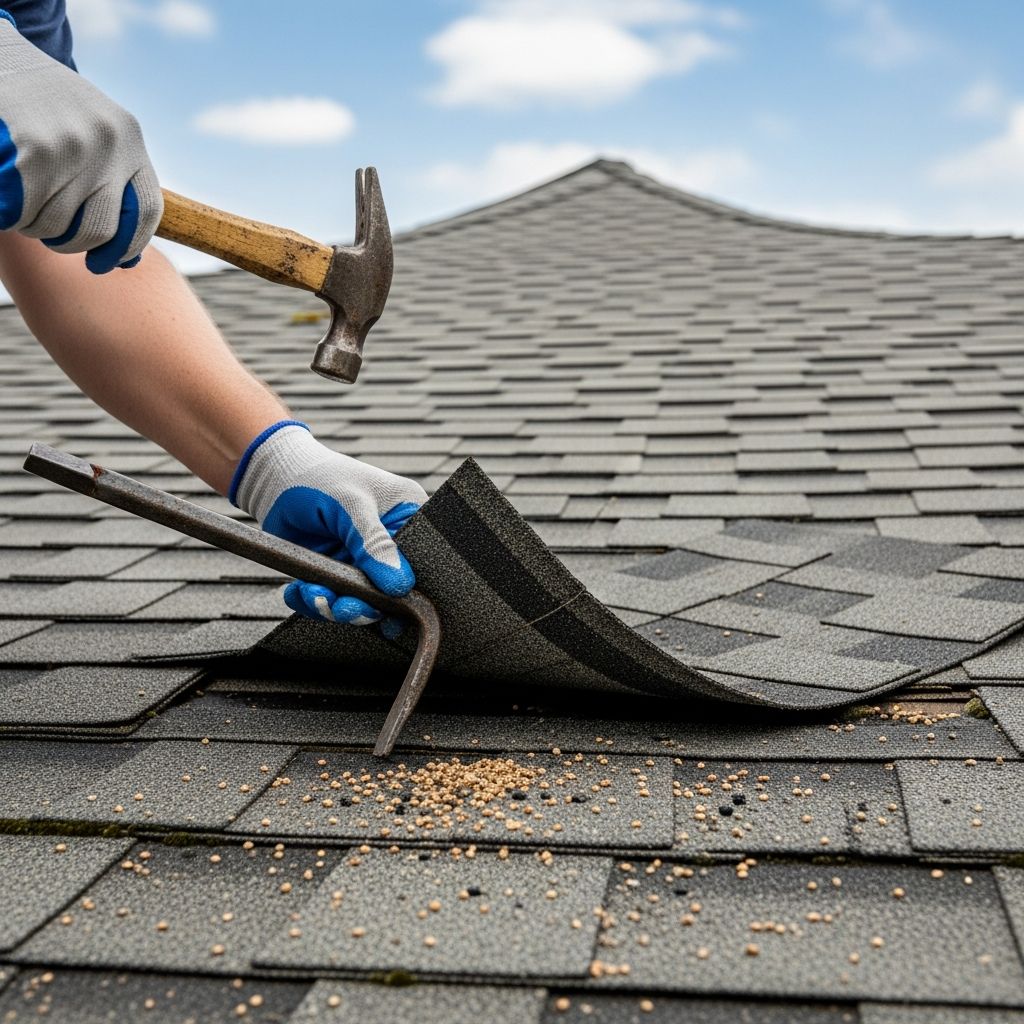
Begin by carefully lifting the shingle directly above the damaged one. You’ll notice that roofing shingles are held down with nails at the top edge and roofing cement along the bottom edge. Using a pry bar or flat-head screwdriver, gently remove the nails holding the damaged shingle in place. Work carefully to avoid damaging the surrounding shingles. You may need to heat the sealant slightly with a heat gun to soften it and make removal easier, especially in cold weather.
Once you’ve removed the nails, carefully peel back the shingle and remove any remaining nails or fasteners. Clean up any old roofing cement residue from the roof surface beneath where the shingle was located. This creates a clean surface for the new shingle to adhere properly.
Step 2: Prepare the Replacement Shingle
If your replacement shingles are coming from a bundle stored in the sun, they may be stuck together. Gently separate them and allow them to lie flat for a few minutes. Cold weather can make shingles brittle, so if it’s chilly outside, try warming the shingles slightly to make them more flexible and less prone to cracking.
Position the replacement shingle in the empty space where the damaged shingle was removed. Ensure that it aligns properly with the shingles on either side and that the cutouts (tabs) match the surrounding shingles’ pattern. The shingle should sit in the exact same position as the original.
Step 3: Install the New Shingle
Secure the new shingle with roofing nails placed through the nail slots at the top of the shingle. Use four to six nails, depending on the width of the shingle. The nails should be driven straight into the roof decking, not at an angle, and should be flush with the shingle surface—not overdriven, as this can damage the shingle and compromise the seal.
After nailing the new shingle, you’ll also need to re-nail the shingle above it to ensure it’s properly secured. This step is often overlooked but is crucial for a lasting repair. Drive nails through the top edge of the new shingle into the shingle above it, maintaining the same nail spacing as the original installation.
Step 4: Seal the Repair
Apply roofing cement to the underside of the shingle tab and press it firmly against the shingle below it. This reseals the bond that was originally applied during manufacturing. Additionally, apply a small dab of roofing cement under each of the four nail heads where you fastened the new shingle. This creates a watertight seal and prevents water from seeping around the nail penetrations.
For the shingle above the replacement, lift its tab and apply roofing cement underneath to ensure it bonds securely to the new shingle. This final sealing step is critical for preventing leaks and ensuring the longevity of your repair.
Replacing Multiple Damaged Shingles
If storm damage has affected multiple shingles across your roof, the process is essentially the same, but you’ll repeat these steps for each damaged shingle. Work systematically across the affected area, moving from top to bottom. This approach prevents you from accidentally stepping on newly installed shingles and maintains a logical workflow. It’s often more efficient to complete all nail removal first, then install all new shingles, and finally seal everything.
Common Mistakes to Avoid
Understanding what not to do is just as important as knowing the correct procedure. Avoid overdriving nails, which can create holes in the shingle that lead to leaks. Don’t use too little roofing cement, which compromises the waterproof seal. Avoid installing shingles in extremely cold weather when they’re brittle, and don’t forget to seal the nail heads. Additionally, never skip the step of re-nailing the shingle above your replacement—it’s essential for a proper repair.
When to Call a Professional Roofer
While replacing individual shingles is a manageable DIY project, certain situations warrant professional attention. If your roof damage is extensive, affecting more than a few shingles, if your roof is steeply pitched or you’re uncomfortable working at heights, or if your shingles are significantly older or difficult to match, consider hiring a professional roofer. Professionals have specialized equipment, insurance, and expertise to handle complex repairs safely and efficiently.
Maintenance Tips to Prevent Future Damage
After completing your repair, adopt a maintenance routine to minimize future shingle damage. Inspect your roof twice yearly—spring and fall—looking for signs of deterioration. Keep your gutters clean to ensure proper water drainage. Trim tree branches that hang over your roof, as they can damage shingles during storms. Monitor weather reports and inspect your roof after severe weather events. Additionally, ensure proper attic ventilation, as temperature fluctuations can accelerate shingle degradation.
Understanding Shingle Types and Compatibility
Different roofs use different shingle types, including asphalt composite, architectural, designer, and wood shingles. When replacing damaged shingles, ensure you purchase the exact same type and color to maintain a uniform appearance. Some older roofs may have discontinued shingle styles, making replacements more challenging. If this is the case, you may need to contact the shingle manufacturer or roofing supply company to find a compatible match. Mixing different shingle types or colors can create an unsightly patchwork appearance and potentially compromise the roof’s integrity.
Seasonal Considerations
The time of year affects how you approach shingle replacement. During hot summer months, shingles are more pliable and easier to work with, but you must work quickly to avoid roof hazards during peak heat. In cold weather, shingles become brittle and inflexible, increasing the risk of cracking. Spring and fall typically offer ideal conditions—moderate temperatures and lower humidity. Avoid working during rainy seasons or when ice is present on the roof, as these conditions create slip hazards and prevent proper sealing.
Frequently Asked Questions
Q: How long does it take to replace damaged shingles?
A: Replacing a single shingle typically takes 15-30 minutes. Multiple shingles may take several hours depending on the number and accessibility of damaged areas. Professional roofers work faster due to experience and specialized equipment.
Q: Can I replace shingles in winter?
A: It’s challenging but possible. Cold temperatures make shingles brittle and more prone to cracking. Consider warming them with a heat gun or waiting for a warmer day if the damage isn’t urgent.
Q: What’s the difference between roof cement and roof caulk?
A: Roof cement is thicker and better for sealing nail heads and shingle tabs. Roof caulk is more flexible and is used for filling gaps and seams. Both are waterproof, but they serve slightly different purposes in roof repairs.
Q: How do I match my roof shingles if they’re old?
A: Take a photo or sample of your roof to a roofing supply store. If your shingles are discontinued, ask about compatible alternatives that match the color and profile as closely as possible.
Q: Is it necessary to replace a single damaged shingle, or should I replace multiple?
A: Only damaged shingles need replacement. However, if multiple shingles are damaged near each other, replacing the group at once ensures a more uniform appearance and reduces the likelihood of missing some damaged areas.
Q: What type of nails should I use for roof shingles?
A: Use galvanized or stainless steel roofing nails, typically 1-1/4 inches long for standard asphalt shingles. These resist corrosion and provide secure fastening. Never use undersized nails or nails made from materials prone to rusting.
Comparing Repair vs. Replacement
| Aspect | Shingle Repair | Full Roof Replacement |
|---|---|---|
| Cost | $50-$200 per shingle | $5,000-$25,000+ depending on roof size |
| Time | Few hours for DIY | 1-3 days professionally |
| Skill Level | Beginner to intermediate | Professional required |
| When to Choose | Isolated damage, new roof | Widespread damage, old roof nearing end of life |
Conclusion
Replacing damaged roof shingles is an achievable DIY project that can save you money and maintain your home’s protection. By following the steps outlined in this guide—removing the damaged shingle, preparing the replacement, installing it properly with the correct fastening, and sealing the repair—you can successfully complete this common home repair. Remember to prioritize safety, use quality materials that match your existing roof, and don’t hesitate to call a professional if the job seems beyond your comfort level. Regular roof maintenance and prompt repairs ensure your home remains protected from the elements for years to come.
References
- Roof Shingle Installation and Repair Guidelines — National Roofing Contractors Association. 2024. https://www.nrca.net
- Home Roof Maintenance Best Practices — U.S. Department of Energy. 2023. https://www.energy.gov/energysaver/roof-maintenance
- Asphalt Shingle Roofing Safety Standards — Occupational Safety and Health Administration (OSHA). 2024. https://www.osha.gov/roofing
- Roofing Materials and Installation Specifications — American Society for Testing and Materials (ASTM). 2023. https://www.astm.org
- Homeowner’s Guide to Roof Repair — Consumer Reports. 2024. https://www.consumerreports.org
Similar Articles




Read full bio of medha deb