Repotting Houseplants
Master the art of repotting houseplants with our step-by-step guide to ensure thriving indoor greenery year-round.
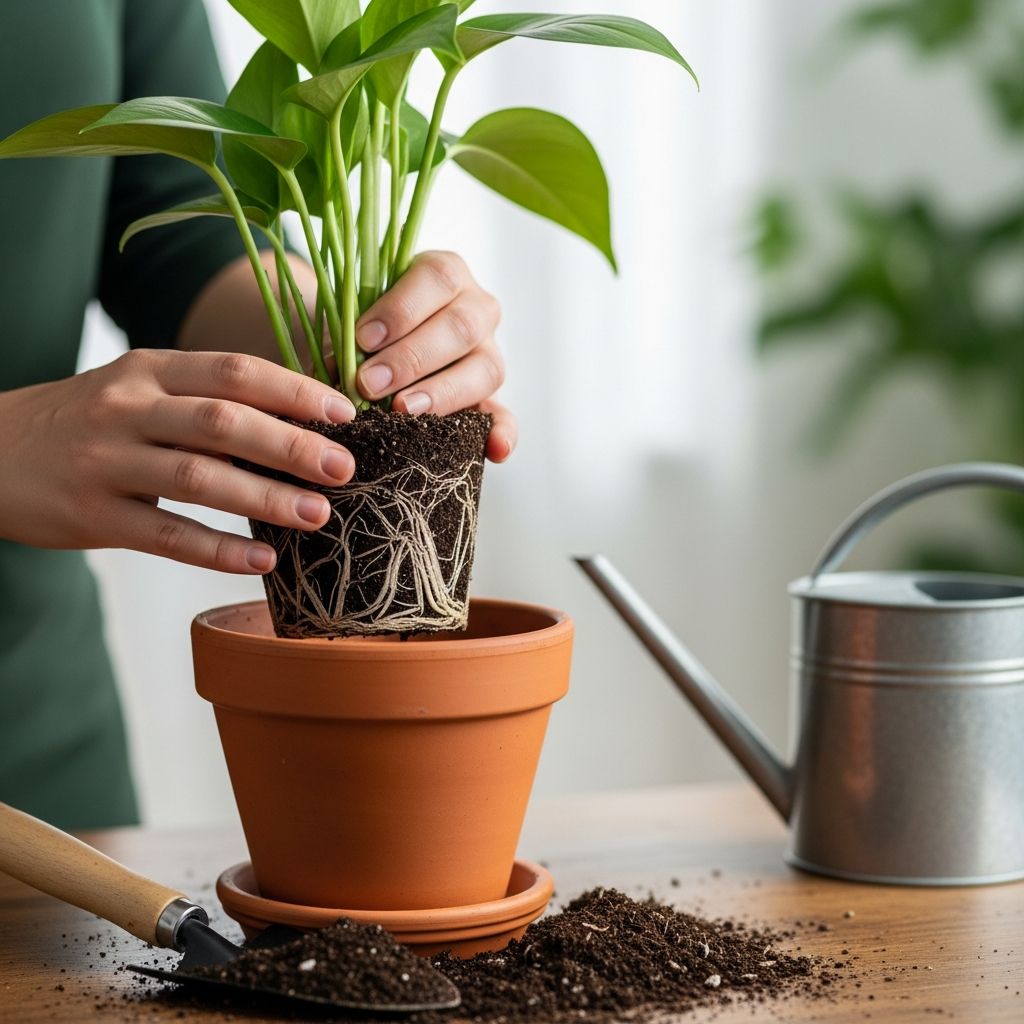
Repotting houseplants rejuvenates their growth by providing fresh soil and more root space, essential for long-term vitality. This process, done correctly, prevents issues like stunted development and root bound conditions, allowing plants to flourish indoors.
Understanding When Your Houseplants Need a New Home
Houseplants signal when they require repotting through visible cues and changes in behavior. Recognizing these early helps maintain plant health without unnecessary disturbance.
- Roots emerging from drainage holes: This indicates the root system has filled the container completely.
- Plant lifting upward: Roots pushing the plant out of the pot suggest overcrowding.
- Increased watering frequency: Soil dries out rapidly because roots have consumed all available space and nutrients.
- Slowed growth or smaller leaves: Limited root space restricts nutrient uptake, leading to reduced vigor.
- Top-heaviness: The plant tips over easily due to a dense root ball unable to support top growth.
- Salt or mineral buildup: White crust on soil surface from fertilizer accumulation calls for fresh mix.
Most houseplants thrive with repotting every 12-24 months, though slow-growers may need it less often. Fast-growers or those in small pots may require attention annually.
Optimal Timing for Repotting Success
Spring emerges as the prime season for repotting, aligning with natural growth cycles when plants actively extend roots into new soil. Late winter also works as light increases, rousing plants from dormancy. Avoid repotting during fall or winter when growth slows, increasing transplant shock risk.
Water plants a day or two before repotting to loosen soil and minimize root damage. This preparation eases removal and supports recovery.
Selecting the Right Container for Your Plant
Choose pots 1-2 inches larger in diameter than the current one to avoid excess soil that retains moisture and invites root rot. Larger jumps hinder growth by drowning roots in unused soil.
Prioritize pots with drainage holes to prevent waterlogging, crucial for most houseplants. For decorative pots without holes, add a layer of gravel or hydroton at the bottom to create drainage space.
| Pot Material | Pros | Cons | Best For |
|---|---|---|---|
| Terra Cotta | Porous, promotes airflow and drying | Dries soil quickly, needs frequent watering | Succulents, cacti |
| Ceramic/Glazed | Stylish, retains moisture moderately | Heavier, can crack if frozen | Tropicals like pothos |
| Plastic | Lightweight, inexpensive, retains moisture | Less breathable, risk of overwatering | Beginners, humid environments |
| Fabric | Excellent aeration, self-pruning roots | Dries fast, may need more water | Root-bound prone plants |
Clean reused pots thoroughly with soap and water to eliminate pathogens.
Choosing the Perfect Potting Mix
Opt for well-draining, peat-free potting mixes tailored to your plant type. General houseplant blends work for most, but amend for specifics: add perlite or sand for drainage-loving species, or more organic matter for moisture-retentive ones.
- Aroid mix: High in bark and chunky perlite for monstera, philodendron.
- Succulent/cactus mix: Sandy, low-nutrient for reduced water retention.
- Standard potting soil: Balanced for ferns, peace lilies.
Avoid garden soil, which compacts and harbors pests. Fresh mix replenishes nutrients depleted over time.
Step-by-Step Repotting Process
Follow these detailed steps for stress-free repotting, ideally over newspaper or outdoors to manage mess.
- Prepare workspace: Gather tools: new pot, soil, trowel, gloves. Water plant if needed.
- Remove plant: Turn pot sideways, tap bottom firmly while holding stems. For stubborn plants, squeeze plastic sides or insert knife around edges.
- Inspect and loosen roots: Gently tease apart circling roots. Trim dead, mushy, or excessively long ones with sterile shears. For root-bound plants, make vertical cuts to encourage outward growth.
- Add base layer: Place 1-2 inches of fresh soil in new pot. Position plant so root ball top aligns with pot rim, leaving 1-inch headspace.
- Fill and firm: Add soil around sides, pressing lightly to eliminate air pockets without compacting. Avoid burying crown.
- Water thoroughly: Soak until water drains out, settling soil. Place in bright, indirect light for recovery.
Aftercare: Helping Plants Thrive Post-Repot
Newly repotted plants need gentle care to rebound. Skip fertilizer for 4-6 weeks to avoid burn on tender roots. Maintain consistent moisture without sogginess, and provide higher humidity if possible.
Monitor for wilting or yellowing, signs of shock. Most recover within weeks, showing new growth as roots establish.
Common Mistakes to Avoid During Repotting
- Repotting too frequently or into oversized pots, leading to rot.
- Ignoring drainage, causing root suffocation.
- Overpacking soil, restricting air and water flow.
- Repotting in wrong season, prolonging stress.
- Using unsterilized tools or pots, spreading disease.
Troubleshooting Post-Repotting Problems
Yellow leaves often indicate overwatering; let top soil dry before next water. Leggy growth means insufficient light—relocate accordingly. Persistent droop signals underwatering or shock; ensure proper drainage and humidity.
Special Considerations for Different Houseplants
- Orchids: Use bark-based mix, repot every 1-2 years post-bloom.
- Succulents: Minimal soil disturbance, dry between waterings.
- Ferns: Moist, humus-rich mix; high humidity post-repot.
- Palms: Loosen fibrous roots carefully.
Frequently Asked Questions (FAQs)
Should I repot a new store-bought plant?
Not immediately unless root-bound. Wait 6-12 months or until signs appear.
Can I repot in winter?
Avoid if possible; spring is best for recovery.
What if my plant wilts after repotting?
Normal shock—provide shade, humidity, consistent moisture. It should perk up in days.
Do I need new soil every repot?
Yes, for nutrient refresh. Top-dressing works for same-size pots.
How do I repot a very large plant?
Enlist help, use potting bench. Slide out carefully, divide if possible.
References
- Complete guide to repotting — Patch Plants. Accessed 2026. https://www.patchplants.com/pages/plant-care/complete-guide-to-repotting/
- Repotting Guide: How to Repot Your Houseplant — Fifth Season Gardening. Accessed 2026. https://fifthseasongardening.com/repotting-guide-how-to-repot-your-houseplant
- How To Pot or Repot Your Houseplants Step By Step — The Sill. Accessed 2026. https://www.thesill.com/blogs/care-miscellaneous/plant-care-repotting
- Repotting Houseplants — Penn State Extension. Accessed 2026. https://extension.psu.edu/repotting-houseplants/
- Repotting Houseplants — University of Arkansas Extension. 2021-04-28. https://www.uaex.uada.edu/counties/white/news/horticulture/20210428RepottingHouseplants.aspx
Similar Articles




Read full bio of Sneha Tete