How to Seal an Asphalt Driveway: Complete DIY Guide
Master the art of driveway sealing with our comprehensive step-by-step guide for homeowners.
How to Seal an Asphalt Driveway: A Complete DIY Guide
Protecting your asphalt driveway is one of the most important maintenance tasks you can perform as a homeowner. Sealing your driveway every two to three years helps prevent water damage, UV deterioration, and extends the life of your asphalt surface by several years. While professional sealcoating services can be expensive, sealing your driveway yourself is a manageable DIY project that can save you hundreds of dollars. This comprehensive guide will walk you through every step of the process, from preparation to final application, ensuring your driveway receives professional-quality results.
Understanding Driveway Sealers and Choosing the Right Product
Before you begin any work, it’s essential to understand the different types of sealers available and select the right one for your needs. Asphalt driveways typically require coal tar or asphalt-based seal-coating, though some contractors prefer rubberized sealers for enhanced flexibility and durability. The type of sealer you choose will affect application methods, drying times, and longevity of the protection.
Coal tar-based sealers are traditional options that provide excellent protection against UV rays and water penetration. Asphalt-based sealers, also called asphalt emulsion sealers, are another popular choice that works well for most driveways. Rubberized sealers offer superior flexibility and tend to last longer, making them worth the extra investment. When selecting your sealer, consider the manufacturer’s warranty period—products range from one-year warranties to ten-year warranties, with longer warranties indicating better quality and durability.
Calculate the square footage of your driveway carefully, as sealer comes in 5-gallon buckets that typically cover up to 400 square feet. If you plan to apply two coats—which is often recommended for optimal protection—purchase enough material to cover twice your driveway’s square footage. Always check the manufacturer’s instructions for specific coverage rates and application recommendations, as these can vary by product.
Preparing Your Driveway: The Foundation for Success
Proper preparation is absolutely critical to achieving a professional finish and ensuring the sealer adheres correctly to your asphalt surface. Many DIY mistakes occur during this phase, so take your time and follow each step carefully. A clean, well-prepared driveway will result in better adhesion, longer-lasting protection, and a more polished appearance.
Cleaning and Clearing Debris
Begin by removing large debris from your driveway. Use a leaf blower to clear leaves, dirt, pollen, seeds, and dust from the entire surface. Pay special attention to corners and edges where debris tends to accumulate. For grass growing over the driveway edges, trim it back with a weed whip or edge trimmer to create clean lines and prevent vegetation from interfering with the sealing process.
Next, clean any vegetation or debris from cracks in the asphalt. Use a stiff brush or wire brush to dislodge stubborn material from fissures. This step is crucial because sealer cannot bond properly to dirty surfaces, and any trapped debris can prevent proper adhesion.
Power Washing Your Driveway
One of the biggest DIY driveway sealing mistakes is not properly cleaning your driveway beforehand. Asphalt sealer will not bond to dirt, requiring thorough cleaning before any sealant application. The best approach is to power wash your driveway, which you can do yourself or rent equipment from a local hardware store.
Apply driveway cleaner using either a power washer with a soap nozzle or a garden hose applicator. Work the cleaner into the surface using a stiff-bristled push broom, scrubbing in circular motions to break up dirt and stains. After scrubbing, rinse thoroughly with your hose or power washer using a 40-degree nozzle to remove all dirt, debris, and soap suds. Ensure your driveway is completely clean before moving to the next step, as any remaining residue will compromise sealer adhesion.
Treating Oil Stains
Oil stains are common on driveways and require special treatment before sealing. After cleaning and drying your driveway, paint over troublesome spots using an oil-spot primer. Apply the primer using a paintbrush or similar tool, making sure your driveway is completely dry beforehand. If stains are particularly stubborn, feel free to apply a second coat of primer. Allow the primer to dry completely before applying the final sealant coat.
Filling Cracks
Inspect your driveway for cracks and fissures. Use a quality crack filler to seal these openings before applying the sealant. Latex or asphalt-grade crack fillers work well and typically dry within 48 hours, though drying time depends on temperature and humidity. Some products dry faster than others, so allow adequate drying time before proceeding with sealing. Properly filled cracks prevent water from penetrating the asphalt and causing further deterioration.
Allowing Adequate Drying Time
After power washing and cleaning, allow your driveway to thoroughly dry for several hours before applying any sealant. Complete drying is essential because moisture will prevent the sealer from bonding properly to the asphalt surface. On sunny days, two to four hours is typically sufficient, but cloudy or humid conditions may require longer drying periods.
Mixing and Preparing Your Sealant
Proper mixing of your sealant is essential for achieving consistent color, texture, and application quality throughout your project. Mixing sealant with just a stir stick is difficult and often results in incomplete mixing. Instead, use a drill with a paddle mixer for professional results.
The Mixing Process
Begin by turning your unopened sealant container upside down the night before you plan to mix it. This positioning allows the heavy pigments and materials to resettle, making mixing significantly easier the next day. When you’re ready to mix, cut a hole in the center of the bucket lid just large enough to insert your drill and paddle. Keeping the lid on helps prevent splashing and messy spills during the mixing process.
Insert your drill equipped with a paddle into the container through the hole. Start mixing with the paddle positioned toward the top of the sealant, then slowly lower it deeper into the container and back up repeatedly. Continue this motion for several minutes until the sealant reaches a uniform consistency with no streaks or unmixed materials visible. Thorough mixing ensures your sealer will perform as intended and provide consistent coverage.
Applying Sealant: Step-by-Step Instructions
With your driveway properly prepared and sealant thoroughly mixed, you’re ready to begin application. A typical 2,000-square-foot driveway will take approximately three hours to seal when working alone. Choose a day with favorable weather conditions and plan for adequate drying time between coats.
Creating Clean Edges
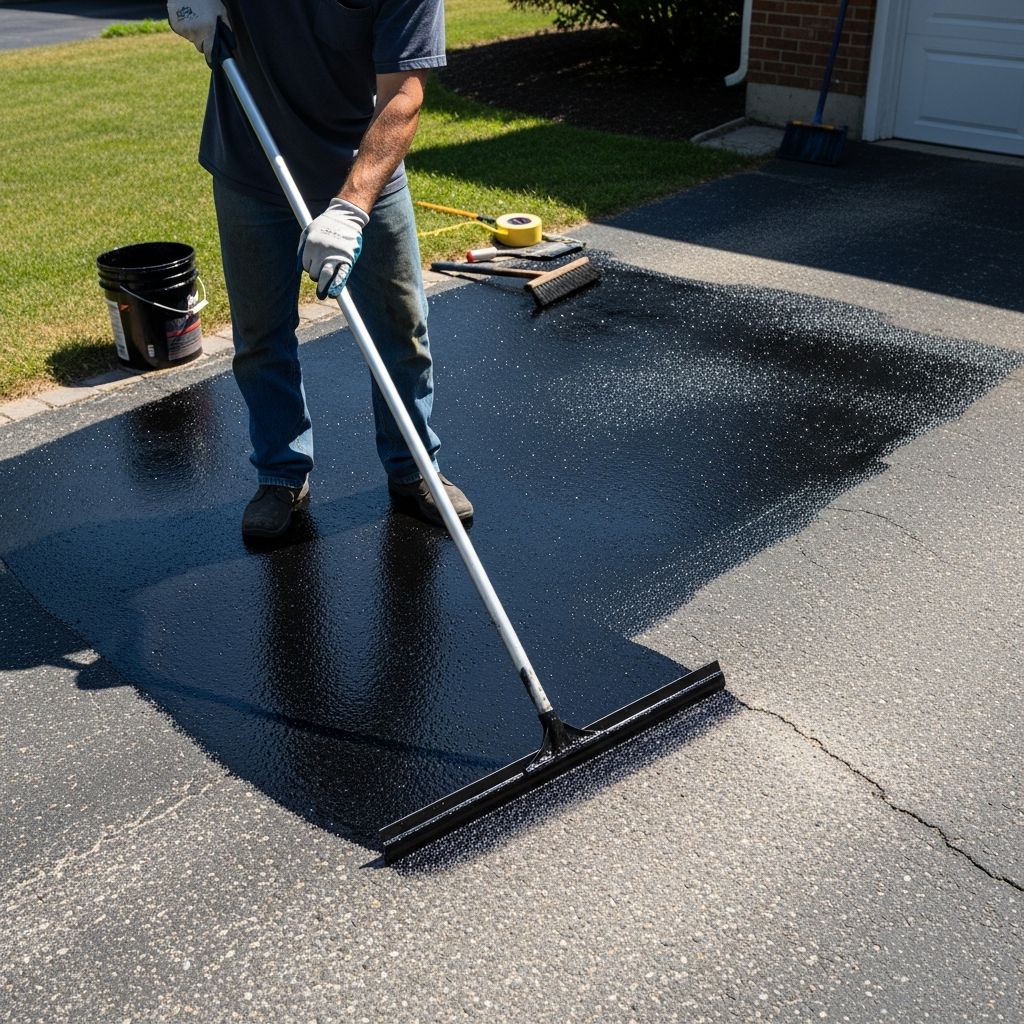
Start by applying sealant along the perimeter of your driveway to create neat, finished edges. Use an old, wide paintbrush or dashing brush to apply a generous layer of sealant along the edges. This framing step ensures your driveway looks professionally finished and prevents sealer from running onto surrounding surfaces. The edges should have enough sealant to sink into the pores without spreading too thin.
Spreading the Sealant Coat
Once you’ve completed the edges, begin applying sealant to the main driveway surface. Pour approximately two gallons of sealant slowly in a U-shape, starting in one of the top corners of the driveway. Use a squeegee or broom to spread the sealant in a thin layer across the driveway, working from top to bottom or from one side to the next in systematic passes.
As you work, push the material forward and pull it back to ensure all crevices and pores are filled. This back-and-forth motion is crucial for proper adhesion and uniform coverage. Work methodically across your driveway, maintaining consistent technique throughout the application.
Managing Multiple Buckets
If your driveway requires more than one bucket of sealant, start mixing your next bucket once you’ve used approximately half of your first bucket. This timing prevents color variations that can occur if batches of sealant are mixed at different times. By keeping fresh sealant continuously mixed, you’ll maintain uniform color and appearance across your entire driveway.
Drying and Second Coats
Allow the first coat of sealant to dry for at least eight hours before assessing whether a second coat is needed. Some driveways may only require one coat, while others benefit from a second application for enhanced protection and appearance. Consult the manufacturer’s instructions to determine the appropriate number of coats for your specific sealer product.
If a second coat is necessary, repeat the entire application process: edge work first, followed by systematic spreading of sealant across the main surface. Drying times for sealant vary by product type. Some sealers cure in as little as four hours, while others require up to 48 hours for complete curing. To be safe and ensure optimal results, avoid driving on your driveway for two full days after sealing.
Weather Considerations and Timing
Successful driveway sealing depends heavily on weather conditions. Temperature and humidity levels directly affect application quality and drying times. Ideally, seal your driveway when temperatures are between 50 and 85 degrees Fahrenheit, with low humidity levels for optimal drying and curing.
Plan your sealing project for a day when no rain is forecast for at least 24 to 48 hours. If rain falls shortly after you apply sealant, water can wash away the fresh sealer and render your work useless. You’ll need to wait for your driveway to dry completely and attempt the application again. Some specialty sealers—such as oil-based or fast-drying products—may cure faster than traditional coal tar or asphalt-based sealers, so always ask about specific timing requirements for your chosen product.
Essential Tools and Materials Checklist
Before beginning your project, gather all necessary tools and materials to ensure a smooth, uninterrupted workflow:
Materials:
– Driveway sealer (appropriate type for your asphalt)- Driveway cleaner- Oil-spot primer (for stained areas)- Crack filler
Tools and Equipment:
– Power washer or garden hose- Stiff-bristled push broom- Squeegee applicator or broom- Old, wide paintbrush or dashing brush- Leaf blower- Drill with paddle mixer- Wire or stiff brush (for debris removal)- Weed whip or edge trimmer- Measuring tape (for calculating square footage)
Frequently Asked Questions About Driveway Sealing
Q: How often should I seal my asphalt driveway?
A: Most experts recommend sealing your asphalt driveway every two to three years to maintain optimal protection and appearance. This schedule may vary based on your climate, weather patterns, and the quality of your sealant product.
Q: Can I seal my driveway if there’s rain in the forecast?
A: No, you should postpone your sealing project if rain is forecast within at least 24 to 48 hours. Rain will wash away fresh sealant and compromise your work, requiring you to start over once the driveway dries.
Q: How long does driveway sealer take to dry?
A: Drying times vary by product type. Some sealers dry in as little as four hours, while others require up to 48 hours for complete curing. Always consult your sealer’s manufacturer instructions for specific timing recommendations.
Q: What’s the best temperature for applying driveway sealer?
A: The ideal temperature range for applying driveway sealer is between 50 and 85 degrees Fahrenheit. Temperatures outside this range can affect application quality and drying times, potentially compromising results.
Q: Do I need two coats of sealant?
A: It depends on your specific sealer product and your driveway’s condition. Some driveways require only one coat, while others benefit from two coats for enhanced protection and appearance. Check your sealer’s manufacturer instructions for guidance.
Q: How much does driveway sealer cost?
A: Driveway sealer typically comes in 5-gallon buckets and costs between $30 and $100+ per bucket, depending on sealer type and quality. Premium products with longer warranties cost more but may provide better long-term value.
Q: Can I apply sealant over existing sealant?
A: Yes, you can reapply sealant over existing coatings, but proper preparation is essential. Clean your driveway thoroughly and allow any previous sealant to fully cure before applying a new coat.
Conclusion
Sealing your asphalt driveway is a worthwhile investment in your home’s maintenance and curb appeal. By following this comprehensive guide and taking time to properly prepare your surface, mix your materials correctly, and apply sealant carefully, you can achieve professional-quality results while saving hundreds of dollars on contractor fees. The key to success is thorough preparation, proper timing, favorable weather conditions, and careful application technique. With these fundamentals in place, your newly sealed driveway will provide years of protection and maintain its attractive appearance for years to come.
References
- How to Seal a Driveway: A Step-by-Step DIY Guide — Angi. 2024. https://www.angi.com/articles/diy-how-seal-driveway-asphalt.htm
- How to Seal Your Asphalt Driveway Yourself (Every-Step) — YouTube. https://www.youtube.com/watch?v=O2CLPB9WxRQ
- Asphalt Seal Your Own Driveway! — YouTube. https://www.youtube.com/watch?v=ESG-Erd_XsY
- DIY DRIVEWAY SEALING — YouTube. https://www.youtube.com/watch?v=9a1PEUX-XnY
Similar Articles



Read full bio of Sneha Tete