Shorten Kitchen Cabinets: DIY Guide With Pro Tips
Master the art of resizing kitchen cabinets with this comprehensive DIY guide for perfect custom fits in any space.
Shorten Kitchen Cabinets: DIY Guide
Adapting standard kitchen cabinets to fit non-standard spaces often requires shortening them, particularly upper units that hang too low or too high. This process demands precision to maintain structural integrity and aesthetics. With the right preparation and tools, homeowners can achieve professional results without replacing entire setups.
Why Modify Cabinet Heights?
Stock cabinets typically measure 42 inches tall, but ceiling heights, appliance placements, or design preferences may necessitate reductions to 30 or 20 inches. Shortening allows customization for open shelving effects, better appliance integration, or compliance with ergonomic standards recommended by the National Kitchen & Bath Association, which suggests 18 inches between countertops and cabinets for optimal reach.
Common scenarios include fitting cabinets over refrigerators, microwaves, or in kitchens with sloped ceilings. Modifying existing units saves costs compared to bespoke cabinetry, which can exceed $500 per linear foot according to U.S. Department of Labor housing data.
Essential Tools and Materials
Gather these items before starting to ensure smooth workflow:
- Circular saw or table saw for primary cuts
- Jigsaw for curved or tight-space adjustments
- Router with pattern bit for finishing edges
- Drill with bits matching hinge and peg sizes (typically 35mm for European hinges)
- Clamps, measuring tape, painter’s tape, and straightedge
- Screwdrivers (Phillips and flathead), utility knife, hammer, chisel
- Sandpaper (120-220 grit), wood filler, paint or stain matching original finish
- Safety gear: goggles, dust mask, gloves
Power tools reduce effort, but manual alternatives like handsaws work for smaller jobs. Invest in quality blades to minimize splintering on veneered surfaces.
Preparation: Safe Removal and Measurement
Disconnect power to nearby outlets and cover floors with drop cloths. Measure desired height from the floor or soffit, accounting for countertop thickness (usually 1.5 inches). Mark cut lines precisely, using painter’s tape to prevent chipping.
Remove cabinet by unscrewing from wall studs—typically 2-4 screws per side. Support the unit with a helper or jack to avoid crashes. Label doors, shelves, and hardware for reassembly. Inspect internal components like cleats and braces.
| Standard Cabinet Height | Common Shortened Heights | Applications |
|---|---|---|
| 42 inches | 30 inches | Over standard appliances |
| 42 inches | 20 inches | Microwave or open shelf |
| 42 inches | 24 inches | Low-profile over sinks |
Disassembly Techniques
Carefully dismantle to access cutting areas. Unscrew or pry apart top headers, sides, and backs. For glued joints, use a utility knife to score lines and tap gently with a mallet. Preserve offcuts as fillers or patterns.
Remove doors by lifting off hinges or releasing clips. Document hinge locations—upper and lower plates require exact repositioning. Extract shelves and drawers, noting peg and pin positions for dowel replication.
Precise Cutting Methods
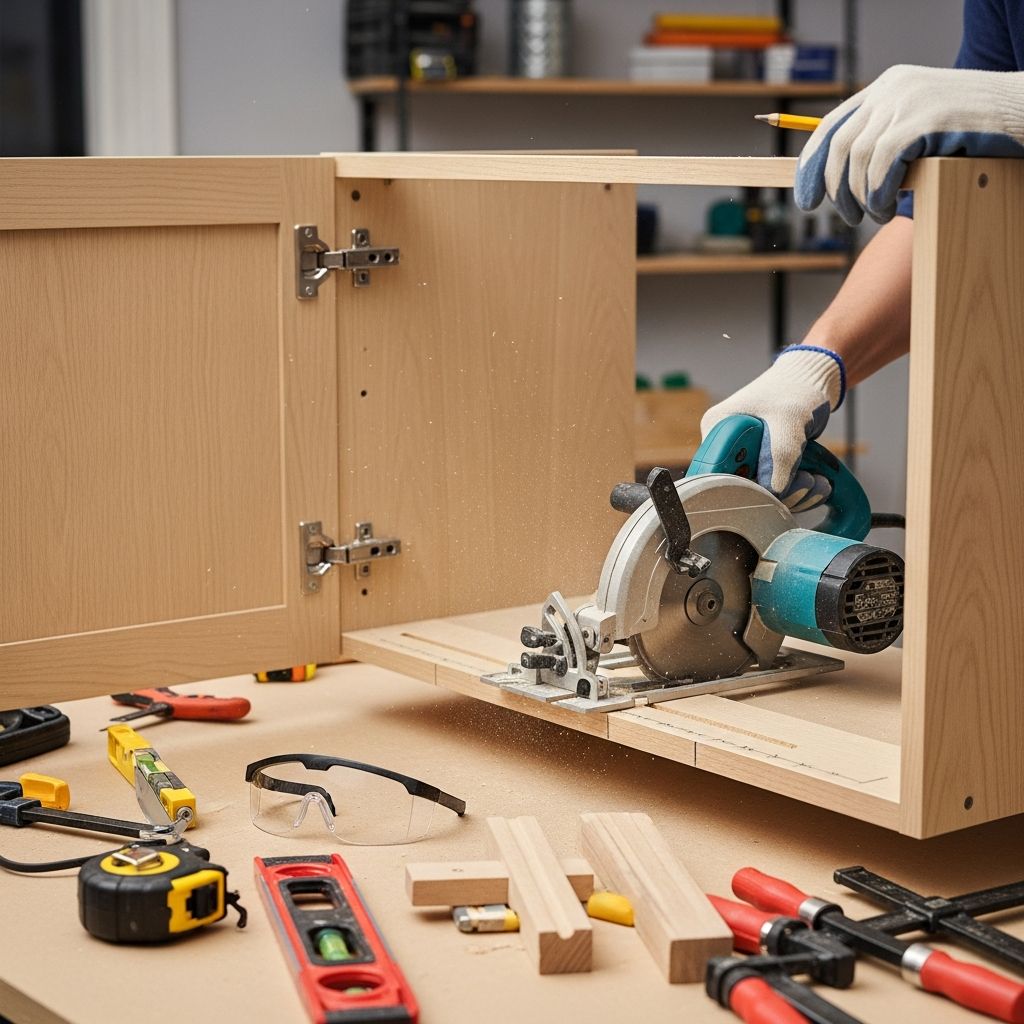
Work on a stable surface like sawhorses. Cut sides first: clamp a straightedge guide 1/16-inch above the line for circular saws, plunging from the finished face to hide tear-out. Flip for back panels if veneered.
For tops and bottoms, use a jigsaw for initial rough cuts, then router with a clamped plywood pattern for straight, clean edges. Test cuts on scraps to check for chipping; reverse direction if needed. Aim for minimal material removal per pass to control accuracy.
Advanced tip: Use a track saw for tracksaw-like precision in tight spaces, as endorsed by fine woodworking standards from the Fine Woodworking Institute.
Rebuilding Stronger Than Before
Reattach tops and bottoms with screws from underside, pre-drilling pilot holes to prevent splitting. Reinforce joints with wood glue and clamps; allow 24 hours drying. Fill screw holes with matching dowels or plugs.
Recreate toe kicks or fillers from offcuts, beveling edges for seamless fits. Reinstall backs with brad nails or glue, ensuring squareness with a framing square.
Hardware Repositioning Mastery
Transfer hinges by tracing outlines or using a cabinet hinge template jig. Drill new 35mm holes to exact depth (set stops on bits). Insert pegs for shelves, tapping firmly.
For adjustable shelves, drill matching shelf pin holes using a portable indexing jig. Lubricate slides and test door swing before final mounting.
Finishing for Flawless Appearance
Sand all edges smooth, feathering into original surfaces. Apply wood filler to gaps, sand flush, then prime and match-paint or stain. Use a tinted polycrylic topcoat for durability.
Buff edges with 220-grit for hand-feel matching. Test-fit doors; shim if clearances vary due to wood movement.
Reinstallation Best Practices
Level cabinets using shims at wall cleats. Secure to studs with 2.5-inch screws, pre-drilling if needed. Scribe fillers for gaps against walls. Caulk joints sparingly.
Reattach doors, adjusting hinges for plumb alignment. Verify drawer slides operate smoothly under load.
Safety Protocols and Common Pitfalls
Always wear PPE; secure workpieces firmly. Avoid over-tightening screws in particleboard. Measure twice—errors compound during reassembly.
Pitfalls: Ignoring grain direction (causes splintering), skipping pilots (splits wood), or neglecting dust extraction (health hazard).
Advanced Modifications
For base cabinets, cut toe kicks similarly but reinforce aprons. Integrate lighting by routing channels during shortening. Combine with crown molding adjustments for cohesive looks.
Frequently Asked Questions (FAQs)
What is the best saw for cutting cabinets?
A circular saw with a guide or table saw yields straightest cuts; jigsaws suit curves but require cleanup.
Can I shorten cabinets in place?
Possible with mini circular saws and guides, but removal prevents damage and ensures precision.
How do I match the finish after cutting?
Sand thoroughly, use color-matched filler, and apply multiple thin finish coats, testing on scraps.
Will shortening void warranties?
Typically yes for stock cabinets; check manufacturer terms beforehand.
What if my cabinets have solid wood?
Cut from rough side, plane edges; solid lumber sands easier than veneer.
Cost Savings Analysis
DIY shortening costs $50-150 in tools/materials versus $300+ for pro labor per cabinet, per HomeAdvisor averages. Long-term value: Custom fit enhances resale by 5-10% per National Association of Realtors kitchen remodel data.
References
- Occupational Safety and Health Standards for Woodworking Machinery — U.S. Department of Labor OSHA. 2023-01-15. https://www.osha.gov/laws-regs/regulations/standardnumber/1910/1910.213
- Kitchen Planning Guidelines — National Kitchen & Bath Association (NKBA). 2024-06-01. https://nkba.org/technical/kitchen-planning-guidelines/
- Woodworking Safety Guidelines — Fine Woodworking Institute. 2022-11-10. https://www.finewoodworking.com/
- Remodeling Impact Report — National Association of Realtors. 2025-03-20. https://www.nar.realtor/research-and-statistics/research-reports/remodeling-impact
- Cabinet Installation Standards — Kitchen Cabinet Manufacturers Association (KCMA). 2024-09-05. https://kcma.org/standards/
Similar Articles


Read full bio of medha deb