Ceiling Fan Size: 5 Simple Rules To Choose The Right Fan
Complete guide to selecting the perfect ceiling fan size for any room.
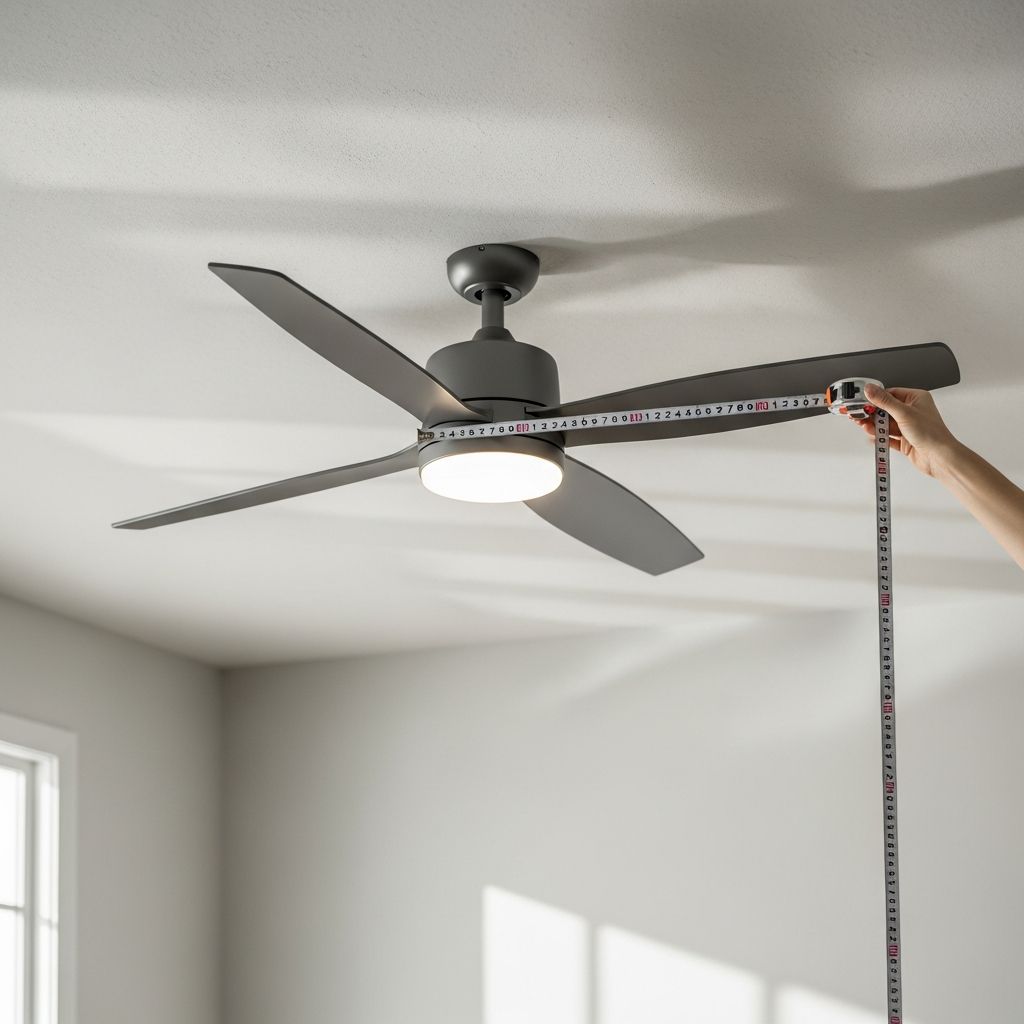
How to Size Up a Ceiling Fan: The Complete Guide
Choosing the right ceiling fan for your home involves more than just picking a style you like. The size of your ceiling fan is critical to its performance, energy efficiency, and overall aesthetic appeal in your space. A fan that’s too small won’t effectively circulate air throughout the room, leaving you uncomfortable and wasting energy. Conversely, an oversized fan can overwhelm a small space, create excessive noise, and consume more electricity than necessary. Understanding how to properly size a ceiling fan ensures you get maximum performance and value from your investment.
Understanding Room Size and Ceiling Fan Dimensions
The foundation of selecting the correct ceiling fan starts with understanding your room’s dimensions. Room size directly impacts which fan blade span you should choose. The blade span, also known as the sweep, refers to the diameter of the circle created by the rotating blades when the fan is in motion. This measurement is one of the most important factors in determining whether a fan will effectively move air throughout your space.
Sizing Guidelines by Room Square Footage
Different room sizes require different fan sizes to ensure adequate air circulation. Here’s a comprehensive breakdown of sizing recommendations:
Small Rooms (Up to 50 Square Feet): For compact spaces like small bedrooms, bathrooms, or home offices, a 30-inch blade span is appropriate. This size provides adequate air circulation without overwhelming the space or creating excessive noise.
Medium Rooms (51 to 100 Square Feet): For typical bedrooms or small living areas, choose a 36-inch blade span. This size represents the most common ceiling fan dimension and works well in standard residential spaces.
Medium-Large Rooms (101 to 200 Square Feet): Larger bedrooms, dining rooms, or average living rooms benefit from a 42-inch blade span. This size moves air more efficiently through the space while maintaining aesthetic balance.
Large Rooms (201 to 400 Square Feet): For spacious living areas, master bedrooms, or open-concept kitchens, opt for a 52-inch blade span. Fans of this size effectively condition larger areas and are popular in modern homes.
Extra-Large Rooms (More than 400 Square Feet): For expansive spaces, great rooms, or commercial areas, select a 54-inch or larger blade span. You may also consider installing multiple fans to ensure comprehensive air circulation throughout the entire space.
Ceiling Height Considerations
Beyond room square footage, ceiling height plays a crucial role in ceiling fan performance and safety. The vertical distance from floor to ceiling affects how effectively the fan circulates air and determines the appropriate mounting hardware you’ll need.
Standard Ceiling Heights
Most homes feature standard 8-foot ceilings. For these typical heights, a standard downrod between 3 to 6 inches in length works perfectly. The downrod is the metal tubing that suspends the fan from the ceiling, and its length ensures the fan blades sit at least 7 feet above the floor, which meets building codes and safety requirements.
Low Ceilings
If your ceiling is lower than 8 feet, installing a flush mount fan is your best option. Flush mount fans sit much closer to the ceiling, reducing or eliminating the need for a downrod. This configuration maintains adequate headroom while still allowing the fan to function efficiently. These fans are specifically designed for spaces with limited vertical clearance and work exceptionally well in basements, bathrooms, or rooms with dropped ceilings.
High or Sloped Ceilings
Rooms with ceilings higher than 8 feet or sloped ceilings require longer downrods to position the fan at the optimal height. Ideally, the fan blades should sit between 8 and 9 feet above the floor to maximize airflow and maintain safety. For pitched ceilings, you’ll need to calculate the roof pitch (the ratio of vertical rise to horizontal run) to determine the appropriate downrod length. This ensures the fan’s blade sweep doesn’t intersect with the sloping ceiling.
Critical Clearance Requirements
Proper clearance around your ceiling fan is essential for both safety and optimal performance. These measurements should be carefully observed during installation to prevent accidents and ensure the fan operates at peak efficiency.
Clearance Specifications
Ceiling to Blade Clearance: Maintain a minimum of 8 to 12 inches between the ceiling and the top of the fan blades. This spacing allows proper air intake and prevents the blades from striking the ceiling surface.
Blade to Floor Clearance: The fan blades must be at least 7 feet (84 inches) above the floor. This clearance protects occupants from accidentally contacting the blades and meets most building codes and safety standards. In rooms with standard 8-foot ceilings, this leaves approximately 10 inches for the fan housing.
Wall Clearance: Position the ceiling fan at least 18 to 24 inches away from walls. This distance prevents airflow obstruction and ensures the fan can move air freely throughout the room without interference from vertical surfaces.
Clearance from Other Fixtures: Maintain approximately 39 inches of clearance between the fan and other ceiling fixtures such as light fixtures, beams, or architectural elements. This spacing prevents collisions and interference with the fan’s operation.
Blade Span Guidelines and Performance
Understanding blade span is fundamental to selecting an appropriately sized ceiling fan. Blade span directly correlates with the fan’s ability to move air and the coverage area it can effectively condition.
Blade span measurements typically range from 30 inches for small rooms up to 84 inches or more for commercial spaces. The relationship between blade span and room size ensures that the fan operates efficiently without being under-powered or oversized for the space. Many homeowners make the mistake of selecting a smaller fan than needed, thinking it will be less intrusive. However, an undersized fan won’t move adequate air volume, defeating the purpose of installation and wasting energy by running continuously without achieving comfort goals.
Room Shape and Layout Considerations
While square footage is the primary sizing metric, room shape also affects ceiling fan selection. Long, narrow spaces may require different considerations than square rooms of identical area.
In rectangular or elongated rooms, a single fan may not effectively circulate air throughout the entire space. In such cases, installing multiple fans ensures comprehensive air movement. This approach also works well for very large rooms or open-concept areas where a single fan cannot adequately reach all zones. Multiple fans can be controlled separately or together, depending on your lighting and ventilation system configuration.
Measuring Your Room for Fan Selection
Accurately measuring your space is the first step in the ceiling fan sizing process. Follow these simple steps to ensure you select the right fan:
Step 1: Calculate Square Footage Measure your room’s length and width using a tape measure. Multiply these two measurements together to determine the total square footage. For example, a room measuring 12 feet by 15 feet equals 180 square feet.
Step 2: Measure Ceiling Height Measure the vertical distance from floor to ceiling at multiple points in the room. Note any variations due to sloped or pitched ceilings. This measurement determines whether you need a standard downrod or a flush mount configuration.
Step 3: Account for Obstacles Identify any obstructions such as beams, skylights, light fixtures, or architectural features that might interfere with fan placement or operation. Consider furniture placement and ensure the fan won’t create safety hazards or impede movement in the space.
Matching Fan Size to Space Function
Different room types may have varying air circulation needs. Living rooms and bedrooms benefit from effective air circulation for comfort. Kitchens and bathrooms may prioritize ventilation. Considering the room’s primary function helps you make the best sizing decision.
Bedrooms: Typically range from 75 to 225 square feet. A 36 to 42-inch fan works well for most bedrooms, providing gentle air circulation for comfortable sleeping.
Living Rooms and Family Rooms: Often exceed 150 square feet. A 42 to 52-inch fan ensures adequate air circulation in these high-traffic gathering spaces.
Master Bedrooms and Owner’s Suites: May be 200 square feet or larger. A 52 to 60-inch fan provides appropriate air movement in these spacious rooms.
Open-Concept Areas: These large, uninterrupted spaces may require multiple fans or extra-large models (60+ inches) to ensure adequate air circulation throughout.
Installation and Performance Optimization
Proper installation is just as important as correct sizing. A well-sized fan installed incorrectly won’t perform optimally. Ensure your electrician or installer follows all manufacturer guidelines and local building codes. The downrod length, mounting bracket type, and clearances all affect how effectively your ceiling fan operates.
Professional installation ensures the fan is securely mounted, properly balanced, and electrically safe. This investment in proper installation protects your home and maximizes the fan’s lifespan and performance.
Frequently Asked Questions (FAQs)
Q: What happens if I choose a ceiling fan that’s too small for my room?
A: An undersized ceiling fan won’t move adequate air volume to effectively circulate air throughout your space. You’ll experience inadequate cooling or heating assistance, poor comfort levels, and wasted energy as the fan runs continuously without achieving its intended purpose. The fan may also appear disproportionately small in the space, creating an unbalanced aesthetic.
Q: Can I install a very large ceiling fan in a small room?
A: While technically possible, oversizing a ceiling fan creates several problems. An oversized fan can create excessive noise, overwhelm the visual space, create safety hazards due to blade proximity to walls, and consume more electricity than necessary. It’s best to match fan size to room dimensions for optimal performance and aesthetics.
Q: What’s the minimum clearance between ceiling fan blades and the ceiling?
A: Maintain a minimum of 8 to 12 inches of clearance between the ceiling and the top of the fan blades. This spacing allows proper air intake and prevents the blades from striking the ceiling. Less clearance can impede airflow and create noise issues.
Q: Do I need a downrod for my ceiling fan?
A: The need for a downrod depends on your ceiling height and the fan’s mounting type. Standard 8-foot ceilings typically use a 3 to 6-inch downrod. Lower ceilings use flush mount fans with minimal or no downrod. Higher ceilings require longer downrods to position the fan at the optimal 8 to 9-foot height above the floor.
Q: What’s the ideal height for ceiling fan blades?
A: Ceiling fan blades should ideally be positioned 7 to 9 feet above the floor. This height ensures adequate clearance for safety, allows proper air circulation, and meets building code requirements. The exact height depends on your room’s dimensions and ceiling configuration.
Q: Should I install multiple ceiling fans in large rooms?
A: Yes, for rooms larger than 400 square feet or long, narrow spaces, multiple fans ensure comprehensive air circulation. Multiple fans can be controlled separately or together, depending on your system setup. This approach ensures all areas of the space receive adequate air circulation.
Q: How far should a ceiling fan be from walls?
A: Position ceiling fans at least 18 to 24 inches away from walls. This clearance prevents airflow obstruction and allows the fan to move air freely throughout the room without being blocked by vertical surfaces.
References
- 5 Best Ceiling Fans (2025) – This Old House — This Old House. 2025. https://www.thisoldhouse.com/fans/best-ceiling-fan
- What Size Ceiling Fan Do I Need for Home? 3 Quick Tips You Need — MacroAir Fans. https://macroairfans.com/blogs/articles/what-size-ceiling-fan-do-i-need
- How to Replace a Ceiling Fan — This Old House. https://www.thisoldhouse.com/
- How-To: Our Ceiling Fan Buying Guide — Schoolhouse. https://schoolhouse.com/blogs/how-to/schoolhouse-ceiling-fan-buying-guide
- How to Choose a CEILING FAN? Size, Motor, Light, etc. — Educational Resources. https://www.thisoldhouse.com/
Similar Articles








Read full bio of medha deb