Soundproof A Basement Ceiling: Step-By-Step Guide
Master basement ceiling soundproofing with expert techniques and materials to reduce noise effectively.
How to Soundproof a Basement Ceiling
A basement serves many purposes in modern homes—a recreation room, home theater, music studio, or workout space. However, one persistent challenge is managing noise that travels through the ceiling from upper floors. Footsteps, vibrations from appliances, and everyday household sounds can significantly impact your basement’s usability and comfort. Soundproofing your basement ceiling is a practical solution that transforms this space into a quiet, peaceful retreat while also minimizing noise transmission to other parts of your home.
Why Basement Ceilings Need Soundproofing
Basement ceilings are particularly vulnerable to noise transmission for several reasons. The structural elements—joists, beams, and support structures—act as excellent conductors for sound waves. Mechanically transmitted sounds, such as footsteps, furniture movement, and vibrations from appliances or HVAC systems, travel directly through these physical structures into your basement. Unlike airborne noise that travels through the air, mechanical sound transmission requires a different approach to effectively control.
The basement’s underground location also means it receives sound from above through the floor joists and ceiling structure. Without proper sound-dampening materials and techniques, these vibrations penetrate easily into the space below, creating an acoustically compromised environment. Understanding this transmission mechanism is essential for implementing effective soundproofing solutions.
Planning Your Basement Ceiling Soundproofing Project
Before purchasing materials or beginning installation, proper planning is crucial for a successful project. Start by conducting a thorough inspection of your basement’s existing infrastructure.
Assessment and Measurement
Examine your basement ceiling carefully, noting the location of HVAC ducts, electrical wiring, plumbing pipes, and any other mechanical systems. These utilities require special consideration during installation, as you’ll need to route materials around them carefully. Document the ceiling height, joist spacing, and overall dimensions of your basement. Measure doorways, windows, and any other architectural features where noise might infiltrate.
Pay particular attention to cracks, gaps, and holes in the subfloor above your basement. These openings allow sound to leak through and should be prioritized for sealing. Take detailed measurements of areas requiring treatment, including the square footage of ceiling space that needs soundproofing.
Establishing Your Goals
Consider what level of noise reduction you need. Are you creating a music practice space, home theater, or simply want to reduce general household noise? Your specific objectives will influence which soundproofing techniques and materials you choose. Budget constraints also play a role—some methods are more cost-effective than others, though most offer good value for the noise reduction achieved.
Core Soundproofing Methods for Basement Ceilings
1. Insulation Installation in Ceiling Joists
Adding insulation to ceiling joists is one of the most fundamental and cost-effective soundproofing techniques. Insulation materials absorb sound energy as it travels through the joists, significantly reducing noise transmission. Fiberglass batts, mineral wool, and spray foam insulation all perform well for this application.
To install insulation in ceiling joists, measure the joist cavity dimensions and cut insulation batts accordingly. Fiberglass batts typically come in standard widths matching common joist spacing (16 or 24 inches). Carefully insert the batts between joists, ensuring they fit snugly without compression, as compressed insulation loses effectiveness. Wear appropriate protective equipment including gloves, a respirator, and eye protection when handling fiberglass materials.
Spray foam insulation offers advantages in hard-to-reach areas and creates an air-tight seal simultaneously. However, it requires specialized equipment and is typically more expensive than traditional batts. The choice depends on your budget, the ceiling complexity, and your comfort level with installation.
2. Resilient Channels Installation
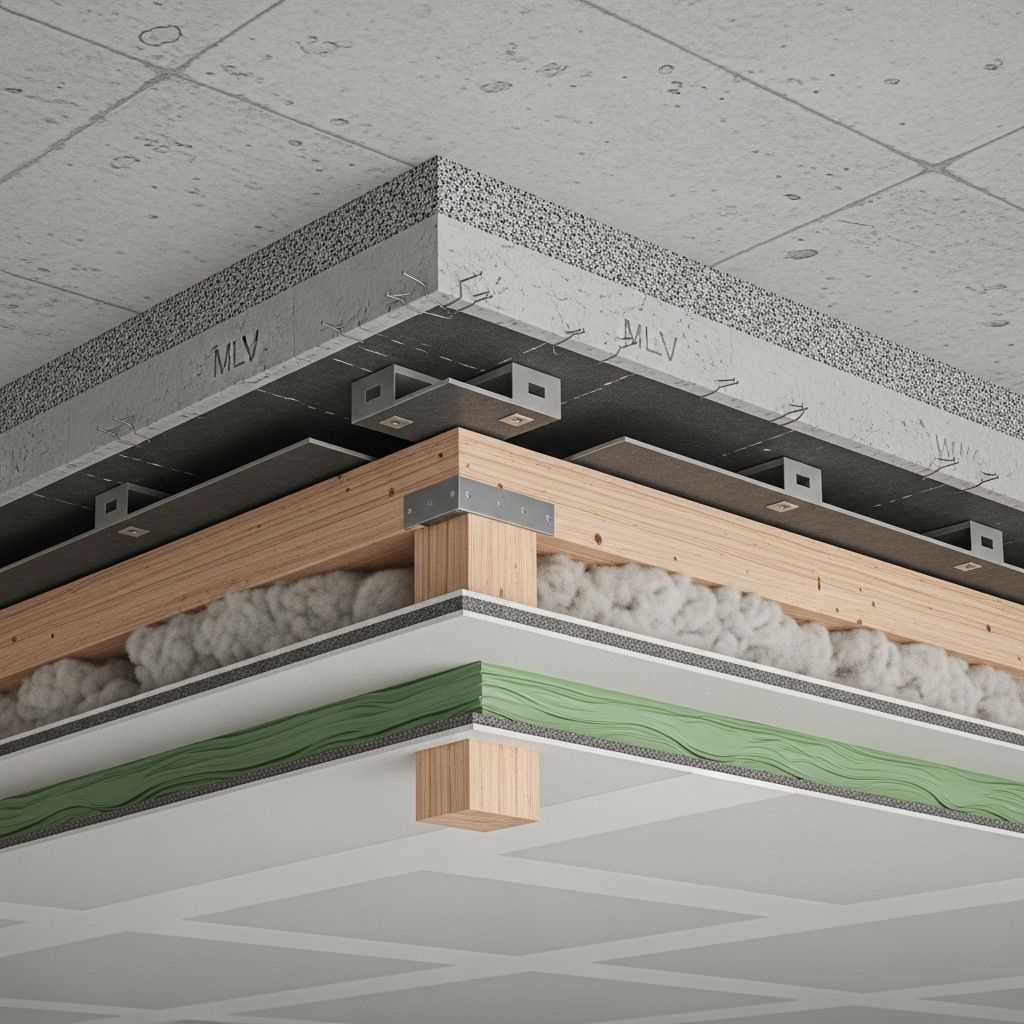
Resilient channels decouple the ceiling structure from sound-transmitting pathways, preventing vibrations from traveling directly through the building frame. These spring-metal channels are screwed perpendicular to ceiling joists, creating a break in the structural connection that significantly reduces mechanical noise transmission.
Installation involves positioning resilient channels perpendicular to joists at 24-inch intervals and securing them with short screws through the flanges into each joist. The channels span the length of the ceiling, creating a suspended framework. Drywall is then attached to the channels using short screws that don’t penetrate back into the joists, maintaining the acoustic isolation the channels provide.
This method is particularly effective for reducing footstep noise and vibration-based sounds. When combined with insulation and additional mass (drywall), resilient channel installation dramatically improves sound isolation performance.
3. Drywall Layers
Adding mass to the ceiling structure substantially improves its sound-blocking capabilities. Drywall is an economical mass material that reflects and absorbs sound. Using two layers of drywall instead of one approximately doubles the sound-blocking effectiveness.
For maximum sound isolation, apply the first drywall layer directly to resilient channels, then add a second layer offset by approximately 16 inches. This staggered approach prevents sound from finding a clear transmission path. Use joint compound, tape, and proper taping techniques to seal all seams, as unsealed gaps significantly reduce performance.
Specialized drywall products like acoustic drywall or damped drywall provide even better performance. These materials have inherent acoustic properties that enhance sound absorption compared to standard drywall.
4. Mass-Loaded Vinyl Barriers
Mass-loaded vinyl (MLV) is a flexible, dense material that adds mass to ceiling assemblies while remaining thin and easy to install. When placed between insulation and drywall, MLV effectively blocks sound transmission.
Installation involves unrolling MLV across the ceiling area, overlapping seams by at least 6 inches, and stapling it to the joist structure. Some products include tape that seals the seams, creating a continuous barrier. MLV works particularly well in retrofit situations where adding traditional framing isn’t practical.
5. Acoustic Panels and Foam
Acoustic panels and foam absorb sound rather than block it, making them effective complementary treatments. Applied directly to the existing ceiling, they trap sound energy and prevent it from bouncing around the basement space.
Fiberglass, melamine foam, and mineral fiber panels all provide good absorption. Typically 2-4 inches thick, these materials absorb mid-to-high frequency sounds effectively. They’re excellent for creating a more pleasant acoustic environment within the basement itself, though they’re best used in combination with blocking methods for comprehensive noise control.
Gap and Crack Sealing
Before installing any primary soundproofing materials, seal all existing gaps and cracks in the subfloor above your basement. These openings allow significant sound leakage and undermine the effectiveness of other treatments. Use acoustic caulk, spray foam, or expanding foam sealant to close these gaps.
Pay special attention to areas around ducts, pipes, and utility penetrations. These gaps often go unnoticed but represent major sound transmission pathways. Sealing them is inexpensive and yields noticeable improvements in sound isolation.
Soundproofing the Basement Ceiling-Wall Interface
The connection between ceiling and walls is a critical area for sound transmission. Flanking—where sound travels around the edges of a soundproof barrier—can undermine ceiling treatments if not addressed. Install acoustic sealant where the ceiling meets walls, ensuring no gaps remain. This creates a continuous acoustic barrier that prevents sound from bypassing the ceiling treatment.
Addressing Doors and Windows
Basement doors and windows are common sound leak sources. Install weatherstripping and door sweeps to seal gaps around doors, reducing sound transmission significantly. For windows, apply acoustic caulk around frames and consider adding acrylic or polycarbonate window inserts that dampen external noise.
Solid-core or acoustic doors perform better than hollow-core doors. If your basement has an exterior entrance, upgrading to a solid door with proper sealing can substantially improve overall noise isolation.
Step-by-Step Installation Guide
Phase 1: Preparation
– Inspect and document all mechanical systems in the ceiling- Seal gaps and cracks in the subfloor above- Gather all materials and tools needed for installation- Ensure adequate ventilation and wear appropriate safety equipment
Phase 2: Insulation Installation
– Install fiberglass or mineral wool batts in joist cavities- Ensure batts fit snugly without excessive compression- Cover the entire ceiling area systematically
Phase 3: Resilient Channel Installation
– Position channels perpendicular to joists at 24-inch intervals- Secure with appropriate fasteners through channel flanges- Maintain consistent spacing and alignment throughout
Phase 4: Barrier Installation
– Install mass-loaded vinyl or acoustic barriers over channels- Overlap seams by at least 6 inches and seal with appropriate tape- Ensure complete coverage with no gaps
Phase 5: Drywall Installation
– Attach first drywall layer to resilient channels using short screws- Apply joint compound and tape all seams- Add second drywall layer offset for maximum effect- Sand, texture, and paint as desired
Phase 6: Final Touches
– Install acoustic panels or foam if desired- Seal ceiling-wall interfaces with acoustic caulk- Address any remaining sound leak sources
Material Selection and Performance Comparison
| Material | Sound Reduction | Cost | Installation Difficulty | Best For |
|---|---|---|---|---|
| Fiberglass Insulation | Moderate | Low | Easy | Absorption, basic soundproofing |
| Resilient Channels | High | Moderate | Moderate | Mechanical noise, decoupling |
| Drywall (single layer) | Moderate | Low | Moderate | Mass, basic blocking |
| Drywall (double layer) | High | Moderate | Moderate | Comprehensive blocking |
| Mass-Loaded Vinyl | High | Moderate | Easy | Retrofit projects, flexibility |
| Acoustic Foam Panels | Moderate | Moderate | Very Easy | Absorption, esthetic appeal |
Common Mistakes to Avoid
Several common errors can significantly reduce soundproofing effectiveness. Compressing insulation reduces its acoustic properties—ensure batts fit snugly but aren’t compressed. Leaving gaps and seams unsealed allows sound to leak through, undermining the entire project. Using only one method rather than combining approaches (insulation, decoupling, mass, and absorption) limits results. Installing acoustic materials over mechanical systems without proper clearance creates safety hazards and reduces effectiveness. Finally, failing to address flanking paths allows sound to travel around barrier edges, bypassing your soundproofing efforts.
Budget-Conscious Alternatives
If comprehensive soundproofing exceeds your budget, prioritize the most effective treatments. Sealing gaps and adding insulation provides significant improvement at low cost. Installing resilient channels and a single drywall layer offers better performance than insulation alone without excessive expense. Acoustic panels and foam represent an inexpensive way to improve the acoustic environment within the basement, even if they don’t block external noise completely.
Professional Installation Considerations
While many homeowners successfully complete basement soundproofing projects, complex situations may warrant professional installation. If your basement has complicated mechanical systems, structural issues, or unique challenges, professionals bring expertise and specialized equipment. They can often complete projects faster and ensure optimal results. Obtain multiple quotes and verify credentials before hiring contractors.
Frequently Asked Questions
Q: How much sound reduction can I expect from basement ceiling soundproofing?
A: Results vary based on methods used and existing conditions. Combining insulation, resilient channels, and double drywall typically reduces noise by 50-70 decibels, making most mechanical noise inaudible in the basement.
Q: Can I soundproof my basement ceiling without removing the existing ceiling?
A: Yes, mass-loaded vinyl and acoustic panels can be installed over existing ceilings. However, this approach provides less sound reduction than proper decoupling and isolation techniques.
Q: Will soundproofing my basement ceiling affect HVAC performance?
A: Proper installation routes materials around ducts and maintains clearances. Work carefully around mechanical systems, and consult HVAC professionals if concerned about airflow impacts.
Q: How long does a basement ceiling soundproofing project typically take?
A: DIY projects typically require 3-7 days depending on basement size and complexity. Professional installation is usually faster, completing in 1-3 days.
Q: Is soundproofing a basement ceiling a good investment?
A: Yes, soundproofing increases basement usability, improves quality of life, and adds value for homes with valuable basements spaces like home theaters or studios.
Q: Can I combine different soundproofing methods?
A: Absolutely. Combining insulation, resilient channels, mass-loaded vinyl, and drywall creates the most effective soundproofing system, with each method addressing different noise transmission pathways.
Q: Do I need a permit for basement soundproofing?
A: Requirements vary by location. Check local building codes and contact your municipality. Some jurisdictions require permits for ceiling modifications, while others do not.
References
- Soundproof Cow — Soundproof Cow. 2024. https://www.soundproofcow.com/soundproof-a-space-restaurant-office/basement-soundproofing/
- Architecture Lab — Architecture Lab. 2024. https://www.architecturelab.net/soundproof-basement-ceiling/
- Acoustic Properties of Building Materials — International Organization for Standardization (ISO). 2023. https://www.iso.org/standard/78876.html
- Sound Transmission Class (STC) Ratings — American Society for Testing and Materials (ASTM). 2023. https://www.astm.org/e90-20.html
- Building Insulation Standards — ASHRAE Standards Committee. 2024. https://www.ashrae.org/technical-resources/standards-and-guidelines
Similar Articles





Read full bio of Sneha Tete