How To Spray Paint Kitchen Cabinets: Complete DIY Guide
Transform your kitchen with professional spray-painted cabinets using our complete DIY guide.
How to Spray Paint Kitchen Cabinets: A Complete DIY Guide
Transforming your kitchen doesn’t always require a complete renovation. One of the most impactful and cost-effective upgrades you can make is refreshing your cabinet finish through spray painting. Whether your cabinets are showing their age, you’re tired of the existing color, or you simply want to modernize your kitchen’s appearance, spray painting offers a professional-looking result that can completely revitalize your space. This comprehensive guide will walk you through every step of the spray painting process, from initial preparation through final finishing touches.
Why Choose Spray Painting Over Traditional Brush Painting?
Spray painting cabinets offers several distinct advantages over traditional brush or roller application methods. The spray method produces a smooth, even finish without visible brushstrokes or lap marks, which is particularly important for cabinet work where a flawless appearance matters. Modern spray equipment, including budget-friendly options, makes this process accessible to DIYers without requiring professional contractor fees. Additionally, spray painting typically covers surfaces faster than hand-painting, reducing the overall project timeline significantly.
Essential Materials and Tools You’ll Need
Before beginning your cabinet spray painting project, gather all necessary materials and equipment. You’ll need a quality paint sprayer suitable for cabinet work, primer designed to block stains, high-quality latex enamel paint or urethane topcoat, appropriate safety equipment including respiratory protection, and various preparation materials. The right tools make the difference between a mediocre and professional-looking result.
Paint and Primer Selection
Choosing the correct primer and paint is crucial for long-lasting results. A stain-blocking primer creates an excellent base, particularly if your cabinets have existing water stains or discoloration. For the topcoat, select a high-quality latex enamel or water-based urethane designed specifically for cabinet applications. These products offer durability, easy cleanup, and low odor compared to oil-based alternatives. Professional-grade products may cost more upfront but deliver superior finish quality and longevity.
Spray Equipment Options
Various spray equipment options exist for cabinet painting, ranging from budget-friendly to professional-grade sprayers. Even inexpensive sprayers can achieve excellent results when properly maintained and calibrated. The key is understanding your specific equipment’s capabilities and adjusting paint viscosity and application techniques accordingly. If using a less powerful sprayer, you may need to thin your primer by approximately 20 percent to achieve proper atomization and a smooth finish.
Preparation: The Foundation for Success
Proper preparation is absolutely essential for achieving professional results. This stage requires patience and attention to detail, as inadequate preparation often leads to disappointing outcomes. The time invested in preparation typically determines the quality of your final finish.
Removing Cabinet Doors and Hardware
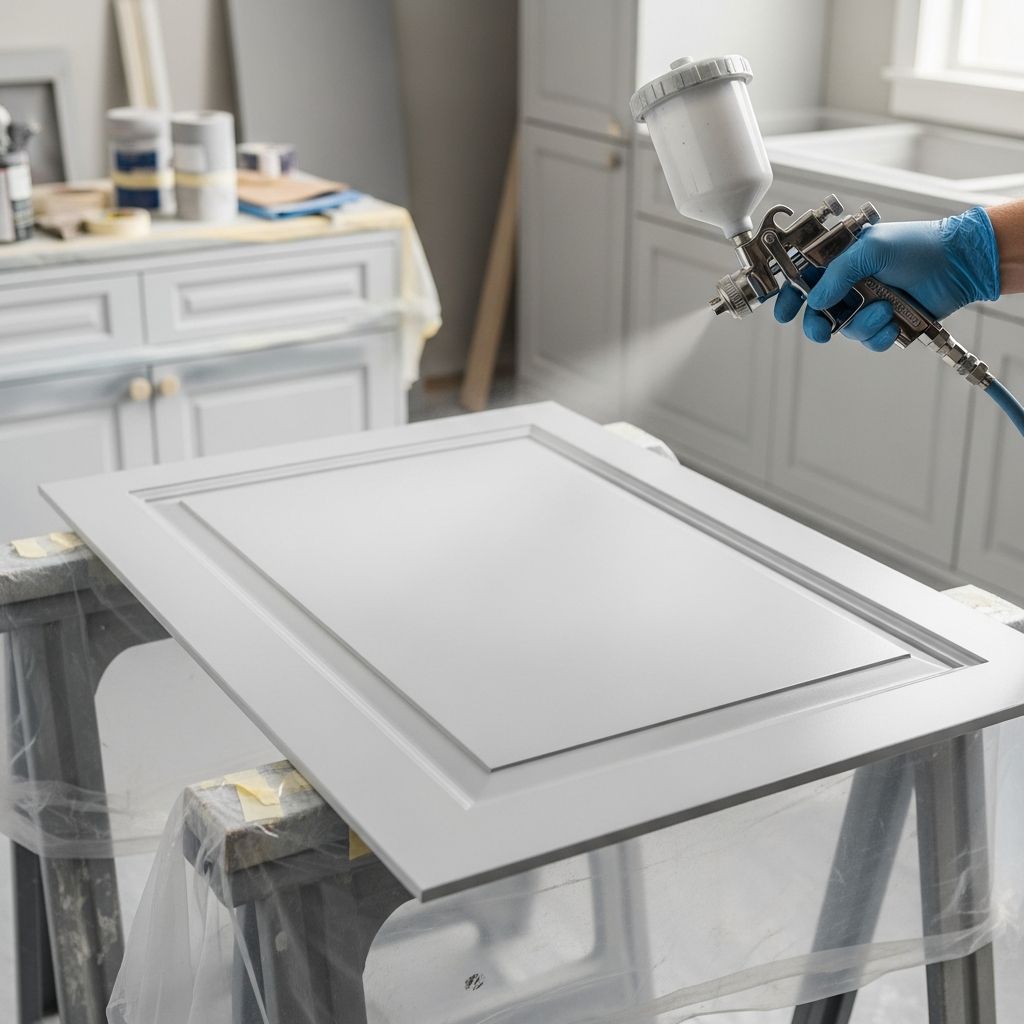
Begin by removing all cabinet doors and hardware. This allows you to spray doors while lying flat, which prevents runs and ensures even coverage. Remove hinges, handles, and any other hardware to prevent paint from accumulating in crevices and awkward spots. Label each door with painter’s tape and numbering to ensure proper reinstallation.
Cleaning Cabinet Surfaces
Thoroughly clean all cabinet surfaces using appropriate degreasing solutions. Kitchen cabinets accumulate grease, cooking residue, and dust over years of use. Any remaining contamination will prevent paint from adhering properly and compromise the final finish. After cleaning, allow surfaces to dry completely before proceeding to the next step.
Sanding and Surface Preparation
Sanding creates a smooth surface and improves paint adhesion. Use appropriate grit sandpaper to remove the glossy finish from existing paint or stain. This step is particularly important for previously painted cabinets. After sanding, vacuum thoroughly to remove all dust particles, then wipe surfaces with a tack cloth to capture remaining fine dust.
Protecting Surrounding Areas
Protect walls, countertops, and flooring with plastic sheeting and painter’s tape. Create effective dust barriers using plastic sheeting suspended from the cabinet tops. When working with spray equipment, overspray can travel farther than expected, so comprehensive protection is essential. Use quality painter’s tape that adheres well and can be removed without damaging surfaces.
Priming Your Cabinets
Priming is a critical step that many DIYers underestimate. A quality primer provides excellent blocking capability, improves topcoat adhesion, and ensures uniform color coverage. The primer stage also makes the topcoat application easier and more forgiving.
Primer Application Technique
When applying primer, use a thick coat to maximize blocking power and coverage. For flat cabinet doors that are horizontal during spraying, you can apply generously without worrying about runs. Aim for approximately 50 percent overlap with each pass to ensure consistent coverage. You can even spray in two different directions to guarantee thorough paint coverage on all surfaces.
Cabinet Box Considerations
When spraying the cabinet boxes (the stationary frame components), be more cautious with coating thickness. The vertical orientation of cabinet boxes makes them susceptible to runs and drips if too much paint is applied in a single coat. If you’re struggling to achieve adequate coverage on boxes, apply one coat of primer, allow it to dry completely, then apply a second coat. There’s no need to sand between primer coats; simply apply another layer before moving on to the topcoat.
Sprayer Settings and Maintenance
Proper sprayer setup ensures optimal paint atomization and application. Turn your air all the way out and start with fluid control set to minimum. Slowly increase fluid flow while observing the spray pattern until you achieve a nice fan with good atomization. If your sprayer spits or splatters paint, the most likely cause is paint that’s too thick or insufficient airflow. Thin your paint further and ensure the air setting is at maximum.
Sanding Between Coats
After the primer has dried completely, lightly sand all surfaces. This step removes any dust particles that settled during drying and smooths the primer surface, allowing the topcoat to adhere properly and flow smoothly. Use fine-grit sandpaper and sand lightly—you’re not trying to remove the primer, just smooth the surface. After sanding, vacuum thoroughly and wipe with a tack cloth before applying the topcoat.
Caulking and Gap Sealing
Before applying the topcoat, address gaps and seams in your cabinet boxes. Professional cabinet finishes include properly caulked gaps, which look more polished than gaps filled with paint. Use a quality caulk gun and paintable caulk to seal gaps between cabinet sections and panels. A dripless caulk gun makes this process cleaner and more precise. Allow caulk to cure according to manufacturer instructions before sanding and painting over these areas.
Applying Your Topcoat
The topcoat application is where your cabinets really begin to shine. This final color layer determines the finished appearance and durability of your project.
Topcoat Material Selection
High-quality latex enamel or water-based urethane works well for most cabinet applications. These materials offer excellent durability, resist yellowing, and provide easy cleanup with water. Some professionals prefer urethane products for their superior hardness and scratch resistance, though they typically require mineral spirits for cleanup. Consider your priorities regarding durability, ease of application, and maintenance when selecting your topcoat.
Spraying Technique for Perfect Results
Apply the topcoat using the same techniques as the primer, but with careful attention to coat thickness. Multiple thin coats typically produce better results than one very thick coat. Allow adequate drying time between coats, and lightly sand between applications for best adhesion and a smooth final surface. The satisfaction of watching your cabinets transform from natural wood or old color to a fresh, vibrant finish is one of the most rewarding aspects of this project.
Final Details and Touches
After your final topcoat has cured appropriately, inspect all surfaces for imperfections. Light sanding of the final coat can be beneficial for achieving an ultra-smooth finish. Once fully cured, carefully reinstall cabinet doors and hardware. Take your time during reinstallation to ensure everything aligns properly and operates smoothly.
Project Timeline and Cost Expectations
The complete cabinet spray painting project typically requires several days from start to finish, accounting for drying and curing times. Actual hands-on working time might be 8-12 hours spread across multiple days. Material costs for an average kitchen remain significantly less than replacement cabinets or professional refinishing services, making this an excellent value home improvement project. If you were to hire a professional contractor, expect to pay substantially more, making the DIY approach particularly attractive for budget-conscious homeowners.
Troubleshooting Common Issues
Preventing Runs and Drips
Runs occur when too much paint is applied in one area. Prevent this by applying multiple thin coats rather than one heavy coat. Avoid spraying cabinet boxes with excessive thickness, and allow proper drying time between applications.
Achieving Smooth Atomization
If your sprayer produces splattering or uneven coverage, check that your paint isn’t too thick and your air pressure is sufficient. Thin paint down incrementally until you achieve a smooth, consistent spray pattern.
Managing Dust and Particles
Dust settling on wet paint creates a bumpy finish. Minimize this by maintaining clean work areas, using dust collection on sanders, and allowing paint to reach a certain level of dryness before moving nearby materials.
Frequently Asked Questions
Q: How long does kitchen cabinet spray painting typically take?
A: A complete cabinet painting project usually takes 3-5 days when accounting for drying and curing times between coats. Actual hands-on work time is typically 8-12 hours spread across these days.
Q: Can I use a budget-friendly sprayer for cabinet painting?
A: Yes, even inexpensive sprayers can produce professional results. You may need to thin paint slightly (approximately 20 percent for primer) and adjust your technique to work within the equipment’s capabilities.
Q: Should I paint cabinet interiors?
A: Interior cabinet painting is optional and depends on your preference. Many homeowners opt to paint only the visible exterior surfaces to save time and materials.
Q: What’s the best paint color for kitchen cabinets?
A: Popular cabinet colors include white, off-white, soft gray, and navy. Choose colors that complement your kitchen style and overall home design. Test paint samples in your kitchen lighting before committing.
Q: How durable is spray-painted cabinet finish?
A: With quality materials and proper application, spray-painted cabinets can last 5-10 years or longer. Regular cleaning and gentle handling extend the finish lifespan.
Q: Do I need special ventilation for spray painting cabinets?
A: Adequate ventilation is essential. Open windows, use exhaust fans, and consider portable ventilation units. Water-based paints produce fewer fumes than oil-based alternatives but still require proper air circulation.
Conclusion
Spray painting your kitchen cabinets is an achievable DIY project that delivers dramatic results without the expense of full cabinet replacement. By following this comprehensive guide and taking time during preparation, you’ll achieve a professional-quality finish that transforms your kitchen’s appearance. The satisfaction of completing this project yourself, combined with the significant cost savings and customization options, makes cabinet spray painting an excellent choice for homeowners looking to refresh their kitchens. Start your project with proper planning, gather quality materials, and follow each step carefully for the best possible results.
References
- Kitchen Cabinet Painting Start to Finish Full DIY Process — YouTube DIY Painting Guide. 2024. https://www.youtube.com/watch?v=_Xhgu0obN0o
- How to Spray Paint Kitchen Cabinets — The Family Handyman. https://www.familyhandyman.com/project/how-to-spray-paint-kitchen-cabinets/
- How to Get a Perfect Paint Job on Your Kitchen Cabinets — The Handyman YouTube Channel. 2024. https://www.youtube.com/watch?v=yQO9OKhUeB0
Similar Articles








Read full bio of medha deb