How To Stabilize A Washing Machine: 5 Easy Fixes
Stop washing machine vibrations and wobbling with simple stabilization techniques.
How to Stabilize a Washing Machine
A washing machine that shakes, wobbles, or vibrates excessively during operation is more than just an annoyance—it can indicate underlying issues that affect performance and longevity. Whether your machine is violently shaking during the spin cycle or producing concerning vibrations, stabilization is essential for smooth operation and preventing damage to your appliance and flooring. The good news is that most washing machine vibration problems can be resolved without hiring a professional repair service, and many solutions are simple enough for any homeowner to tackle.
Understanding why your washing machine vibrates is the first step toward fixing the problem. Excessive movement during operation typically stems from an unbalanced load, improper leveling, or worn components. By learning how to properly stabilize your machine, you’ll extend its lifespan, reduce noise in your laundry room, and ensure optimal washing performance.
Understanding Washing Machine Vibrations
Washing machines are designed to operate smoothly, but several factors can cause them to shake or vibrate more than normal. The most common cause of violent shaking is an imbalanced load inside the drum. When clothes are unevenly distributed, they create centrifugal force during the spin cycle, causing the machine to wobble excessively. This uneven weight distribution forces the machine to work harder and can put stress on internal components.
Beyond load imbalance, an improperly leveled machine sitting on an uneven floor contributes significantly to vibration problems. Many homes have slightly uneven flooring, especially older properties or those with settling foundations. When a washing machine is not level, it cannot spin properly, leading to increased movement and noise. Additionally, the surface where your machine sits plays an important role—carpet or soft flooring absorbs vibrations differently than hard surfaces, potentially exacerbating the problem.
Preparing Your Washing Machine for Stabilization
Before you begin stabilizing your washing machine, safety is paramount. Washing machines are heavy appliances that require careful handling. Always enlist assistance from at least one other person when moving or adjusting your machine, as attempting this task alone increases the risk of injury.
Start by inspecting the area where your machine sits. The ideal location is on a hard, flat surface such as concrete, tile, or vinyl flooring. If your machine is currently on carpet or an uneven floor, you may need to relocate it to a more suitable spot. Even minor floor unevenness can create ongoing vibration issues, so take time to assess the stability of your current setup.
Next, push the washing machine gently from different angles to assess its current stability. If you notice any wobbling or rocking, your machine definitely needs adjustment. Document any movement or unusual sounds, as this will help you determine which adjustments are most necessary.
Adjusting Leveling Feet
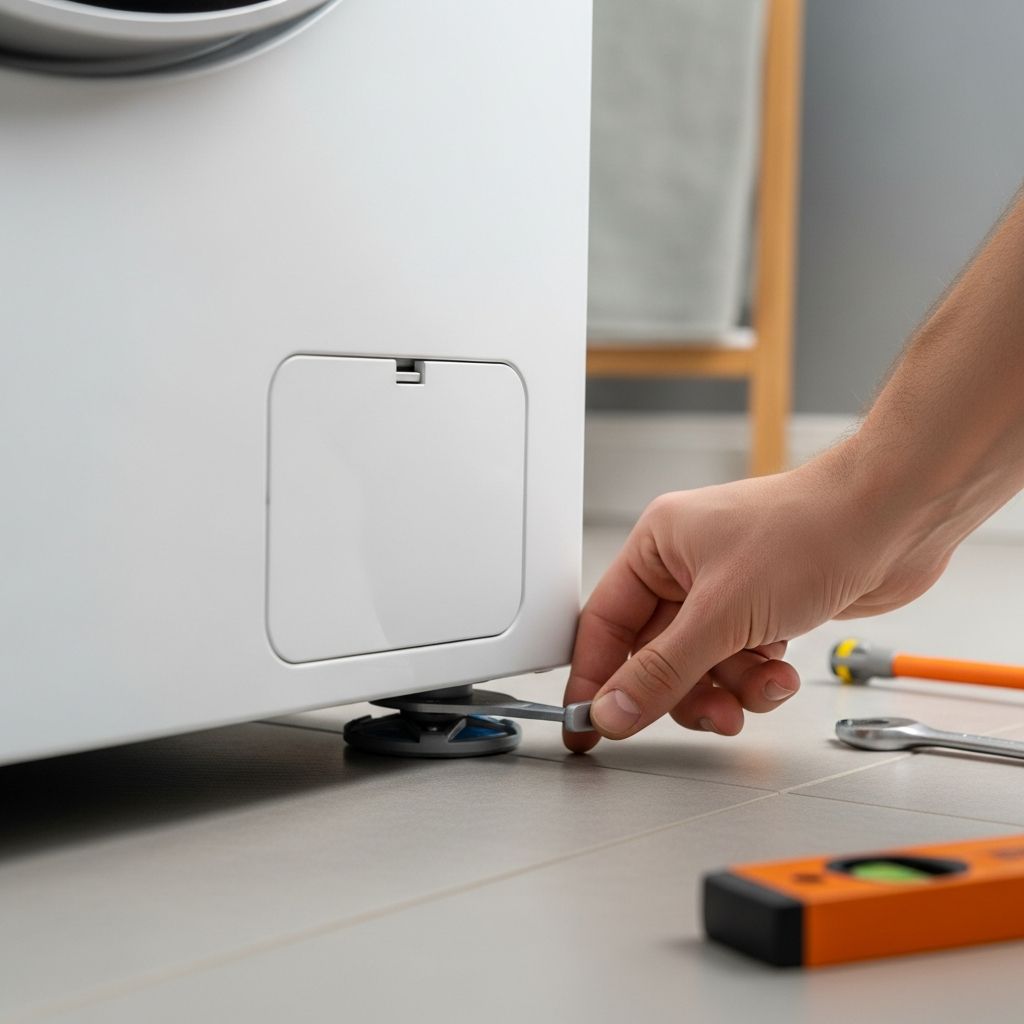
The leveling feet of your washing machine are the primary tools for achieving proper balance and stability. These feet are typically located at the bottom of the machine and can be adjusted individually to compensate for uneven flooring.
Identifying and Accessing Leveling Feet
Locate all four leveling feet at the base of your machine. On most models, these feet can be turned clockwise to raise the machine or counterclockwise to lower it. Some machines feature self-adjusting feet, while others require manual adjustment. Consult your machine’s manual to understand your specific model’s design.
Using a Level for Precision
For accurate leveling, place a bubble level or digital level on top of your washing machine. This tool is essential for ensuring the machine is perfectly level in both directions—front-to-back and side-to-side. Make small adjustments to the leveling feet as needed, checking the level after each adjustment. This step is crucial for preventing excessive vibrations and noise during the spin cycle.
If you’re using a bubble level, the bubble should be centered within the indicator lines on the level’s surface. With a digital level, watch for the readout to show zero degrees in both directions. Take your time with this step, as even slight deviations from perfect level can result in ongoing vibration problems.
Securing the Leveling Feet
Once you’ve achieved proper leveling, secure each foot in its adjusted position by tightening the lock nuts located near the base of each foot. These nuts prevent the feet from shifting during machine operation, maintaining the balance you’ve carefully established. Use a wrench to tighten these nuts firmly, but avoid over-tightening, which could damage the feet or make future adjustments difficult.
Proper Load Distribution Techniques
Even a perfectly leveled machine will vibrate excessively if the load inside the drum is unbalanced. How you load your washing machine is just as important as physical stabilization.
Avoiding Heavy Item Concentration
One of the most common mistakes is placing all heavy items on one side of the drum. Bunching heavy garments together creates uneven weight distribution, causing the drum to become unbalanced during the spin cycle. Instead, spread heavy and light items throughout the drum evenly. For example, if you’re washing a single heavy item like a comforter, balance it by adding several lighter garments to distribute weight more evenly.
Strategic Item Mixing
Arrange your laundry thoughtfully by alternating between heavy and light items. Jeans and towels should be interspersed with lighter garments like t-shirts and underwear. This strategic arrangement promotes even weight distribution and results in a smoother, quieter spin cycle. Most modern washing machines have a maximum load capacity—never exceed this limit, as overloading forces the machine to work harder and increases vibration.
Avoiding Overloading
While it might be tempting to stuff as many clothes as possible into one load, overloading causes vibration problems and reduces washing effectiveness. Leave adequate space for clothes to move freely in the drum. A good rule of thumb is filling the drum about three-quarters full, allowing sufficient room for proper agitation and rinsing.
Using Vibration Reduction Products
Beyond manual adjustment, several products can help reduce washing machine vibration and noise. Anti-vibration pads are popular solutions designed to absorb and dampen the vibrations transmitted from the machine to your flooring.
Anti-Vibration Pads
These pads are placed under each leg of your washing machine and work by absorbing vibration energy before it can be transmitted to the floor. Installation is straightforward—simply lift each leg of the machine and insert it into the center of each pad. Testing has shown that quality anti-vibration pads can reduce vibrational noise, particularly low-frequency vibrations that travel through floors and walls.
Anti-vibration pads are especially beneficial if your laundry room is above a bedroom, living space, or finished basement. By reducing the transmission of vibrations to the floor structure, these pads can make the difference between hearing your washing machine in adjacent rooms and not hearing it at all.
Anti-Vibration Mats
An alternative to individual pads is an anti-vibration mat, a single platform that supports the entire washing machine. These mats are designed to absorb vibrations from noisy machines and may provide additional stabilization benefits for machines that already operate relatively quietly.
Manufacturer Stabilization Kits
Some washing machine models come with manufacturer-designed stabilization or balancing kits specifically engineered for that machine. If your machine includes such a kit, refer to the manufacturer’s instructions for proper installation and use. These kits are optimized for your specific model and can provide excellent stabilization results.
Addressing Load Balancing During Operation
Sometimes, even a properly loaded machine will develop balance issues during the wash cycle. Modern washing machines often have built-in load-sensing technology, but manual intervention can help.
Monitoring the Spin Cycle
Pay attention to your machine’s spin cycle. If you notice excessive wobbling or unusual noise, stop the cycle and open the door. Carefully examine how the clothes are distributed inside the drum. You may find that items have bunched up on one side, creating an unbalanced load.
Rebalancing Mid-Cycle
If an imbalance is detected, redistribute the clothes evenly around the drum. Separate any items that are stuck together or clumped. Restart the spin cycle and observe whether the machine now operates more smoothly. This simple intervention can prevent the machine from becoming excessively stressed during operation.
Maintenance and Periodic Checks
Stabilizing a washing machine is not a one-time task. Regular maintenance and periodic checks ensure your machine continues to operate smoothly.
Routine Inspection Schedule
Every few months, perform a quick inspection of your washing machine’s leveling feet. Check that they remain secure and that the machine continues to sit evenly on the floor. If you notice any changes in how the machine operates or if vibrations return, revisit your leveling adjustments.
Post-Relocation Checks
Any time you move or relocate your washing machine, it’s particularly important to recheck its level and balance. The process of moving can shift the feet, and the new location may have different floor characteristics. Take time to thoroughly relevel the machine in its new location before resuming normal use.
Monitoring for Wear
Over time, leveling feet can wear or become damaged, compromising their ability to keep the machine stable. If you notice that your machine has become increasingly wobbly despite previous adjustments, inspect the feet for visible damage or wear. Worn feet may need replacement.
Common Washing Machine Vibration Problems and Solutions
| Problem | Cause | Solution |
|---|---|---|
| Violent shaking during spin | Unbalanced load or unevenly distributed clothes | Redistribute clothes evenly, avoid heavy item concentration |
| Constant wobbling | Machine not level on floor | Use level tool to adjust leveling feet precisely |
| Noise transmission to floors above | Vibrations conducting through floor structure | Install anti-vibration pads under machine legs |
| Machine rocks from side to side | Uneven flooring or worn leveling feet | Check floor evenness, adjust feet, or replace worn feet |
| Excessive vibration after relocation | Machine not properly leveled in new location | Recheck level, adjust feet, recheck floor surface |
Safety Considerations
When stabilizing your washing machine, prioritize safety. Always disconnect the machine from power before performing any maintenance work. When lifting or moving the machine, use proper lifting techniques—bend at the knees, not the waist, and always get help from another person. Never attempt to move or adjust a washing machine alone.
Be cautious when working underneath or around the machine, as fingers and clothing can get caught. If your machine has sharp edges or moving parts, be particularly careful during adjustment procedures.
Frequently Asked Questions
Q: How often should I check my washing machine’s level?
A: Perform a visual inspection every few months and a thorough check with a level at least once per year or whenever you notice increased vibration. If you move your machine, always recheck the level immediately.
Q: Can I use shims instead of leveling feet adjustments?
A: While shims can provide temporary solutions for minor unevenness, adjusting the machine’s leveling feet is the proper method. Shims are not designed to support the weight and vibration of a washing machine long-term.
Q: Do anti-vibration pads work for all washing machine types?
A: Anti-vibration pads are universal and work for most top-load and front-load washing machines. However, check that the pads are rated for the weight of your specific machine model.
Q: What’s the cost of stabilizing a washing machine?
A: Manual leveling is free if you already have a level tool. Anti-vibration pads typically cost $20-50 per set. Replacement leveling feet, if needed, usually cost $15-40 per foot.
Q: Should I call a professional if my machine still vibrates after stabilization?
A: If vibrations persist after proper leveling and load balancing, internal components may be damaged. Contact a qualified repair technician to diagnose and address mechanical issues.
Q: Can a vibrating washing machine damage my floor?
A: Yes, prolonged vibration can cause damage to flooring, especially if the floor has water exposure. Stabilizing your machine protects both the appliance and your home’s structure.
Conclusion
Stabilizing a washing machine involves a combination of proper leveling, careful load distribution, and potentially using vibration-reducing products. By following these straightforward steps, you’ll eliminate excessive vibrations, reduce noise in your laundry room, and extend your machine’s operational lifespan. Regular maintenance and periodic checks ensure continued stability. Most homeowners can accomplish these stabilization tasks without professional help, making this an accessible and cost-effective home improvement project. A stable, properly functioning washing machine operates more efficiently, cleans clothes better, and provides years of reliable service.
References
- How to Balance a Washing Machine and Stop It From Shaking — Angi. 2024. https://www.angi.com/articles/how-to-balance-washing-machine.htm
- Washing Machine Vibration & Shaking Solution — Soundproof Guide. 2023. https://soundproofguide.com/how-to-reduce-washing-machine-noise-with-anti-vibration-pads/
Similar Articles




Read full bio of medha deb