How to Test a Car Battery: Complete Guide
Learn essential techniques to test your car battery and diagnose electrical issues effectively.
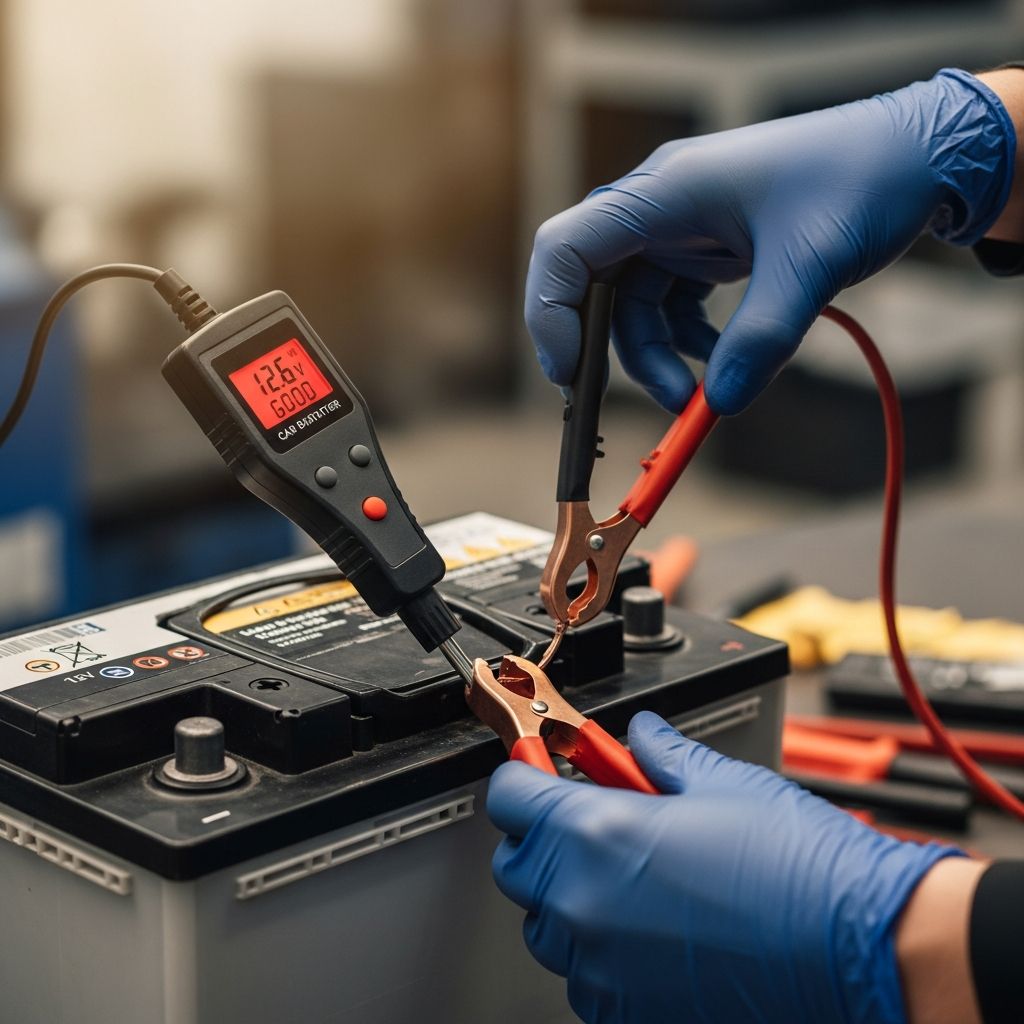
How to Test a Car Battery: A Complete Guide to Diagnosing Battery Problems
Your car battery is one of the most critical components of your vehicle’s electrical system. A failing battery can leave you stranded, so knowing how to test it properly is an essential skill for any car owner. Whether you’re experiencing slow engine starts, dim headlights, or other electrical issues, understanding how to test your car battery can help you diagnose problems before they become serious. This comprehensive guide will walk you through multiple testing methods that you can perform at home with basic tools.
Why Testing Your Car Battery Matters
Regular battery testing is crucial for vehicle maintenance. A dead or dying battery is one of the most common reasons for roadside breakdowns. By learning to test your battery, you can identify issues early and avoid unexpected failures. Additionally, proper battery testing helps you determine whether your battery needs replacement or if the problem lies elsewhere in your electrical system. Understanding the condition of your battery also helps you plan maintenance and replacements before they become emergencies.
Before You Begin: Safety Precautions
Before you start testing your car battery, it’s important to follow proper safety protocols. Always wear safety glasses to protect your eyes from any potential acid splashes or sparks. Remove any metal jewelry, as it can create a circuit if it touches both terminals simultaneously. Make sure your vehicle is parked on a level surface and the engine is off. Never smoke or create sparks near the battery, as it can release hydrogen gas that is highly flammable. If you notice any visible damage to the battery case or corrosion that appears severe, do not attempt to test it yourself.
Visual Inspection: The First Step
Before you grab a multimeter or load tester, perform a thorough visual inspection of your battery. This simple first step can reveal obvious problems that require immediate attention.
Check for Physical Damage
Examine the battery case for any cracks, leaks, or bulging. A damaged battery case indicates internal problems and should be replaced immediately. Look at the terminals for corrosion, which appears as white, blue, or green crusty buildup. Minor corrosion can be cleaned, but extensive corrosion may indicate a deeper issue with your battery or charging system.
Inspect Battery Connections
Ensure both battery terminals are firmly connected to their respective cables. Loose connections can prevent proper charging and cause starting problems. The positive terminal should have a red cable or cover, while the negative terminal should have a black cable. Check that these connections are tight by attempting to wiggle them gently with your hand.
Examine Electrolyte Levels
If your battery has removable caps on top of each cell, carefully pry them off to inspect the electrolyte level. The water and acid mixture inside should reach approximately one-half inch below the cell cap. If the level is low, add distilled water to bring it to the proper level. Never use tap water, as it contains minerals that can damage the battery.
Testing with a Digital Multimeter
A digital multimeter is one of the most useful tools for battery testing. This versatile device can check voltage, resistance, and continuity, making it perfect for diagnosing electrical problems in your vehicle.
Preparing Your Multimeter
Set your multimeter to the DC voltage setting, typically marked as DCV or V with a line and dots below it. Make sure the dial is set to a range that accommodates your car battery voltage, usually 20 volts or higher. Always hold the multimeter probes by their insulated handles to prevent accidental shock. Keep the probes away from the battery terminals until you’re ready to perform the test.
Testing Battery Voltage
Place the black negative probe on the negative terminal of your battery. Then connect the red positive probe to the positive terminal. Read the voltage displayed on the multimeter screen. A healthy car battery should read between 12.6 and 12.8 volts when the engine is off. If your reading is below 12 volts, your battery may be discharged or failing. Remove the probes carefully, starting with the red probe first, then the black probe.
Testing Under Load
While resting voltage is useful, a more accurate test involves checking the battery voltage while the engine is cranking. Have a helper start the engine while you monitor the multimeter. The voltage should not drop below 10 volts during cranking. If it drops significantly, your battery may not have sufficient capacity to start the engine properly.
Understanding Multimeter Readings
| Voltage Reading | Battery Condition | Recommended Action |
|---|---|---|
| 12.6 – 12.8 volts | Excellent | No action needed |
| 12.4 – 12.6 volts | Good | Monitor and maintain |
| 12.0 – 12.4 volts | Acceptable | Consider testing further |
| Below 12.0 volts | Poor or Dead | Charge or replace battery |
Load Testing Your Battery
A load test is one of the most reliable ways to determine if your battery can handle the demands of starting your engine. This test applies a load to the battery and monitors how well it performs under stress.
What is a Battery Load Test?
A battery load tester is a specialized device that temporarily draws current from your battery while measuring the voltage drop. This simulates the demand placed on the battery when you start your engine. Load testers come in both digital and analog versions and are commonly available at auto parts stores.
Performing a Load Test
First, ensure your battery is fully charged before performing a load test. Connect the load tester’s positive clamp to the positive terminal and the negative clamp to the negative terminal. Set the load tester to draw approximately half your battery’s ampere-hour rating. For example, if your battery is rated at 600 cold cranking amps, set it to draw 300 amps. Maintain this load for 15 seconds while observing the voltage reading. The voltage should not drop below 9.6 volts during the test. If it does, your battery is likely failing.
Testing with a Battery Hydrometer
For traditional flooded lead-acid batteries with accessible cells, a battery hydrometer provides another diagnostic tool. This device measures the specific gravity of the battery electrolyte, which indicates the battery’s state of charge and overall condition.
How to Use a Hydrometer
Remove the cell caps from your battery. Draw electrolyte into the hydrometer tube from each cell, one at a time. Read the specific gravity number where the electrolyte level meets the scale inside the tube. A reading above 1.260 indicates a fully charged cell, while a reading below 1.200 suggests the cell is discharged. All cells should have similar readings; significantly different readings between cells may indicate an internal problem.
Checking Your Vehicle’s Charging System
Sometimes battery problems are actually charging system problems. After determining your battery is in good condition, test whether your vehicle’s alternator is charging properly.
Testing Alternator Output
Start your engine and set your multimeter to DC voltage. Connect the probes to the battery terminals. The reading should be between 13.5 and 14.5 volts when the engine is running. This voltage indicates the alternator is charging the battery. If the reading is below 13 volts or higher than 15 volts, your alternator may need service.
Interpreting Results and Next Steps
After performing your tests, compare your results to determine the appropriate next step. If your battery voltage is low but the alternator is charging properly, your battery may simply be discharged and can be recharged. If your battery voltage remains low even after a full charge, or if it drops significantly during a load test, replacement is likely necessary. If your battery readings are normal but your vehicle still has starting problems, the issue may lie with your starter motor or other electrical components.
Maintenance Tips for Battery Longevity
Proper battery maintenance can extend the life of your battery and prevent premature failure. Keep your battery terminals clean and free from corrosion by regularly inspecting them. Ensure battery connections are tight and secure. For batteries with removable caps, check electrolyte levels monthly and add distilled water as needed. Avoid leaving electrical devices running when the engine is off, as this drains the battery unnecessarily. During winter months, keep your battery fully charged, as cold weather reduces battery effectiveness.
When to Replace Your Battery
Most car batteries last between three and five years, depending on climate and usage patterns. If your battery is approaching the end of its expected lifespan and showing signs of weakness, consider replacing it proactively. Some warning signs include slow engine cranking, dim interior lights, and dashboard warning lights. If your battery fails testing or you cannot maintain a charge, replacement is necessary. Always dispose of old batteries properly by taking them to a recycling center or auto parts store that accepts batteries.
Frequently Asked Questions
Q: How often should I test my car battery?
A: It’s wise to test your battery at least twice a year, in spring and fall. More frequent testing is recommended if your battery is older than three years or if you live in extreme climates.
Q: Can I test my battery while the engine is running?
A: For initial voltage testing, the engine should be off. However, testing under load with the engine cranking provides a more accurate picture of your battery’s actual capacity.
Q: What should I do if my multimeter shows 0 volts?
A: A zero reading indicates either the battery is completely dead, the probes are not making proper contact with the terminals, or the multimeter is set incorrectly. Check your connections and multimeter settings before concluding the battery is dead.
Q: Is it safe to test a battery that appears swollen or damaged?
A: No. Do not test a visibly damaged or swollen battery. This indicates internal damage and potential safety hazards. Replace the battery immediately without attempting to test it.
Q: Can cold weather affect battery test results?
A: Yes, cold weather significantly impacts battery performance. Test your battery indoors at room temperature when possible, or wait several hours after the vehicle has been in the cold for the most accurate readings.
Q: What is the difference between CCA and ampere-hour ratings?
A: Cold Cranking Amps (CCA) measures the battery’s ability to start your engine in cold conditions, while ampere-hour (Ah) rating indicates the battery’s total energy capacity over time.
References
- How to Use a Multimeter — Family Handyman. 2023-12-23. https://www.familyhandyman.com/project/how-to-use-a-multimeter/
- The 10-Minute Car Battery Check-Up — Reader’s Digest Canada. https://www.readersdigest.ca/cars/maintenance/car-battery-care/
- Battery Testing and Maintenance Guide — U.S. Department of Energy Office of Energy Efficiency and Renewable Energy. https://www.energy.gov/
Similar Articles






Read full bio of Sneha Tete