How to Use a Charcoal Grill: Complete Guide
Master charcoal grilling with our step-by-step guide to perfect heat, even cooking, and delicious results.
How to Use a Charcoal Grill: The Complete Guide to Outdoor Cooking Success
Charcoal grilling is an art form that combines technique, timing, and patience to produce some of the most flavorful meals you’ll ever prepare outdoors. Whether you’re a seasoned grilling enthusiast or picking up your first charcoal grill, understanding the proper methods will transform your outdoor cooking experience. This comprehensive guide walks you through every step of using a charcoal grill, from initial setup to serving perfectly cooked food.
Understanding Your Charcoal Grill
Before diving into the mechanics of lighting and cooking, it’s important to understand the basic components of a charcoal grill. A typical charcoal grill consists of a bowl-shaped body that holds the charcoal, a charcoal grate at the bottom, a cooking grate where your food sits, vents for airflow control, and a lid for heat management. Each component plays a crucial role in how your grill performs and the quality of food you produce.
The vents are perhaps the most critical feature for temperature control. Most charcoal grills have vents on the bottom and top that allow you to regulate oxygen flow, which directly controls how hot your coals burn. Understanding how to manipulate these vents gives you complete control over your cooking temperature.
Step 1: Prepare Your Grill for Success
Starting with a clean grill is the foundation of successful charcoal grilling. Begin by removing any food residue, ash, and buildup from your previous cooking session. Use a stiff-bristled wire grill brush to scrape the cooking grate thoroughly, knocking away any stuck-on food particles and debris. This cleaning step ensures better airflow and prevents unwanted flavors from transferring to your new meal.
Next, locate your ash tray or pan and empty it completely. Even a small amount of leftover ash can impede airflow and affect temperature regulation. Once emptied, place it back in position. Open all air vents fully at this stage to prepare for maximum airflow. A clean grill with open vents promotes uninterrupted air circulation, which is essential for consistent heat distribution.
Remove your cooking grate and set it aside temporarily. This step is crucial because you’ll be placing your charcoal chimney on the charcoal grate below, not on the cooking surface. This positioning makes the ignition process easier and safer than attempting to light a chimney on top of a cooking grate.
Step 2: Gather Your Materials and Tools
Success with charcoal grilling requires having the right materials on hand before you begin. Here’s what you’ll need:
- A charcoal chimney starter (highly recommended for efficient, even heating)
- Quality charcoal briquettes or lump charcoal
- Fire starter materials (crumpled newspaper, plain paper, or commercial fire cubes)
- A long-handled lighter or grill lighter for safe ignition
- Heat-resistant leather gloves with cuffs
- Metal tongs for organizing coals and handling food
- A grill brush for cleaning
- Vegetable oil and a basting brush for coating grates
The choice of fire starter material significantly impacts your grilling experience. Plain crumpled newspaper is an excellent choice because it ignites quickly and burns consistently without adding unwanted chemicals to your food. Paper typically burns out around 10 minutes, giving your coals enough time to ignite. Commercial fire cubes and wax-soaked lint may last longer than necessary, potentially continuing to burn after your coals have already caught fire. If you want convenience, tumbleweed starters (hardwood shavings mixed with paraffin wax in cube form) offer reliable ignition without excessive burn time.
Step 3: Load Your Charcoal Chimney
The charcoal chimney is a cylindrical metal device designed to heat charcoal efficiently using natural draft and convection. Fill your chimney starter with charcoal briquettes according to the amount of food you’re planning to cook. Most chimneys come with guidelines indicating how much charcoal produces adequate heat for different quantities of food and cooking durations.
For small grilling sessions with hot dogs or burgers, fill your chimney about three-quarters full. For larger gatherings or extended cooking sessions, fill it completely. If you’re planning to use a charcoal snake technique for low-and-slow smoking of ribs or brisket, you may need less charcoal in the chimney since you’ll only be burning a few coals to maintain the snake throughout cooking.
The charcoal snake technique involves stacking briquettes in a ring formation around part of the grill’s bowl. By adding just a few lit coals to one end of the snake, you achieve a low, consistent burn that can last for hours—perfect for slow cooking brisket, ribs, or pork shoulder. When using this technique, you can flip your charcoal chimney upside down to burn only a small amount of coals more easily than if it were right-side up.
Step 4: Ignite Your Fire Starter and Begin the Charcoal Ignition Process
Place your chosen fire starter material on the charcoal grate at the bottom of the grill. If using paper, crumple it into relatively tight balls, making sure the paper doesn’t completely block the chimney vents as it expands during burning. Position your loaded charcoal chimney directly over the fire starter, ensuring it sits securely on the charcoal grate.
Use a grill lighter to ignite the paper from multiple points if possible. A grill lighter offers superior convenience and safety compared to matches, giving you better control over the flame and keeping your hands at a safer distance. Once ignited, smoke should immediately begin pulling through the chimney, with flames rising within seconds.
The magic of the charcoal chimney lies in natural draft. As the fire starter burns, it heats the air inside the chimney, creating an upward draft that pulls fresh air upward through the charcoal stack. This constant supply of oxygen and rising heat ignites the charcoal from the bottom up, ensuring even, consistent burning. If nothing seems to happen after a minute or two, simply repack your paper, tap out any ash, and relight. There’s no shame in a restart—it’s better than risking chemical additives or improper ignition.
Step 5: Wait for Coals to Reach the Perfect State
Patience is essential at this stage. Leave your grill lid off and allow the charcoal to burn undisturbed for 10 to 15 minutes. During this time, the coals will transition from black to gray as they ash over—a visual indicator that they’ve reached optimal cooking temperature. The gray ash coating indicates that the briquettes have burned off their initial volatile compounds and are now ready to provide consistent, even heat.
While waiting, resist the urge to check progress constantly. The chimney works best when left undisturbed. However, you can visually inspect the top of the chimney to see when coals begin showing that characteristic gray ash. When most of the top pieces have turned gray and ashy, your coals are ready. If they still look predominantly black, give them another few minutes to continue their transformation.
Step 6: Carefully Transfer Coals to Your Grill
Once your coals are properly ashed over, it’s time to transfer them to the grill. This step requires careful attention to safety. Before beginning, put on a pair of heavy-duty leather work gloves with extended cuffs. Even though charcoal chimneys typically feature heat shields, the entire device becomes extremely hot during the burning process. Your leather gloves provide essential protection against burns.
Grasp the handle of the chimney securely and slowly pour the coals onto the charcoal grate where your cooking will take place. Don’t worry about precise placement at this point—focus on getting the coals safely onto the grate. Once all coals are transferred, use long-handled metal tongs to arrange them according to your cooking needs. For even heat across the grill, spread coals in a single layer. For zone cooking with different temperature areas, concentrate coals on one side while leaving the other side bare.
After arranging your coals, position the cooking grate back on top of the grill and close the lid. This allows heat to build up inside the grill chamber, radiating more evenly across all surfaces. Ensure both bottom and top vents are fully open at this stage to promote maximum airflow and achieve the hottest possible cooking temperature. For lower temperature cooking, you can adjust vents to halfway open once the grill reaches your desired heat level.
Step 7: Pre-Heat and Prepare for Cooking
After placing the cooking grate back on the grill and closing the lid, allow approximately 10 minutes for the grill to reach optimal cooking temperature. During this preheat period, the residual heat from the coals will radiate and build up inside the grill chamber, bringing everything to temperature.
While waiting for your grill to preheat, prepare your vegetables, meats, and other ingredients. Having everything ready before your grill reaches temperature ensures you won’t have long delays between putting food on and closing the lid. Room-temperature ingredients cook more predictably than cold ingredients straight from the refrigerator.
As the final step before cooking, coat your cooking grate with vegetable oil to prevent sticking. Use a basting brush dipped in oil and carefully brush it across the grate. Be prepared for slight smoke and flare-ups—this is completely normal and indicates the oil is bonding to the grate. The oil creates a seasoning layer that improves with each use and prevents food from sticking.
Step 8: Master Temperature Control and Cooking Zones
One of the greatest advantages of charcoal grilling is the ability to create multiple cooking zones with different temperatures. Arrange your coals to create a hot zone, medium zone, and cool zone across your grill. The hot zone, with concentrated coals directly beneath, is perfect for searing steaks and burgers. The medium zone works well for chicken and vegetables that need thorough cooking without charring. The cool zone is ideal for moving food away from direct heat if it’s cooking too quickly or catching fire.
Control your grill temperature by adjusting the vents. Opening vents wider increases oxygen flow and raises temperature, while partially closing them decreases temperature. Make small adjustments and wait a few minutes before assessing the change. Quick temperature adjustments allow you to dial in precisely the heat you need for your specific recipe.
Step 9: Cook with Confidence
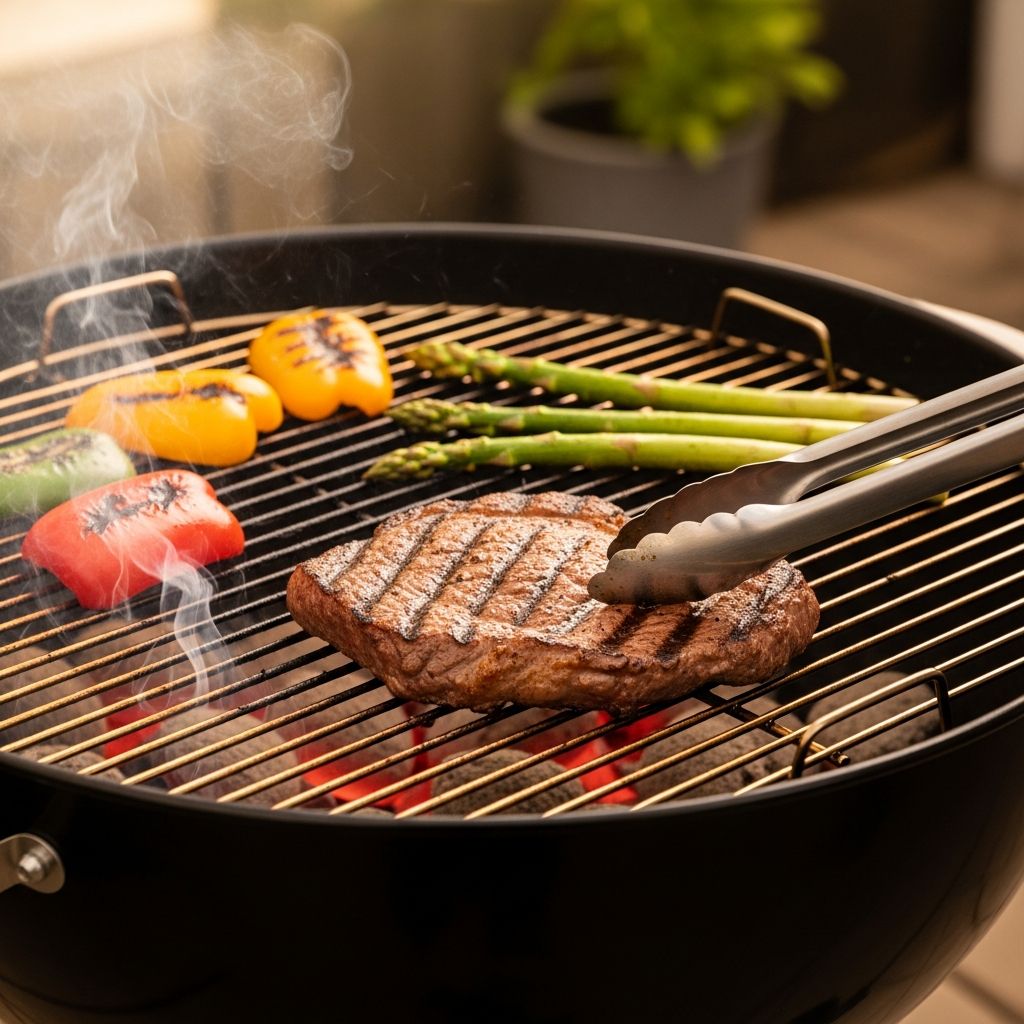
Now that your grill is properly prepared and heated, place your food directly on the oiled cooking grate. Whether grilling burgers, hot dogs, chicken, steaks, or vegetables, the foundational principles remain the same: use appropriate heat for your ingredients, avoid moving food excessively before creating a proper sear, and maintain consistent temperature throughout cooking.
Close the lid to trap heat and smoke, which adds tremendous flavor to your food. Check your food periodically using tongs to flip or rotate pieces as needed, but resist the urge to constantly open the lid and peek inside. Each time you open the lid, you release built-up heat and compromise the cooking process.
Step 10: Maintenance and Post-Cooking Care
After finishing your grilling session, allow your grill to cool slightly before handling the grates. Once cooled enough to touch safely, use your grill brush to clean the cooking grate while residual heat helps lift stuck-on food. This warm cleaning is far easier than trying to clean a completely cold grate with baked-on food.
Once the grill cools completely, spread any remaining coals to disperse their heat and allow them to burn out fully. Empty your ash tray into a metal waste container, never a plastic bag, as residual heat can ignite plastic. Store your grill in a covered location to protect it from weather and extend its lifespan.
Frequently Asked Questions
What type of charcoal is best for grilling?
Both charcoal briquettes and lump charcoal have advantages. Briquettes burn more consistently and predictably, making them ideal for beginners. Lump charcoal burns hotter and produces less ash, preferred by experienced grillers seeking maximum flavor.
How long does charcoal take to heat up?
Using a charcoal chimney, your coals will be ready to cook on in approximately 15-20 minutes from ignition. This includes the 10-15 minutes for coals to ash over plus a few additional minutes for the grill chamber to reach temperature.
Can you reuse charcoal?
Yes, partially burned charcoal can be reused. After grilling, spread remaining coals to cool, then store them in a dry container. These coals will ignite faster next time than fresh charcoal.
What’s the difference between direct and indirect grilling?
Direct grilling places food directly over coals for high-heat searing. Indirect grilling positions food away from coals, using reflected heat for slower, more gentle cooking—ideal for larger pieces or items requiring longer cooking times.
How do I control flare-ups?
Flare-ups occur when fat drips onto coals. Move food away from direct heat temporarily, close vents slightly to reduce temperature, or create a cooler zone where you can move meat while flames die down.
References
- How to Start a Charcoal Grill — Popular Mechanics. 2024. https://www.popularmechanics.com/home/a64851014/how-to-start-a-charcoal-grill/
- The Complete Guide to Outdoor Grilling Techniques — Weber Grills Official Technical Documentation. 2024. https://www.weber.com/en-US/grills/support/resources
- Food Safety Guidelines for Outdoor Cooking — United States Department of Agriculture Food Safety and Inspection Service. 2023. https://www.fsis.usda.gov/food-safety/safe-food-handling-and-preparation/food-safety-basics/safe-internal-temperature-chart
- Charcoal Grill Maintenance and Safety Standards — Consumer Product Safety Commission. 2023. https://www.cpsc.gov/
- Heat Management in Outdoor Cooking — National Fire Protection Association. 2024. https://www.nfpa.org/
Similar Articles



Read full bio of medha deb