How to Wash Shoes in the Washing Machine
Master the art of cleaning sneakers safely in your washing machine with expert tips.
How to Wash Shoes in the Washing Machine: A Complete Guide
Keeping your favorite sneakers clean and fresh doesn’t always require expensive professional cleaning services. Washing your shoes in the washing machine is a practical solution that can save you significant time and effort while maintaining the quality of your footwear. However, this task requires careful preparation and attention to detail to ensure your shoes come out looking great without sustaining damage in the process.
Before tossing your shoes into the washer, it’s essential to understand the proper techniques and precautions that will help you achieve the best results. This comprehensive guide walks you through every step of the process, from initial preparation to final drying, ensuring your beloved shoes receive the care they deserve.
Preparing Your Shoes for the Washing Machine
Proper preparation is the foundation of successful shoe washing. Taking time to prepare your shoes correctly prevents damage and ensures a thorough clean. The first critical step involves checking your shoes’ care instructions to verify they are washing machine safe. Not all shoes can withstand the mechanical action of a washing machine, so always review the manufacturer’s guidelines before proceeding.
Tools and Supplies You’ll Need
Gathering the right materials before you start makes the process smoother and more efficient. Here’s what you should have on hand:
- A soft brush or old toothbrush for gentle scrubbing
- A sponge for detailed cleaning
- Old towels for balancing the wash load
- Liquid laundry detergent (not powder)
- Baking soda for deodorizing
- A mesh garment bag for protection
- Shoe cleaner for treating scuffs and marks
Having these supplies readily available ensures you won’t need to pause midway through the cleaning process. The right tools make a significant difference in the final outcome and help protect your shoes from unnecessary wear.
Step-by-Step Instructions for Machine Washing Shoes
Following a systematic approach ensures thorough cleaning while minimizing the risk of damage. The entire process, including washing and initial drying, typically takes between 45 minutes to one hour, though shoes will require air drying overnight for complete moisture removal.
Step 1: Remove and Prepare the Laces
Begin by carefully removing the shoelaces from your sneakers. Laces can become tangled around the drum components during the wash cycle, potentially causing damage to both the laces and the machine. To keep laces secure and prevent tangling, place them in a separate mesh garment bag that’s firmly closed. If your laces have stubborn stains or dirt buildup, you can manually scrub them using laundry detergent and a soft brush before bagging them.
Step 2: Handle the Insoles Properly
Remove the insoles from your shoes and wash them by hand rather than in the machine. Machine washing can leave insoles waterlogged, causing them to take several days to dry completely. To clean and deodorize your insoles effectively:
- Wipe them down with a soft brush or cloth using slightly soapy water
- Use a sponge to absorb excess moisture
- Sprinkle baking soda generously over the insoles
- Allow them to sit overnight, letting the baking soda absorb odors and remaining moisture
- Brush off the baking soda thoroughly in the morning
This hand-washing method preserves the integrity of your insoles while effectively removing dirt and odors.
Step 3: Clean the Soles Thoroughly
Before placing shoes in the washer, remove excess debris from the soles. Use a soft brush to dislodge dried mud and dirt. For stubborn debris stuck in grooves and crevices, carefully use a toothpick or old toothbrush to extract particles. After removing debris, apply shoe cleaner to scuff marks using a soft brush, gently rubbing the product into the affected areas. Wipe away any excess cleaner with a damp cloth, ensuring no residue remains that could transfer to other items during washing.
Step 4: Place Shoes in a Mesh Garment Bag
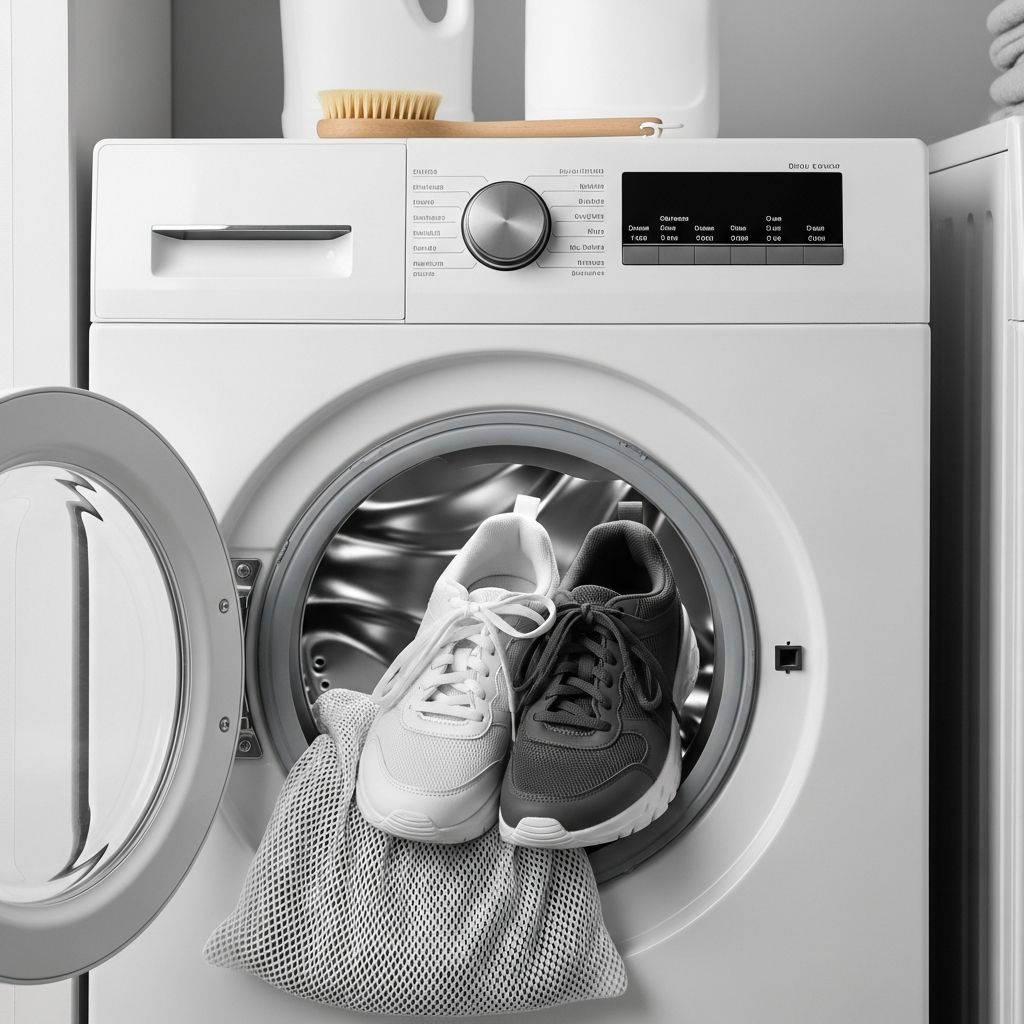
After cleaning the soles, place both shoes inside a protective mesh garment bag. This crucial step prevents your shoes from tumbling violently around the drum, which could cause damage or deformation. If you don’t have a mesh bag available, a clean pillowcase serves as an excellent alternative, providing similar protection by containing the shoes and reducing excessive movement during the wash cycle.
Step 5: Add Towels for Load Balancing
Place the mesh bag containing your shoes into the washing machine along with several old towels. The towels serve an important purpose: they help balance the load, preventing the shoes from bouncing excessively. Critically, use only old towels that you don’t mind potentially getting dye transfer from. Newer towels may leach excess dye that could permanently stain your shoes, so this precaution is worth taking.
Step 6: Select the Appropriate Wash Cycle
Set your washing machine to a delicate or gentle cycle using cold water with a slow or no-spin option. This conservative approach minimizes agitation and reduces the risk of damage. Use liquid laundry detergent or laundry pods rather than powder detergent, as powder can become trapped in shoe crevices and fail to dissolve properly, leaving residue that’s difficult to remove.
Understanding Shoe Shrinkage and Prevention
One common concern when washing shoes in machines is whether they might shrink. The answer depends largely on the water temperature and wash cycle you use. Shoes may shrink if washed on hot water cycles, as heat can cause materials to contract. Always follow your shoes’ specific care instructions and maintain cold water temperatures to prevent shrinking and other heat-related damage.
After washing, never place your shoes in the dryer, regardless of the convenience this might offer. The high heat of a clothes dryer is particularly damaging to shoes and will cause shrinkage, material warping, and potential glue damage if shoes are constructed with adhesives. Instead, allow your shoes to air dry naturally overnight at room temperature.
Hand Washing Your Shoes: An Alternative Approach
For shoes that may be too delicate for machine washing or when you prefer a more controlled cleaning method, hand washing offers an excellent alternative. Begin by using a soft, wet cloth to gently clean the soles. Stuff your shoes with rags or newspaper to prevent water from seeping into the interior during cleaning.
Use a soft toothbrush to gently remove excess dirt and grime from the shoe surface. Mix a cleaning solution using two cups of water with just one-quarter teaspoon of dish soap. Before proceeding with full cleaning, spot-test this solution on an inconspicuous area of your shoe to ensure it won’t cause discoloration or damage to your specific material.
Dip your toothbrush into the solution and carefully clean your shoes, working in small sections. Once you’ve cleaned the visible surfaces, use a washcloth to remove excess moisture from the exterior. Remove the stuffing material from inside your shoes and allow them to air dry completely, which may take 24 to 48 hours depending on humidity and ventilation.
Drying Your Shoes Properly
Proper drying is just as important as the washing process itself. After machine washing, your shoes need adequate time to dry completely before wearing. Air drying overnight is the minimum requirement, though some shoes may need additional time depending on their material and construction. Place your shoes in a well-ventilated area away from direct sunlight or heat sources.
To help shoes maintain their shape during drying, you can stuff them loosely with newspaper or paper towels, which also helps absorb internal moisture. Replace the stuffing periodically to ensure even drying. Never accelerate the drying process using a hair dryer, oven, or other heat source, as this will cause permanent damage.
Special Considerations for Different Shoe Materials
| Material Type | Washing Recommendation | Special Precautions |
|---|---|---|
| Canvas and Cotton | Machine washable | Use cold water and gentle cycle |
| Suede and Nubuck | Hand wash only | Avoid excessive water; use specialized brush |
| Leather | Hand wash recommended | Test cleaner on hidden area first |
| Mesh and Synthetic | Machine washable | Use mesh bag for protection |
| Athletic/Running Shoes | Machine or hand wash | Check manufacturer instructions |
Tips for Best Results
- Always check care labels and manufacturer instructions before washing
- Wash shoes separately from regular laundry to prevent color transfer
- Never use bleach or harsh chemicals on colored shoes
- Remove excess dirt before washing to protect your machine
- Use cold water exclusively to prevent shrinkage
- Ensure shoes are completely dry before wearing
- Consider washing shoes on a schedule to prevent excessive buildup of dirt
- Test any new cleaning products on inconspicuous areas first
Common Mistakes to Avoid
Understanding what not to do is just as important as knowing what to do. Avoid washing shoes in hot water, using powder detergent, or placing shoes in the dryer. Don’t wash shoes with regular laundry, as dyes may transfer. Never skip the protective mesh bag step, and don’t use bleach on colored shoes. Additionally, avoid washing shoes too frequently, as excessive washing can prematurely wear materials.
Frequently Asked Questions
Q: Can I wash shoes with other clothing in the washer?
A: It’s best to wash shoes separately to avoid potential dye transfer and to protect your regular clothing from debris on the shoes. If you must wash them together, place shoes in a mesh bag and use only old items you don’t mind potentially staining.
Q: How often should I wash my sneakers?
A: The frequency depends on how often you wear the shoes and their condition. Generally, washing shoes every 3 to 6 months keeps them fresh without excessive wear. Spot-clean visible dirt between washes to extend the time between full cleanings.
Q: What if my shoes are not removable for insoles?
A: If insoles cannot be removed, you can still machine wash your shoes using the delicate cycle with a mesh bag. Just accept that the interior will take longer to dry completely, requiring 24-48 hours of air drying.
Q: Can I use fabric softener when washing shoes?
A: It’s not recommended. Fabric softener can leave residue on shoes and potentially affect their grip and performance. Stick with regular laundry detergent for best results.
Q: Is it safe to wash designer or expensive shoes in the machine?
A: For expensive or specialty shoes, hand washing is the safer choice. High-end shoes often use delicate materials and construction methods that benefit from gentler cleaning. When in doubt, consult the manufacturer’s instructions or consider professional cleaning services.
Q: Why do my shoes smell even after washing?
A: Lingering odors often come from insoles or shoe interiors that haven’t dried completely. Ensure insoles are treated with baking soda and that shoes are thoroughly air-dried. Consider replacing insoles if odor persists.
Q: Can I use my regular dryer on a low heat setting?
A: No, avoid the dryer entirely. Even low heat settings can cause damage to shoe materials and the adhesives used in shoe construction. Air drying is the only recommended method.
References
- How to Wash Shoes in the Washing Machine — Whirlpool Corporation. 2024. https://www.whirlpool.com/blog/washers-and-dryers/how-to-wash-shoes-in-washing-machine.html
Similar Articles



Read full bio of medha deb