How to Wash a Tie-Dye Shirt: Keep Colors Vibrant
Master the art of washing tie-dye shirts to preserve vibrant colors and prevent fading.
How to Wash a Tie-Dye Shirt: Keep Colors Vibrant and Bright
Tie-dye shirts are vibrant, colorful creations that require special care to maintain their beauty and prevent color fading or bleeding. Whether you’ve just finished tie-dyeing your first shirt or you’re a seasoned crafter, understanding the proper washing techniques is essential to keeping your designs looking fresh and bold. The process of caring for tie-dye garments differs significantly from regular laundry, as improper washing can quickly diminish the vibrancy of your colors and compromise the pattern integrity.
The key to preserving your tie-dye creation lies in understanding how dyes set into fabric and how different water temperatures, detergents, and washing methods affect the final result. By following the right steps from the moment you remove your tie-dye creation from its curing period through subsequent washes, you can ensure that your tie-dye shirt remains a stunning wearable piece for years to come.
Understanding the Dye-Setting Process
Before you even consider washing your tie-dye shirt, it’s crucial to allow the dye sufficient time to set properly into the fabric fibers. The curing period is one of the most critical steps in the tie-dye process and directly impacts how well your colors will hold up during washing.
Allow your tie-dye creation to cure for at least 6 to 8 hours, though up to 24 hours is ideal. During this time, the dye molecules bond more thoroughly with the fabric fibers, resulting in more vibrant and longer-lasting colors. If you rinse out your tie-dye too early, before the dye has fully cured, the colors will appear faded and the pattern will be less distinct.
The curing time also affects the intensity of your colors. The longer you allow the dye to sit on the wet fabric, the more intense and rich your colors will become. However, avoid leaving the dye on the fabric for longer than 24 hours, as this can result in dark, odd splotches of color appearing in areas where the fabric has dried.
Rinsing Out Excess Dye: The Foundation of Color Preservation
The rinsing process is absolutely critical to maintaining your tie-dye’s vibrancy and preventing color bleeding. This step requires patience and attention to detail, as rushing through it can compromise all your hard work.
Step-by-Step Rinsing Process
Remove the rubber bands or string first. Once your curing time is complete, carefully remove your tie-dye shirt from its plastic bag or wrap. Take off any rubber bands, string, or ties you used to create the pattern, as these will prevent water from reaching those areas during rinsing.
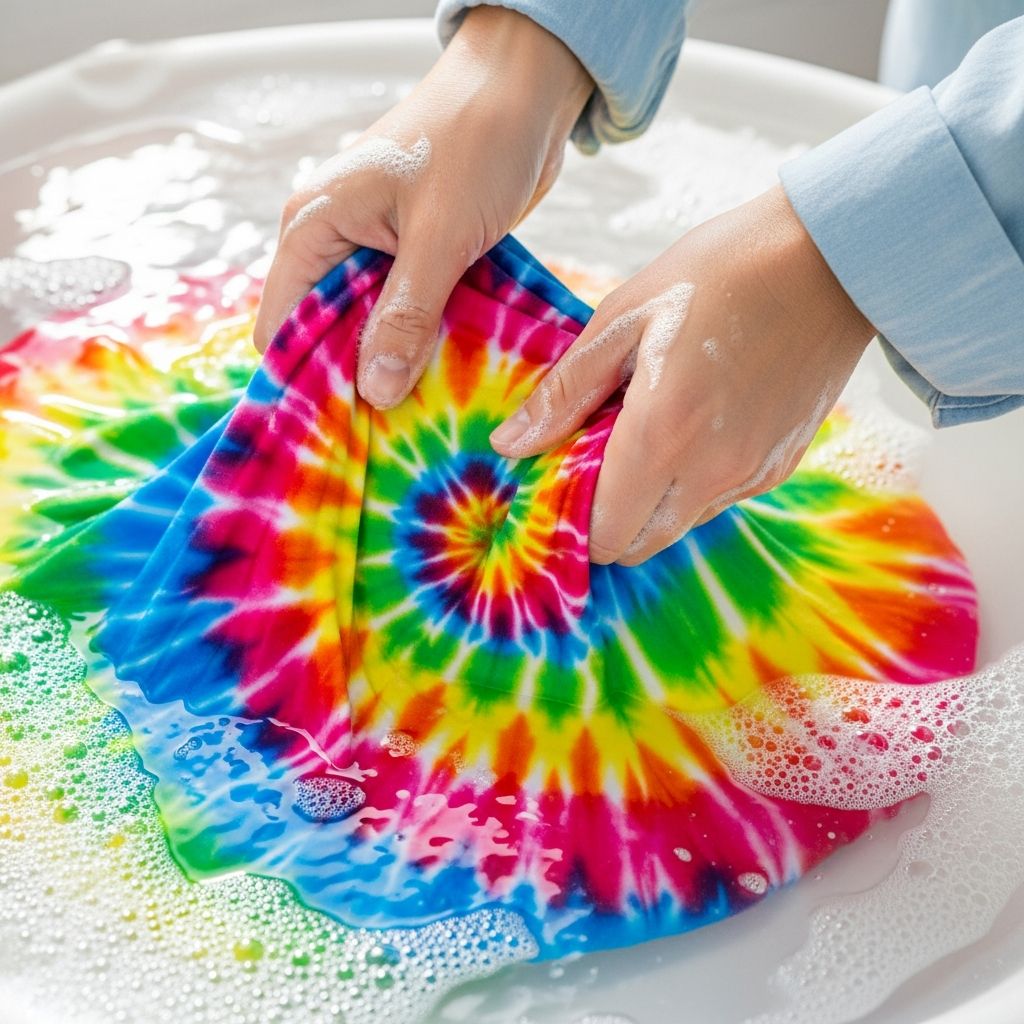
Rinse in cold water. The first and most crucial rinsing step must be done in cold water. Place your tie-dye shirt in a sink, bucket, or basin filled with cold water. Cold water is essential because it allows excess dye to wash out slowly while preventing the dye from setting further into the white or light-colored areas of your shirt. Heat actually helps dye set, so using hot water during this stage would counteract your goal of removing excess dye.
Repeat the rinsing process multiple times. Continue rinsing your shirt in cold water, moving it around gently with your hands to help loosen excess dye. Don’t worry if the water turns deeply colored during the first few rinses—this is normal and expected. The color in the water indicates that excess dye is being removed, not that your colors are fading away. The dye that’s already bonded to the fabric will remain.
Continue until the water runs clear. Keep rinsing in cold water until the water remains relatively clear. This may take 5 to 10 rinses, depending on how much excess dye was in your fabric. More thorough rinsing in the cold water stage results in better overall outcomes and less color bleeding in future washes.
Follow up with a warm water rinse. Once the water runs fairly clear during cold water rinsing, perform one final rinse using lukewarm (not hot) water. This warm rinse helps remove the last bits of excess dye before you move the shirt to the washing machine. Lukewarm water is gentler than cold water for this final stage and won’t set any remaining loose dyes into unwanted areas.
Machine Washing Your Tie-Dye Shirt
After thoroughly rinsing your tie-dye creation, it’s time to give it its first machine wash. The first few washes are particularly important for maintaining color vibrancy and preventing bleeding.
First Wash Recommendations
Wash separately for the first few washes. Always wash newly tie-dyed items alone during the first three to four washes. If you’ve dyed multiple shirts in the same color palette at the same time, you can wash those together, but keep them separate from other garments. This prevents any remaining loose dyes from transferring to other items in your laundry.
Select the appropriate water temperature. The debate over water temperature for tie-dye is ongoing among crafters. Some experts recommend warm or hot water for the first wash to help set the design and remove any final excess dye. Others advocate for cold water throughout to maximize color intensity and prevent fading. If you’ve done a thorough job rinsing in cold water beforehand, a warm wash should work well. After the first few washes, switch to cold water to help preserve the color in subsequent washings.
Use a gentle detergent. Choose a mild, gentle detergent specifically formulated for colors or consider using specialty products like Synthrapol, which is commonly used for dyed fabrics. Regular detergent works adequately, but color-safe or specialty dye detergents provide better color preservation. Use only a small amount of detergent—a typical load of tie-dye items needs far less soap than regular laundry.
Avoid harsh additives. Never use fabric softener or bleach on tie-dyed items, particularly on the first wash. Fabric softeners can leave residue on the fabric and may cause color bleeding, while bleach will strip away colors or create unwanted discoloration.
Washing Multiple Tie-Dye Items Together
If you’re tie-dyeing multiple shirts at once, you can optimize your washing process. For the first wash, if you’ve dyed up to six shirts in similar color schemes, you can wash them together in a single load. Use a normal washing machine setting with the appropriate water temperature and a small amount of detergent. As long as you’ve rinsed thoroughly beforehand, these items should wash safely together.
Water Temperature: Cold vs. Warm vs. Hot
Understanding how water temperature affects tie-dye is essential for maintaining your garment’s appearance.
Why Hot Water Isn’t Ideal
Hot water is harsh on all fabrics, including tie-dyed items. While heat helps set dyes, using hot water for rinsing or regular washing can cause several problems. Hot water can stress fabric fibers, potentially causing shrinkage or accelerating color fading. Additionally, heat causes loose dyes to leach out and bleed into white or light-colored areas of your shirt, muddying your pattern and compromising the design’s clarity.
If you’ve properly rinsed your tie-dye shirt in cold water and followed up with a warm wash in the machine, there’s no need to use hot water. Your colors will be sufficiently set without the risk of damage.
Cold Water for Long-Term Care
After the first few washes, cold water becomes your best friend for maintaining tie-dye colors. Cold water minimizes fading and prevents any remaining loose dyes from bleeding. When washing tie-dye items with similar colors, cold water helps preserve the intensity and vibrancy of your design.
Drying Your Tie-Dye Shirt
Once your tie-dye shirt has been washed, proper drying is equally important for maintaining its appearance.
Air drying is the best option. Whenever possible, hang your tie-dye shirt to air dry rather than using a machine dryer. Air drying is gentler on the fabric and helps prevent excess fading that can result from heat exposure. Simply hang your damp shirt on a clothesline, drying rack, or hanger in a well-ventilated area away from direct sunlight.
Machine drying on low heat. If you must use a machine dryer, set it to a low or medium heat setting. Avoid high heat, which can damage the fabric and cause colors to fade more quickly. Some people recommend adding wool dryer balls to the dryer drum to help fluff tie-dyed items and reduce static without damaging the fabric.
Avoid excessive machine drying. The best way to preserve any fabric, including tie-dye, is to minimize machine drying. Each tumble dryer cycle contributes to wear and fading over time. Reserve machine drying for occasions when you need your shirt dried quickly, and opt for air drying whenever your schedule permits.
Preventing Dye Bleeding and Color Loss
Several proactive measures can help prevent dye bleeding and maintain your tie-dye’s vibrant appearance over time.
Essential Prevention Strategies
Rinse thoroughly with cold water. This cannot be overemphasized. Thorough cold water rinsing is the single most important factor in preventing dye bleeding. The more you rinse during the initial phase, the fewer loose dyes remain to bleed later.
Wash with like colors only. Once past the first few washes, continue to wash tie-dye items with similar or complementary colors. This minimizes the risk of unwanted color transfer if any bleeding occurs.
Consider a vinegar rinse. Some tie-dye enthusiasts swear by a vinegar rinse to help set colors and prevent bleeding. After your initial cold water rinses and before the machine wash, soak your tie-dye shirt in equal parts white vinegar and cold water for approximately 30 minutes. The vinegar helps stabilize the dyes and can improve color longevity. After soaking, rinse the vinegar out with clean water before proceeding to the machine wash.
Use a mesh bag for extra protection. For added safety during machine washing, place your tie-dye shirt inside a mesh laundry bag. This provides an extra layer of protection and can minimize any potential color transfer to other items, even when washing like colors together.
Handling Accidental Dye Stains
Despite your best efforts, sometimes dye ends up on garments you didn’t intend to tie-dye. If you discover unwanted dye stains on other washable items:
Act quickly. Dye stains are significantly easier to remove when treated promptly. Don’t wait or put the affected item through the dryer, as heat will set the stain permanently.
Treat the stained area. Use an enzymatic stain solution formulated for tough stains. Apply the treatment directly to the affected area and allow it to penetrate. Work the treatment in gently using a soft brush if needed.
Soak in warm water. After applying stain treatment, allow the affected item to soak in warm water for up to 30 minutes. This allows the treatment to work effectively on the dye stain.
Wash and air dry. Wash the item as normal using regular detergent. Critically, avoid putting the item in the dryer until the stain has completely lifted. Air dry instead, and check the stain regularly. Once completely removed, you can resume normal drying methods.
Long-Term Care and Maintenance
Maintaining your tie-dye shirt beyond the first few washes requires consistent attention to detail.
Continue cold water washing. After the first three to four washes, continue washing your tie-dye items in cold water. This helps preserve color intensity and prevents unnecessary fading over the shirt’s lifetime.
Minimize dryer exposure. Continue to prioritize air drying whenever possible. The cumulative effect of heat from multiple dryer cycles will gradually fade your tie-dye design over time.
Wash inside out. Turning your tie-dye shirt inside out before washing can provide additional protection to the front design, as the back side of the fabric experiences less direct friction with the washing machine.
Use color-safe detergent. Continue using a gentle, color-safe detergent for all future washes to help preserve the colors in your tie-dye design.
Frequently Asked Questions About Tie-Dye Care
Q: How long should I wait before washing a newly tie-dyed shirt?
A: Wait at least 24 hours before washing a newly tie-dyed shirt. The minimum curing time is 6 to 8 hours, but allowing the full 24 hours produces the most vibrant colors. Always check the recommendations provided with your specific fabric dye brand for best results.
Q: Can I wash tie-dye in hot water?
A: Hot water is not recommended for washing tie-dye. It stresses fabric fibers, can cause shrinkage, accelerates color fading, and causes loose dyes to bleed into white or light-colored areas. Warm or cold water is preferable for maintaining your tie-dye’s appearance.
Q: Why does my tie-dye continue to bleed even after rinsing?
A: Continued bleeding indicates insufficient rinsing during the initial cold water rinse phase. Return to the rinsing process and continue rinsing in cold water until the water runs completely clear. You can also try the vinegar rinse method to help set colors and prevent further bleeding.
Q: Should I use fabric softener on tie-dye items?
A: No, avoid fabric softener on tie-dyed items, especially during the first wash. Fabric softener can leave residue on the fabric that may cause color bleeding or compromise color vibrancy. Stick to gentle, color-safe detergent instead.
Q: How many times should I wash tie-dye separately before mixing with other clothes?
A: Wash tie-dye items separately for at least the first three to four washes. After this initial period, you can wash tie-dye items with like colors, using cold water to help preserve the colors and minimize bleeding risk.
Q: What’s the best way to dry a tie-dye shirt?
A: Air drying is the best option for tie-dye shirts. Hang your damp shirt on a clothesline or rack in a well-ventilated area. If you must use a machine dryer, select a low or medium heat setting. Minimize machine drying to prevent premature fading.
Q: Can I use bleach on tie-dye?
A: Never use bleach on tie-dyed items. Bleach will strip away colors or create unwanted discoloration, ruining your tie-dye design. Stick exclusively to gentle, color-safe detergents.
Q: Is it okay to wash multiple tie-dye shirts together in the first wash?
A: Yes, if the shirts were dyed in similar colors during the same tie-dyeing session, you can wash up to six of them together in a single load after thorough rinsing. However, always keep them separate from undyed garments to prevent unwanted color transfer.
References
- How To Wash Tie Dye And Keep It Bright And Colorful — My Growing Creative Life. 2024. https://mygrowingcreativelife.com/how-to-wash-tie-dye/
- How To Wash Tie-Dye Items — The Laundress. 2024. https://www.thelaundress.com/blogs/tips/how-to-wash-tie-dye-items
- How to Prep, Wash & Care for Tie Dye — The Neon Tea Party. 2024. https://theneonteaparty.com/online-craft-studio/tie-dye/how-to-prep-wash-tie-dye/
Similar Articles








Read full bio of medha deb