Humidistat Malfunctions: Diagnosis and Repair
Master the essential troubleshooting techniques to restore your humidity control system.
Understanding and Resolving Humidistat Failures
A humidistat serves as the command center for your home’s moisture management system, automatically triggering your humidifier or dehumidifier based on indoor humidity levels. When this critical device malfunctions, your indoor environment suffers—leading to excessive dryness in winter or uncomfortable dampness in summer. Unlike thermostats that regulate temperature, humidistats operate through a more delicate electrical mechanism that can become unreliable over time. Understanding the distinction between different failure modes is essential for effective troubleshooting and determining whether you can resolve the issue yourself or need professional intervention.
Electrical Connectivity Problems and Power Supply Issues
The foundation of any humidistat’s operation depends entirely on consistent electrical power delivery. Before investigating the humidistat itself, systematically verify the complete electrical pathway from your home’s main panel to the device.
Begin by confirming the unit receives power. Plug a secondary device—such as a lamp or phone charger—into the same outlet to verify the outlet itself functions properly. If that device works, your outlet is operational. Next, examine the power cord along its entire length for visible damage including frays, cuts, or crushed sections that could compromise the conductor integrity. A damaged cord requires replacement rather than repair due to safety concerns.
If your humidifier is hard-wired into your electrical system, locate the associated circuit breaker or fuse in your main panel. A tripped breaker or blown fuse will completely prevent operation. Resetting a breaker involves switching it fully to the OFF position before returning it to ON. Should a breaker repeatedly trip, this indicates an underlying electrical fault requiring a licensed electrician’s expertise.
The power button itself can fail mechanically. If you press the button and hear no click or feel no resistance, the internal contacts may have corroded or disconnected. For portable units, replacing a faulty power button is typically straightforward. For permanently installed systems, professional replacement becomes necessary.
Calibration Drift and Sensing Inaccuracy
Modern humidistats employ sensor technology to detect ambient moisture levels, but these sensors gradually lose accuracy through exposure to dust, mineral deposits, and temperature fluctuations. When your humidistat displays an incorrect reading, it cannot trigger the humidifier at the appropriate threshold.
To assess whether calibration drift affects your system, acquire an independent hygrometer—a standalone humidity meter available at hardware stores—and place it near your humidistat. Allow both devices to stabilize for several minutes in the same location. Compare their readings. If the humidistat shows significantly higher or lower humidity than the hygrometer, calibration error has occurred.
Some humidistats include adjustment screws or calibration knobs that allow fine-tuning without replacement. Consult your device’s manual to locate these controls. However, if adjustment range proves insufficient or your humidistat lacks calibration provisions, replacement becomes the only solution. Modern humidistats are inexpensive relative to the comfort and air quality benefits they provide.
Water Supply Interruption and Inlet Valve Dysfunction
A humidifier that receives the “activate” signal but fails to fill with water indicates obstruction or failure in the water supply pathway. The inlet valve—a solenoid-operated component that opens when the humidistat triggers—represents the most common culprit in this scenario.
When you set your humidistat to maximum and listen carefully, you should hear a distinct clicking sound within five to ten seconds. This click indicates the electrical contacts are closing and sending voltage to the inlet valve. If no click occurs, the humidistat contacts have failed. If clicking happens but water still doesn’t flow, the inlet valve itself requires diagnosis.
Mineral deposits from hard water progressively clog inlet valves, restricting water flow even when the valve receives the open command. A multimeter set to continuity mode can test whether electrical current flows through the valve when activated. If continuity testing confirms the valve receives power but water doesn’t flow, mineral obstruction has likely occurred. In most cases, valve cleaning proves ineffective compared to replacement, which is economical and straightforward for competent homeowners.
Water supply lines feeding the valve can also develop leaks or complete blockages from sediment accumulation. Inspect any visible tubing for cracks, loose connections, or discoloration indicating mineral deposits. Reconnecting loose fittings or replacing compromised tubing often restores water delivery immediately.
Electrical Contact Deterioration and Signal Failure
Inside every humidistat lies a simple electrical switch—two metal contacts that open and close to complete or interrupt the circuit powering your humidifier. Years of repeated switching cycles cause these contacts to oxidize, corrode, or physically wear, preventing reliable electrical continuity.
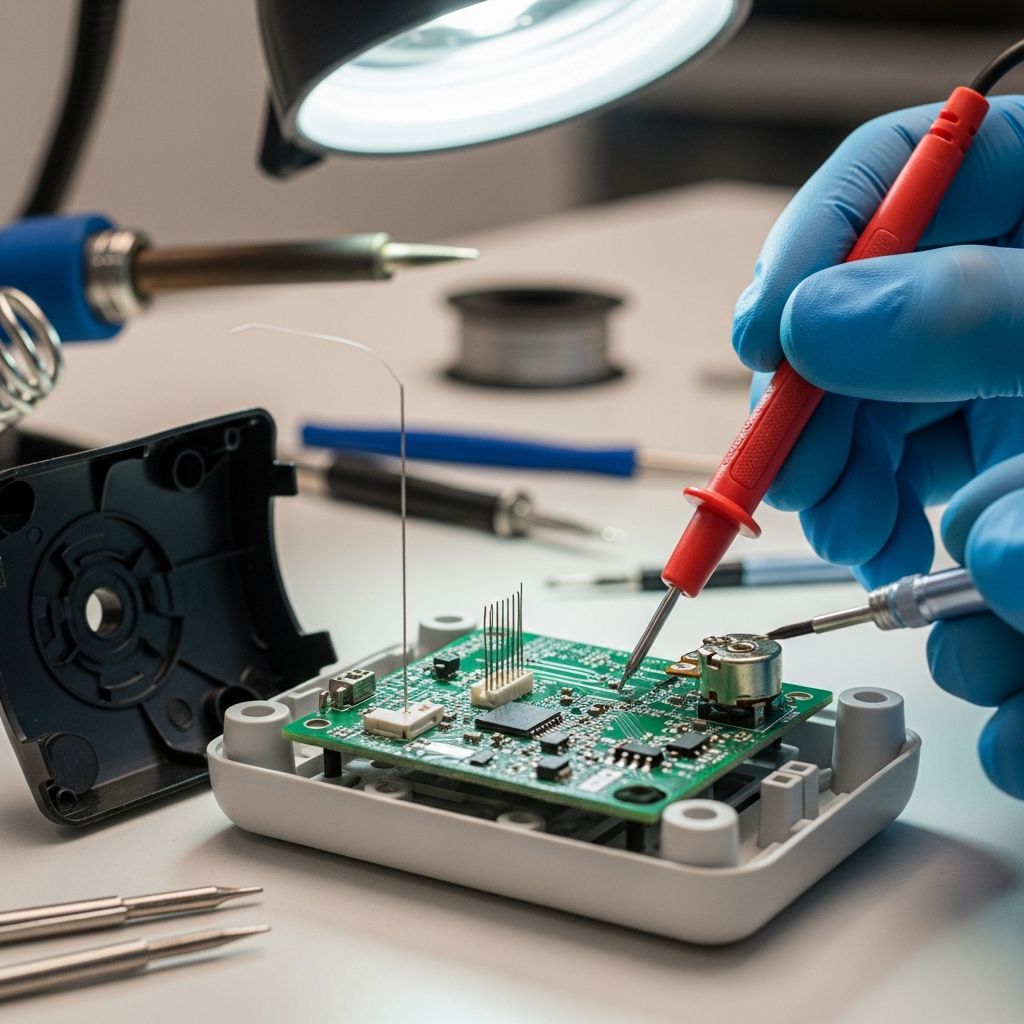
Testing contact integrity requires a multimeter set to continuity mode. With the humidistat turned to its maximum setting, place the multimeter probes on the two terminal screws where wires connect. A functioning humidistat should produce a continuous beep, confirming the electrical path remains unbroken. Silence indicates contact failure requiring replacement.
Corrosion appears as a light gray or white coating on contact surfaces, reducing conductivity. In some cases, gentle cleaning with fine sandpaper or a pencil eraser can restore contact quality temporarily. However, this solution rarely lasts long, and replacement is more reliable.
Float and Reservoir Level Detection Failure
Reservoir-style humidifiers employ a float mechanism—similar to a toilet tank float—connected to the inlet valve assembly. As water fills the reservoir, the rising float eventually reaches a mechanical stop that closes the inlet valve, preventing overfilling. When this float assembly fails, the humidifier either never fills or continues filling beyond capacity.
Float mechanisms can jam due to mineral deposits or physical obstruction. Manually manipulating the float up and down while the system is off may restore function if sediment has locked the assembly. If movement remains impossible despite cleaning efforts, component replacement is necessary.
Additionally, the float arm can crack or separate from its pivot point. Visual inspection often reveals such damage immediately. Replacing the float assembly restores proper water level regulation.
Humidity Range Setting and Operational Parameters
Among the most frequently overlooked causes of apparent humidistat failure is simple misconfiguration of the humidity setpoint. If your humidistat is adjusted to 30% relative humidity and your home already maintains 35% humidity, the device correctly remains inactive—no malfunction has occurred.
Most humidistats feature a dial or digital display with a range spanning 20% to 80% relative humidity. Setting this control too low prevents activation even during dry winter months. Conversely, excessively high settings cause continuous operation and potential moisture damage.
Optimal residential humidity typically ranges between 30% and 50%, varying by season and climate. During winter heating, lower settings (30-40%) prevent condensation on windows. Summer settings (40-50%) balance comfort with mold prevention. Adjusting your setpoint to match seasonal conditions often resolves perceived equipment failure.
Preventive Maintenance Extending Equipment Lifespan
Proactive maintenance dramatically extends humidistat reliability and prevents many failures before they occur. The EPA recommends using distilled or demineralized water in humidifiers, as this practice eliminates mineral deposits that damage internal components including humidistats.
Monthly inspection of all visible connections ensures wires remain secure and corrosion-free. Gently tightening terminal screws and cleaning light oxidation from contact surfaces prevents electrical failures. The Consumer Product Safety Commission emphasizes regular cleaning of humidification systems, including filter replacement according to manufacturer specifications.
Seasonal storage requires special attention. Before storing your humidifier during warm months, completely drain the reservoir and allow internal components to dry thoroughly. Any residual moisture invites mold growth and mineral crystallization. Upon retrieval from storage, inspect all components before operation and consider replacing aged filters regardless of their appearance.
Environmental factors affect humidistat performance. Mounting the device away from direct sunlight, drafts from windows or doors, and heat sources like radiators ensures accurate humidity sensing. A humidistat positioned in a kitchen near a steam source will read artificially high humidity and reduce humidifier operation accordingly.
When Professional Intervention Becomes Necessary
Certain humidistat failures exceed safe DIY repair boundaries. Hard-wired humidifiers connected directly to your electrical panel require licensed electrician expertise for power-related diagnostics and repairs. Attempting such work risks electrocution or fire hazard.
Complex mechanical linkages or control boards within sophisticated humidistat models may lack user-serviceable components. Modern smart humidistats with WiFi connectivity and software features often require manufacturer support or authorized technician evaluation.
If you’ve systematically verified power supply, tested electrical continuity, confirmed proper water supply, and adjusted humidity setpoints—yet your humidistat still fails to function—internal component failure has likely occurred beyond reasonable DIY repair. Professional technicians possess diagnostic equipment that identifies failures invisible to standard multimeters.
Common Questions About Humidistat Function and Repair
Why does my humidistat reading differ from a standalone hygrometer?
Humidistat sensors can drift from accuracy over months or years. Additionally, location matters significantly—sensors near doorways, windows, or heat sources read differently than centralized locations. Comparing readings in the same spot after allowing both devices to stabilize for fifteen minutes reveals true calibration error versus location variation.
Can I simply bypass a faulty humidistat and run my humidifier continuously?
Continuous operation risks excessive humidity exceeding 60%, promoting mold growth and structural damage. The humidistat exists to automate appropriate moisture levels. Bypassing it is unsafe and potentially harmful to your home.
What is the typical lifespan of a humidistat before failure?
Quality humidistats function reliably for ten to fifteen years with proper maintenance. Hard water exposure significantly reduces this lifespan through mineral accumulation. Using distilled water can extend the service life considerably.
Do I need special tools to replace a humidistat?
Most humidistat replacement requires only a screwdriver and multimeter for testing. The replacement device should connect to existing wiring using identical terminal configurations. Always photograph the original wiring before disconnection to ensure correct reconnection.
Why does my humidifier run constantly even though my home feels dry?
Constant operation despite dry conditions suggests either a faulty humidistat stuck in the “on” position or a humidity setpoint set above your home’s capability. Additionally, air leaks through unsealed doors, windows, and electrical boxes continuously introduce dry outside air, defeating humidification efforts. Sealing these leaks is essential for maintaining consistent humidity.
References
- Why is My Humidifier Not Working? 10 Common Issues and Fixes — Total Home Supply. 2025. https://blog.totalhomesupply.com/humidifier-troubleshooting/
- Humidifier Not Getting Water — Humidifier Troubleshooting — RepairClinic.com. https://www.youtube.com/watch?v=v5TpGFVhIrw
- Diagnosing Home Humidifier System Problems — Service Legends. https://www.servicelegends.com/diagnosing-home-humidifier-system-problems/
- How to Diagnose and Replace a Humidistat — Video Tutorial. https://www.youtube.com/watch?v=6lMW78w3-Vs
Similar Articles



Read full bio of Sneha Tete