Designing the Perfect Hummingbird-Friendly Birdbath for Your Garden
How to create a shallow, sparkling oasis that hummingbirds can’t resist
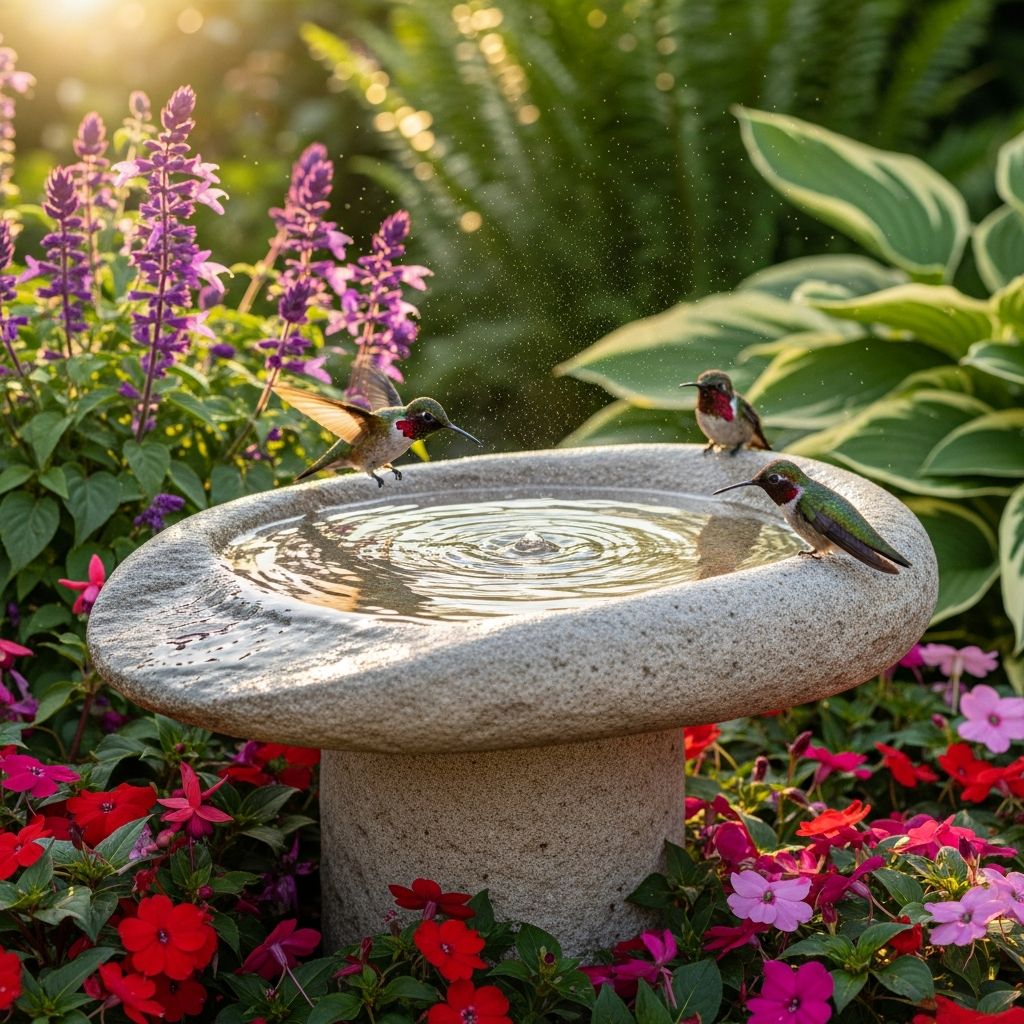
Hummingbirds are among the most captivating visitors a garden can host, and while nectar feeders and tubular flowers get most of the attention, water is just as important. A thoughtfully designed birdbath tailored to these tiny birds can transform your yard into a busy, sparkling oasis where hummingbirds drink, bathe, and hover throughout the day.
Why Hummingbirds Need a Different Kind of Birdbath
Traditional birdbaths are typically designed for songbirds that like to stand in shallow pools of water. Hummingbirds use water very differently. They prefer to fly through light sprays, settle onto shallow, wet surfaces, or hover at the edge of gentle trickles rather than wade into deep bowls.
Designing a birdbath specifically with hummingbirds in mind means rethinking depth, movement, and scale. Instead of focusing on a deep basin, you emphasize fine droplets, thin films of water, and very shallow edges where these energetic birds feel safe and in control.
Core Design Principles for a Hummingbird Birdbath
Before you choose a style or material, start with the basic characteristics that make a birdbath truly hummingbird-friendly. These fundamentals will guide every design decision you make.
- Shallow water: Aim for water that is no more than 1–2 cm (about 1/2 inch) deep where hummingbirds will actually bathe.
- Moving, sparkling water: Fine sprays, drips, bubbles, and thin sheets of water are far more attractive than a silent, still pool.
- Safe approach: Good visibility, nearby perches, and an easy escape route make hummingbirds feel secure while they bathe.
- Easy maintenance: Simple shape and accessible parts encourage frequent cleaning, which is vital in warm weather.
Ideal Water Depth, Shape, and Scale
Depth and contour matter more to hummingbirds than the overall size of your birdbath. Because they are so small, even a shallow saucer can feel overwhelming if it is too deep at the center.
Recommended water depths
- Bathing edges: 0.5–1 cm, enough to dampen feathers without forcing the bird to wade.
- Shallow interior: Up to 2 cm in the deepest point for those that like to fluff into the water.
- Mist or drip zones: Focus less on depth and more on creating damp surfaces and droplets on leaves or rocks.
Helpful shapes and contours
- Wide, gently sloping basins that start almost flat at the rim and deepen gradually toward the center.
- Stepped or tiered bowls where water trickles from one level to the next in thin sheets.
- Flat stones or textured plates placed inside a shallow dish to raise the bathing surface closer to the water’s edge.
| Feature Type | Depth Profile | Water Movement | Hummingbird Suitability |
|---|---|---|---|
| Standard deep birdbath | 5–10 cm or more in center | Usually still | Low; water too deep, better for larger songbirds |
| Shallow saucer with rocks | 0.5–2 cm over stones | Still or gently rippling | Moderate; acceptable if very shallow and visible |
| Drip or mist over leaves | Damp leaf surfaces, thin film of water | Fine droplets / continuous trickle | High; closely mimics natural bathing behavior |
| Weeping fountain with thin sheet | Thin sheet over rock or sculpture | Continuous gentle flow | Very high; allows both hovering and perching |
Choosing Materials That Work with Hummingbirds
Any safe, outdoor-ready material can serve as a hummingbird birdbath if the shape and depth are right, but some surfaces perform better than others. Think about texture, heat retention, and how easily algae may form.
- Ceramic or glazed stoneware: Smooth, easy to clean, and available in bright colors that catch the light. Be mindful of extremely dark glazes that can overheat in full sun.
- Concrete or cast stone: Stable and durable, ideal for sculptural pieces, but somewhat heavy to move. A sealed surface is easier to scrub.
- Glass or metal dishes: Visually striking, especially in colored glass, but can become hot; use partial shade or add stones to buffer temperature swings.
- Natural stone and slate: Excellent for creating trickles and thin water sheets, with enough texture to provide secure footing for tiny claws.
Whatever material you choose, ensure that any paints, sealants, or finishes are non-toxic and rated for outdoor use around wildlife. Avoid sharp edges or rough seams that could snag delicate wings or feet.
Adding Motion: Drippers, Misters, and Gentle Fountains
Movement is one of the most powerful ways to entice hummingbirds. They notice the sparkle and sound of moving water from a distance, and many will fly straight through a mist or hover where droplets fall from above.
Popular water movement options
- Drippers: A slow, steady drip from a small tube or spout onto a rock, leaf, or shallow dish. The repeated droplets keep surfaces wet and create a soft, rhythmic sound.
- Misters: Fine spray nozzles connected to a water line or pump that create a cloud of tiny droplets. Hummingbirds often dart in and out of the mist to rinse their feathers.
- Weeping fountains: Designs where water spills in a thin sheet over a sculpted surface, forming a shallow, continuously refreshed film.
- Low-output bubblers: Small pumps that push water just high enough to ripple the surface without forming a tall jet that could overwhelm tiny birds.
You can combine these approaches by placing a mister above a shallow saucer or directing a dripper onto a flat stone that sits inside a shallow basin. The goal is to keep the experience gentle: movement should be visible and audible, but never forceful or noisy.
Placement: Where to Put a Hummingbird Birdbath
Location influences how often hummingbirds use your birdbath and how safe they feel while doing so. Proper placement balances visibility, security, and convenience for maintenance.
Key placement guidelines
- Near nectar sources: Position the birdbath within a short flight of hummingbird-friendly flowers or feeders so birds can drink and bathe on the same circuit.
- Good sight lines: Avoid tucking the bath deep into dense shrubs. A clear view helps hummingbirds watch for predators and feel confident enough to linger.
- Safe distance from cover: Keep a few meters between the bath and heavy brush where cats or other predators could lurk, while still offering nearby branches for perching.
- Partial shade: Dappled shade or morning sun prevents water from overheating and slows algae growth without hiding the feature completely.
- Visible from indoors: Place the birdbath where you can watch the action from a window or patio, turning everyday routines into birdwatching moments.
Integrating a Hummingbird Birdbath into a Pollinator Garden
A hummingbird birdbath is most effective when it is part of a broader habitat that includes nectar, shelter, and safe flight paths. By weaving it into a pollinator-friendly design, you create a richer, more resilient garden ecosystem.
Plant choices that complement your birdbath
- Tubular flowers: Salvias, penstemons, bee balm, columbine, and trumpet honeysuckle provide natural nectar and visual cues that draw hummingbirds toward your yard.
- Layered planting: Mix low groundcovers, mid-height perennials, and taller shrubs to create vertical structure and varied perching options.
- Continuous bloom: Choose species that flower at different times so hummingbirds have a reliable nectar supply across the season.
Group your birdbath, hummingbird feeder, and most nectar-rich flowers in a loose triangle rather than clustering everything in one spot. This gives birds multiple approach routes and reduces congestion, which can discourage shyer individuals.
Safety and Hygiene: Keeping Hummingbirds Healthy
Clean, fresh water is essential for any birdbath, but shallow, sunlit hummingbird baths can accumulate biofilm and algae surprisingly fast. Good hygiene protects birds from disease and keeps your feature visually appealing.
Cleaning tips and frequency
- Empty and refill still-water basins at least every 1–2 days in warm weather.
- Scrub surfaces weekly with a dedicated brush and a mild solution of water and white vinegar, then rinse thoroughly.
- Avoid soaps and detergents, which can leave residues on surfaces and in the water.
- Disassemble pumps and tubing regularly to remove debris and biofilm that could impede flow.
Never add chemicals, algaecides, or scented cleaners to a birdbath meant for wildlife. If algae becomes a recurring issue, adjust placement for more shade, reduce nutrient sources nearby, and shorten cleaning intervals instead of resorting to additives.
Simple DIY Ideas for a Hummingbird Birdbath
You do not need a complex or expensive fountain to serve hummingbirds well. Many effective designs can be assembled from everyday items and a small pump or simple drip line.
Easy DIY approaches
- Shallow saucer on a stand: Use a plant saucer on a sturdy pedestal, fill it with flat river stones, and position a small solar bubbler at one edge for gentle ripples.
- Leafy drip station: Suspend a small container above a cluster of broad leaves (real or artificial) and allow water to drip slowly, creating damp surfaces where hummingbirds can bathe.
- Stepped rock cascade: Arrange flat stones in a low, gentle slope inside a shallow basin and direct a low-flow pump so water seeps down the steps in a thin veil.
- Window-view mister: Attach a fine mister nozzle to a nearby hose or micro-irrigation line near a small, shallow dish that collects excess droplets.
Experiment with flow rate and positioning. Small adjustments can make a big difference in how the water moves and where it collects, and hummingbirds may quickly reveal their favorite spots.
Frequently Asked Questions about Hummingbird Birdbaths
Do hummingbirds actually use birdbaths?
Yes. While hummingbirds do not typically stand in deep pools like many songbirds, they readily use shallow, moving water. They may fly through mists, perch on wet rocks, or hover at the edge of a gentle trickle to bathe and preen.
How shallow should a hummingbird birdbath be?
Design the primary bathing area to be less than 2 cm deep, with at least part of the surface closer to 0.5–1 cm. When in doubt, err on the side of shallower water and rely on movement (drips, sprays, thin sheets) to make it attractive.
Can I use a regular birdbath for hummingbirds?
You can adapt a standard birdbath by making it shallower and more dynamic. Add clean, flat stones to raise the effective floor and place a small fountain head, bubbler, or drip above one section so water stays in motion.
Is running water better than still water?
For hummingbirds, yes. Running or gently moving water is easier to spot and more closely resembles the natural sources they use in the wild, such as waterfall spray, dripping foliage, and trickling streams.
How close can I place a hummingbird feeder to the birdbath?
Keep the feeder and bath within easy sight of each other but not so close that splashes can dilute nectar or that birds feel cramped. A gap of a few meters with clear flight paths between them works well in most yards.
What about winter or cooler seasons?
In cold climates, consider a shallow heated birdbath or bring pumps and delicate components indoors when freezing temperatures arrive. Hummingbird presence varies by region and migration patterns, but maintaining liquid water benefits many bird species.
Making Your Garden a Lasting Hummingbird Haven
A hummingbird birdbath is more than a decorative accent; it is a functional piece of habitat that meets a real need for these high-energy birds. When combined with nectar-rich flowers, safe perches, and thoughtful placement, it encourages hummingbirds to return day after day.
By focusing on shallow water, gentle movement, and clean, wildlife-safe materials, you create a reliable source of refreshment that benefits both the birds and everyone who enjoys watching them. The result is a garden that feels more alive, more dynamic, and more connected to the natural world just beyond your door.
Similar Articles






Read full bio of Sneha Tete