Hydroponic Gardening Risks: 6 Major Hazards And Safety Tips
Discover the hidden hazards of soil-less growing and master safety strategies for thriving hydroponic setups.
Hydroponic Gardening Risks: Navigating the Challenges of Soil-Less Cultivation
Hydroponic systems grow plants in nutrient-rich water without soil, offering efficiency and year-round production, but they introduce specific hazards like electrical dangers, microbial contamination, and rapid disease spread that demand vigilant management.
Electrical Hazards in Wet Environments
The core of hydroponics relies on pumps, lights, and timers operating near water, creating shock risks from faulty wiring or spills. Low-voltage DC pumps at 12V-18V reduce shock potential compared to standard AC outlets.
Insulation failures or exposed connections amplify dangers, especially in humid setups where moisture corrodes components. Surge protectors and ground-fault circuit interrupter (GFCI) outlets are critical; test them monthly to ensure functionality.
- Position cords away from reservoirs and trays to avoid accidental submersion.
- Inspect pumps and timers for cracks or wear during weekly routines.
- Use waterproof enclosures for all electrical junctions.
Fire Risks from Intensive Power Use
Despite water abundance, hydroponics heightens fire chances through heavy electrical loads from grow lights, heaters, and fans. Overloaded circuits or frayed wires ignite flammable materials like plastics and growing media nearby.
| Risk Factor | Prevention Strategy |
|---|---|
| High-wattage lights | Install dedicated circuits and timers |
| Heat buildup | Ensure ventilation and space appliances from combustibles |
| Extension cord overuse | Opt for direct wall plugs with surge protection |
Maintain clearance around outlets and avoid stacking gear to dissipate heat effectively.
Microbial Contamination and Food Safety Threats
Hydroponic produce faces elevated pathogen risks like E. coli, Salmonella, and Listeria due to recirculating nutrient solutions that spread contaminants rapidly. Purdue research detected Shiga toxin-producing E. coli (STEC) in both hydroponic and aquaponic systems, entering via accidental splashes or poor hygiene.
High humidity fosters biofilms on surfaces, while oxygen-rich solutions accelerate bacterial growth. A 2021 salmonellosis outbreak linked to hydroponic greens hospitalized four people, tracing back to tainted water sources.
- Wash hands thoroughly before handling plants or equipment.
- Sanitize reservoirs, tubing, and tools with approved disinfectants weekly.
- Test source water for coliforms before use.
Damaged roots or harvest splashes transfer pathogens to edible parts; avoid root contact during picking.
Rapid Disease Propagation in Closed Systems
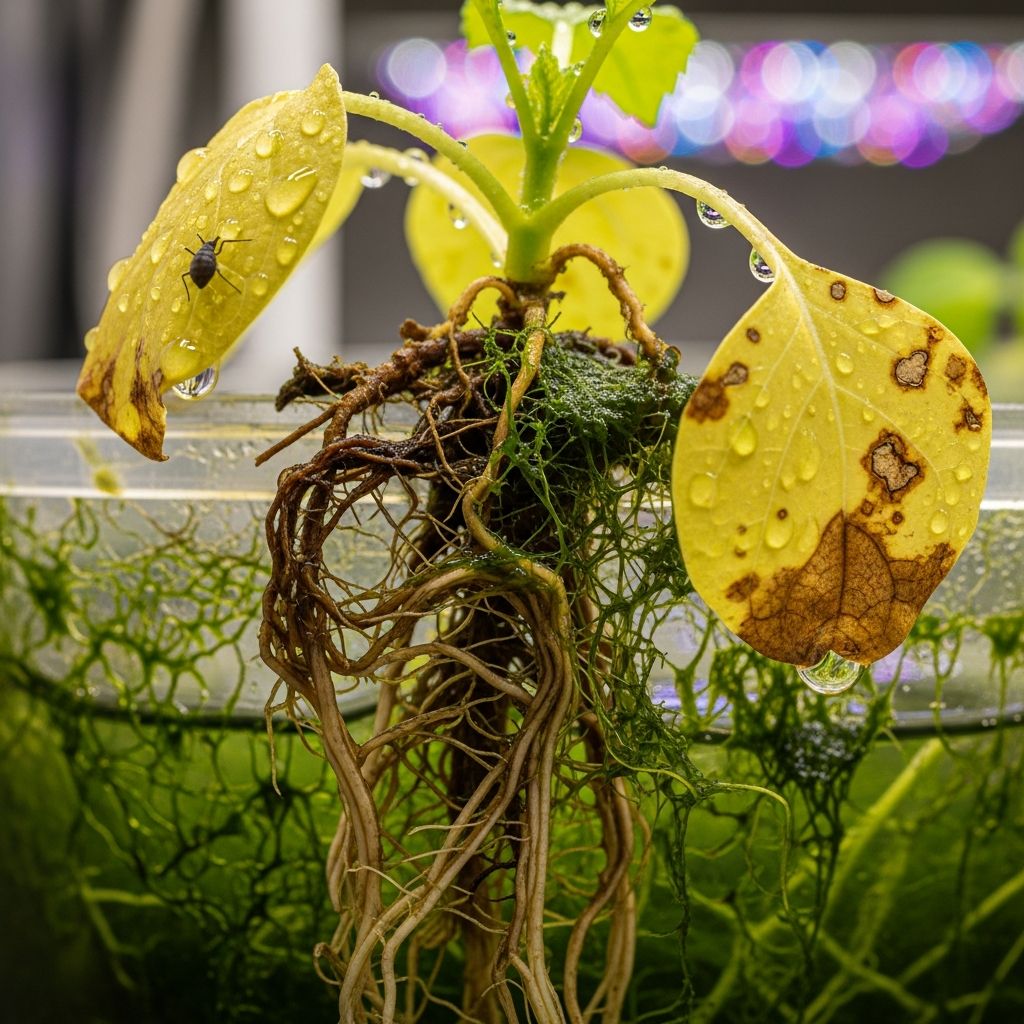
Unlike soil gardening, hydroponics circulates issues system-wide: one infected plant contaminates all via shared water. Pathogens thrive in warm, humid conditions, spreading viruses, fungi, and bacteria without soil buffers.
Algae overgrowth clogs lines and depletes oxygen, stressing plants and inviting root rot. Preventive sanitation trumps cures, as chemical reliance harms edibles.
Power Failure and Environmental Disruptions
Outages halt circulation, lighting, and climate control, causing wilting, oxygen starvation, or temperature swings. Freezing risks damage pipes in cold climates, while heat spikes promote bolting.
- Backup generators or battery pumps for critical functions.
- Insulate systems against freezes with heaters.
- Monitor remotely via apps for early alerts.
Structural and Maintenance Oversights
Poor builds lead to leaks flooding electrics or collapsing trays injuring users. Neglected filters breed blockages, pressuring pumps to failure.
Wildlife intrusion introduces feces-borne pathogens; seal facilities tightly. Pre-harvest audits check for drips, chemicals, or pests.
Best Practices for Risk Mitigation
Layer defenses: quality gear with built-in safeties, routine protocols, and training. University extensions stress Good Agricultural Practices (GAPs) like worker hygiene and water testing.
| Category | Daily Checks | Weekly Actions |
|---|---|---|
| Electrical | Cord dryness, GFCI test | Insulation inspection |
| Water Quality | pH/EC levels | Full sanitize cycle |
| Cleaning | Surface wipes | Component deep clean |
FAQs on Hydroponic Safety
Can hydroponic veggies carry E. coli?
Yes, studies show STEC presence; handle carefully to prevent edible part transfer.
Are low-voltage pumps fully safe?
They minimize shocks but pair with GFCIs and maintenance for complete protection.
How to prevent disease outbreaks?
Sanitize rigorously and quarantine new plants; recirculating water spreads fast.
What if power goes out?
Plants suffer quickly; have backups for pumps and fans.
Is hydroponics riskier than soil growing?
It controls variables better but amplifies contamination scale without precautions.
Hydroponics rewards preparation with bountiful, clean yields when risks are proactively managed through informed practices and reliable equipment.
References
- Water Meets Electricity: Safety Measures in Hydroponic Gardening — NatureTech Hydroponics. 2023. https://nthydroponics.com/blogs/learn/water-meets-electricity-safety-measures-in-hydroponic-gardening
- 8 Risks to Be Aware of and Reduce While Growing Hydroponics — NIP Group. 2023. https://nipgroup.com/blogs/8-risks-while-growing-hydroponics/
- Risk of E. coli in hydroponic and aquaponic systems may be greater than once thought — Purdue University Newsroom. 2020-05-18. https://www.purdue.edu/newsroom/archive/releases/2020/Q2/risk-of-e.-coli-in-hydroponic-and-aquaponic-systems-may-be-greater-than-once-thought.html
- Food safety considerations for hydroponic fruit and vegetable production — University of Illinois Extension. 2025-08-21. https://extension.illinois.edu/blogs/commercial-fruit-and-vegetable-growers/2025-08-21-food-safety-considerations-hydroponic-fruit
- Food Safety in Hydroponic Food Crop Production: A Review — National Institutes of Health (PMC). 2024. https://pmc.ncbi.nlm.nih.gov/articles/PMC12248475/
- Hydroponic Production of Edible Crops: Food Safety Considerations — Virginia Tech Extension. 2022. https://www.pubs.ext.vt.edu/content/pubs_ext_vt_edu/en/SPES/spes-467/spes-467.html
- Hydroponics and food safety — Jiffy Group. 2023. https://jiffygroup.com/news/hydroponics-and-food-safety/
Similar Articles








Read full bio of Sneha Tete