Illuminate Your Shadow Box: DIY Guide
Transform ordinary shadow boxes into stunning illuminated displays with easy LED and fairy light techniques for personalized home decor.
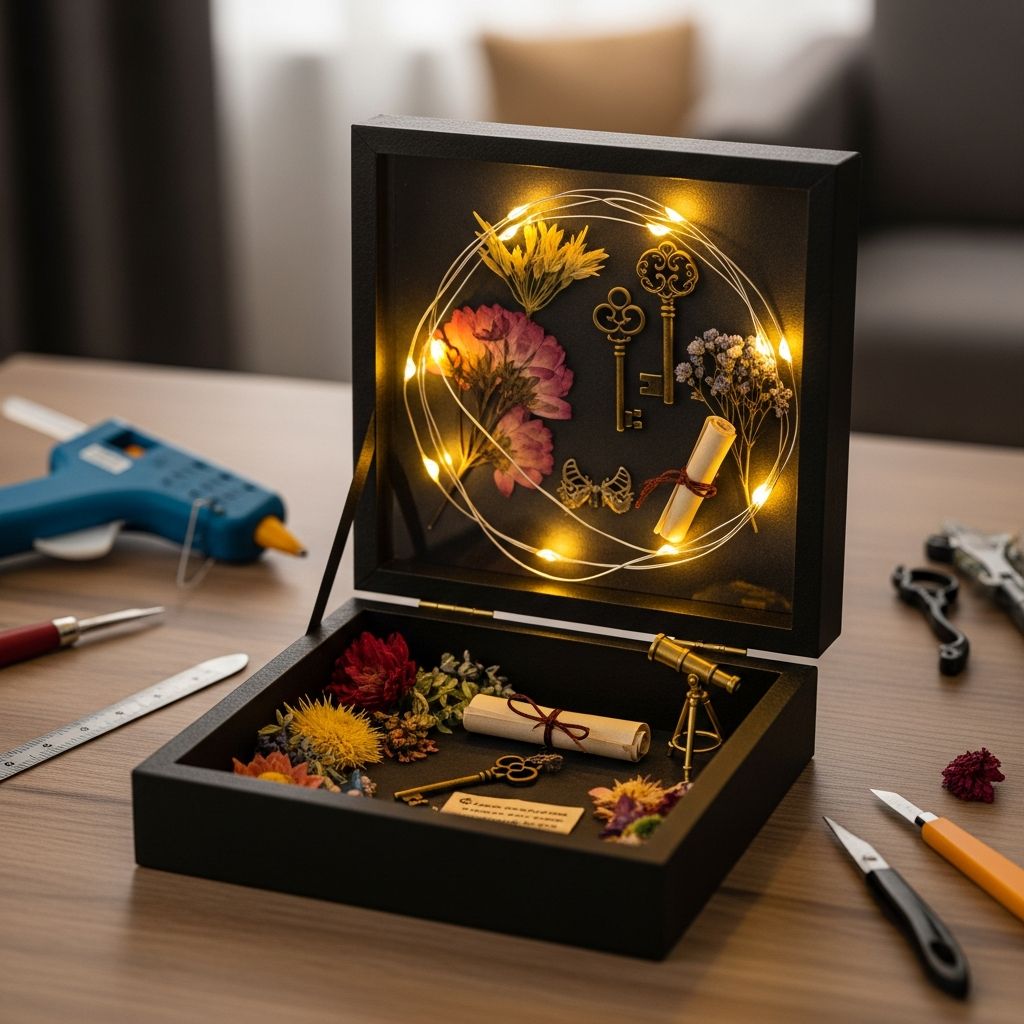
Adding illumination to a shadow box elevates it from a simple frame to a captivating light display that highlights layered designs, cherished mementos, or intricate artwork. This technique uses affordable LED components to create depth and ambiance, perfect for walls, shelves, or gifts.
Why Light Up Your Shadow Box?
Illuminated shadow boxes bring static displays to life, casting soft glows through cutouts and layers for a three-dimensional effect. They work well for seasonal themes, family photos, or hobby collections, enhancing visibility in dim rooms while adding modern flair to interiors.
- Boosts visual impact with backlighting.
- Highlights fine details in papercraft or 3D elements.
- Customizable colors and intensities for any mood.
- Energy-efficient with battery-powered options.
Essential Materials for Success
Gather these items before starting to ensure a smooth project. Focus on quality components for longevity and safety.
| Category | Item | Purpose |
|---|---|---|
| Frame | Deep shadow box (8×10 inches or larger) | Holds layers and lights securely. |
| Lights | LED strip lights (battery-powered, trimmable) | Perimeter glow around edges. |
| Lights | Fairy lights (warm white, 10-20 feet) | Soft, dotted illumination inside layers. |
| Power | AA battery packs | Portable operation without outlets. |
| Adhesives | Glue dots, double-sided tape | Secures lights without damage. |
| Tools | Craft knife, scissors, weeding tool | Precise cutting and placement. |
| Extras | Foam spacers, cardstock layers | Builds depth and design. |
Preparation: Setting Up Your Workspace
Begin in a well-lit, flat area with protective mats to avoid scratches. Disassemble the shadow box, removing glass, insert, and backing. Clean all interior surfaces with a lint-free cloth to ensure adhesives stick properly. Plan your design by sketching layer placement and light paths, noting battery pack positions for easy access.
Technique 1: Installing LED Strip Lights
LED strips provide even, vibrant lighting along the frame’s inner edges, ideal for outlining the entire display. These are flexible, adhesive-backed, and cuttable at marked intervals.
- Test the strip: Connect the battery pack and verify brightness and color options.
- Position the battery: Place it near a corner for wiring. Cut a small notch (0.5 inches) in the backing using a craft knife on a self-healing mat.
- Attach the strip: Peel backing from one end, starting near the battery. Press firmly against the insert’s inner side or frame back, following the perimeter smoothly.
- Curve corners: Gently bend the strip without kinking; add a second row angled upward for intensified glow if desired.
- Trim excess: Turn off lights, cut at the nearest cut-mark (plus/minus icon), and secure ends.
- Reassemble: Feed wires through the notch, layer designs face-down, and secure the backing.
This method keeps lights hidden, diffusing light through layers for a professional halo effect.
Technique 2: Embedding Fairy Lights
Fairy lights mimic twinkling stars, perfect for nesting between layers to spotlight specific elements like trees or patterns. Their thin wires weave easily without bulk.
- Plan routing: Decide layers for light concentration, such as behind focal points.
- Secure battery: Align with the notch corner on the rearmost layer.
- Place lights: Use glue dots on wire backs, avoiding light housings. Loop strands across solid areas, spacing evenly.
- Layer progressively: Add lights to one layer, top with the next, repeating until complete. Check visibility from the front before committing.
- Notch integration: Feed wires through pre-cut layer notches for clean exits.
- Finalize: Press layers together, ensuring even pressure, then insert into frame.
Experiment with loops for denser glow in key spots, creating dynamic shadows.
Combining Lights for Maximum Drama
Pair LED strips for edge lighting with fairy lights internally for layered brilliance. Attach strips to the frame perimeter first, then embed fairies between designs. This dual setup amplifies depth—strips provide overall wash, fairies add sparkle. Use color-changing variants for holidays or moods, securing both battery packs externally or via shelf mounting.
Safety Tips for Long-Lasting Displays
Prioritize precautions to prevent hazards and ensure durability.
- Avoid overheating: Limit to low-heat LEDs; never cover battery packs fully.
- Secure wiring: Tape or dot all loose strands to prevent pulls.
- Ventilation: Leave slight gaps in backing for airflow if wall-hung.
- Battery management: Use rechargeable AAs; switch off when not in use.
- Child-proof: Position switches away from easy reach.
For hanging, reinforce frames with picture wire; shelves suit heavier battery setups.
Creative Design Ideas and Customization
Adapt lighting to themes for unique results.
- Seasonal Scenes: Fairy lights in winter villages glow through ‘snow’ layers.
- Memory Boxes: LED outlines highlight photos or medals softly.
- Artistic Mandalas: Twinklers accent intricate paper cuts.
- Galaxy Effects: Blue LEDs with star-punched layers simulate space.
- Botanical Glows: Green-tinted strips illuminate leaf silhouettes.
Scale up for larger boxes or link multiples for gallery walls. Software like Cricut Design Space aids custom SVGs.
Troubleshooting Common Issues
| Problem | Solution |
|---|---|
| Lights dim or flicker | Check battery charge; clean contacts. |
| Visible wires | Reposition with more glue dots; use thinner strands. |
| Uneven glow | Add extra loops or second strip row. |
| Adhesive fails | Switch to foam tape; roughen surfaces lightly. |
| Overheating | Space out lights; ensure ventilation. |
Display and Maintenance Advice
Mount away from direct sun to preserve colors. Dust gently with compressed air monthly. Refresh batteries seasonally. For permanence, convert to USB power with hidden adapters.
Frequently Asked Questions (FAQs)
Can I use these lights in any shadow box size?
Yes, scale strips and fairy lengths to fit; most are adjustable.
Are battery packs removable?
Design with notches for easy access without disassembly.
What if I want color changes?
Opt for remote-controlled RGB LEDs for versatility.
Is this beginner-friendly?
Absolutely—with basic tools, it’s achievable in under an hour.
How long do the lights last?
LEDs endure 20,000+ hours; batteries vary by use.
References
- National Fire Protection Association (NFPA) – LED Safety Guidelines — NFPA. 2024-01-15. https://www.nfpa.org/codes-and-standards/all-codes-and-standards/list-of-codes-and-standards/detail?code=70
- Underwriters Laboratories (UL) Standards for Battery-Operated Lights — UL. 2025-03-10. https://www.ul.com/standards
- Cricut Design Space Official Tutorials – Layered Projects — Cricut. 2025-11-20. https://design.cricut.com/
- Consumer Product Safety Commission (CPSC) – Craft Light Safety — CPSC. 2024-06-05. https://www.cpsc.gov/safety-education
- Energy Star LED Efficiency Guide — EPA. 2025-02-14. https://www.energystar.gov/products/lighting_fans/light_bulbs
Similar Articles



Read full bio of medha deb