Install Artificial Turf: Complete DIY Guide
Transform your yard with professional-quality artificial turf installation using our detailed step-by-step instructions and essential tips for lasting results.
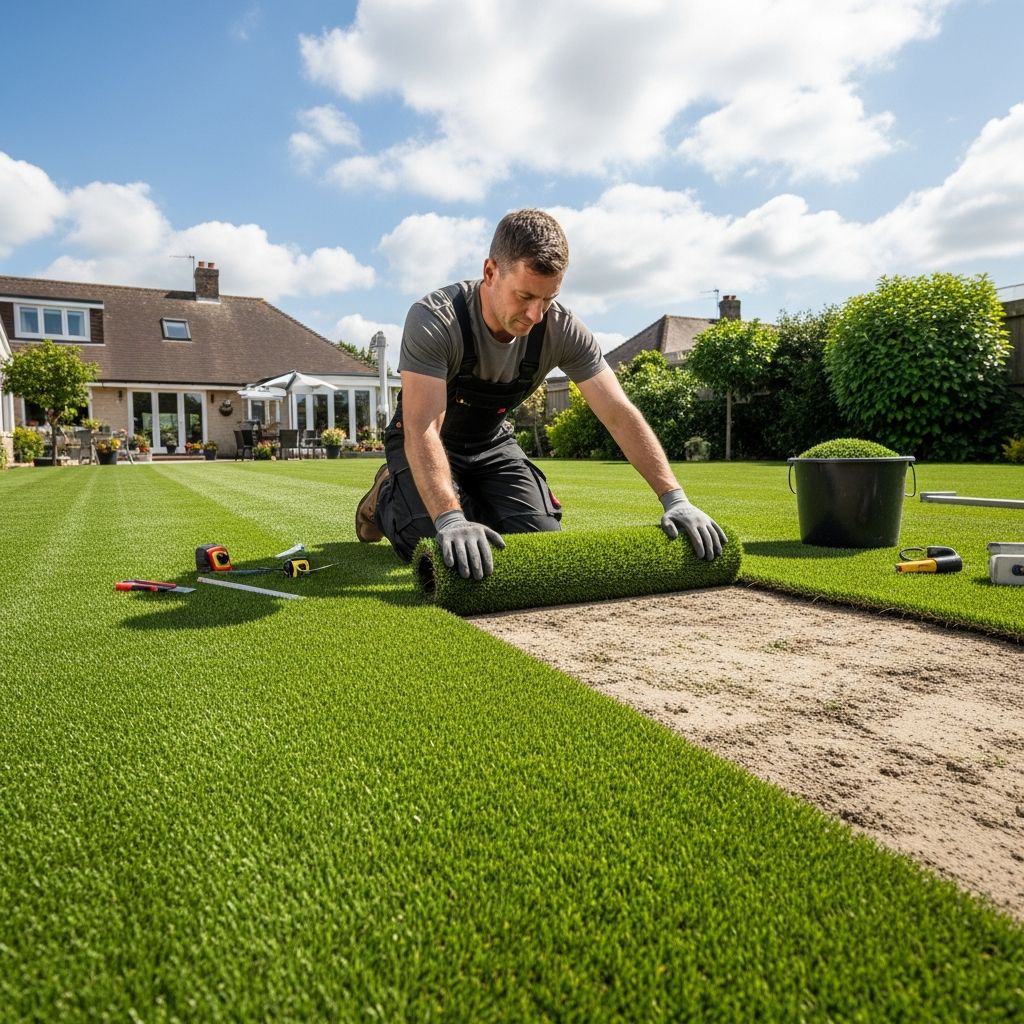
Artificial turf offers a durable, evergreen alternative to natural grass, ideal for busy homeowners seeking low-maintenance landscapes. This guide provides a thorough walkthrough for installing synthetic grass, ensuring proper drainage, stability, and aesthetic appeal. Whether refreshing a backyard or creating a pet-friendly play area, following these steps yields professional results without hiring experts.
Planning Your Artificial Turf Project
Success begins with meticulous planning. Measure the installation area precisely, accounting for curves and obstacles to calculate turf needs accurately. Add 10-20% extra material for irregular shapes to avoid shortages. Assess the site’s slope for drainage, aiming for a 1-2% grade away from structures. Identify underground utilities like irrigation lines or wiring, marking them to prevent damage.
- Sketch the layout to minimize seams, as fewer joints mean stronger durability.
- Choose turf with UV protection and appropriate pile height for your use—shorter for high-traffic zones, longer for luxury feel.
- Budget for materials: turf, base gravel (decomposed granite or class II road base), infill sand, nails, and tools.
Acquire tools upfront: plate compactor, shovels, grading rake, utility knife, drop spreader, power broom, and 6-inch landscape nails. One cubic yard of base covers about 100 square feet at 3 inches deep.
Preparing the Installation Site
Clear the area by removing existing sod, weeds, and debris to a depth of 3-4 inches. Use a sod cutter for efficiency on lawns. Excavate deeper (4-6 inches) in high-use areas to accommodate the base layer fully.
Cap or relocate sprinklers, as synthetic turf requires no irrigation. Move electrical or plumbing lines inward by 6-8 inches from edges. Compact the native soil with a plate compactor to create a firm foundation, preventing future settling.
Install a weed barrier fabric over the soil, securing it with landscape staples. For pest-prone areas, add gopher wire beneath. Avoid plastic sheeting, which traps moisture and leads to mold.
| Site Prep Checklist | Depth/Spacing | Purpose |
|---|---|---|
| Remove sod/dirt | 3-4 inches | Room for base |
| Compact soil | Full coverage | Stability |
| Weed barrier | N/A | Weed prevention |
| Utility adjustment | 6-8 inches inward | Safety |
Building a Solid Base Layer
The base is crucial for drainage and longevity. Spread 3-4 inches of crushed gravel or decomposed granite in layers, compacting each 1-2 inches thick. Wet the material lightly to aid settling, then use a 5000 lb plate compactor or roller until achieving 90-95% compaction.
Slope the base 1-2% toward drainage points, away from buildings. Check levelness with a long board and straightedge, adjusting with additional gravel as needed. For pet areas, incorporate a gravel-sand mix to enhance permeability.
- Layer 1: 1.5 inches gravel, compact.
- Layer 2: 1.5 inches gravel/sand mix, compact and wet.
- Final check: No more than 1/8-inch variation under a 10-foot straightedge.
Install edging like bender board along perimeters for clean boundaries and to contain the base.
Laying and Cutting the Turf
Acclimate the turf by unrolling it in direct sunlight for 1-2 hours; this relaxes fibers for easier handling. Lay panels in the same blade direction to avoid visible seams. Position without dragging to prevent contamination.
Cut from the backing side using a sharp utility knife along stitch lines for straight edges. Trim excess around obstacles like trees or posts. Butt seams tightly without overlapping.
For large areas, plan seams to run perpendicular to main viewing angles, minimizing visibility.
Securing the Turf Properly
Start at one end, driving 6-inch nails every 3-4 inches along edges, then 12-24 inches in the field. Angle nails slightly outward for better hold. For seams, apply seam tape beneath, fold turf back, glue if specified, then secure with U-nails every 6 inches on both sides.
Drive nails 3/4 deep, parting blades to hide them. Tuck edges under hardscapes using a wonder bar for a seamless finish. Avoid over-nailing, which dimples the surface.
| Nailing Guide | Spacing | Nail Type |
|---|---|---|
| Perimeter | 3-4 inches | 6-inch nails |
| Field | 12-24 inches | 6-inch nails |
| Seams | 6 inches | U-nails |
Applying Infill for Stability and Uprightness
Infill weighs down the turf, supports blades, and aids drainage. Use silica sand or antimicrobial options like Envirofill at 1-2 lbs per square foot, depending on pile height. Spread evenly with a drop spreader, then power brush against the grain to stand blades upright.
Apply in thin layers, brushing between additions to work material into the base. Final light brushing settles infill. Never use masonry sand, which compacts poorly.
- Power brush first to fluff turf.
- Spread infill uniformly.
- Brush thoroughly; repeat until no blades lay flat.
Finishing Touches and Maintenance
Remove debris with a blower. Rinse the surface to set infill and test drainage—water should percolate within minutes. For curves, use carpet scissors to trim stray blades precisely.
Maintenance is simple: brush weekly, rinse monthly, remove leaves promptly. Avoid heavy traffic for 24-48 hours post-install. Annual infill top-ups maintain cushioning.
Common Mistakes to Avoid
- Poor compaction: Leads to settling and unevenness.
- Inadequate drainage slope: Causes pooling and turf failure.
- Skipping acclimation: Results in wrinkles.
- Wrong infill: Compromises blade support.
- Overlooking utilities: Risks costly repairs.
Tools and Materials Summary
| Category | Items |
|---|---|
| Tools | Plate compactor, shovels, rake, utility knife, drop spreader, power broom, hammer, measuring tape |
| Materials | Artificial turf, decomposed granite, weed barrier, 6″ nails, U-nails, infill sand, bender board |
Frequently Asked Questions (FAQs)
Can I install artificial turf over concrete?
Yes, but add a foam underlay for cushioning and shock pads for drainage if needed. Clean and level the surface first.
How long does DIY installation take?
For 500 sq ft, expect 2-4 days depending on experience and helpers.
Is artificial turf safe for pets?
Opt for permeable backing and pet-specific turf with antimicrobial infill to handle urine effectively.
What base depth for heavy use areas?
Increase to 4 inches for playgrounds or sports zones.
Do I need glue for seams?
Nails suffice for most outdoor installs; glue enhances permanence in high-wind areas.
Advanced Tips for Pro Results
Incorporate a crown in the center for natural water shedding. Use geotextile fabrics under base for superior weed control. For rooftops, verify structural load capacity. Test turf samples for color and texture match before committing.
References
- Step by Step Guide to Installing Artificial Grass — Synthetic Grass Warehouse. 2023. https://syntheticgrasswarehouse.com/resources/installing-artificial-grass/step-by-step-guide-to-installing-artificial-grass/
- Synthetic Grass Installation Guide — Green Line Artificial Grass. 2024. https://greenlineartificialgrass.com/synthetic-grass-installation-guide/
- Step by Step Guide for Easy Evergrass™ Turf Installation — MSI Surfaces. 2023. https://www.msisurfaces.com/evergrass-installation.html
- How to Install Artificial Grass | Purchase Green DIY Portal — Purchase Green. 2024. https://www.purchasegreen.com/installation/do-it-yourself
- DIY INSTALLATION GUIDELINES FOR SYNLAWN ARTIFICIAL TURF — Lowe’s (PDF). 2022. https://pdf.lowes.com/productdocuments/240a8581-4267-4cdf-aa5f-d4d1e250fec6/44269346.pdf
Similar Articles



Read full bio of medha deb