Mastering Butcher Block Countertop Installation
Comprehensive DIY guide to measuring, cutting, sealing, and securing durable butcher block countertops for your kitchen remodel.
Butcher block countertops bring natural warmth and timeless appeal to any kitchen, offering a sturdy surface perfect for food preparation and daily use. Made from joined wood strips, these countertops require careful handling to account for wood’s natural expansion and contraction. This guide provides a complete roadmap for DIY installation, from initial planning to final touches, ensuring a seamless fit and enduring beauty.
Understanding Butcher Block Materials and Benefits
Butcher block consists of hardwood strips edge-glued and pressed together, creating a robust yet attractive surface. Common woods include maple, walnut, and oak, each with unique grains and durability levels. Unlike stone or laminate, wood countertops breathe, allowing moisture to escape and preventing warping when properly maintained.
Key advantages include affordability compared to granite, easy customization for cuts and edges, and repairability—scratches can be sanded out. However, they demand regular sealing to resist stains and water damage, especially near sinks.
Essential Tools and Materials for Success
Gathering the right equipment upfront prevents delays. Here’s what you’ll need:
- Circular saw with fine-tooth blade and guide rail for straight cuts
- Jigsaw for sink and irregular cutouts
- Router with 1/2-inch straight bit for joining channels
- Drill with bits (1/8-inch pilot, 5/8-inch for cabinet holes)
- Sandpaper (80-220 grit) or orbital sander
- Clamps, measuring tape, combo square, and pencil
- Sealant (tung oil, mineral oil, or polyurethane), brushes, tack cloths
- Fasteners: #10 screws, fender washers, miter bolts or pocket screws
- Safety gear: goggles, gloves, dust mask
Invest in quality tools like a saw guide to ensure precision, reducing waste and errors.
Preparing Your Kitchen Cabinets
Stable cabinets are crucial. Inspect for levelness using a long straightedge and adjust shims as needed. Remove old countertops, appliances, and plumbing fixtures. Clean surfaces thoroughly.
Drill oversized 5/8-inch holes in cabinet corners and every 24-30 inches along front and back edges. For deeper counters over 30 inches, add a middle row. These holes allow screws to secure the top while permitting wood movement, preventing cracks. Avoid gluing or caulking the top directly to cabinets, as it traps moisture and voids warranties.
| Cabinet Depth | Hole Placement |
|---|---|
| Up to 25.5 inches | Front/back edges every 24-30 inches |
| Over 30 inches | Front/back + middle row |
Accurate Measuring and Templating
Precision starts here. Create cardboard templates for each cabinet section, noting seams, wall irregularities, and sink locations. Lay templates on the butcher block and trace outlines.
Measure twice: from cabinet fronts to walls, accounting for overhangs (typically 1-1.5 inches). Mark front edges prominently. For corners, cut oversized pieces first, then scribe to fit bowed walls using a compass or belt sander. Transfer sink centerlines from walls to the slab for alignment.
Precision Cutting Techniques
Apply painter’s tape to cut lines to minimize chipping. Set your circular saw guide: measure from shoe to blade and mark accordingly, ensuring the blade cuts just outside the line.
Steps for multi-piece installs:
- Cut corner slabs first, checking fit and clamping in place.
- Position adjacent pieces, aligning fronts tightly.
- Trace and jigsaw sink cutouts using templates; test-fit over the sink flange.
- Belt-sand backs for wall contours until snug.
For edges, rout rounded profiles post-installation. Always wear safety gear and secure workpieces.
Joining Seams Securely
Seams must align perfectly for strength. Options include:
- Pocket screws: Drill angled holes every 6 inches with a jig, ensuring cross-grain entry.
- Miter bolts: Rout 1/2-inch deep channels along seams, insert bolts, and tighten with wrenches.
- Mending plates: Glue joints lightly and screw plates underneath for temporary hold.
Dry-fit before final assembly. Mark reference lines across seams for alignment.
Sealing for Protection and Longevity
Seal all surfaces before installation to protect against moisture. Choose based on use:
| Sealer Type | Best For | Application Notes |
|---|---|---|
| Tung oil | Water exposure (undermount sinks) | 2-3 coats, 24-hour dry time per coat |
| Mineral oil | Food prep surfaces | Reapply monthly; food-safe |
| Polyurethane | High-traffic, low-maintenance | Satin finish; durable but less natural |
Sand to 220 grit, clean with tack cloth, apply thinly with brush or rag. Coat ends extra heavily as they absorb most.
Installing the Countertop
Lower pieces into place, aligning fronts and seams. Drill 1/8-inch pilot holes up through cabinet holes into the underside—never through the top. Secure with #10 screws and fender washers penetrating at least half the slab thickness.
Support overhangs: brackets every 24 inches for 8+ inches perpendicular to grain, 12+ inches parallel. Tighten miter bolts, clamp seams, and check levelness.
Sink, Faucet, and Backsplash Integration
Cut faucet holes with hole saws post-installation, sealing raw wood. For undermount sinks, ensure overhang covers the flange; apply sealant to sink rim before dropping the top.
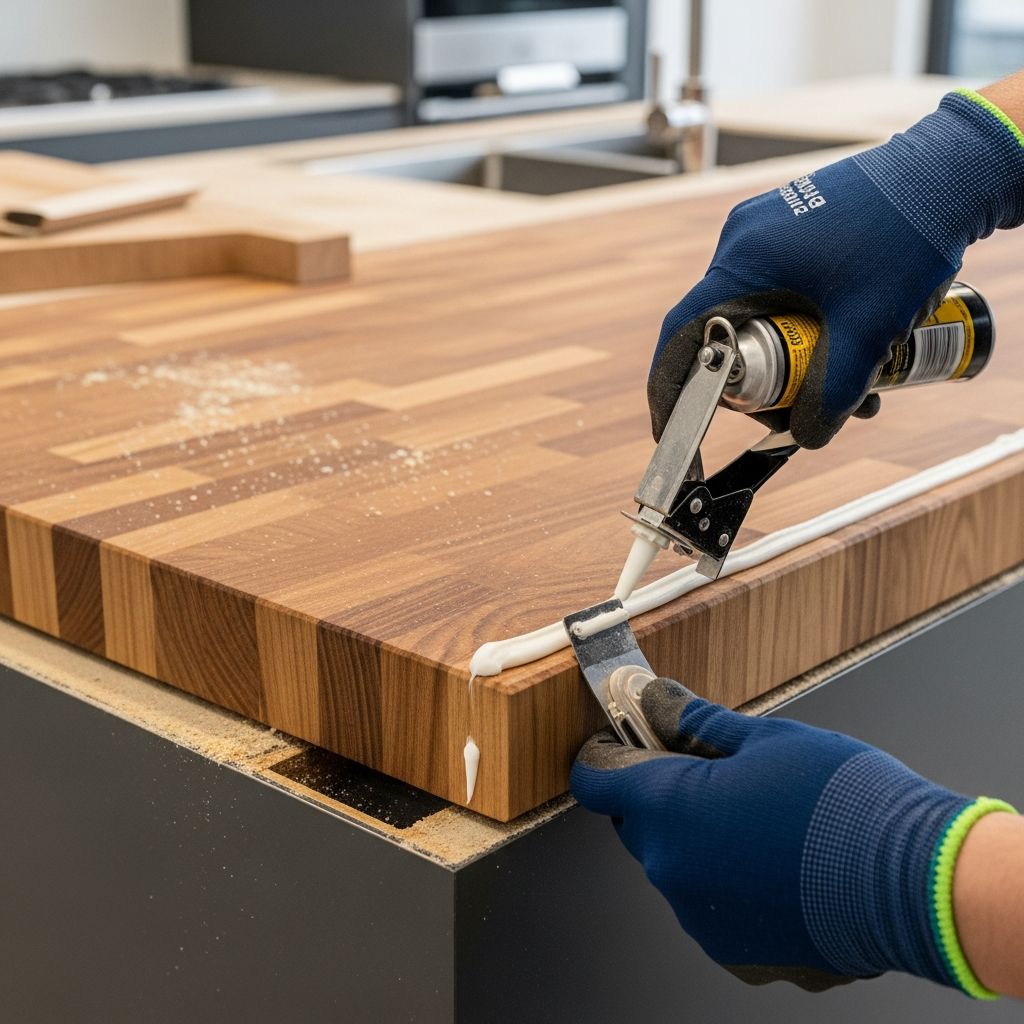
Install backsplash with construction adhesive to the counter edge, not wall-pinned. Dry-fit plumbing, prime and cement PVC connections with quarter-turn alignment.
Finishing Touches and Maintenance
Sand edges smooth and reapply sealant. Rout bullnose profiles for safety. Maintain by oiling monthly, cleaning with mild soap, and avoiding harsh chemicals.
Troubleshoot sagging with added corbels; re-sand deep scratches before resealing.
Frequently Asked Questions
How do I prevent wood movement issues?
Use oversized cabinet holes with fender washers, allowing seasonal expansion without stress.
What’s the best overhang support?
Brackets every 24 inches for overhangs exceeding 8 inches perpendicular or 12 inches parallel to grain.
Can I install over existing plywood?
No—wood needs to breathe; direct contact traps moisture, causing warping.
How often should I reseal?
Monthly for oil finishes, or when water beads stop forming.
Is butcher block food-safe?
Yes, with FDA-approved sealers like mineral oil; avoid untreated raw wood for prep.
References
- How to Install a Butcher Block Countertop — Lowe’s. 2023-01-15. https://www.lowes.com/n/how-to/install-a-butcher-block-countertop
- Installing Butcher Block Countertops — Vermont Butcher Block. 2024-05-20. https://www.vermontbutcherblock.com/pages/installation
- How to Cut & Install Butcher Block Countertops From A to Z — Home RenoVision DIY (YouTube). 2022-11-10. https://www.youtube.com/watch?v=WAJimT_a0Bk
- Installation Tips — Bally Block Co. 2023-08-05. https://butcherblock.com/information-resources/how-tos/installation-tips/
- How to Install Butcher Block Countertops — The Home Depot. 2024-02-12. https://www.homedepot.com/c/ah/how-to-install-butcher-block-countertops/9ba683603be9fa5395fab901f01afa17
Similar Articles




Read full bio of Sneha Tete