Install Outlet Using Light Switch Power: 6 Safe Steps
Comprehensive guide to safely adding a powered outlet by tapping into your existing light switch circuit for more home convenience.
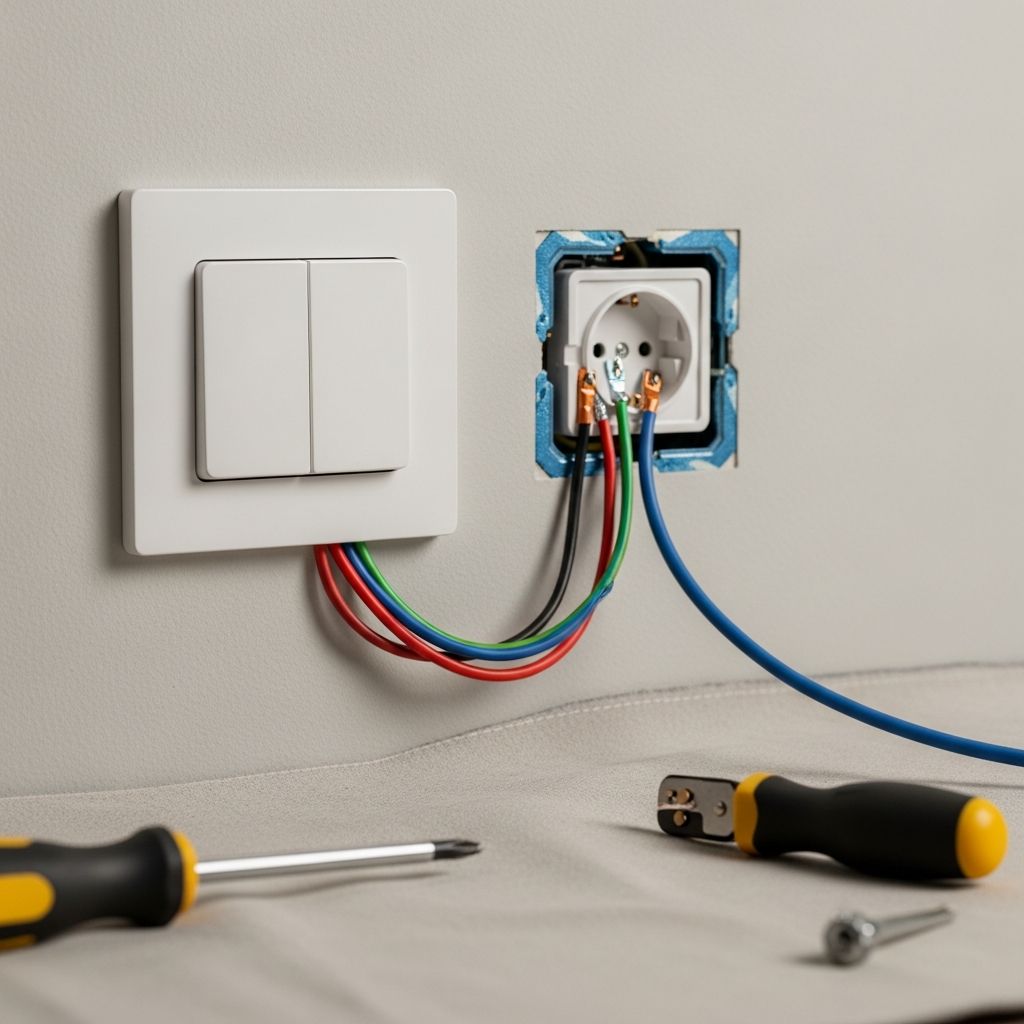
Install Outlet Using Light Switch Power
Expanding electrical access in your home often involves creative solutions like drawing power from an existing light switch. This method allows you to add a convenient outlet without running new circuits from the panel, saving time and cost. However, it requires careful planning to maintain functionality of both the switch and outlet while adhering to safety standards.
Why Tap Into a Light Switch for Outlet Power?
Using a light switch circuit for an outlet provides a practical way to bring power to areas lacking nearby receptacles, such as hallways, bedrooms, or workshops. This approach leverages existing wiring, minimizing wall damage and disruption. Common scenarios include powering lamps, chargers, or tools near a switched light fixture.
Key benefits include reduced material needs and simpler installation compared to full circuit extensions. Always verify the circuit’s capacity can handle added load—typically 15-20 amps for residential setups—to prevent overloads.
Essential Safety Protocols Before Starting
Electrical work demands utmost caution to avoid shocks, fires, or code violations. Begin by shutting off power at the breaker panel serving the switch. Use a non-contact voltage tester to confirm no live current at the switch box, fixture, and planned outlet location.
- Assume all wires are energized until tested.
- Wear insulated gloves and safety glasses.
- Work with a partner for complex steps.
- Consult local electrical codes; permits may be required.
Never bypass ground faults or use damaged tools. If unsure, hire a licensed electrician—DIY errors can lead to hazards.
Tools and Materials Checklist
Gather everything upfront to streamline the project. Quality tools ensure precise connections and compliance.
| Category | Items | Purpose |
|---|---|---|
| Tools | Voltage tester, wire strippers, needle-nose pliers, screwdriver set, drywall saw, fish tape, stud finder | Testing, cutting, pulling wires, mounting |
| Materials | 14/2 NM cable (Romex), outlet box, receptacle (15A standard or GFCI), wire nuts, electrical tape, cable staples, cover plates | Wiring, housing, connections |
| Optional | Switch-outlet combo unit, conduit (if code requires), labels | Integrated control, protection |
Source high-quality components from reputable suppliers to match your home’s amperage.
Planning Your Installation Location and Wiring Path
Select an outlet spot 12-18 inches above the floor, between studs for easy access. Use a stud finder to avoid obstacles. Plan the wire route from switch to outlet—ideally along joists or through walls without excessive bends.
Measure cable length, adding 20% extra for pulls. For runs over 50 feet, assess voltage drop. Sketch a diagram labeling hot (black), neutral (white), ground (bare/green) paths.
Step-by-Step Wiring Process
Step 1: Access and Inspect Switch Wiring
Remove the switch plate, unscrew the switch, and gently pull it out. Note connections: typically black hot to switch top, white neutral looped through, ground attached. Photograph for reference.
Feed new 14/2 cable into the box via knockout, securing with staple within 12 inches.
Step 2: Prepare the New Outlet Box
Cut a precise opening using the box as template and drywall saw. Insert and secure the old-work box with wings or screws into drywall. Punch knockouts and route cable inside.
Step 3: Run and Strip the Cable
Use fish tape to pull cable from switch to outlet. Score sheathing with utility knife, strip 6-8 inches, remove paper filler, and strip 1/2-inch insulation from conductors. Leave 6 inches slack.
Step 4: Connect Wires at the Switch
Pigtail the existing switch hot: connect incoming black hot to a short black pigtail with wire nut, then link pigtail to switch and new cable black. Neutrals splice together (existing + new white). Grounds unite all bare wires.
This “switch loop” or pigtail method keeps the light operational while feeding the outlet constantly.
Step 5: Wire the Outlet
Form clockwise hooks on wire ends (direction of screw tightening). Attach black to brass screw, white to silver, ground to green. Tighten firmly—no loose strands.
For GFCI: use “line” terminals only, following labels.
Step 6: Mount and Secure Components
Tuck wires zigzag-folded into box, screw outlet in place. Ensure flush and level. Replace switch, attach cover plates.
Power-Up Testing and Final Verification
Restore power at breaker. Test switch (light on/off), then outlet with tester or lamp. Check for proper polarity and ground. No heat, sparks, or tripped breakers? Secure.
Label the breaker and note the shared circuit.
Advanced Options: Combo Devices and Load Considerations
For controlled outlet power (off with light), use a combo switch-outlet—no new cable needed. Wire per device instructions.
Monitor load: switches handle ~2A continuous; derate for outlets. Upgrade if exceeding circuit limits.
Common Pitfalls and Troubleshooting
- No power at outlet: Check pigtails, nuts; retest voltage.
- Switch inop: Verify hot leg continuity.
- GFCI trips: Wrong terminals or moisture.
- Overheating: Loose screws—retighten.
Use multimeter for continuity/voltage checks.
Frequently Asked Questions
Can any light switch power an outlet?
Most 15A switches on NM-wired circuits work, but confirm capacity and no AFCI/GFCI upstream conflicts.
Is a permit needed?
Check local codes; many areas require inspection for new outlets.
What if no neutral at switch?
Use a switch loop: mark white as hot (tape black), return neutral via new cable.
GFCI required?
Mandated in kitchens, baths, garages per NEC—consider for all.
Max outlets per circuit?
Generally 8-10 for 15A, space evenly.
Legal and Code Compliance Essentials
Follow National Electrical Code (NEC): proper box fill (max 9x#12 wire volume), arc-fault protection in bedrooms, tamper-resistant receptacles post-2014. State/local amendments apply. Document work for resale.
This method boosts home functionality safely when executed right.
References
- Mastering DIY: A Step-by-Step Guide to Installing Electrical Outlets Safely and Easily — The McGill Group LLC. 2023. https://www.themcgillgroupllc.com/post/mastering-diy-a-step-by-step-guide-to-installing-electrical-outlets-safely-and-easily
- How to Replace an Outlet (or Install a New Outlet) in Your Home — Prairie Electric. 2024. https://www.prairielectric.com/electrical-service/adding-replacing-electrical-outlets/
- How to Install an Electrical Outlet — Lowe’s. 2025-01-10. https://www.lowes.com/n/how-to/how-to-install-an-electrical-outlet
- How to Install an Electrical Outlet — YouTube (Leviton tutorial equivalent). 2022. https://www.youtube.com/watch?v=ziZA-bOFZl4
- How to Wire an Outlet — The Home Depot. 2024. https://www.homedepot.com/c/ah/how-to-wire-an-outlet/9ba683603be9fa5395fab908cd82822
Similar Articles






Read full bio of medha deb