Installing Exterior Garage Lighting Without Existing Holes
Complete guide to adding outdoor garage lights when no electrical infrastructure exists on your wall.
Planning Your Garage Lighting Installation Project
Adding exterior lighting to your garage transforms both its functionality and curb appeal. When your garage wall lacks any pre-existing electrical infrastructure, the installation process requires careful planning and attention to safety protocols. Before breaking out your tools, invest time in understanding the scope of work ahead. This foundational step ensures you select appropriate fixtures, gather necessary materials, and determine whether professional help is needed. Understanding local building codes and electrical requirements protects your home and ensures compliance with safety standards.
Begin by assessing your garage’s exterior wall structure. Is it constructed of wood siding, brick, stucco, or vinyl? Different materials require distinct drilling techniques and mounting approaches. Walk around your garage at various times of day to identify where light would be most beneficial. Most homeowners benefit from fixtures positioned above garage doors or near entrances. Consider how shadows fall throughout the day and plan for nighttime visibility. Document the exact locations where you want lights, taking photographs and measurements to guide your installation.
Evaluating Electrical Supply Options
Your power source determines much of your installation strategy. Evaluate three primary options: extending existing interior circuits, creating a dedicated circuit from your main panel, or installing solar-powered fixtures. If you lack interior electrical access nearby, solar options eliminate complex wiring requirements entirely. However, solar lights require reliable sun exposure and don’t provide the brightness intensity that hard-wired fixtures deliver. For traditional lighting, determine if you can safely extend power from an existing garage outlet or if you must run new wiring from your electrical panel. This decision significantly impacts complexity, cost, and the necessity of hiring a licensed electrician. Building codes typically require dedicated circuits for outdoor lighting, especially motion-activated or floodlight fixtures.
Essential Tools and Materials Checklist
Successful installation depends on having proper equipment. Before beginning, gather the following items:
- Drill with appropriate bits for your wall material (masonry bits for brick, standard bits for wood)
- Drywall anchors and wall-mounting hardware designed for exterior use
- Nonmetallic electrical cable (Romex 14/2 or 12/2)
- Weatherproof electrical boxes and junction boxes
- Wire connectors and electrical tape
- A non-contact voltage tester for safety verification
- Screwdrivers, wire strippers, and utility knife
- Conduit and conduit fittings for protecting wiring
- Silicone caulk for weatherproofing
- Level tool for ensuring straight installation
- Measuring tape and pencil for marking positions
Selecting and Positioning Your Light Fixtures
Choose fixtures specifically rated for exterior use. Standard interior fixtures lack weather resistance and fail prematurely outdoors. Examine your chosen fixtures to understand their mounting requirements. Some attach directly to junction boxes, while others employ separate mounting brackets. Review manufacturer instructions thoroughly before purchasing to ensure compatibility with your installation plan. Position fixtures at heights that provide effective illumination without creating excessive glare. Standard practice places garage lights 8-10 feet high, though your specific needs may vary. Ensure fixtures won’t shine directly into neighbors’ windows or onto the street, reducing light pollution and maintaining good community relations.
Preparing the Wall Surface
Proper surface preparation prevents moisture damage and ensures secure mounting. Begin by cleaning the installation area thoroughly. Remove dirt, algae, or old caulk that could interfere with proper sealing. If mounting on siding, consider installing backing blocks—plywood reinforcements that create stable surfaces for fasteners. Siding alone cannot adequately support fixture weight, particularly for larger floodlights. Mark your mounting positions precisely using a level. Incorrect positioning looks unprofessional and may result in uneven light distribution. For areas without existing holes, you’ll create new penetrations through your wall material. This step requires careful execution to avoid damaging hidden utilities.
Drilling Mounting Holes with Precision
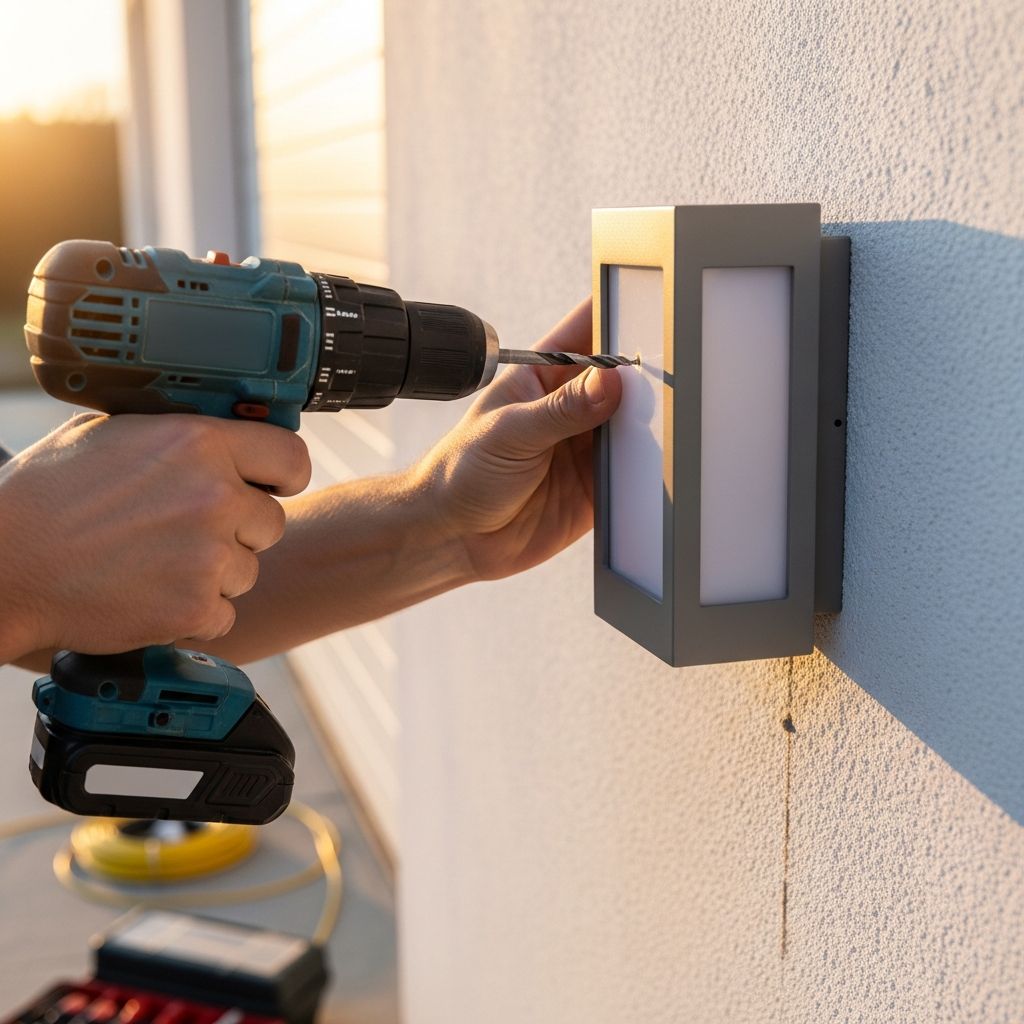
Drilling into your exterior wall introduces water intrusion risks that must be managed carefully. Before drilling, locate electrical wiring, plumbing, and gas lines in the wall. Use a non-contact voltage detector to identify live electrical circuits behind your wall surface. When drilling is safe to proceed, create pilot holes before full-size holes. Pilot holes guide your drill bit and prevent splitting in wood or cracking in stucco and brick. Angle holes slightly downward if possible, encouraging water to run outward rather than into the wall. For masonry surfaces, use appropriate masonry bits and consider professional help if walls are thicker than six inches. Multiple shallow holes are safer than forcing one large hole through hard materials.
Running Electrical Wiring to the Installation Site
Protecting wiring from weather and physical damage is paramount. If extending power from an existing interior outlet, route wiring along your wall using exterior-rated conduit. Conduit—metal or plastic tubing—shields wiring from UV exposure, temperature extremes, and mechanical damage. Secure conduit to walls using appropriate fasteners spaced no more than three feet apart. Ensure conduit slopes slightly downward to prevent water pooling at connection points. When running new circuits from your main electrical panel, hire a licensed electrician. This work requires permit approvals and specialized knowledge about load calculations and circuit capacity. Never attempt to modify your main electrical panel yourself.
For installations requiring buried conduit, dig trenches at least 4-6 inches deep. This depth protects wiring from lawn equipment and foot traffic. Lay conduit in the trench and secure it at intervals. After testing the complete system, cover conduit with soil, ensuring buried portions drain adequately. Where conduit enters exterior walls, seal openings with caulk to prevent water infiltration and pest entry. Weatherproof caulk rated for exterior use maintains flexibility through temperature cycles, preventing cracks that permit water penetration.
Installing Junction Boxes and Electrical Infrastructure
Junction boxes house electrical connections outside the wall surface. These weatherproof boxes must be properly positioned before running wire. Mount them securely to your backing blocks or wall structure. For installations on solid surfaces, use appropriate anchors rated for the specific material and expected load. Plastic anchors work for light fixtures on wood, while concrete screws suit masonry surfaces. The junction box must remain accessible—avoid covering it with siding or other materials. Building codes prohibit burying electrical connections inside walls. Junction boxes provide maintenance access for future repairs or modifications. Ensure boxes remain level and positioned to facilitate conduit and wire entry from above or below.
Running and Securing Wire Through Conduit
Feed electrical wire through conduit carefully to avoid insulation damage. Nonmetallic cable (Romex) comes as paired or triple conductors—black (hot), white (neutral), and green (ground). For most 120-volt garage lighting, 14-gauge wire suffices. Higher-amperage fixtures may require 12-gauge wire. Use a fish tape—a long, flexible steel tool—to guide wire through long conduit runs. Thread one end of the fish tape through the conduit from the starting point, then attach wire securely using electrical tape. Carefully pull the fish tape back, drawing wire through the conduit. This method prevents insulation abrasion that could create shock hazards. Avoid sharp bends in wire, which stress insulation and copper conductors. Leave 6-8 inches of wire extending from each conduit end for making connections.
Making Electrical Connections at the Fixture
Proper wire connections ensure safe operation and longevity. Strip approximately 1/2 inch of insulation from each conductor at the fixture location. Twist like-colored wires together—black to black, white to white. Use appropriately sized wire nuts to secure connections, then wrap with electrical tape for additional weather protection. The green or bare copper ground wire connects to a grounding screw on the fixture’s metal housing. This connection is critical for shock prevention. After making connections, carefully fold wires into the junction box, ensuring no exposed copper remains. Install appropriate cover plates or gaskets that seal the junction box, preventing water entry while allowing access for future maintenance.
Mounting the Light Fixture Securely
Once electrical connections are complete, attach the fixture to its mounting bracket. Use all provided fasteners and ensure connections are tight. A loose fixture becomes dangerous as vibration gradually loosens fasteners over time. Apply weatherproof screws that resist corrosion better than standard steel fasteners. After mounting, test the fixture immediately before proceeding with final steps. This approach identifies electrical problems while connections remain accessible. Check that the fixture sits level and points in the intended direction. Adjust aiming as needed for desired light coverage. Apply silicone caulk around the fixture perimeter where it contacts the wall, creating a weather seal. Proper caulking prevents the most common source of exterior electrical problems—moisture intrusion around fixture mounting points.
Testing and Troubleshooting Your Installation
Complete safety testing before considering your installation finished. Turn on the circuit breaker and verify the fixture illuminates. Check for any crackling sounds, burning smells, or flickering, which indicate problems requiring immediate investigation. Use a non-contact voltage tester to confirm power presence at all connection points. If wiring were extended underground, walk the path to ensure no wire is exposed. Test the fixture on a night with clear skies to evaluate actual light coverage and brightness. Dark night testing reveals whether positioning matches your daytime expectations. If the fixture doesn’t illuminate, verify circuit breaker switches are on. If the breaker trips repeatedly, an electrical short or overload exists—shut off power immediately and investigate or contact a licensed electrician.
Weatherproofing and Maintenance Considerations
Long-term performance depends on proper weatherproofing. Inspect all caulking annually, particularly in joints between fixtures and wall materials. Reapply caulk if gaps appear or existing caulk cracks. Check that mounting fasteners remain tight, tightening any loose screws found. Clear any debris or spider webs from fixture lenses to maintain light output. Replace bulbs with weather-rated equivalents rated for wet locations. LED bulbs offer superior weather resistance and longevity compared to incandescent alternatives. Ensure that water doesn’t pool around junction boxes after heavy rains. If pooling occurs, improve drainage or reposition the fixture slightly. These simple maintenance practices extend your installation’s lifespan significantly.
Frequently Asked Questions
Q: Can I install outdoor lights without hiring an electrician?
A: Simple solar lights require no electrical work, but hard-wired fixtures involve electrical codes and safety requirements. Many jurisdictions require licensed electricians for new circuits. Check local building codes before proceeding with any installation involving your home’s main electrical panel.
Q: What’s the difference between interior and exterior electrical boxes?
A: Exterior electrical boxes feature weatherproofing gaskets and sealed components to prevent moisture intrusion. Interior boxes lack these protections and fail quickly when exposed to weather. Always use boxes rated for exterior wet locations for outdoor installations.
Q: How deep should I bury outdoor electrical conduit?
A: Standard practice calls for 4-6 inches of soil coverage over conduit. This depth protects wiring from lawn equipment and foot traffic. Deeper burial may be required in areas with heavy vehicular traffic.
Q: Do I need a dedicated circuit for outdoor garage lights?
A: Building codes typically require dedicated 20-amp circuits for outdoor lighting, especially motion-activated fixtures. Sharing circuits with other appliances risks exceeding safe load capacity. Consult local building officials or a licensed electrician about your specific situation.
Q: What caulk should I use around outdoor light fixtures?
A: Use 100% silicone caulk rated for exterior use. Silicone maintains flexibility through temperature changes and resists UV degradation better than acrylic or latex alternatives. Paintable silicone caulk provides aesthetic flexibility if you prefer color matching.
Q: Can I extend power from an existing interior outlet?
A: Extending from interior outlets is possible if adequate circuit capacity exists and code-approved conduit protects the wiring. However, running new circuits from the main panel often proves safer and more reliable for outdoor installations. Verify with local building officials before deciding.
References
- How to Install Outdoor Lighting: DIY Guide — Aosom. https://www.aosom.com/blog-how-to-install-outdoor-lighting-diy-guide.html
- How To Install a Garage Floodlight — This Old House. https://www.thisoldhouse.com/garages/how-to-install-a-floodlight
- How to Install Outdoor Garage Lights — Lighting Warehouse. https://www.lightingwarehouse.com/learn/how-to-install-outdoor-garage-lights
Similar Articles






Read full bio of medha deb