Install Fabric Vertical Blinds Guide
Master the step-by-step process to install fabric vertical blinds and transform your windows with style and ease in your home.
Installing
fabric vertical blinds
offers an effective way to control light, enhance privacy, and add a soft aesthetic to any room. These versatile window treatments consist of fabric panels, or vanes, suspended from a horizontal headrail, allowing easy adjustment via rotation or stacking. Unlike rigid vinyl slats, fabric versions provide a gentler look suitable for living rooms, bedrooms, and offices. This guide details every aspect of the process, from initial planning to final adjustments, ensuring a professional result even for first-time DIYers.Understanding Fabric Vertical Blinds
Fabric vertical blinds feature lightweight, durable panels made from materials like polyester, sheer voile, or blackout fabrics. They hang from travelers in the headrail, which move along a track to open or close the stack. Controls include wand tilting for rotation, cord loops for drawing, or motorized options for convenience. Benefits include superior light diffusion, noise reduction, and easy cleaning compared to traditional slats. Proper installation ensures smooth operation and longevity, typically lasting 5-10 years with care.
Essential Tools and Materials
Gather these items before starting to streamline the process:
- Tape measure for precise dimensions
- Pencil and level for marking alignments
- Drill with bits matching screw sizes
- Phillips screwdriver or power driver
- Stepladder for high placements
- Stud finder to locate secure mounting points
- Wall anchors for non-stud surfaces (e.g., drywall)
- Pliers for adjustments
- Cleaning cloth for handling fabric panels
Most kits include brackets, headrail, vanes, valance, and fasteners. Verify package contents upon arrival to avoid delays.
Measuring Your Windows Accurately
Correct measurements prevent gaps, sagging, or excess fabric. For
inside mounts
, measure the window opening width at three points (top, middle, bottom) and use the narrowest. Height goes from top casing to sill, subtracting 1/4 inch for clearance. Depth must be at least 1-2 inches for headrail fit, varying by model.For
outside mounts
, extend width 2-4 inches beyond the frame on each side for overlap, and height 2 inches above the frame to block light fully. Record in 1/8-inch increments. Always measure multiple windows if stacking treatments.| Mount Type | Width Guideline | Height Guideline | Depth Requirement |
|---|---|---|---|
| Inside | Narrowest opening minus 1/4″ | Top to sill minus 1/4″ | Min 1.25-2″ |
| Outside | Frame + 4-8″ total overlap | Frame height + 2-4″ | N/A (wall/ceiling) |
Choosing Inside vs. Outside Mounting
**Inside mounting** tucks blinds within the recess, ideal for shallow frames and a clean look. It requires sufficient depth and works best for smaller windows. Position brackets near the top corners, ensuring 2 inches from the back edge for clearance.
**Outside mounting** suits deep frames, bay windows, or full light block. Mount on walls or ceilings above the frame, extending coverage for insulation benefits. Brackets go 4 inches from headrail ends, spaced 24-36 inches apart based on width. Use a level to maintain straightness across all points.
Step-by-Step Installation Process
1. Mark and Install Mounting Brackets
Hold brackets at marked positions, aligning with studs using a finder. For drywall, pre-drill and insert anchors. Secure with provided screws (two per bracket), tightening firmly but avoiding over-torquing wood. Check levelness; shim if needed for uneven surfaces.
2. Attach the Headrail
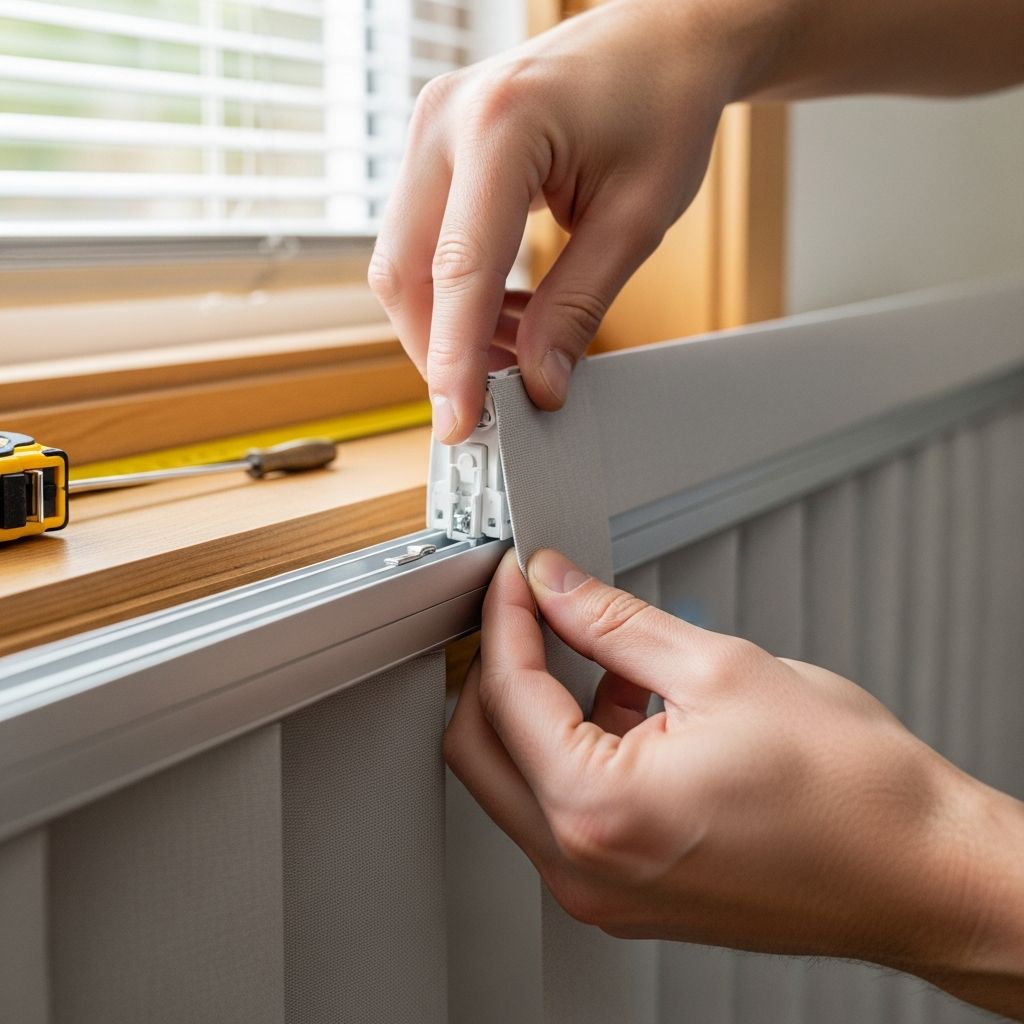
With vanes removed, angle the headrail into brackets—hook rear first, then snap front. Some models use clips or screws; follow kit specifics. Tug gently to confirm lock. For inside mounts, install valance clips first if required.
3. Hang the Fabric Vanes
Unroll panels carefully, identifying tops (often with Velcro or clips) and weighted bottoms. Open carriers by separating front/back clips. Align and press vanes onto hooks or Velcro, starting from one end. Ensure even spacing; add spacers for wide spans. Fabric vanes fold horizontally if prepped, using hangers for secure attachment.
4. Install Valance and Covers
Snap valance clips onto headrail edges. Slide or clip valance cover over, ensuring it conceals brackets without touching vanes. For inside/ceiling mounts, secure via screws through valance returns.
5. Add Controls and Tension Devices
Attach wand by twisting into mechanism or baton holder. For corded systems, position tensioner at loop bottom, aligning with frame/wall. Screw in place to keep taut, preventing child hazards. Motorized units pair via remote post-headrail setup.
6. Test and Fine-Tune
Operate fully: draw open/closed, rotate vanes 180 degrees. Adjust stacking side, check for binding or gaps. Trim excess vane length if sagging (0.5-inch floor clearance). Lubricate travelers sparingly with silicone spray if sticky.
Safety Considerations and Childproofing
Vertical blinds pose entanglement risks, especially cords. Install tension devices or rigid wands per guidelines. Keep loops short; use cord cleats. For homes with infants, opt for wandless or motorized controls. Secure headrails to studs resisting 50 lbs pull-out force. Fabric panels reduce pinch points versus hard slats.
Troubleshooting Common Issues
- Vanes won’t rotate: Check carrier alignment; realign clips.
- Headrail sags: Add center brackets for spans over 48 inches.
- Gaps in coverage: Verify width measurements; order wider.
- Noisy operation: Clean track; ensure weights are seated.
- Uneven stack: Balance traveler tension; adjust end stops.
Maintenance and Cleaning Tips
Dust vanes weekly with a microfiber cloth or vacuum brush. Spot-clean stains with mild soap solution; air-dry fully. Avoid machine washing unless specified. For deep cleans, remove vanes and soak in tub. Inspect annually for worn clips or frayed fabric, replacing as needed. Keep away from direct sun to prevent fading.
Advanced Tips for Perfect Results
Match fabric opacity to room needs: sheers for ambiance, opaques for bedrooms. Layer with curtains for versatility. For arched windows, custom track bends accommodate curves. Motorization integrates with smart homes via apps. Professional measuring services ensure precision for odd sizes.
Frequently Asked Questions (FAQs)
Can I install fabric vertical blinds on a sliding door?
Yes, outside mount with extended track clears door travel; measure panel clearance.
How many brackets for a 100-inch wide blind?
Typically 4-5, spaced 24-30 inches, hitting studs.
Are fabric vertical blinds easy to remove for cleaning?
Most vanes clip off individually; headrail unsnaps from brackets.
What’s the difference between fabric and vinyl vertical blinds?
Fabric offers softer light diffusion and aesthetics; vinyl is more durable for high-humidity areas.
Can I cut fabric vanes to fit height?
Yes, trim bottoms evenly after hanging, preserving weights.
Enhancing Your Space with Vertical Blinds
Beyond function, fabric vertical blinds elevate decor with patterns and textures. Coordinate colors with upholstery for cohesion. In modern spaces, sleek tracks minimize bulk. Energy efficiency improves via insulation, reducing drafts. Invest time in installation for years of reliable performance.
References
- 6 Steps for How to Install Vertical Blinds — The Shade Store. 2023. https://www.theshadestore.com/blog/how-to-install-vertical-blinds/
- Refined Fabric Vertical Blinds Install Guide — SelectBlinds. 2024. https://cdn.selectblinds.com/documents/verticalblinds/installation-instructions/refined-fabric-vertical-blinds-install-guide.pdf
- Vertical Blinds Installation for Modern Spaces — Custom Window Decorators. 2023. https://customwindowdecorators.com/vertical-blinds-installation-for-modern-spaces/
- How to Install Vertical Blinds — JustBlinds. 2024. https://www.justblinds.com/help/installation/vertical-blinds
- How to Install Soft Vertical Blinds — Levolor. 2023. https://www.levolor.com/customer-support/installation/how-to-install-soft-vertical-blinds
Similar Articles








Read full bio of Sneha Tete