Installing Flagstone On Bare Soil: 5-Step DIY Guide
Master the art of laying flagstone directly on dirt for durable patios, walkways, and garden paths with this comprehensive DIY tutorial.
Installing Flagstone on Bare Soil: A Complete DIY Guide
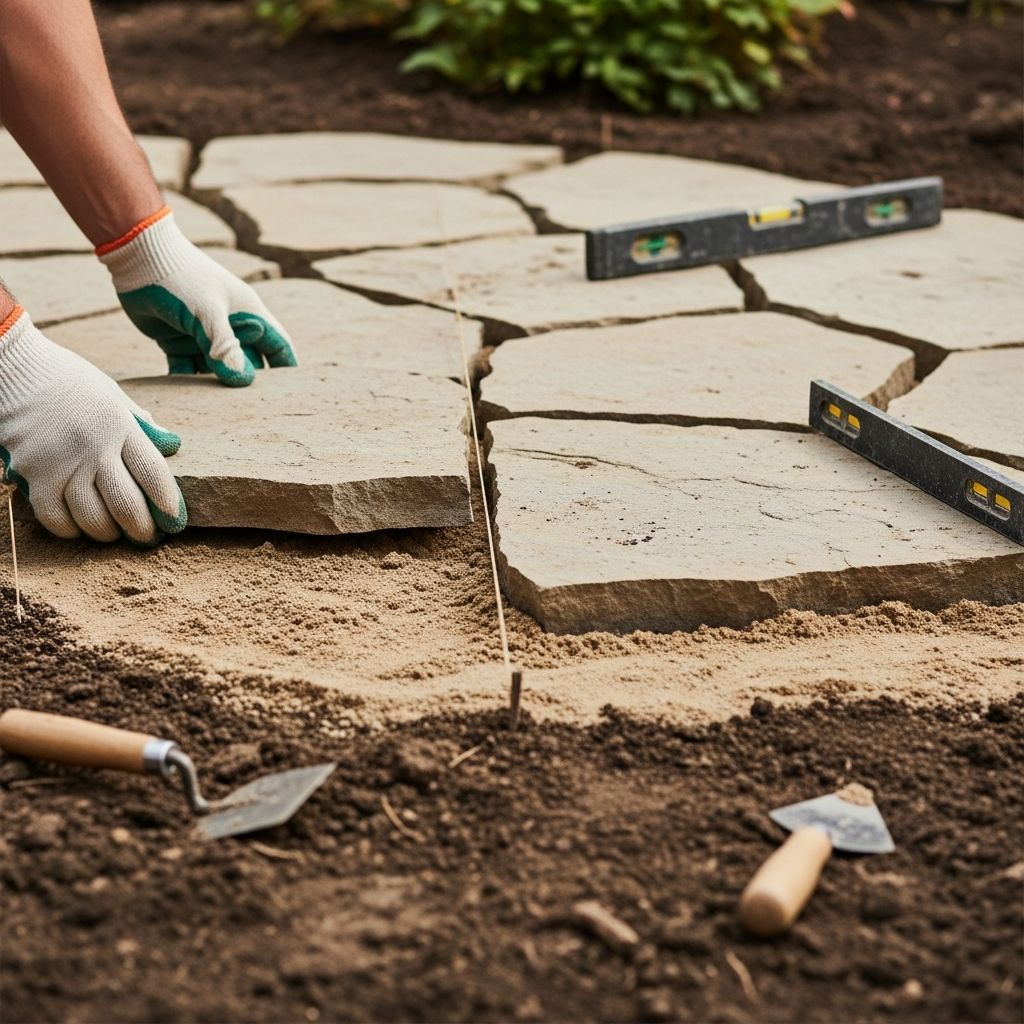
Creating a flagstone surface on bare soil transforms ordinary dirt into a beautiful, functional patio or walkway. This dry-lay method relies on a stable gravel base and careful stone placement for durability without mortar. Ideal for homeowners seeking natural aesthetics and easy maintenance, this approach ensures proper drainage and weed resistance when done correctly.
Why Choose Flagstone for Soil Installation?
Flagstone offers timeless appeal with its irregular shapes and natural textures, blending seamlessly into landscapes. Unlike poured concrete, it permits water infiltration, reducing runoff and erosion. Dry-laying on soil is cost-effective, averaging $10 per square foot for materials and labor in basic setups, making it accessible for DIY projects. Its permeability supports plantings in joints, fostering eco-friendly designs.
Benefits include flexibility for uneven terrains, simple repairs by lifting individual stones, and enhanced curb appeal. However, success demands precise base preparation to prevent shifting over time.
Essential Tools and Materials
Gather these items before starting to streamline the process:
- Shovel and spade for excavation
- Wheelbarrow for transporting materials
- Plate compactor or hand tamper
- Rubber mallet for setting stones
- Level (4-foot) and string line for alignment
- Broom and hose for cleaning
- Landscape fabric (optional weed barrier)
- Crushed gravel (1/4-inch minus), coarse sand or decomposed granite
- Polymeric sand or fine gravel for joints
- Flagstones (1.5-3 inches thick, select flat-sided pieces)
Stone thickness matters: thicker pieces (2-3 inches) suit high-traffic areas for stability.
Planning Your Flagstone Project
Begin with design. Sketch the layout, considering traffic flow, furniture placement, and connection to existing structures like doors or driveways. Aim for a slight slope (1/4 inch per foot) away from buildings for drainage. Check local codes and call 811 to mark utilities, avoiding costly surprises.
Calculate materials: Measure area length times width for square footage. For a 10×12-foot patio, excavate to 6-8 inches deep, needing about 2 cubic yards of gravel base plus sand layer. Purchase 10-15% extra stone to account for cuts and waste.
| Project Size | Excavation Depth | Gravel Needed (cu yd) | Stone Coverage (sq ft/ton) |
|---|---|---|---|
| 100 sq ft | 6 inches | 1.5 | 100-120 |
| 200 sq ft | 8 inches | 3 | 100-120 |
| 500 sq ft | 8-10 inches | 7-8 | 100-120 |
This table provides quick estimates based on standard depths and coverage rates.
Step 1: Preparing the Site
Mark boundaries with stakes and string. Excavate 4-6 inches deeper than stone thickness plus base layers—for 2-inch stones, dig 6-8 inches total. Remove sod, roots, and debris thoroughly to prevent upheaval. Compact the soil subgrade with a tamper, creating a firm foundation.
For soft soils, over-excavate and backfill with engineered fill. Wet and re-compact in layers for hydro-compaction, enhancing density.
Step 2: Building a Sturdy Base Layer
A reliable base is crucial for longevity. Lay landscape fabric over soil to block weeds and separate layers. Spread 3-4 inches of crushed gravel (1/4-inch minus) evenly. Compact in 2-inch lifts using a plate compactor for large areas or hand tamper for small ones. Achieve 95% compaction to minimize settling.
Level with a screed board, establishing the 1-2% slope. Add a 1-2 inch top layer of coarse sand or decomposed granite, screed smooth, and lightly mist with water to settle. This “setter bed” allows fine adjustments during stone placement.
Step 3: Selecting and Arranging Flagstones
Choose stones with one flat face up for walking comfort and water shedding. Sort by size: place largest, flattest pieces at edges, entrances, and high-use spots for stability. Dry-lay stones on the base without setting to test fit, aiming for 1/2-2 inch joints. Irregular patterns mimic nature; avoid uniform grids for authenticity.
Work from fixed points like house edges outward. Cut stones with a masonry saw or chisel for curves and borders—wear safety gear. Mark cuts during dry layout to minimize errors.
Step 4: Setting the Stones Precisely
Begin installation at one end. Position each stone, check level in multiple directions, and tap gently with a rubber mallet to seat into the sand bed. Wiggle slightly for full contact, adding or removing base material underneath as needed.
Maintain consistent joint widths and surface plane. Use straightedges for long runs. For walkways, align with adjacent paths flush to prevent trips. Allow settling overnight if possible before filling joints.
Step 5: Filling and Sealing Joints
Sweep polymeric sand, fine gravel, or stone dust into joints. Polymeric sand hardens when wet, locking stones and deterring weeds—ideal for patios. For lush looks, plant low-growing groundcovers like thyme in wider joints over topsoil.
Compact joints by sweeping and hosing lightly. Repeat until full, then mist to activate polymers. Avoid foot traffic for 24-48 hours.
Common Mistakes to Avoid
- Skipping compaction: Leads to uneven settling and rocking stones.
- Inadequate slope: Causes puddling; always verify with a level.
- Poor stone selection: Round or thin pieces wobble—prioritize flat, thick slabs.
- Rushing joints: Incomplete filling invites weeds and erosion.
- Ignoring drainage: Base must percolate water freely.
Maintenance for Longevity
Flagstone on soil requires minimal upkeep. Re-sweep joints annually, reseal polymeric sand every 2-3 years. Pressure wash gently to remove algae. Inspect for shifting after heavy rains; reset with fresh base as needed. In freeze-thaw zones, ensure deep bases prevent frost heave.
Plantings in joints need occasional trimming and fertilizer. Overall, expect 20+ years of service with proper install.
Frequently Asked Questions (FAQs)
Can I lay flagstone directly on dirt without gravel?
No, a gravel base is essential for stability and drainage. Direct contact leads to shifting and poor performance.
How deep should I excavate for a flagstone patio?
Excavate 4-6 inches beyond stone thickness, typically 6-8 inches total for standard stones.
What’s the best joint filler for weed control?
Polymeric sand provides superior locking and weed resistance compared to regular sand.
Is a plate compactor necessary?
For areas over 50 sq ft, yes—it ensures professional-grade compaction. Hand tampers suffice for small paths.
Can I install flagstone in winter?
Avoid freezing conditions; wet, cold soil hinders compaction and base curing.
Advanced Tips for Professional Results
Incorporate edging with metal or plastic strips to contain base materials. For curves, pre-cut stones or use flexible patterns. Lighting recesses cut into joints add ambiance. Integrate with retaining walls by aligning base levels.
Cost breakdown: Gravel $30-50/cu yd, sand $20-40/cu yd, stones $200-400/ton. DIY saves 50% over pros.
References
- How to Lay Flagstone Installation Guide — Landscaping Network. Accessed 2026. https://www.landscapingnetwork.com/flagstone/installation.html
- Dry Lay Flagstone: Top Guide for Perfect Patios 2025 — AJM Grounds. 2025. https://ajmgrounds.com/dry-lay-flagstone/
- How to Build a Stunning Flagstone Wall in 7 Easy Steps — Lompoc Stone. Accessed 2026. https://lompocstone.com/how-to-build-flagstone-wall/
- Guide: How to Lay Flagstone Patio — Stone Centers. Accessed 2026. https://stonecenters.com/blog/guide-how-to-lay-flagstone-patio
- How To Lay a Flagstone Walkway — This Old House. Accessed 2026. https://www.thisoldhouse.com/sidewalks/how-to-lay-a-flagstone-walkway
Similar Articles




Read full bio of medha deb