Install Floating Tongue-and-Groove Flooring
Master the art of laying floating tongue-and-groove flooring with our detailed guide for a durable, professional finish at home.
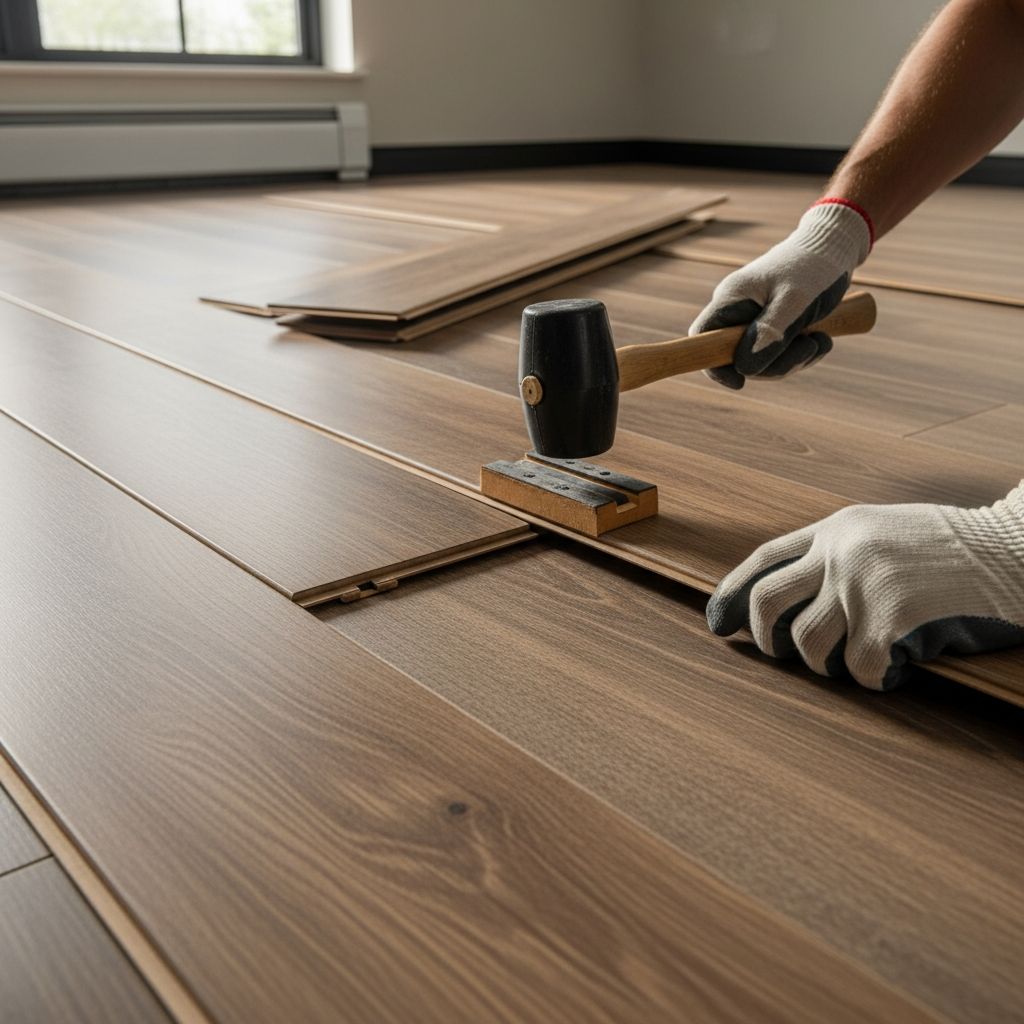
Floating tongue-and-groove flooring offers a versatile and elegant solution for updating your home’s interior without permanent adhesives or fasteners to the subfloor. This method relies on interlocking planks that ‘float’ over an underlayment, allowing natural expansion and contraction. Ideal for engineered hardwood or laminate, it suits DIY enthusiasts seeking professional results.
Why Choose Floating Tongue-and-Groove?
**Floating installations** provide flexibility, making them suitable for various subfloors like concrete or wood. Unlike glued-down systems, they accommodate moisture changes, reducing buckling risks. Homeowners appreciate the ease of disassembly for future updates, and the tongue-and-groove design ensures tight seams for a smooth surface.
- Quick setup: Complete a room in a weekend.
- Cost-effective: No need for heavy tools or pros.
- Durable: Proper technique yields decades of use.
Essential Tools and Materials
Gather these items before starting to streamline the process.
| Category | Items | Purpose |
|---|---|---|
| Tools | Circular saw, jigsaw, tapping block, mallet, spacers (1/4-1/2 inch), level, straightedge, utility knife | Cutting, aligning, and securing planks |
| Materials | Tongue-and-groove planks, underlayment (foam/cork), vapor barrier (for concrete), wood glue (waterproof, e.g., Titebond II), duct tape, transition strips, quarter-round molding | Core flooring, moisture protection, finishing |
| Optional | Flooring adhesive kit, pull bar, flooring straps/clamps | Enhanced joining for tricky spots |
Select high-quality
underlayment
to cushion footsteps and dampen sound. For concrete slabs, a 6-mil vapor barrier prevents moisture damage.Acclimating Your Flooring
Before any cuts, let planks acclimate in the installation room for 48-72 hours. Stack them horizontally, away from walls, to match ambient humidity and temperature. This step minimizes warping post-installation. Monitor room conditions: aim for 60-75°F and 35-55% relative humidity.
Preparing the Subfloor Thoroughly
A level, clean subfloor is non-negotiable for longevity. Unevenness over 3/16 inch in 10 feet causes clicks or gaps.
- Remove old flooring: Pry up tiles or vinyl; roll carpets.
- Inspect and repair: Fill cracks, sand high spots on wood, apply self-leveling compound on concrete.
- Clean meticulously: Vacuum dust, debris; wipe with a damp cloth.
- Check flatness: Use a 10-foot straightedge.
For wood subfloors, ensure joists are secure. Over concrete, test moisture levels—under 3 lbs/1000 sq ft/24 hrs via calcium chloride kit.
Installing the Underlayment Base
The underlayment acts as a vapor shield and sound barrier. Roll it out perpendicular to plank direction.
- Overlap seams by 6 inches if required; tape securely with duct tape.
- Leave 1/4-inch gaps at walls for expansion.
- Trim around obstacles like vents or pipes.
- For multi-room jobs, extend continuously under doorways.
On concrete, lay a plastic vapor barrier first, then foam underlayment. Butt edges without overlap to avoid lumps.
Planning the Layout Precisely
Measure room width and divide by plank width. If the final row is narrower than 2 inches, rip the first row for balance. Lay parallel to the longest wall for visual appeal and stability.
Dry-lay the first three rows to verify stagger and fit. Factor in doorways and transitions for seamless flow.
Laying the First Row Accurately
Begin in the corner furthest from the door. Place spacers along walls for a 1/4-1/2 inch expansion gap—equal to plank thickness.
- Position groove side against the wall.
- Apply glue in grooves (Titebond II or equivalent) for side and end joints.
- Tap planks together using a tapping block and mallet—avoid direct hammer strikes.
For click-lock variants, angle and lock; glue enhances hold. Keep tongues facing the installation direction.
Staggering Rows for Strength
Offset end joints by at least 6-8 inches per row to distribute stress. Use cut-off pieces (over 8 inches) as starters.
- Glue long edges and ends.
- Angle second row’s tongue into first groove at 30-45 degrees, then fold down.
- Tap lightly; use pull bar for tight fits near walls.
For irregular walls, scribe and cut planks to contour precisely. A jigsaw handles curves around pipes.
Handling Cuts and Obstacles
Measure twice: Mark from the tongue side to account for groove width. Flip boards when cutting tongues to preserve grooves.
- Straight cuts: Circular saw with fence.
- Notches: Jigsaw.
- End flips: Rotate for clean tongue preservation.
Leave shims in place until complete to prevent shifting.
Doorways, Transitions, and Edges
Undercut door jambs with a jamb saw for planks to slide underneath. Install T-moldings or reducers at differing floor heights.
Drill pilot holes in transitions before nailing to subfloor—never to floating planks. Maintain expansion gaps.
Finalizing with Trim and Finishing
Remove spacers. Nail quarter-round or baseboards to walls, not floor, covering gaps. Caulk if desired, but allow movement.
Vacuum thoroughly. Walk traffic lightly for 24 hours as glue sets.
Common Pitfalls and Pro Tips
Avoid these errors for flawless results:
- No acclimation: Leads to gaps or humps.
- Tight walls: Causes buckling—always gap.
- Poor stagger: Weakens structure.
- Skipping vapor barrier: Moisture wrecks floors on concrete.
Pro tip: Rent a flooring nailer for practice, but floating skips it. Work in temperatures above 60°F.
Maintenance for Longevity
Sweep regularly; avoid excess water. Use felt pads under furniture. Refinish engineered tops after years if needed.
Frequently Asked Questions (FAQs)
Can I install over existing tile?
Yes, if secure and level; fill grout lines.
Glue necessary for floating?
Recommended for tongue-and-groove to prevent shifting.
What expansion gap size?
Plank thickness at walls.
Suitable for bathrooms?
Engineered yes, with vapor barrier; avoid solid wood.
How to fix squeaks?
Inspect underlayment; add shims if loose.
References
- Floating Installation Guide — Mullican Hardwood Flooring. Accessed 2026. https://www.mullicanflooring.com/installation/floating/
- How To Install a Floating Engineered Wood Floor — This Old House. Accessed 2026. https://www.thisoldhouse.com/flooring/how-to-install-a-floating-engineered-wood-floor
- How to float/install a tongue and groove engineered floor — ReallyCheapFloors.com (YouTube). 2015-10-19. https://www.youtube.com/watch?v=Xb8mYHcV9dY
- Beginner Hardwood Flooring Installation, EASY Floating Floor Method — YouTube. Accessed 2026. https://www.youtube.com/watch?v=zxNFrci0EBc
Similar Articles






Read full bio of Sneha Tete