Install Pop-Up Sprinklers: Complete DIY Guide
Master the art of setting up pop-up sprinklers for flawless lawn coverage with this detailed step-by-step tutorial for homeowners.
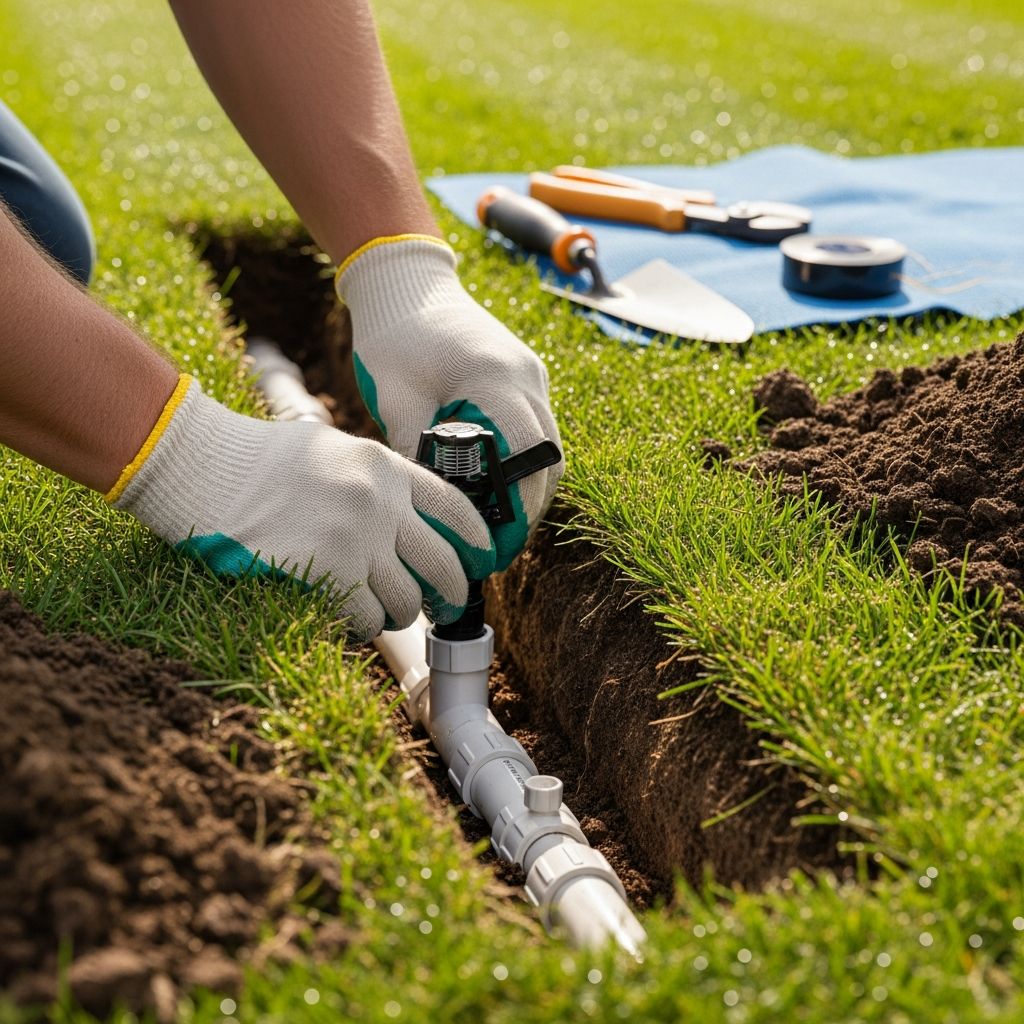
Pop-up sprinkler heads provide an efficient way to water lawns and gardens without obstructing daily activities. These devices retract into the ground when not in use, delivering precise water distribution through customizable nozzles. Proper installation ensures uniform coverage, prevents leaks, and extends system longevity. This guide walks through every phase, from initial planning to final testing, empowering homeowners to achieve professional results.
Understanding Pop-Up Sprinkler Systems
Pop-up sprinklers consist of a body that houses a riser, nozzle, and seal. When pressurized water activates the system, the riser extends, spraying water in a defined pattern. Key components include the sprinkler body, swing joints for flexibility, lateral pipes, and nozzles like fixed sprays or rotators. Systems operate on zones controlled by valves, allowing tailored watering schedules for different areas.
Benefits include head-to-head coverage for even watering, reduced evaporation via low-angle sprays, and protection from mowers or foot traffic when retracted. Common types suit various needs: short-radius for small lawns, high-pop for tall grass, and pressure-regulated for inconsistent supplies.
Essential Tools and Materials
Gather these items before starting to streamline the process:
- Trenching shovel or edger for digging
- Pipe cutter or hacksaw for PVC or poly pipes
- Fittings: elbows, tees, couplings, and barbed adapters
- Swing joints or articulated risers for stability
- Pop-up sprinkler heads with nozzles and screens
- Soil compactor or tamper
- Measuring tape, flags, and string for layout
- Pipe clamps, Teflon tape, and PVC primer/glue
- Adjustable wrench and Hunter wrench for nozzles
Choose durable brands known for reliability in residential applications. Ensure compatibility between pipe sizes (typically 3/4-inch or 1-inch) and sprinkler inlets.
Planning Your Sprinkler Layout
Effective planning prevents gaps or overspray. Measure the area, noting obstacles like trees, fences, or slopes. Sketch a zone diagram, calculating head spacing based on nozzle radius—aim for overlap where spray from one head reaches adjacent heads.
| Nozzle Type | Radius (ft) | Recommended Spacing (ft) | Pattern |
|---|---|---|---|
| Fixed Spray | 8-15 | Head-to-head (e.g., 12 ft apart for 12 ft radius) | 90°, 180°, 360° |
| MP Rotator | 8-35 | Head-to-head with 50-60% overlap | Adjustable arc |
| High-Pop Rotor | 15-25 | Evenly spaced per manufacturer | Full or part circle |
Place heads in corners first, using 90° or 180° patterns, then fill interiors. Account for wind by positioning fixed edges along boundaries. Test water pressure and flow at the source to select appropriate nozzles—high pressure causes misting, requiring regulators.
Preparing the Site and Trenching
Mark head locations with flags after sketching. Dig trenches 6-12 inches deep, 4-6 inches wide, along the pipe route. Position trenches 6-8 inches from edges for edge coverage without interference from trimmers. For corners, offset 8-12 inches to allow spray reach.
Dig individual holes at head spots, 4-6 inches deep and wide enough for swing joints. On slopes, place lowest heads with check valves to prevent weeping. Roll out poly pipe if using flexible lines, securing with pins at turns.
Assembling and Installing the Piping
Start from the zone valve, laying lateral lines in trenches. Cut pipes to length, ensuring fittings point upward for access. Use primer and glue for PVC or clamps for poly. Connect swing joints: attach elbow to lateral pipe, then riser to sprinkler body.
For end-of-line heads, use threaded elbows. Install all assemblies before burying. Flush lines by capping ends and running water to clear debris—critical to avoid nozzle clogs.
Mounting the Sprinkler Heads
Position each head plumb (vertical) in its hole. Connect to swing joints, ensuring the top is flush with or slightly below grade—about 1/4 inch for mower safety. Backfill around bases in layers, compacting firmly to prevent leaning. Wider-base models resist movement better.
Avoid tilting; use levels if needed. For uneven terrain, articulated risers absorb impacts from vehicles or equipment.
Selecting and Installing Nozzles
With lines flushed, pull risers up using the seal tab or wrench. Remove flush caps, insert screens, then nozzles matching your plan. MP rotators have fixed left edges; align by rotating the riser. Rotors adjust from a fixed right stop.
Match nozzle color codes to radius needs. Toro nozzles may have male threads, unlike Rain Bird or Hunter female types—verify before purchase.
Adjusting Coverage and Arc
Activate the zone. Fine-tune radius via screw adjustments (clockwise reduces throw). Set arc: for rotators, turn dial rightward from fixed edge; for sprays, rotate top ring. Ensure no dry spots or sidewalk spray—walk the area while running.
Target 100% head-to-head overlap. Sketch adjustments on paper for complex zones.
Backfilling and Finalizing Installation
Once adjusted, backfill trenches, tamping soil to avoid settling voids. Test for leaks at fittings; tighten or re-glue as needed. Program timers for efficient cycles, considering evapotranspiration rates.
Troubleshooting Common Issues
Uneven coverage? Check pressure (30-50 PSI ideal) and clean filters. Leaning heads? Re-compact soil or upgrade to swing joints. Misting indicates over-pressure—add regulators. Low pop-up in tall grass? Use 6-inch stems.
- Weeping on slopes: Install check valves.
- Clogs: Flush annually and use screens.
- Poor reach: Verify nozzle matches GPM.
Maintenance for Longevity
Seasonally inspect for damage, clean nozzles, and lubricate seals. Winterize by draining lines in freeze-prone areas. Replace worn parts yearly. Proper upkeep ensures 5-10 years of service.
Frequently Asked Questions (FAQs)
What depth should trenches be for pop-up sprinklers?
6-12 inches, depending on frost line and mower clearance.
Can I install sprinklers near fences?
Yes, use swing joints and position 6-8 inches away for coverage.
How do I fix a leaning sprinkler?
Dig out, re-level, compact soil tightly, or add articulated risers.
What’s head-to-head coverage?
Spacing where each sprinkler’s throw reaches neighboring heads for uniformity.
Do I need a permit for irrigation?
Check local codes; usually not for residential DIY.
Advanced Tips for Optimal Performance
Integrate smart controllers for weather-based adjustments. Use low-flow rotators to cut water use by 30%. For large lawns, divide into multiple zones. Monitor soil moisture to avoid overwatering.
Table of Pressure vs. Performance:
| PSI | Effect | Solution |
|---|---|---|
| <25 | Weak throw | Larger nozzles or booster pump |
| 25-50 | Optimal | Standard nozzles |
| >50 | Misting/fog | Pressure regulators |
References
- Sprinkler System Installation Guide — Rain Bird. 2023. https://www.rainbird.com/homeowners/sprinkler-system-installation-guide
- How to Install a Pop-Up Sprinkler — Irrigation Express. 2024. https://www.irrigationexpress.co.nz/industry-guides/landscape/how-to-install-a-pop-up-sprinkler/
- Pop-Up Sprinkler Installation Step-by-Step Tutorial — Hunter Industries (YouTube). 2022-10-15. https://www.youtube.com/watch?v=8HmooRCz7RI
- DIY GUIDE – Lawn Pop-Ups — Pope Irrigation. 2019-10. https://popeirrigation.com.au/wp-content/uploads/2019/10/DIY-Lawn-Pop-Ups-compressed.pdf
- How to Install Pop-up Sprinklers | A Comprehensive Guide — Retic Renovation. 2023. https://reticrenovation.com.au/how-to-install-pop-up-sprinklers/
Similar Articles








Read full bio of medha deb