Install Pull Chain Light Fixtures: Complete DIY Guide
Master the art of installing pull chain light fixtures with our comprehensive DIY guide for safe, effective home lighting upgrades.
Install Pull Chain Light Fixtures: Your Complete DIY Guide
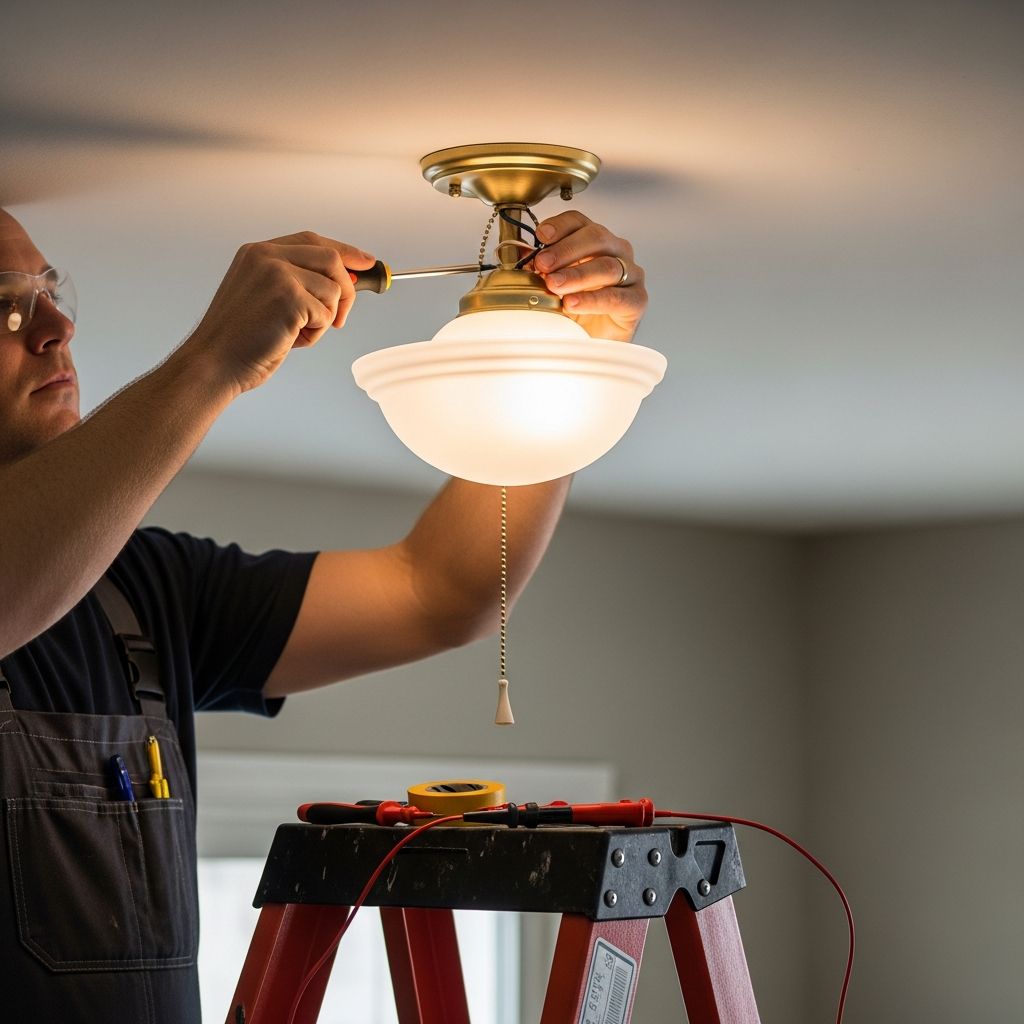
Pull chain light fixtures offer a simple, reliable way to control lighting in tight spaces like closets, garages, or basements. These fixtures feature a chain you pull to turn the light on or off, eliminating the need for wall switches. Installing one yourself can save money and give you control over the process. This guide walks you through every aspect, from preparation to final testing, ensuring a secure and functional setup.
Why Choose Pull Chain Lights for Your Space
These fixtures excel in areas without easy switch access. Their compact design fits standard electrical boxes, and they support various bulb types like LEDs or incandescents for energy efficiency. Common in older homes, they provide nostalgic charm while meeting modern safety standards. Upgrading to a pull chain model improves visibility in dim areas without complex rewiring.
- Versatility: Ideal for closets, pantries, attics, and utility rooms.
- Cost-Effective: Affordable units start under $10, with easy bulb replacement.
- Durability: Chains withstand frequent use if properly maintained.
Gathering Essential Tools and Materials
Before starting, assemble everything needed to avoid interruptions. A well-stocked toolkit ensures smooth progress.
| Category | Items | Purpose |
|---|---|---|
| Safety Gear | Work gloves, safety glasses, non-contact voltage tester | Protects against shocks and debris |
| Tools | Screwdriver set (Phillips/flathead), wire strippers, pliers, ladder | Handles screws, wires, and access |
| Materials | Pull chain fixture, wire nuts, electrical tape, replacement bulbs | Core components for installation |
Opt for UL-listed fixtures to guarantee safety compliance. Have extra wire on hand for longer runs.
Prioritizing Safety Before Any Work
Electricity poses serious risks, so safety comes first. Turn off power at the breaker box and verify with a voltage tester. Touch probes to wires; no reading means it’s safe.Never assume power is off—residual charge can cause injury.
- Locate your breaker panel.
- Switch off the relevant circuit.
- Test hot and neutral wires twice.
- Place a label on the breaker to prevent accidental reactivation.
Wear gloves to insulate hands and glasses to shield eyes from sparks or dust.
Assessing Your Installation Location
Evaluate the site for suitability. Most setups use a ceiling-mounted octagonal box. Check for stable support—plaster alone won’t suffice; secure to joists if needed. Measure clearance for the fixture and bulb to avoid head bumps.
- New Installs: Run NM cable (Romex) from a power source.
- Replacements: Reuse existing wiring if intact.
- Challenges: Low ceilings may need flush-mount models.
Removing Old Fixtures Safely
For replacements, detach the existing light first. Support the fixture to prevent strain on wires. Unscrew mounting nuts or screws, then lower it carefully. Disconnect wires by loosening terminals or nuts—note colors for reference.
Inspect the box for damage or corrosion. Clean connections and test for power again. If wires are short, splice in extensions with wire nuts.
Understanding Wiring Basics
Residential wiring uses three main types: black (hot, carries power), white (neutral, returns power), and green/bare (ground, safety path). Pull chain fixtures integrate the switch in the socket, simplifying control.Match colors precisely to avoid shorts.
- Black or red to brass/gold terminal (hot).
- White to silver terminal (neutral).
- Ground to green screw or box if present.
Step-by-Step Wiring Connections
With power off, prepare wires by stripping 3/4 inch of insulation. Form hooks clockwise for screw terminals.
- Ground First: Twist fixture and box grounds together, cap with nut, tape over.
- Neutral Link: Connect whites similarly, ensuring tight twists.
- Hot Connection: Join blacks; double-check polarity.
- Insulate: Wrap nuts with tape for security.
For screw-terminal models, slide stripped wire under the clamp and tighten. No ground screw? Connect to the box ground.
Mounting the Fixture Securely
Attach the crossbar bracket to the box with provided screws. Thread wires through the fixture base, then secure to the bracket with nuts or clips. Align knockout holes if using a compact box. Hand-tighten initially, then use tools for firmness.
Tuck wires neatly to prevent pinching. Install the bulb last to avoid damage during handling.
Testing and Finalizing the Setup
Restore power at the breaker. Pull the chain—light should toggle on/off smoothly. Inspect for heat or flicker, indicating loose connections. If issues arise, power off and recheck wiring.
- No Light: Verify bulb and connections.
- Flickering: Tighten terminals.
- Chain Stuck: Lubricate or replace.
Advanced Tips for Tricky Installations
In conduit systems, colors may vary (e.g., red hot). For multi-fixture setups, wire the switch in series on the hot leg. Adding a pull chain to an existing fixture involves splicing into the hot wire upstream.
Consider dimmable models for adjustable brightness. In damp areas, choose weather-rated units.
Common Mistakes to Avoid
DIY pitfalls can lead to hazards. Skipping voltage tests tops the list, followed by mismatched wires causing fires. Over-tightening screws damages insulation; under-tightening leads to arcing.
| Mistake | Consequence | Fix |
|---|---|---|
| Power On During Work | Electrocution Risk | Always Test Twice |
| Wrong Wire Pairing | Short Circuit | Match Colors/Terminals |
| Loose Connections | Flicker/Fire | Tighten and Tape |
Maintenance for Longevity
Dust chains regularly to prevent sticking. Replace bulbs promptly to avoid overheating. Check wires yearly for frays. LED upgrades reduce heat and extend life.
Frequently Asked Questions (FAQs)
Can I install a pull chain light without an existing box?
Yes, but install an approved ceiling box first, secured to a joist.
What if my fixture lacks a ground screw?
Connect ground to the metal box or use a pigtail to other grounds.
Are pull chain lights code-compliant?
UL-listed models meet NEC standards for closets if properly installed.
How do I add a pull chain to a hardwired light?
Splice a pull switch into the hot wire before the fixture.
What’s the best bulb type?
LEDs for efficiency; max wattage per fixture specs.
References
- National Electrical Code (NEC) Handbook — National Fire Protection Association. 2023. https://www.nfpa.org/codes-and-standards/all-codes-and-standards/list-of-codes-and-standards/detail?code=70
- Electrical Safety Foundation International Guidelines — ESFI. 2024-01-15. https://www.esfi.org/resource/light-fixture-installation-20069
- OSHA Electrical Safety Standards — U.S. Department of Labor. 2025. https://www.osha.gov/electrical
- Wiring a Pull Chain Light: A Step-by-Step Guide — Oreate AI Blog. 2024. https://www.oreateai.com/blog/wiring-a-pull-chain-light-a-stepbystep-guide/2ad102a6a27f3121288d72d0d6fd18a7
- How to Install a Pull Chain Light Fixture — FIX IT Home Improvement (YouTube). 2016-09-26. https://www.youtube.com/watch?v=Rqy8t5I0lL8
Similar Articles








Read full bio of Sneha Tete