Install Switch And Outlet Combo: Step-By-Step Guide
Master the art of combining a light switch and power outlet in one box for smarter home wiring solutions.
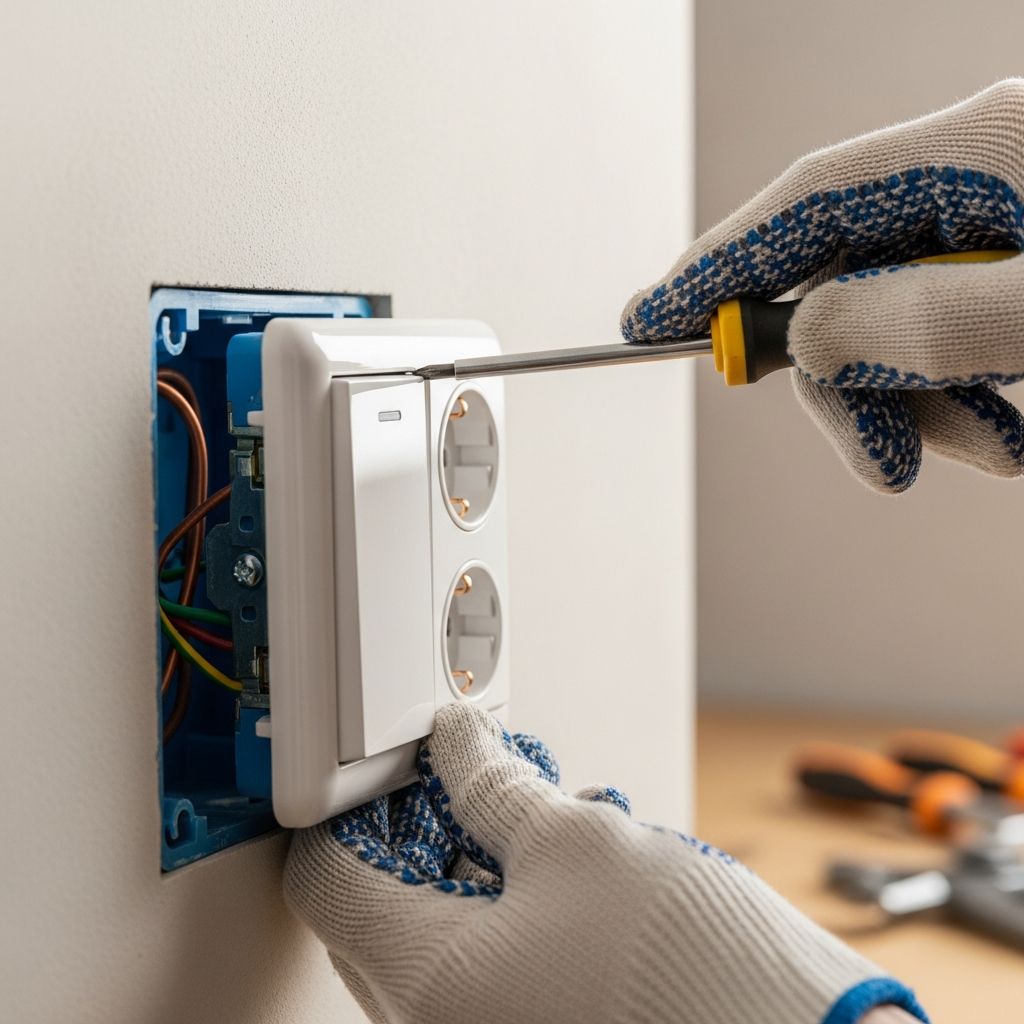
Install Switch and Outlet Combo Guide
Combining a light switch and electrical outlet into a single device offers a practical way to maximize space and functionality in your home’s electrical boxes. This setup, often called a switch-receptacle combo, allows you to control lighting while providing convenient power access, ideal for kitchens, garages, or workshops.
Why Choose a Switch-Outlet Combination Device?
Space-saving is the primary advantage. Traditional setups require separate boxes for switches and outlets, but a combo unit fits everything into one standard box. This reduces clutter and simplifies installation, especially in tight spaces. Additionally, these devices support modern requirements like tamper-resistant features, mandated by the National Electrical Code (NEC) in many areas for residential use.
Functionally, the switch can control overhead lights or fans, while the outlet remains always hot or switched as needed. This versatility enhances room utility without running new wires.
Essential Tools and Materials Needed
Gathering the right tools ensures a smooth process. Here’s what you’ll need:
- Combination switch-outlet device (15-amp or 20-amp, tamper-resistant if required)
- Wire strippers and cutters
- Screwdrivers (flathead and Phillips)
- Needle-nose pliers
- Wire nuts and electrical tape
- Voltage tester or non-contact tester
- Pigtail wires (white neutral, green or bare ground, black hot)
- Combination device screws
Select a device matching your circuit’s amperage. For most homes, 15-amp suffices, but verify your breaker rating.
Safety Protocols Before Starting
Electricity demands respect. Always prioritize safety to avoid shocks or fires.
- Locate your electrical panel and identify the circuit breaker for the box.
- Turn off the breaker and verify power is off using a voltage tester on all wires.
- Remove the faceplate and pull out the old switch to inspect wires: you need a hot (line/load), neutral, and ground.
- If no neutral exists, this install isn’t feasible without upgrades—consult a professional.
Test multiple times: energize briefly to confirm the right breaker, then de-energize again.
Understanding Your Wiring Configuration
Most switch boxes have two hot wires (black)—one incoming power (line), one to the load (light). Neutrals are bundled in the box back, grounds too. A combo device requires connecting these properly.
Key Terms:
- Line: Incoming power from breaker.
- Load: Outgoing to light/fixture.
- Neutral: Return path, white wires.
- Ground: Safety path, green/bare.
Use a tester to distinguish line from load: the always-hot wire is line.
Step-by-Step Installation Process
Step 1: Remove Existing Switch
Unscrew and pull out the switch. Disconnect wires: note positions or label line/load. Gently extract neutrals and grounds from the box rear.
Step 2: Prepare Pigtails
Combo devices often lack enough terminals, so create pigtails.
- Cut 6-inch white wire; strip ends. Twist with box neutrals under a wire nut.
- Do the same for ground (green/bare wire).
These pigtails connect to the device.
Step 3: Configure the Combo Device
Inspect the unit: switch on top, duplex outlet below. Break the tab between outlet terminals if splitting hot/switched (optional).
Connections:
| Terminal | Wire | Notes |
|---|---|---|
| Switch Line (Brass) | Line hot (black) | Incoming power |
| Switch Load (Brass) | Load hot (black) | To light |
| Outlet Hot (Brass) | Neutral pigtail? No—hot pigtail if always hot | For always-hot outlet |
| Outlet Neutral (Silver) | Neutral pigtail (white) | Both outlets share |
| Ground | Ground pigtail | Green screw |
Strip ¾-inch insulation. Loop wires clockwise under screws for secure hold. Tighten firmly.
Step 4: Secure Wires and Mount
Fold wires neatly into the box. Align device, screw to box ears. Attach faceplate.
Step 5: Test the Installation
Restore power. Test outlet with plug-in tester (lights indicate correct wiring). Flip switch to verify load control. No sparks or tripped breakers? Success.
Common Wiring Variations
Not all boxes are identical.
- Always-Hot Outlet: Connect line hot to both outlet hots (tab intact).
- Switched Outlet: Connect switch load to one outlet hot; break tab, line to other.
- No Ground: Use GFCI combo for safety.
For split receptacles (top switched, bottom always hot), use 14/3 wire with red for switched leg.
Troubleshooting Issues
Problems arise—here’s how to fix:
- Outlet dead: Check neutral pigtail connection.
- Switch not working: Swap line/load wires.
- GFCI trips: Verify grounds; no ground means wrong device.
- Loose fit: Adjust wire folds.
Retest power off before tweaks.
Compliance with Electrical Codes
Follow NEC: Tamper-resistant outlets required in homes post-2014. Boxes must accommodate fill (device + wires ≤ 2.13 cu in per #12 wire). Local codes vary—check permits for major changes.
U.S. Consumer Product Safety Commission emphasizes proper grounding to prevent shocks.
Advanced Tips for Professional Results
– Use ECX bits for stubborn screws.
– Pre-twist neutrals tightly.
– Label breakers clearly.
– Consider smart combos for app control.
Expand by daisy-chaining to additional boxes.
Frequently Asked Questions (FAQs)
Can I install this without a neutral wire?
No. Neutrals are essential for the outlet. Upgrade wiring if absent.
Is a permit required?
Often not for like-for-like swaps, but check local rules.
What if my box lacks ground?
Opt for switch-GFCI combo; it provides protection.
How do I know if it’s 15 or 20 amp?
Match breaker; 20-amp devices have T-slot outlets.
Can the outlet power high-draw appliances?
Yes, if circuit-rated; avoid continuous loads over 80% capacity.
Benefits Beyond Basic Install
This upgrade modernizes outdated wiring, boosts property value, and enhances safety. In rentals or flips, it impresses inspectors and buyers. Energy savings come from precise load control, reducing phantom power.
Maintenance is simple: annual inspections ensure tight connections. Replace every 10-15 years or after surges.
References
- National Electrical Code (NEC) 2023 Handbook — NFPA. 2023-01-01. https://www.nfpa.org/codes-and-standards/all-codes-and-standards/list-of-codes-and-standards/detail?code=70
- Residential Electrical Code Requirements — U.S. Consumer Product Safety Commission. 2024-06-15. https://www.cpsc.gov/s3fs-public/Resi_Electrical_Code_Req.pdf
- Wiring Devices Guide — Leviton Manufacturing Co. 2025-03-10. https://www.leviton.com/en/docs/Wiring-Devices-Dimensional-Guide
- Electrical Safety in the Home — OSHA. 2023-11-20. https://www.osha.gov/sites/default/files/publications/electrical_safety_home.pdf
- Tamper-Resistant Receptacles Standard — UL Standards & Engagement. 2024-02-05. https://www.shopulstandards.com/ProductDetail.aspx?UniqueKey=31491
Similar Articles








Read full bio of Sneha Tete