Installing Vinyl Siding Over Lap Siding: Expert Guide
Master the step-by-step process of layering vinyl siding over existing lap siding for a durable, low-maintenance exterior upgrade.
Installing Vinyl Siding Over Lap Siding
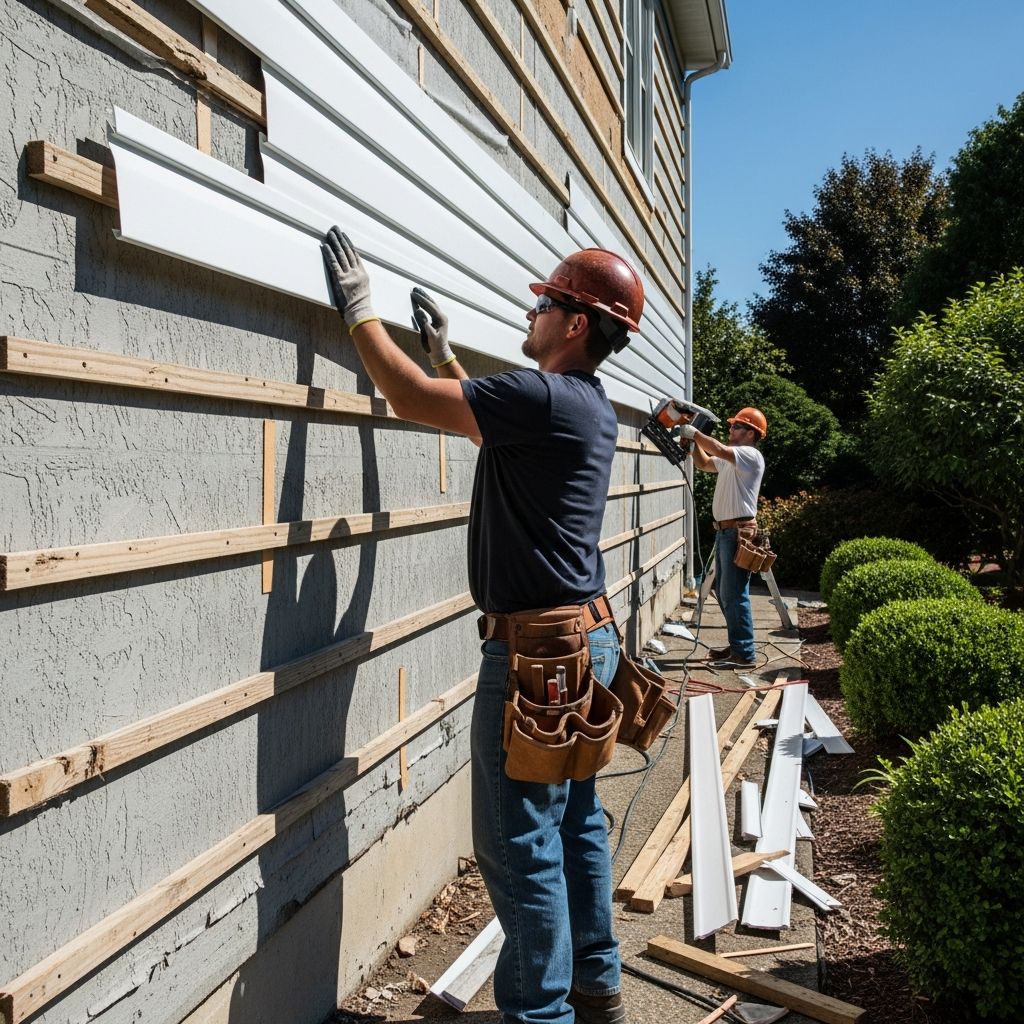
Layering vinyl siding over existing lap siding offers a practical way to refresh a home’s exterior without the labor-intensive process of tear-off. This method saves time and reduces debris while providing a modern, weather-resistant finish. Proper execution ensures longevity and aesthetic appeal, accommodating vinyl’s natural expansion and contraction.
Why Choose Vinyl Over Existing Lap Siding?
Existing lap siding, often wood or fiber cement, can serve as a stable base if it’s sound and flat. Vinyl siding installs efficiently over it, eliminating the need for full removal, which cuts costs and downtime. Key benefits include enhanced insulation, reduced maintenance, and protection from moisture when paired with a weather-resistant barrier.
- Cost savings: Avoids demolition expenses and landfill fees.
- Speed: Installation can complete in days rather than weeks.
- Durability: Vinyl resists fading, cracking, and pests.
However, success hinges on thorough preparation to prevent buckling or uneven panels caused by underlying irregularities.
Essential Tools and Materials
Gather these items before starting to streamline the project:
| Category | Items | Purpose |
|---|---|---|
| Measuring & Leveling | Tape measure, chalk line, 4-ft level, line level, speed square | Ensure straight lines and precise cuts. |
| Cutting & Fastening | Tin snips, utility knife, hammer, siding nailer or galvanized nails (1-1/4″ min.) | Cut panels accurately; secure without over-tightening. |
| Accessories | Starter strips, J-channel, corner posts, undersill trim, housewrap | Frame panels and seal edges. |
| Safety | Gloves, safety glasses, ladder, extension cords | Protect against cuts and falls. |
Use corrosion-resistant fasteners like aluminum or galvanized nails that penetrate at least 1-1/4 inches into the substrate.
Preparing the Existing Lap Siding Surface
A smooth, flat base is critical; vinyl siding cannot bridge gaps over 1/8 inch. Inspect the lap siding for rot, loose boards, or damage.
- Remove accessories like shutters, lights, and downspouts.
- Power wash to eliminate dirt, mildew, and peeling paint.
- Repair cracks or replace damaged sections with compatible material.
- Apply a weather-resistant barrier such as housewrap over the lap siding, overlapping seams and taping joints.
- Flash windows, doors, and corners with self-adhering membrane.
Fill minor depressions with exterior-grade caulk or foam board shims, sanding smooth. This prevents telegraphing of imperfections through the new siding.
Accurate Measurements and Layout
Precision here avoids wavy lines and fitting issues later. Start at the foundation.
- Measure wall height at multiple points; note the lowest point for starter strip placement.
- Mark 1-1.5 inches above the foundation all around.
- At corners, tack nails and snap chalk lines between them, verifying level with a line level.
- Account for expansion: leave 1/4-inch gaps at ends of strips and posts.
For walls with slopes, adjust starter height to keep courses level. Record measurements and transfer consistently.
Installing the Starter Strip Foundation
The starter strip anchors the first course and sets the alignment for all subsequent panels.
Position it along your chalk line, 1-2 inches above the foundation to allow clearance. Nail through slots every 8-12 inches, centering fasteners and leaving 1/32-inch gap under heads for movement.
For insulated vinyl, space starter slightly farther out using furring strips if needed.
Fitting and Securing Corner Posts and Trim
Corner posts cover panel ends and provide a clean transition.
- Cut posts to extend 3/4 inch below starter and 1/4 inch short of soffit.
- Plumb with a level; nail top slots first on both sides, maintaining 1/32-inch clearance.
- Install J-channels around windows, doors, and rooflines, mitering corners precisely.
- Overlap factory notches 1-1.25 inches on long panels.
Drill and rivet overlapping trim pieces for stability.
Laying the First Course of Vinyl Panels
Hooks the bottom edge into the starter strip.
- Cut panels to fit between corners or trim, allowing 1/4-inch expansion gaps.
- Engage the locking hem fully along the bottom without forcing upward.
- Nail centers of slots starting midway, spacing 16 inches apart horizontally.
- Drive nails perpendicular, never tight—think “dime space” under heads.
Work from center outward to ends for even tension.
Installing Subsequent Courses
Each panel overlaps the one below, creating the lap effect.
Overlap by 1-1.25 inches, locking firmly by rolling down and pulling up until it clicks. Check alignment frequently with a level. Cut heights for windows using undersill trim: measure drop, cut panel shorter, insert trim, and nail.
Avoid stretching; let panels hang naturally to prevent buckling in heat.
Handling Around Openings and Obstacles
Windows and doors require J-channel or casing trim.
| Feature | Installation Steps |
|---|---|
| Windows/Doors | Install J-channel on head/sides first, then sill. Cut siding 1/4 inch short; slide into channels. |
| Electrical Boxes | Build out with trim or box extender; cut siding precisely. |
| Utility Pipes | Punch holes in siding; seal with caulk after positioning. |
Always maintain expansion gaps.
Final Touches and Finishing Details
Complete with soffit, fascia, and top trim. Overlap horizontal siding into vertical pieces. Caulk only at fixed joints, not moving parts. Inspect for loose nails and level courses.
Common Mistakes and Prevention Strategies
- Over-nailing: Causes buckling; always leave clearance.
- Ignoring expansion: Gaps prevent warping.
- Uneven surface: Shim or plane irregularities.
- Poor overlap: Leads to leaks; follow manufacturer specs.
Frequently Asked Questions (FAQs)
Can I install vinyl siding over any lap siding?
Yes, if it’s structurally sound, flat, and securely fastened. Inspect and repair first.
How much overlap for panels?
1-1.25 inches for 12-foot panels, adjusting for temperature.
What nail spacing for siding?
Maximum 16 inches for horizontal panels.
Does vinyl siding need furring strips over lap?
Usually not, if surface is flat; use for insulation or unevenness.
How to cut vinyl siding cleanly?
Use tin snips when warm; score and snap for straight lines.
This guide equips you for a professional-grade installation. Consult local codes and manufacturer instructions for specifics.
References
- 2020 VSI Installation Manual — Vinyl Siding Institute. 2020-06-01. https://polymericexteriors.org/wp-content/uploads/2020/06/2020-VSI-Installation-Manual.pdf
- How To Install Vinyl Siding — YouTube (Professional Installer Video). Accessed 2026. https://www.youtube.com/watch?v=l1MwrqImWXs
- How to Install Vinyl Siding — CertainTeed. Accessed 2026. https://www.certainteed.com/how-to-install-vinyl-siding
- Georgia-Pacific Vinyl Siding Installation Guide — Georgia-Pacific. 2022-12-01. https://www.gpvinylsiding.com/wp-content/uploads/2021/12/Georgia-Pacific-Installation-Guide-2022.pdf
- Vinyl Siding Estimating and Installation Guide — Kaycan. 2021-07-01. https://www.kaycan.com/wp-content/uploads/2021/07/2021_KAYCAN_Estimating_Install_Guide_JUL_21.pdf
Similar Articles




Read full bio of medha deb