A Complete Homeowner’s Guide to Installing a Tub Surround
Plan, install, and finish a tub surround that protects your walls and upgrades your bathroom.
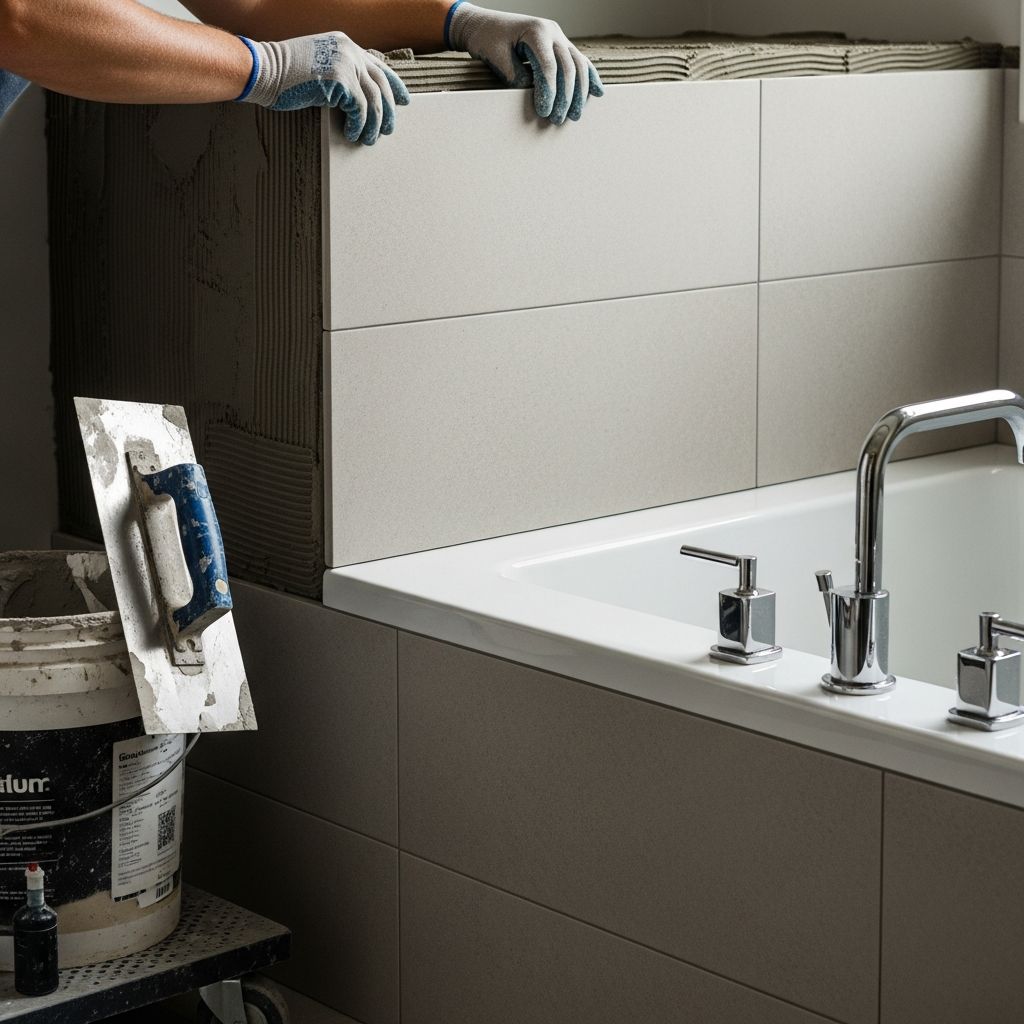
Upgrading the walls around a bathtub with a new surround is one of the most dramatic and practical bathroom improvements a homeowner can tackle without a full-scale remodel. A well-installed surround protects the walls from moisture, simplifies cleaning, and instantly makes an older tub look fresher and more modern.
This guide walks through everything from planning and prep to installation and finishing details, with a focus on practical steps that a careful DIYer can follow safely and confidently.
Why Install a Tub Surround?
A tub surround is a protective wall system that lines the three walls around an alcove bathtub or tub-shower combination. It can be made from acrylic, fiberglass, composite, solid-surface materials, or waterproof wall panels designed to look like tile or stone.
- Protects drywall and framing from splashing water and long-term moisture.
- Simplifies cleaning compared with grout-heavy tile installations.
- Offers a relatively quick, cost-effective way to upgrade a dated bathroom.
Types of Tub Surround Systems
Before jumping into installation, it helps to understand the basic categories of tub surround systems and how they impact your project. Different products require different substrates, adhesives, and fastening methods.
| Type | Typical Material | Installation Style | Main Advantages | Main Considerations |
|---|---|---|---|---|
| Three-piece panel kit | Acrylic or fiberglass | Panels adhere to existing walls or backer | Lightweight, relatively easy to cut and handle | Requires very flat walls and careful adhesive use |
| Multi-piece sectional system | Composite or acrylic | Interlocking panels with corner pieces | Flexible layout and repair-friendly | More seams to seal properly |
| Direct-to-stud unit | Fiberglass or acrylic | Fastened directly to wall framing | Very sturdy, integrated tub and walls possible | Usually installed during major remodels with walls open |
| Waterproof panel systems | Laminated or solid-surface panels | Panels adhere to backer board or studs | High-end appearance, large-format panels | Heavier and may require special tools for cuts |
Planning Your Project
Good planning is the difference between a professional-looking installation and a surround that feels like an afterthought. Take time to measure accurately, verify wall conditions, and confirm that your chosen kit fits both your tub and your bathroom layout.
Essential Measurements
Because surrounds are designed to meet specific tub sizes, small measurement errors can lead to misaligned seams or gaps. Use a quality tape measure and record measurements clearly, noting where you measured from and to.
- Measure the length of the tub along the back wall from stud to stud or finished wall to finished wall.
- Measure the height from the tub deck to the ceiling or the desired top of the surround.
- Measure the depth of each side wall from the front of the tub to the back wall.
- Locate and mark the centerline of the tub on the back wall; many panel layouts reference this line.
Check Wall Conditions
Even the best surround will fail if installed over damaged or unstable walls. Inspect the tub area thoroughly for signs of previous leaks or movement. Soft spots, crumbling drywall, or mold staining indicate that the substrate needs repair or replacement before any panels go up.
- Look for swelling, peeling paint, or loose tile that suggests water intrusion.
- Use a long level or straightedge to check for major bows or dips in the walls.
- Plan to install moisture-resistant backer board if the existing walls are in poor condition.
Tools and Materials Checklist
Gathering the right tools and supplies ahead of time helps the installation proceed smoothly. Always follow the specific product instructions for adhesive type and fasteners, but most projects will draw from a similar tool list.
- Measuring tape, pencil, and straightedge or level.
- Utility knife and fine-tooth handsaw or jigsaw for panel cuts.
- Drill with hole saws or spade bits for plumbing openings.
- Construction adhesive or panel adhesive approved by the manufacturer.
- Silicone or hybrid sealant for seams and tub-to-wall joints.
- Caulk gun, putty knife, and masking tape.
- Safety glasses, cut-resistant gloves, and dust mask when cutting panels.
Safety and Code Considerations
Although a tub surround project looks simple, it still involves sharp tools, working around plumbing, and dealing with existing finishes that may be old or brittle. Basic safety habits help prevent injuries and avoid costly damage.
- Shut off water to the tub-shower valve before removing any trim or fixtures.
- Confirm that any electrical outlets or switches near the tub are appropriately located and protected according to local code.
- Use protective equipment when cutting panels to avoid eye injuries from flying chips or dust.
Preparing the Tub and Walls
Preparation work lays the foundation for a long-lasting, leak-resistant surround. The goal is a clean tub deck, sound walls, and a clear layout for panel placement and plumbing cutouts.
Remove Old Materials
If you are replacing an old surround or tile, remove it down to a solid surface, often backer board or bare studs. Work carefully to avoid cracking the tub itself. Cut old caulk with a sharp knife and pry panels gently.
- Take off the faucet handle, trim plate, tub spout, and shower arm escutcheon.
- Score old caulk at the tub and corners to reduce the chance of chipping the tub finish.
- Remove any loose or damaged drywall or backer and replace with moisture-resistant board if needed.
Clean and Level Surfaces
Adhesives bond best to clean, sound surfaces. Scrape off residual caulk, adhesive ridges, and loose paint. Lightly sand glossy paint or tile if the manufacturer allows direct installation over it, then vacuum or wipe with a damp cloth.
- Fill small wall depressions with setting-type joint compound or patching material; sand smooth when dry.
- Check that the tub sits level; shim where appropriate if your tub installation instructions permit.
- Dry-fit panels to confirm that surfaces are flat enough to support full contact with adhesive.
Layout and Dry-Fitting Panels
Dry-fitting—temporarily placing the panels without adhesive—lets you refine cut lines, confirm plumbing locations, and visualize seams. This step helps prevent costly mistakes once adhesive is on the wall.
- Mark the top edge of the surround on all three walls using a level line.
- Identify factory-finished edges that are meant for exposed corners and keep them aligned with visible sides.
- Plan which panel will be installed first; many kits start with a back panel and then side walls, but follow your product’s guidance.
Locating Plumbing Openings
Accurate openings around the faucet, shower valve, and tub spout are key to a professional look. An error of even a small amount can lead to gaps or difficulty installing trim.
- Measure from fixed references, such as the tub deck and back wall, to the center of each pipe.
- Transfer these measurements to the panel’s finished face, marking center points clearly.
- Drill pilot holes and then enlarge openings with the appropriate hole saw or jigsaw.
- Dry-fit the panel again to ensure the trim plates fully cover the openings.
Adhesive vs. Mechanical Fastening
Tub surrounds may rely primarily on adhesives, screws, or a combination of both. Using the wrong type or skipping fasteners can void warranties and shorten the life of the installation. Always follow the product’s specific recommendations.
Adhesive Basics
Panel adhesives are formulated to remain flexible while providing strong bond strength. Inadequate coverage can lead to hollow spots or flexing panels, while excessive adhesive can cause lumps and difficulty seating panels flush.
- Apply adhesive in vertical or horizontal beads as specified, often keeping beads a few inches apart.
- Avoid placing adhesive too close to panel edges where squeeze-out would interfere with joint sealant.
- Work within the adhesive’s open time; install panels promptly once adhesive is applied.
Using Screws and Clips
Some surrounds, especially direct-to-stud systems, require mechanical fasteners through flanges or integrated mounting points. Fastening only where directed prevents cracking or distorting the visible face of the panels.
- Predrill through flanges where recommended to prevent splitting.
- Use corrosion-resistant screws of the specified length to avoid penetrating plumbing behind the wall.
- Do not over-tighten fasteners; snug is usually enough to hold the panel flush.
Installing the Panels Step by Step
The sequence below outlines a typical panel installation pattern. Always adapt the order to match your particular surround kit, starting with the surfaces that will be hardest to adjust later.
1. Install the Back Wall Panel
The back panel sets the visual alignment and establishes how side panels will meet the corners. Accurate placement on the layout lines is especially important to keep seams square and vertical.
- Apply adhesive to the back wall, or to the back of the panel, following the specified pattern.
- Carefully lift the panel into position, resting its bottom edge on the tub deck and aligning marks with the tub centerline.
- Press the panel firmly from the center outward, smoothing to remove air pockets.
- Use temporary braces or shims at the tub edge if needed to keep the panel from sliding as adhesive sets.
2. Install the Plumbing-Side Wall
The wall with the faucet and shower valve needs extra attention because of the cutouts. Double-check that the panel seats fully against the wall and that trim will cover all openings before final pressing.
- Dry-fit the panel over the pipes and verify that the openings are centered around each fitting.
- Apply adhesive per instructions, keeping beads clear of cutout edges.
- Slide the panel over the plumbing and seat its bottom edge on the tub.
- Press the panel into the corner, starting where it meets the back panel and working forward.
3. Install the Opposite Side Wall
The last large panel completes the enclosure and locks the corners in place. Because this side usually has no plumbing, it is often the easiest panel to fit, but alignment with the back wall and tub edge still matters greatly.
- Dry-fit to verify that vertical edges meet cleanly at the corner and that the front edge lines up with the tub.
- Apply adhesive and position the panel, pressing firmly from bottom to top.
- Confirm that both corners are straight and that panel tops follow the layout line.
Sealing Joints and Edges
Even a perfectly fitted surround will leak if joints and edges are not sealed correctly. Sealant creates a flexible, waterproof barrier at seams, corners, and the tub-to-wall transition where movement is common.
- Use a high-quality tub and tile sealant compatible with your surround material.
- Seal vertical inside corners where panels meet, the joint along the tub deck, and any gaps between the surround and ceiling.
- Smooth beads with a damp finger or caulk tool for a neat, continuous finish.
Reinstalling Fixtures and Accessories
Once adhesive and sealant have cured according to the product directions, you can reinstall plumbing trim and add storage accessories like shelves or grab bars designed for your system. Rushing this step can disturb panels or smear fresh sealant.
- Install the tub spout, valve trim, handle, and shower arm with escutcheon, following manufacturer instructions.
- Avoid overtightening trim screws that could compress the panel material.
- Add factory-approved accessories using supplied fasteners or adhesive pads.
Common Mistakes to Avoid
Knowing typical pitfalls in advance helps keep your project on track. Many installation problems surface months later as loose panels, moldy caulk, or subtle leaks that damage framing.
- Skipping dry-fitting, which can lead to misaligned seams and visible gaps.
- Using unapproved adhesives or caulks that may not bond well or may discolor panels.
- Ignoring a slightly out-of-level tub, which can make panel alignment and caulk lines look crooked.
- Forgetting to leave expansion clearance where required by the manufacturer.
Care and Maintenance Tips
A tub surround is low-maintenance compared to tile, but it still needs routine care to stay attractive and watertight. Simple habits go a long way in preventing soap scum buildup and keeping sealant joints intact.
- Use non-abrasive cleaners and soft cloths to avoid scratching the panel surface.
- Rinse walls after soapy showers to reduce residue.
- Inspect caulk once or twice a year and repair any cracked or missing sections promptly.
Frequently Asked Questions
Can a tub surround be installed over existing tile?
Some manufacturers allow installation over sound, firmly bonded tile if the surface is properly cleaned, lightly scuffed, and within flatness tolerances. However, many homeowners prefer removing old tile to inspect for hidden moisture damage and ensure a flatter substrate.
How long does a typical installation take?
For an experienced DIYer with basic tools, a straightforward three-panel surround can often be installed in a weekend, including demolition, surface preparation, installation, and caulking. Curing times for adhesives and sealants may extend the project across multiple days even when active work time is limited.
Do I need a waterproof membrane behind the surround?
Requirements vary by product and local building code. Many direct-to-stud systems rely on the surround itself as the primary water barrier, while panel systems over backer board may benefit from a moisture-resistant substrate or vapor barrier in particularly wet environments.
Is it possible to replace just one panel later if damaged?
In multi-piece systems, an individual panel can sometimes be removed and replaced, but it often involves cutting through adhesive and redoing nearby caulk joints. Storing documentation and, if possible, noting the model and color code of the surround helps if repairs are needed in the future.
When should a professional handle the work?
If the bathroom shows extensive water damage, mold, structural issues, or complex plumbing reconfiguration, calling a licensed contractor is usually the safest route. Professionals can also be a good choice when you are working with high-end heavy panels or when your project is part of a larger remodel with multiple trade interactions.
Similar Articles





Read full bio of Sneha Tete