Installing AC Condenser Unit: Step-By-Step Guide
Master the complete process of installing an air conditioner condenser unit with our detailed, safety-focused DIY guide for optimal home cooling performance.
Installing AC Condenser Unit Guide
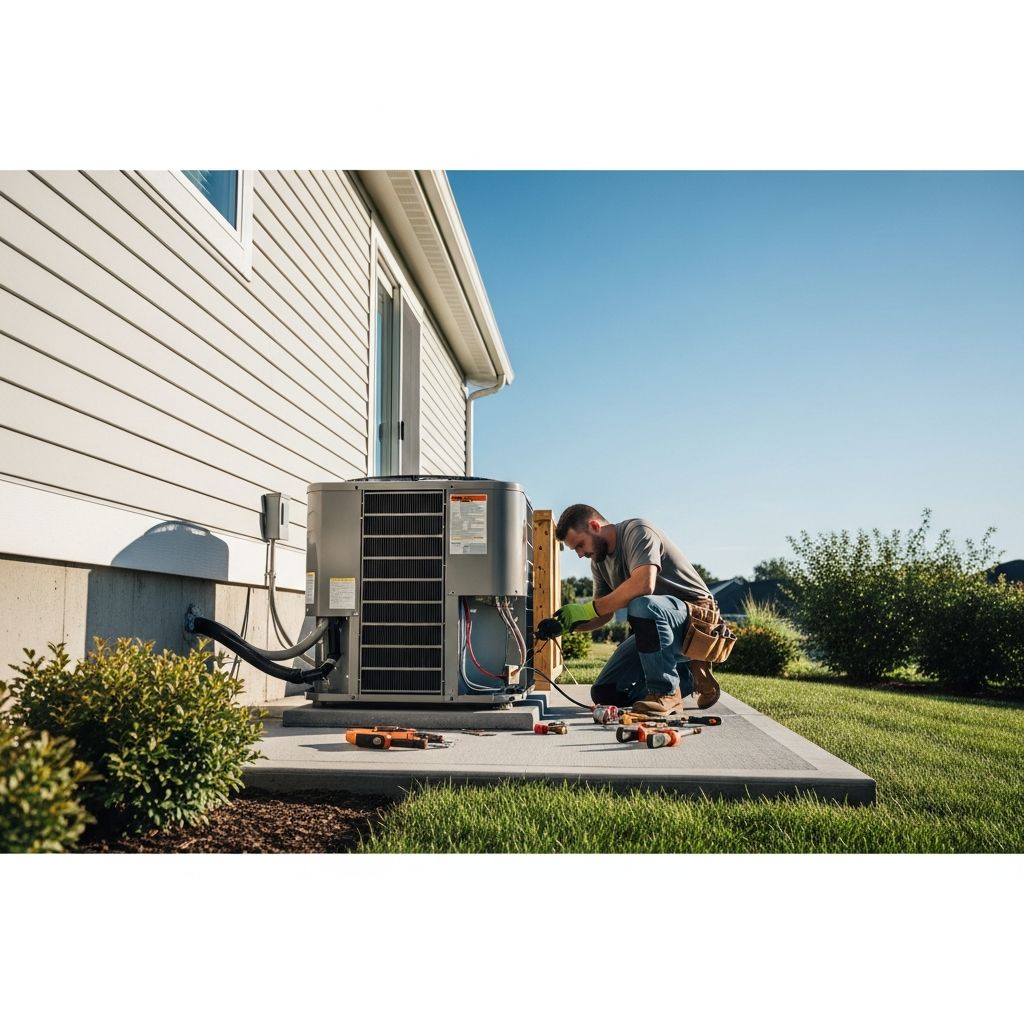
Proper installation of an air conditioner condenser unit ensures efficient cooling, longevity, and safety in your home. This guide provides a detailed roadmap for positioning the outdoor unit, connecting components, and verifying performance, drawing on established HVAC practices.
Understanding the AC Condenser Role
The condenser unit, typically located outside, releases heat absorbed from indoors. It houses the compressor, condenser coil, and fan, working with the indoor evaporator to cycle refrigerant. Correct setup prevents common issues like reduced efficiency or premature failure.
Key components include copper refrigerant lines (suction and liquid), electrical disconnects, and vibration pads. Professional standards emphasize level placement and adequate airflow to maintain optimal operation.
Essential Tools and Materials Checklist
Gather these items before starting to streamline the process and ensure compliance with safety codes.
- Concrete pad or mounting brackets for stable base
- Torque wrench and manifold gauge set for connections
- Brazing torch, nitrogen regulator, and flaring tools
- Level, tape measure, and drill with bits
- Refrigerant scale, vacuum pump, and micron gauge
- Insulation sleeves, PVC for condensate drain, and sealants
- Safety gear: gloves, glasses, and wet rags for heat protection
- Electrical connectors, wire strippers, and multimeter
| Tool/Material | Purpose |
|---|---|
| Electronic refrigerant scale | Accurately weighing refrigerant during charging |
| Drill with various bit sizes | Creating holes for mounting and line connections |
| Level | Ensuring units and brackets are properly aligned |
| Copper pipe cutting tools | Preparing copper pipes for connections |
| Mounting brackets | Securing units to wall or surface |
Planning Your Installation Site
Site selection impacts performance and accessibility. Choose a location with at least 2 feet of clearance on all sides for airflow and service access, away from dryer vents to avoid lint intake. Ensure proximity to electrical service and indoor unit for minimal line lengths.
Check local codes for setbacks from property lines. Verify the ground is level; uneven surfaces cause vibrations and noise. U.S. Department of Energy guidelines stress proper airflow to maximize efficiency.
| Site Check | Location | Requirement |
|---|---|---|
| Clearance from walls/structures | Outdoor | Minimum 2 feet |
| Electrical outlet proximity | Indoor/Outdoor | Accessible and rated correctly |
| Vegetation/debris removal | Outdoor | At least 2-foot buffer |
| Level foundation | Outdoor | Concrete pad or platform |
Preparing the Foundation
A solid base prevents settling and operational issues. Pour or install a concrete pad slightly larger than the unit, elevated 4-6 inches above grade to avoid flooding. Allow concrete to cure fully per manufacturer specs.
Place vibration-dampening pads under the unit feet to reduce noise transmission. Use a level in multiple directions to confirm flatness; shim if needed for precision. This step aligns with best practices for long-term stability.
Mounting the Condenser Unit
Position the unit on the pad, ensuring the service valves face accessible directions. Secure with brackets if wall-mounted, torquing bolts to specs. Orient for optimal airflow, avoiding direct sun or wind obstructions.
Double-check level after placement. Install the electrical disconnect box nearby, wired per local codes with proper grounding. Cover sensitive components with wet towels during any nearby brazing to prevent heat damage.
Installing Refrigerant Lines
Refrigerant lines consist of a larger insulated suction line and smaller liquid line, typically 15-50 feet long. Unroll carefully to avoid kinks, securing every 4-6 feet with straps near beams or ducts.
Loop the liquid line and pinch into the suction line for protection during routing. Flare ends using tools for leak-free fits. Braze connections with nitrogen flow to prevent oxidation: connect line set to service valves, install filter-drier near the expansion valve for moisture control.
Insulate the suction line fully; leave liquid line bare. Seal wall penetrations with weatherproof caulk.
Setting Up Electrical Connections
Route wiring through conduit to the disconnect, matching voltage and ampacity. Use wire nuts or connectors for secure joins. Verify fan rotation direction and compressor amps post-power-up; do not exceed rated load amps (RLA).
Install high-pressure switch set to refrigerant type (e.g., 425 psi), confirming with running system. Ground properly to safeguard against surges.
Condensate Drain Configuration
Run PVC piping from the indoor evaporator’s drain pan to a floor drain or pump. Glue joints securely, sloping 1/8 inch per foot for flow. Add a secondary safety switch wired to shut off the system on overflow.
Position P-traps correctly; extend excess line and seal entry points.
System Evacuation and Charging
Connect manifold gauges to service ports, purging lines. Attach vacuum pump and run to 500 microns, holding for stability. Use micron gauge to verify.
Break vacuum with refrigerant, charge by weight per nameplate using scale. Measure superheat: Suction Line Temp – Sat. Suction Temp ≈ 20°F. Install valve core caps finger-tight after checks.
Testing and Startup Procedures
Power on, observe pressures, temperatures, and amp draws. Check for unusual noises or vibrations. Verify defrost cycle if heat pump-equipped, and oil failure switch operation.
Monitor for leaks at Schrader ports, tightening cores as needed. Run system 30-60 minutes, adjusting superheat for efficiency.
Common Pitfalls and Troubleshooting
- Uneven pad: Causes compressor strain; re-level immediately.
- Improper brazing: Leads to leaks; use nitrogen purge.
- Inadequate clearance: Reduces airflow, icing coils.
- Moisture in lines: Install filter-drier; evacuate thoroughly.
- Electrical mismatches: Breakers trip; match specs precisely.
Ongoing Maintenance for Peak Performance
Annually clean coils, check refrigerant levels, and inspect electrical. Clear vegetation around unit. Replace filter-drier every 5 years or as needed. Professional tune-ups ensure warranty compliance and efficiency.
Frequently Asked Questions (FAQs)
What clearance is needed around the condenser?
At least 2 feet from walls and 1 foot otherwise, per best practices for service and airflow.
Can I install without brazing experience?
Brazing requires skill; consider professional help for leak-free results.
How do I know if superheat is correct?
Aim for 20°F using the formula: Suction temp minus saturation temp.
What’s the purpose of the filter-drier?
Absorbs moisture and filters debris, protecting the system.
Is a concrete pad always required?
Yes for stability; elevate to prevent water damage.
References
- Air Conditioning Installation: A Step-by-Step Process — Nexgen Air and Plumbing. 2023. https://nexgenairandplumbing.com/blog/air-conditioning-installation-a-step-by-step-process/
- Air Conditioner Installation Steps: A Comprehensive Guide — Project HVAC. 2025-08-25. https://projecthvac.com/2025/08/25/air-conditioner-installation-steps/
- Condenser Install 3D — YouTube (Bryan). Accessed 2026. https://www.youtube.com/watch?v=dwrbJKlHw6o
- Guide to Installing Condensing Units — Contracting Business. Accessed 2026. https://www.contractingbusiness.com/residential-hvac/article/20865901/guide-to-installing-condensing-units
- Condensing Unit Air Conditioning Installation & Service Reference — Daikin Comfort (IM-IOD-4015L). Accessed 2026. https://daikincomfort.com/docs/default-source/dx7tc/im-iod-4015l.pdf
Similar Articles








Read full bio of Sneha Tete