Installing Attic Lighting: Complete DIY Guide
Transform your dark attic into a bright, usable space with this step-by-step guide to safe and effective lighting installation.
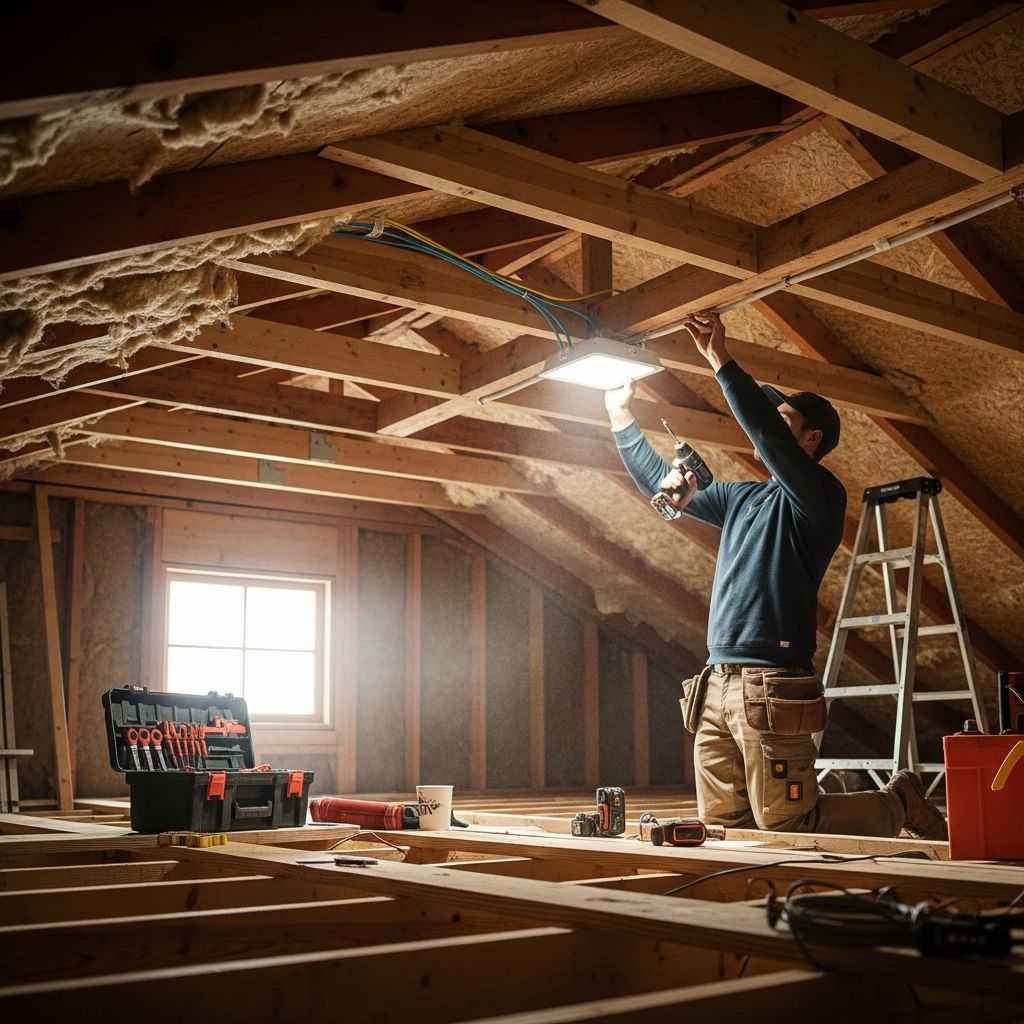
Adding lighting to an attic enhances accessibility for storage, maintenance, or conversion projects. This guide provides a detailed, original approach to selecting fixtures, planning wiring, and executing installation while prioritizing safety and code compliance.
Why Illuminate Your Attic Space
Attics often remain dark and underutilized due to limited natural light. Proper illumination improves visibility for tasks like organizing boxes, inspecting insulation, or pursuing hobbies. LED options offer energy efficiency, longevity, and brightness without excessive heat, making them ideal for enclosed spaces.
- Boosts safety by reducing trip hazards in low-light conditions.
- Supports home value through better usability of overhead storage.
- Enables future expansions like partial conversions.
Assessing Your Attic for Lighting Needs
Begin with a thorough evaluation. Measure the square footage to determine fixture count—aim for 1-2 lumens per square foot for general use, higher for work areas. Check joist spacing, insulation depth, and access points. Note existing electrical access from nearby rooms or circuits.
| Attic Size (sq ft) | Recommended Fixtures | Total Lumens |
|---|---|---|
| 100-200 | 1-2 LED battens | 2000-4000 |
| 200-400 | 2-4 LED battens | 4000-8000 |
| 400+ | 4+ or zoned setup | 8000+ |
Inspect for obstacles like HVAC ducts or wiring. Ensure at least 6 feet of headroom in work zones per building codes.
Selecting the Right Attic Light Fixtures
Opt for durable, low-profile LED battens or strips rated IP65 for dust and moisture resistance. These snap onto joists without major modifications. Avoid recessed cans unless fire-rated for insulation contact. Prioritize cool white (4000K) for task lighting.
- LED Battens: Easy clip-in, 4-6ft lengths, 3000+ lumens each.
- Motion-Sensor Models: Activate on entry, saving energy.
- Dimmable Options: Adjustable for ambiance.
Verify compatibility with 120V household current and included mounting hardware.
Gathering Essential Tools and Materials
Prepare a kit for efficiency. Use insulated tools to prevent shocks.
- Tools: Voltage tester, wire strippers, screwdriver set, drill with bits, fish tape, ladder, stud finder.
- Materials: 14/2 NM cable (or 1.5mm twin & earth), wire nuts, Wago connectors, junction boxes, electrical tape, cable staples.
- Safety Gear: Gloves, safety glasses, knee pads for attic work.
Budget $50-150 per fixture, plus $20-50 for wiring supplies.
Planning the Electrical Circuit
Tap into an existing upstairs lighting circuit to avoid new runs. Confirm capacity—standard 15A circuits handle 4-6 LED fixtures (under 100W total). Use a voltage tester to identify the power source.
- Locate a ceiling light rose or junction box on the target circuit.
- Plan cable routes along joists, securing every 4.5 feet.
- Decide on switch control: new pull-chain, wall switch, or tie-in.
For multi-fixture setups, wire in parallel: power to first, daisy-chain to others.
Safety Protocols Before Starting Work
Electricity demands respect. Turn off the breaker and verify no power with a tester at multiple points. Work with a partner for overhead tasks. Never bypass fuses or overload circuits. Comply with NEC guidelines: attic wiring must avoid foot traffic paths.
Attic installations require protecting cables from physical damage, routing them securely along joists.
Step-by-Step Wiring from Existing Power Source
Access the source: remove a ceiling rose cover downstairs. Identify terminals—neutral (consistent power), live (switched), earth.
- Prepare Cable: Run 14/2 NM from source through attic floor via drilled hole or knockout.
- Install Junction Box: Mount at first fixture location if needed.
- Connect at Source: Pigtail switched live (black/brown) to new cable using Wago or nuts. Neutral (white/blue) and earth (green/yellow/bare) similarly.
Strip 1/2 inch insulation, twist securely, tape connections. Route cable overhead, stapling flat against joists.
Mounting Fixtures Securely in the Attic
Level fixtures using a laser or string line across joists. Most LEDs include clips.
- Mark positions every 6-8 feet.
- Screw brackets into joists (pilot holes prevent splitting).
- Snap fixtures onto brackets—ensure click-lock engagement.
For uneven joists, use adjustable mounts. Test fit before wiring.
Wiring Multiple Fixtures in Series
Daisy-chain for uniformity. At first fixture:
- Incoming live/neutral/earth to input terminals.
- Outgoing cable from output terminals to next.
Repeat: strip, connect live-to-live, etc. Final fixture caps ends. Use color-coded terminals for clarity.

Adding a Switch or Pull Chain
For control, install a ceiling pull switch or wall toggle. From junction:
- Run switched live back to fixture input.
- Connect switch between power live and fixture live.
Motion sensors simplify: wire as switched live interrupter.
Testing and Troubleshooting the Installation
Re-energize breaker. Test each fixture—flicker indicates loose connections. No power? Recheck breaker, voltage at source, continuity. Dimness suggests overload; upgrade circuit if needed.
- Common Fixes: Tug wires, reseat nuts, verify polarity.
Finishing Touches and Maintenance Tips
Secure loose cables, add plywood walkways. Clean fixtures annually. LEDs last 50,000+ hours, but check for dust buildup.
Frequently Asked Questions (FAQs)
Can I install attic lights without an electrician?
Yes, for basic tie-ins on accessible circuits, but consult local codes. Complex runs require pros.
What if my attic has blown-in insulation?
Use insulated-rated fixtures and route wires above or in conduit.
Are LED attic lights energy-efficient?
Absolutely—10W LEDs match 75W incandescents, slashing bills.
How do I add smart controls?
Integrate WiFi relays post-install for app/voice control.
Is a permit needed?
Often not for minor adds, but check municipality; inspections ensure safety.
Advanced Options for Enhanced Attic Lighting
Consider zoned lighting with multiple switches or RGB strips for conversions. Solar-powered pulls work for remote spots. Integrate with home automation for timers.
This installation yields a brighter, safer attic. Expand gradually, always powering down first.
References
- Installing Attic Lighting – What Does Code Say? — Fine Homebuilding. 2023-05-15. https://www.finehomebuilding.com/forum/installing-attic-lighting-what-does-code-say
- How to Install Recessed Lights with Attic Access — Recessed Lighting OC. 2024-02-10. https://www.recessedlightingoc.com/install-recessed-lights-attic-access/
- How to Light a Loft Space: Wiring and Installation Guide — Loft Leg. 2023-11-20. https://www.loftleg.com/post/how-to-light-a-loft-space-wiring-and-installation-guide
- National Electrical Code (NEC) Handbook — National Fire Protection Association (NFPA). 2023-10-01. https://www.nfpa.org/codes-and-standards/all-codes-and-standards/list-of-codes-and-standards/detail?code=70
Similar Articles








Read full bio of Sneha Tete