Installing Drywall Near Bathtubs: Pro Techniques
Master the art of fitting drywall around bathtubs for a seamless, water-resistant bathroom finish that lasts.
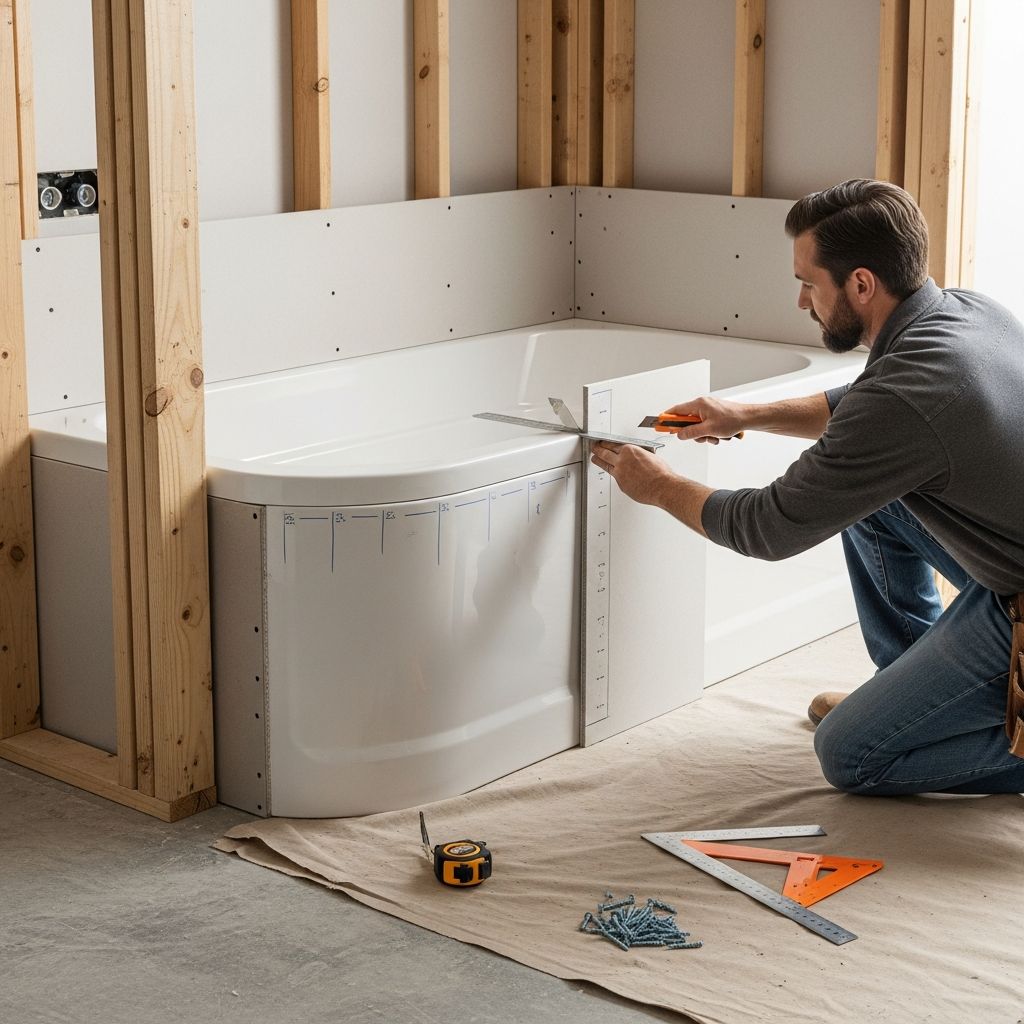
Properly installing drywall around a bathtub is essential for creating a waterproof barrier and achieving a professional finish in any bathroom renovation. This process involves precise cutting, strategic support, specialized finishing, and thorough sealing to prevent moisture damage over time. By following structured steps, even novice DIYers can produce results comparable to experienced contractors.
Essential Preparations Before Drywall Work
Before touching any drywall sheets, ensure the bathtub is securely positioned and level. Use shims under the tub if necessary, but keep them under 1/4 inch to avoid excessive gaps that complicate installation. Verify that all plumbing connections are complete and test the tub for leaks. Frame the walls with studs positioned to support drywall edges tightly against the tub flange without overlapping it, as overlap causes bulging and poor adhesion.
Gather materials including moisture-resistant greenboard or cement board for areas prone to splashes, though standard drywall suffices if properly sealed. You’ll need utility knives, drywall saws, T-squares for measurements, screw guns, and safety gear like dust masks and goggles. Prepare a workspace by protecting the tub surface with painter’s tape and drop cloths to avoid compound splatters.
- Measure distances from tub flanges to opposite walls for accurate sheet sizing.
- Inspect flanges for damage; trim excess if present, but maintain at least 1/8-inch clearance.
- Install temporary bracing on ceilings and walls to hold sheets during solo installation.
Accurate Cutting and Fitting Drywall Sheets
Cut drywall to fit snugly up to—but not over—the tub flanges. For the lower sections behind the tub apron, measure the width from the door jamb or adjacent wall to the flange edge. Hang full sheets higher up first, then custom-cut bottom pieces to tuck behind the apron lip, ensuring they sit flush.
Use a straightedge and utility knife for clean scores on the face side, snapping the sheet backward for a crisp break. For curved tub edges, trace the contour with a compass or flexible template, then score multiple times before sawing. Around protrusions like faucets, create precise notches using a drywall router bit or oscillating tool for seamless integration.
In tight spaces, rip sheets lengthwise to 3/8-inch or quarter-inch thicknesses to level with flanges. Secure with corrosion-resistant screws every 8 inches into studs, driving them slightly below the surface without dimpling the paper. Avoid nailing near edges to prevent crumbling.
| Area | Recommended Drywall Type | Cut Tolerance |
|---|---|---|
| Behind Tub Apron | Standard 1/2-inch | 1/16-inch from flange |
| Above Flange | Moisture-resistant | Up to flange edge |
| Ceiling Transitions | Standard | Full sheet overhang |
Framing Adjustments for Seamless Integration
Wall framing must accommodate the tub’s contours. Install blocking between studs at tub height to support cut edges. For shower surrounds or alcove tubs, add horizontal ledger boards ripped to match the gap depth, allowing backer board or tile to sit flush atop the tub rim.
If the tub sits unevenly, sister additional studs or use furring strips—thin wood spacers nailed perpendicular—to extend planes outward. This ensures drywall aligns perfectly without bows. In multi-piece tub installs, leave expansion gaps filled later with backer rod and sealant.
Pro tip: Dry-fit all pieces before permanent fastening. Slide sheets into position, checking for 1/8-inch reveals around flanges to allow for caulk beads.
Specialized Beads and Edging Solutions
For superior transitions, employ tearaway drywall beads like those with extended mud legs (2-1/2 inches). Cut to length, miter inside corners at 45 degrees for tight joints. Apply spray adhesive to the mud leg back, let it tack, then position 1/8-inch from the tub flange. Secure with stainless-steel staples every 6-8 inches.
These beads protect edges from chipping and create a straight screed line for taping. Alternatives include plastic J-beads or metal corner beads for simpler setups, but tearaway versions excel in moist environments by allowing clean peel-off reveals for caulking.
- Spray adhesive prevents slippage during compound application.
- Miter cuts ensure mitered returns at corners without gaps.
- Stainless staples resist rust in humid bathrooms.
Pre-Filling Gaps with Setting Compound
Irregular gaps between drywall and tub flanges demand pre-filling with hot mud—quick-setting compounds like 20- or 45-minute mixes. These harden fast, minimizing shrinkage and mold risk. Mix to a thick peanut-butter consistency using a hawk and margin trowel.
Apply generously into gaps using a 6-inch knife, forcing it deep with back-and-forth motions. Overfill slightly to account for settling, then feather edges 12 inches onto adjacent drywall faces. Allow full set (20-90 minutes per type) before taping. This creates a solid base for smooth finishes.
For wider voids over 1/4 inch, insert foam backer rod first to reduce compound volume and enhance adhesion.
Layered Taping and Finishing Process
Taping mimics standard drywall joints but adapts for tub proximity. Run painter’s tape along flanges to shield the tub surface. Embed mesh or paper tape in a thin first coat of all-purpose compound over beads and joints, feathering 10-12 inches wide.
Second coat builds to 16-20 inches, using 10- or 12-inch knives for flatness. Third skim coat achieves feather-edge smoothness. Between coats, dry 24 hours or use setting compounds for speed. Sand lightly with 120-grit paper, focusing on bead edges.
Prime with a mold-resistant sealant, then two topcoats of semi-gloss bath paint. Wait 24-48 hours before cleaning residual compound from the tub with a plastic scraper.
- First coat: Tape embedment only.
- Second coat: Fill bead legs fully.
- Third coat: Skim entire surface.
Waterproof Sealing and Final Protection
The critical final step is caulking. Peel tearaway strips if used, exposing clean reveals. Apply 100% silicone caulk—mildew-resistant and flexible—using a caulk gun. Tool into a concave bead matching the 1/8-inch gap, ensuring full contact without voids.
For tiled surrounds, transition to cement board above drywall, sealing seams with thinset and membrane. Test seals by spraying water and checking for infiltration after 24 hours cure time.
Common Mistakes and Troubleshooting
Avoid overlapping drywall onto flanges, leading to cracks. Don’t skimp on pre-fill; thin compounds crack. Ensure even screw patterns to prevent telegraphing. If gaps exceed 1/2 inch, rebuild framing.
Troubleshoot bulges by sanding high spots; persistent moisture indicates poor sealing—recaulk immediately.
Frequently Asked Questions (FAQs)
What type of drywall is best around bathtubs?
Moisture-resistant greenboard or cement board for direct exposure; standard Type X for sealed areas.
Can I hang drywall alone around a tub?
Yes, with temporary braces and pre-cut pieces, but a helper prevents back strain on ceilings.
How long does compound take to dry near tubs?
Setting types: 20-90 minutes; all-purpose: 24 hours per coat.
Is cement board required over drywall?
Not always; sufficient if caulked properly, but ideal for tiled showers.
What if my tub gap is too wide?
Use backer rod plus compound; adjust framing for future installs.
Advanced Tips for Professional Results
Incorporate fiber-reinforced tape for superior strength on angles. Use laser levels for plumb cuts. For textured ceilings, feather compounds wider to blend seamlessly. Always ventilate during sanding to control dust.
Expand coverage by installing vapor barriers behind drywall in cold climates, stapled to studs before sheets. This holistic approach yields bathrooms resistant to decades of use.
References
- How to Finish Drywall Around a Shower Enclosure — Fine Homebuilding / YouTube (DIY With Contractor Ken). 2022-08-01. https://www.finehomebuilding.com/2022/08/01/how-to-finish-drywall-around-a-shower-enclosure
- HOW TO HANG SHEETROCK & TAPE AROUND A SHOWER SURROUND OR BATHTUB — YouTube (Journeyman Drywall Finisher). Accessed 2026. https://www.youtube.com/watch?v=HGYzzvi8vwQ
- How to Hang Drywall and Prep for Shower Surround Framing — YouTube (Bathroom Remodel Series). Accessed 2026. https://www.youtube.com/watch?v=wQIl20XJggE
- How to Fill Drywall Around Tub Flange — YouTube (DIY With Contractor Ken). Accessed 2026. https://www.youtube.com/watch?v=5yw1SdDBc_8
- WALLBOARD ON TUB — YouTube (DIY With Contractor Ken). Accessed 2026. https://www.youtube.com/watch?v=04WLo0aCmBg
Similar Articles


Read full bio of medha deb