Installing Drywall On Exterior Walls: Step-By-Step Guide
Master the essentials of applying drywall to exterior walls for durable, weather-resistant results in your home projects.
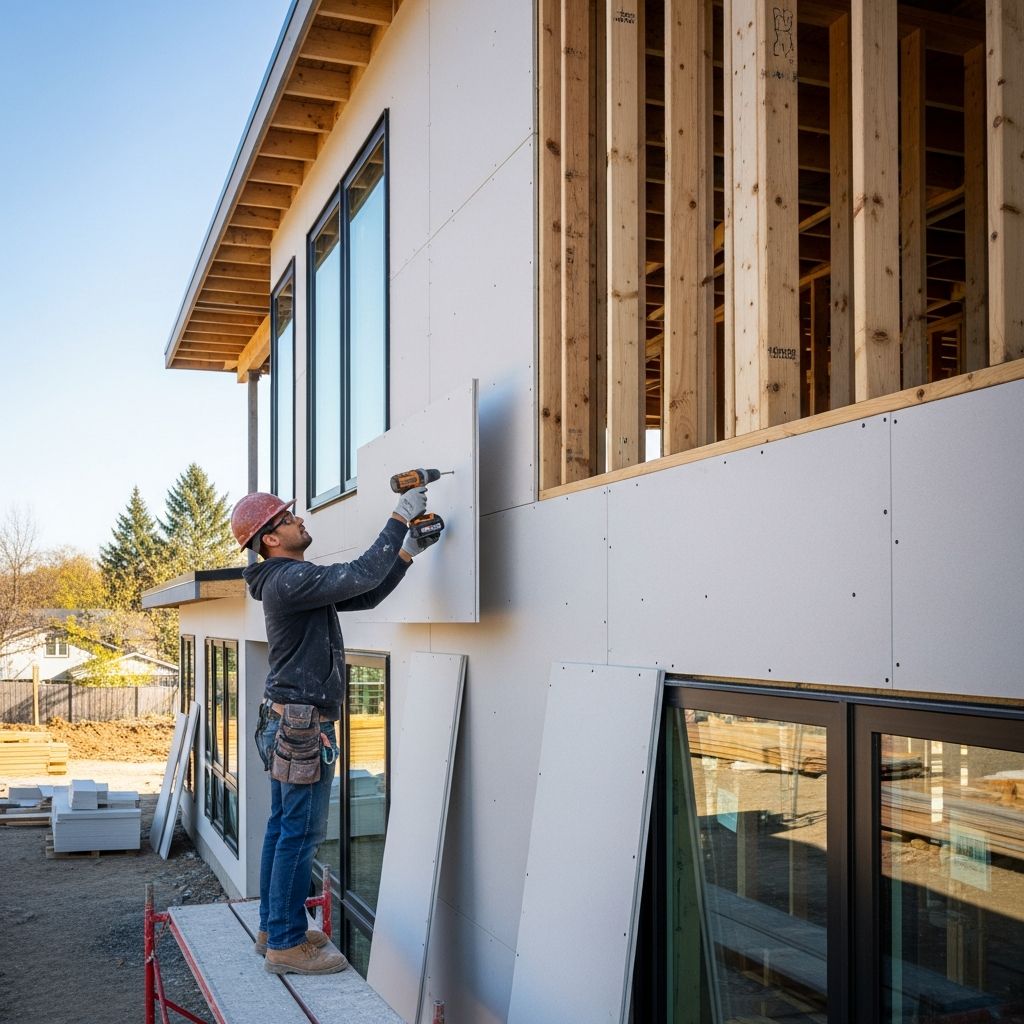
Installing Drywall on Exterior Walls
Applying drywall to exterior walls demands careful attention to framing integrity, moisture management, and precise installation techniques to ensure long-term durability and a smooth finish. This process transforms rough framing into a solid base ready for insulation, vapor barriers, and interior surfacing.
Understanding Exterior Wall Drywall Basics
Exterior walls differ from interior ones due to exposure risks like temperature fluctuations and potential water intrusion. Standard 1/2-inch or 5/8-inch thick gypsum panels work well, but opt for moisture-resistant varieties such as green board or cement board in high-humidity areas. Proper installation prevents issues like warping or mold growth.
Key considerations include maintaining expansion gaps, staggering seams, and securing panels firmly to studs spaced 16 or 24 inches on center. These practices distribute loads evenly and minimize cracking over time.
Essential Tools and Materials for the Job
Gather these items before starting to streamline your workflow:
- Drywall panels (4×8 or 4×12 feet sheets)
- Utility knife and scoring tool for cuts
- T-square or straightedge for measurements
- Drywall screw gun with 1-1/4 inch coarse-thread screws
- Joint compound, paper tape, and corner beads
- 6-inch, 10-inch, and 12-inch taping knives
- Lifting tools like foot lifters or drywall jacks
- Safety gear: dust mask, goggles, gloves
- Stud finder and level
Invest in a cordless screw gun for efficiency; it drives screws without stripping heads. For larger projects, rent a drywall lift to handle heavy sheets solo.
Preparing Your Exterior Wall Framing
Begin with a thorough inspection. Check studs for plumb and level using a 4-foot level. Exterior framing often includes sheathing like plywood or OSB, which provides rigidity. Ensure all electrical, plumbing, and HVAC penetrations are complete and protected.
Install blocking between studs at mid-heights for heavy fixtures. Add horizontal strapping if studs exceed 24-inch spacing to support panel edges and reduce butt joints. Seal any gaps in the sheathing with spray foam or caulk to block air infiltration.
Verify vapor barrier placement on the warm side (interior for cold climates) to control condensation. Tape seams meticulously for airtightness.
| Framing Check | Action Required | Spacing Standard |
|---|---|---|
| Stud Alignment | Shim if needed | 16-24 inches OC |
| Sheathing Integrity | Secure with nails/screws | 6 inches edges, 12 field |
| Expansion Gaps | Maintain 1/8 inch | All panel edges |
Measuring and Cutting Drywall Panels
Measure wall dimensions precisely, accounting for doors, windows, and outlets. Add 1/2-inch extra for floor clearance to allow baseboard installation and expansion.
To cut full sheets: Mark lines with a pencil and T-square. Score the face paper deeply with a utility knife, then snap the core by lifting the sheet. Cut through the back paper. For openings, drill pilot holes and trace outlines, scoring multiple times for clean breaks.
Stagger seams in a brick-like pattern across rows. Start subsequent rows with half-sheets to avoid four-way joints, which weaken the surface.
Hanging Drywall Sheets Securely
Work from top to bottom on walls, hoisting sheets with a partner or lift. Position cut edges near floors for tapered seams in the middle. Use foot lifters to hold panels 1/4 to 1/2 inch off the floor.
Drive screws in a pattern: 3/8 inch from edges, 12 inches apart in the field, and 8 inches on edges for walls, 7 inches on ceilings. Sink screws just below the surface without dimpling the paper. Avoid nails unless specified, as screws hold better.
For ceilings, install perpendicular to joists first for strength. Use longer screws (1-5/8 inch) here.
Handling Special Areas and Fixtures
Cut panels around electrical boxes flush or slightly proud for mudding. Flex sheets into corners and secure immediately. For vaulted or sloped ceilings, bevel edges at 45 degrees to avoid telegraphing.
- Windows/Doors: Measure twice, cut notches for reveals.
- Outlets: Trace box, plunge-cut with keyhole saw.
- Corners: Plan for metal beads on exterior angles.
Finishing Seams and Joints Professionally
Allow 24 hours for any settling before taping. Apply a thin bedding coat of compound over seams, embed paper tape, and wipe excess. Let dry, then feather second and third coats progressively wider.
Butt joints require three coats due to thickness; tapered edges need two. Use 45-degree knife angles for feathering. Cover screw heads with dabs of mud, sanding lightly between coats.
For corners: Bed metal or plastic beads with compound, screwing through flanges. Apply coats to both sides, sanding for crisp lines.
Moisture Protection for Exterior Applications
Exterior walls demand extra vigilance. Use exterior-grade sheathing with housewrap underneath. On the interior, apply a 6-mil poly vapor retarder, sealing all seams with acoustic sealant.
In wet climates, choose mold-resistant drywall. Avoid placing butt joints near floors or in high-moisture zones. Proper ventilation during drying prevents issues.
Sanding, Priming, and Final Prep
After final coats dry (24-48 hours), sand with 120-150 grit polesander. Use light pressure to avoid gouging. Wipe dust with a tack cloth.
Prime with a high-build drywall primer to seal paper and unify absorption. Two coats recommended before paint.
Common Mistakes and Pro Tips
Avoid these pitfalls:
- Missing screws: Leads to popping.
- Poor staggering: Causes cracks.
- Over-mudding: Results in shrinkage.
Pro tips: Work in moderate temperatures (50-90°F). Pre-fill butt joints. Use setting-type compound for speed on first coats.
FAQ
Can I drywall exterior walls without insulation? No, insulate first for energy efficiency and to meet code. Vapor barriers follow.
How many screws per panel? About 40-50 for a 4×8 sheet, per code spacing.
What’s the drying time between coats? 12-24 hours; use fans to accelerate.
Do I need corner beads on all corners? Yes for exteriors, optional interiors if skilled.
Is greenboard necessary for exterior walls? Recommended in bathrooms or humid areas, standard elsewhere.
References
- How to Install Drywall — Lowe’s Home Improvement. 2025-05-03. https://www.youtube.com/watch?v=h0cP2P300hQ
- How To Install Drywall A to Z | DIY Tutorial — YouTube. N/A. https://www.youtube.com/watch?v=VQIMaR7hWtM
- Drywall Layout: Your Roadmap — Trim-Tex. N/A. https://www.trim-tex.com/blog/drywall-layout-roadmap
- How to Hang Drywall — The Home Depot. N/A. https://www.homedepot.com/c/ah/how-to-hang-drywall/9ba683603be9fa5395fab90cbb4826d
- USG Sheetrock® Brand Installation and Finishing Guide — USG. N/A. https://www.usg.com/content/dam/USG/pdpmovedocuments/sheetrock-gypsum-panels-installation-guide-en-J371.pdf
Similar Articles



Read full bio of Sneha Tete