Installing Floor Transition Strips: 6-Step DIY Guide
Master the art of seamless flooring transitions with our detailed DIY guide for professional results at home.
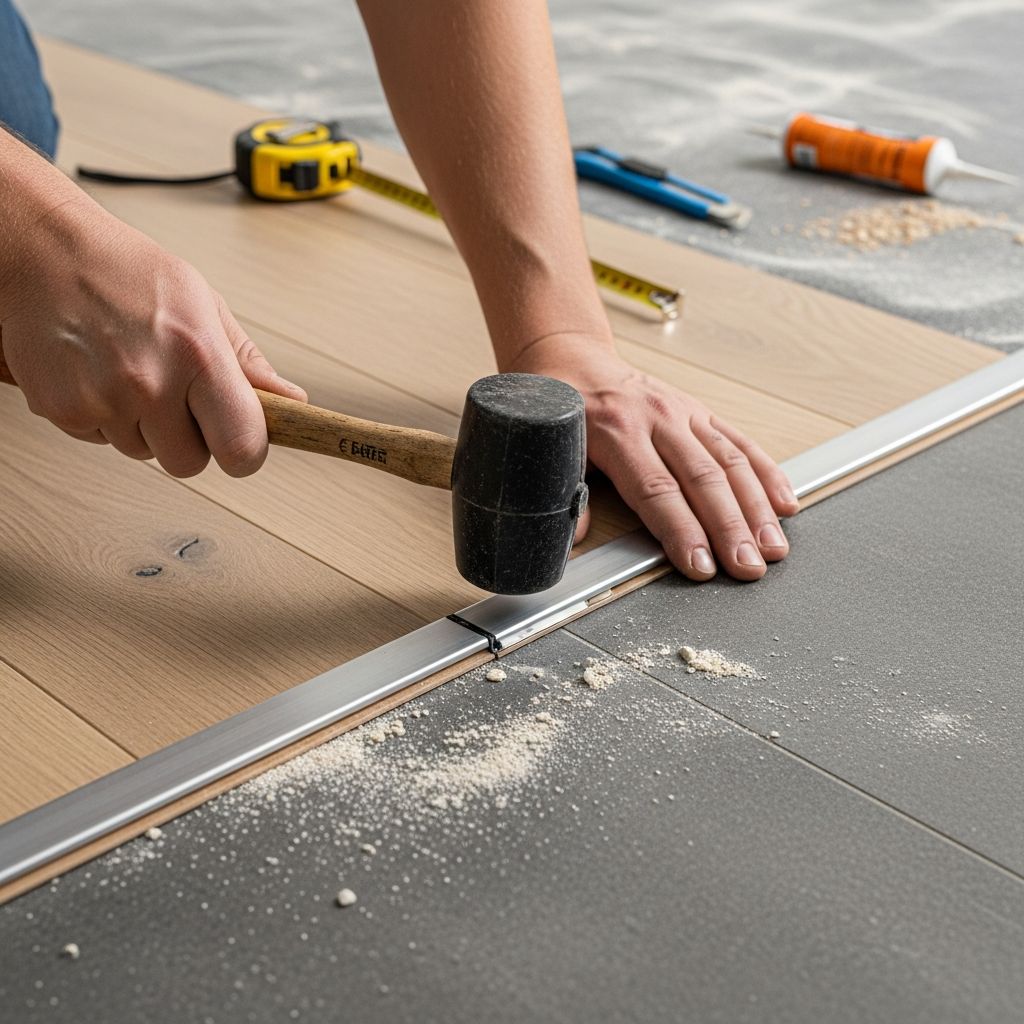
Installing Floor Transition Strips: A Complete DIY Guide
Floor transition strips provide essential bridges between dissimilar flooring materials, ensuring safety and visual harmony in your home. These narrow moldings cover gaps at doorways or room boundaries, accommodating height differences and material expansion while preventing trips.
Understanding Floor Transition Strips and Their Importance
Transition strips, also known as reducers, thresholds, or T-moldings, are slender profiles designed to join flooring types like hardwood to tile, carpet to laminate, or vinyl to concrete. They hide expansion gaps—typically 1/2 to 3/4 inch wide—allowing floors to breathe and move with humidity changes without buckling.
Without proper transitions, uneven heights create hazards, and exposed subfloors invite dirt buildup. Choosing the right strip enhances aesthetics: flat reducers suit minor height variances (up to 1/4 inch), while steeper ramps handle larger differences (1/4 to 1/2 inch). Metal strips offer durability for high-traffic areas; wood or laminate matches adjacent floors for subtlety.
Types of Transition Strips for Every Flooring Scenario
Select strips based on flooring heights and materials. Here’s a breakdown:
- Thresholds: Flat bars for same-height floors like hardwood-to-hardwood, ideal for doorways.
- Reducers: Sloped pieces lowering from thicker carpet (1/2 inch) to thinner tile (1/4 inch).
- T-Moldings: T-shaped for laminate-to-laminate or covering expansion joints.
- End Caps: Bullnose edges finishing against vertical surfaces like stairs.
- Metal Saddles: Heavy-duty for tile-to-carpet in garages or entries.
| Type | Best For | Height Difference | Material Options |
|---|---|---|---|
| Reducer | Carpet to hard floor | 1/8″ to 1/2″ | Wood, vinyl, metal |
| T-Molding | Same height laminate | None/minimal | Laminate, wood |
| Threshold | Doorways, even floors | None | Metal, wood |
| Saddle | Tile to carpet | Up to 3/8″ | Aluminum, brass |
Match finishes: oak for hardwood, brushed nickel for modern tiles.
Essential Tools and Materials for Installation
Gather these before starting to avoid interruptions:
- Transition strip kit (with track if applicable)
- Tape measure and pencil
- Miter saw, hacksaw, or utility knife
- Drill with bits, screwdriver, hammer
- Screws (1-1/2 inch), nails, or construction adhesive
- Level, shims, safety gear (goggles, gloves)
- Cleaning supplies (vacuum, rags, adhesive remover)
Pro tip: Opt for strips with pre-attached tracks for snap-in ease.
Preparation: Setting the Stage for Success
Success hinges on meticulous prep. Vacuum thoroughly to remove dust that could lift adhesives. Check floor heights with a straightedge; shim low spots using thin wedges under the weaker floor for level alignment.
Leave a 3/4-inch expansion gap across the transition zone. For new installs, plan this during flooring layout. Test-fit the strip dry to confirm coverage without overhangs. If heights differ significantly, undercut door jambs using a jamb saw for flush seating.
Step-by-Step Installation Process
Follow these proven steps for flawless results.
Step 1: Accurate Measuring
Measure from jamb to jamb across the doorway, adding 1/8 inch for trimming flexibility. Note height differentials at multiple points for custom cuts.
Step 2: Precision Cutting
Mark the strip and track. For metal, use a miter or hacksaw with fine teeth; wood/vinyl yields to utility knives. Cut at 45-degree miters for corners. File burrs smooth.
Step 3: Install the Base Track
For track systems, position in the gap. Drill pilot holes every 8-12 inches; secure with screws into subfloor, avoiding plywood seams. Press track firmly; it should sit flush.
Step 4: Apply Adhesive or Secure Base
For glue-down strips, spread construction adhesive sparingly. Self-adhesives peel-and-stick easily. Tack strips for carpet edges: place 1/8 inch from walls, nail every 2 inches.
Step 5: Position and Snap or Nail the Strip
Align perfectly, starting at one end. Snap into track with rubber mallet taps; avoid overstrike to prevent dents. Nail wood strips every 6 inches, countersinking heads. Use nail set for finish nails.
Step 6: Final Adjustments and Cleaning
Check levelness; add shims under track if needed. Caulk edges with color-matched sealant. Wipe residues immediately.
Handling Common Challenges and Height Variations
Uneven Floors: Stack shims under the track; Flex Glue secures them. For vinyl-to-carpet, break off excess flanges and nail directly.
Carpet Transitions: Trim carpet edges cleanly with a carpet knife, leaving 1/8-inch tuck-under space. Secure with tack strips offset from the hard floor.
Curved Areas: Heat-flex vinyl strips or use flexible metal alternatives.
High Traffic: Reinforce screws; choose aluminum over plastic.
Pro Tips for Long-Lasting, Professional Results
- Acclimate strips in the room for 48 hours.
- Pre-drill metal to prevent splitting.
- Use painter’s tape for clean adhesive lines.
- For multi-room jobs, install sequentially to maintain flow.
- Inspect after 24 hours; adjust loose pieces promptly.
Frequently Asked Questions (FAQs)
What gap size is ideal for transitions?
A 3/4-inch gap allows strip coverage and expansion.
Can I install without nails or screws?
Yes, heavy-duty double-sided tape works for light traffic, but secure mechanically for durability.
How do I match transitions to my floors?
Buy collections from the same manufacturer or custom stain wood strips.
What’s the best adhesive?
Construction adhesive like Liquid Nails for subfloor bonds.
Do transitions go under doors?
No; trim doors 1/8 inch above for clearance.
Safety and Maintenance Best Practices
Wear gloves to handle adhesives; ventilate for fumes. Post-install, avoid heavy traffic for 24 hours. Clean with mild soap; avoid abrasives on metal. Inspect yearly for loosening, retighten as needed.
These steps transform raw flooring edges into seamless, hazard-free zones, elevating your home’s value and comfort.
References
- Step-by-Step Guide To Installing Floor Transition Strips — Hero Metal. 2023. https://www.tiletrim.com/news/step-by-step-guide-to-installing-floor-transit-72374048.html
- Home DIY: How to Install Transition Strips on New Floor — YouTube (DIY Expert). 2022. https://www.youtube.com/watch?v=rd7tMXKTNo4
- A Step-by-Step Guide to Installing Carpet Transition Strips — Oreate AI. 2024. https://www.oreateai.com/blog/a-stepbystep-guide-to-installing-carpet-transition-strips/4573ffc0aad375df42e6f000aba3ee74
- How to Install Vinyl Flooring Transition Strip | LVP Moulding — YouTube. 2023. https://www.youtube.com/watch?v=_rC3oO-L8HM
- How To Install Laminate Flooring | Transitions — YouTube. 2022. https://www.youtube.com/watch?v=3On5inT8GdA
- Hardwood Transitions Installation Guide — Seneca Millwork. 2020-10-30. http://senecamillwork.com/wp-content/uploads/2020/10/Hardwood-Transitons-Installation-Guide-09.30.2020.pdf
Similar Articles








Read full bio of Sneha Tete