Installing Flush Door Pulls: Complete Guide
Master the art of fitting flush door pulls for a seamless, modern look on sliding and pocket doors with this detailed step-by-step tutorial.
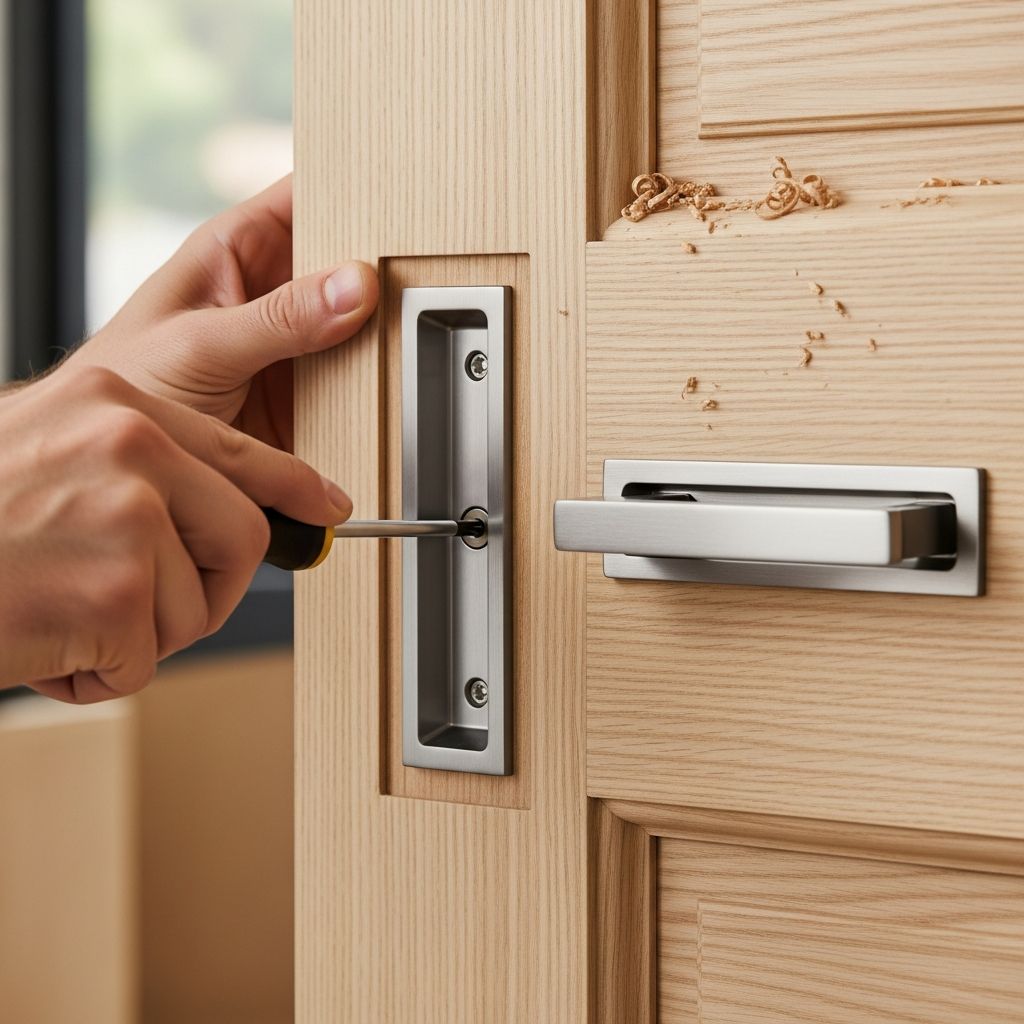
Flush door pulls provide a sleek, minimalist solution for sliding doors, pocket doors, and cabinetry, sitting seamlessly with the surface for a modern aesthetic. These handles are ideal for spaces where traditional protruding knobs won’t work, such as narrow door tracks or contemporary interiors. This comprehensive guide walks you through the entire process, from selecting the right pull to final installation, ensuring durability and functionality.
Understanding Flush Door Pulls and Their Applications
Flush pulls, also known as recessed or edge pulls, are embedded into the door’s surface, creating a smooth profile that prevents snags and maintains clean lines. They are commonly used on timber sliding doors for bathrooms, closets, lounges, and bedrooms. Unlike surface-mounted handles, flush pulls require precise recessing to sit perfectly level, making them a favorite in modern architecture.
Key benefits include enhanced safety—no protruding parts to catch clothing or injure children—and improved aesthetics for minimalist designs. They support both finger-pull functionality for easy gripping and can integrate with locks for privacy doors. Suitable for solid wood, hollow-core, and even some composite doors, these pulls typically measure 2-4 inches in diameter or rectangular shapes up to 8 inches long, with depths around 1/4 to 3/8 inch.
Essential Tools and Materials for the Job
Gathering the right tools upfront saves time and ensures accuracy. Most installations take 30-60 minutes per door, depending on door thickness and your experience level (beginner to intermediate).
- Measuring tools: Tape measure, pencil, combination square for precise markings.
- Cutting tools: Chisel set (1/4-inch and 1/2-inch), hammer or mallet; Forstner bit (2-1/8 inch recommended for round pulls), drill with 3mm pilot bit and Phillips head bit; optional router for rectangular pulls.
- Fastening tools: Screwdriver or power drill, provided screws (usually #6 Phillips).
- Safety gear: Safety glasses, dust mask, work gloves.
- Materials: Flush pull kit, wood filler (if needed), sandpaper (220-grit).
For hollow-core doors, a hole saw may suffice, but Forstner bits excel on solid timber for clean, flat-bottomed recesses. Always match the bit size to your pull’s dimensions—check the manufacturer’s specs.
Choosing the Perfect Location on Your Door
Placement is critical for ergonomics and door integrity. Standard height positions the pull’s center at 36 inches (3 feet) from the floor, aligning with average hand reach. For the pull side, measure 3 inches inward from the door’s leading edge to avoid interference when closing—essential for overlapping sliding doors.
Use a combination square to mark horizontal and vertical center lines. For dual-door setups, ensure symmetry by drilling one hole first, then squaring off the second. Test with a template: many kits include paper or plastic guides; trace around them for exact outlines. Avoid edges closer than 2 inches to prevent splitting, especially on thinner doors (under 1-3/8 inches thick).
| Door Type | Recommended Distance from Edge | Ideal Height |
|---|---|---|
| Sliding Closet | 3 inches | 36 inches |
| Pocket Door | 2-3 inches | 36-40 inches |
| Bathroom Internal | 3 inches | 36 inches |
| Cabinet/Pantry | 1-2 inches | Centered |
Step-by-Step Installation Process
Follow these detailed steps for a professional result. Work on a stable surface, door removed if possible, to minimize errors.
Step 1: Precise Measurements and Marking
Measure the pull’s recess dimensions: width, height, and depth (typically 1/4-3/8 inch). Mark the center point using crossed lines from door edges. Trace the pull’s outline lightly with pencil, double-checking symmetry.
Step 2: Creating the Recess
For round pulls, drill with a Forstner bit at low speed to avoid burning wood. Depth-stop the drill at the pull’s spec (e.g., 1/4 inch). Multiple overlapping passes ensure flatness. For rectangles, chisel or route: score outlines first, then pare away wood in layers, checking depth frequently with a straight edge.
Test fit: Tap the pull in with a rubber mallet. It should sit flush with the lip evenly contacting the surface—no rocking or gaps. Adjust by removing high spots or deepening lows.
Step 3: Drilling Pilot Holes
Position the pull and mark screw holes through its tabs or backplate. Drill 3mm pilot holes to prevent splitting, going only as deep as screw length. For friction-fit pulls without screws, skip this but ensure tight recess.
Step 4: Securing the Pull
Insert the pull, drive screws with a Phillips bit. Tighten snugly but avoid stripping—counter-sink if heads protrude. For nail-secured pulls, tap finish nails gently.
Step 5: Finishing Touches
Sand edges smooth, apply wood filler to minor imperfections, and repaint/stain to match. Rehang the door and test operation: pull should grip fingers comfortably without wobbling.
Advanced Techniques and Custom Templates
For multiple doors, craft a reusable template from plywood or MDF. Cut a precise mortise matching your pull, attach via clamps or double-sided tape, and route in place—ideal for in-situ work on hung doors. Videos demonstrate this: align template, plunge router to depth, and perfect repeatability.
On hollow-core doors, reinforce with wood blocks behind the recess using adhesive and screws for stability. For metal or glass doors, consult specialized kits with adhesive backing.
Troubleshooting Common Issues
Problems arise from imprecise work, but most are fixable:
- Pull sits proud: Deepen recess incrementally with chisel.
- Door splits: Use pilot holes; clamp door edges during drilling.
- Uneven fit: Check with level; sand high spots.
- Screws loose: Switch to longer screws or add thread locker.
- Hollow door flex: Insert backing blocks pre-install.
If the pull binds, verify track alignment—flush pulls don’t affect sliding but poor recess depth can warp the door face.
Safety and Best Practices
Always wear safety glasses when chiseling or drilling—wood chips fly. Secure the door firmly to prevent movement. Work in a ventilated area if using finishes. For rental properties, opt for reversible methods like friction pulls to avoid permanent alterations.
Child safety: Ensure pulls are smooth-edged; add locks for high-traffic areas. Comply with building codes for egress doors—flush pulls must allow easy operation without keys.
Types of Flush Pulls for Different Needs
Select based on use:
- Standard finger pulls: Round or oval for closets.
- Rectangular edge pulls: Slim for pocket doors.
- Lockable versions: Privacy bolts for bathrooms.
- Heavy-duty: Stainless steel for exteriors.
Match finishes (brass, matte black, chrome) to hardware for cohesion.
FAQs
Q: Can I install on hollow doors?
A: Yes, but reinforce the recess area with wood inserts for strength.
Q: What’s the best bit for round pulls?
A: A 2-1/8 inch Forstner bit provides clean, precise holes.
Q: How deep should the recess be?
A: Exactly match your pull’s depth, usually 1/4 to 3/8 inch—test frequently.
Q: Do I need to remove the door?
A: Preferred for accuracy, but templates allow in-place work.
Q: Time for two doors?
A: 45-90 minutes total with practice.
Enhancing Your Home with Flush Pulls
Upgrading to flush pulls modernizes any space affordably. Combine with soft-close tracks for luxury. Maintenance is simple: wipe with damp cloth, avoid harsh cleaners on finishes. Longevity exceeds 10 years with proper install.
References
- How To Install A Flush Pull — Pinnacle Hardware. Accessed 2026. https://www.pinnacle.net.au/how-to/how-to-install-a-flush-pull/
- Modern Flush Pull Instructions — Rustica Hardware. Accessed 2026. https://rustica.com/modern-flush-pull-instructions/
- How To Install Flush Mount Door Handle Pulls on Sliding Doors — Jonny DIY (YouTube). 2025-04-12. https://www.youtube.com/watch?v=njlXboIAxpE
- Flush Pull Handle quick install template — Robin Clevett (YouTube). 2021-02-08. https://www.youtube.com/watch?v=pyuY0ywXv6A
- How to fit a flush pull handle — Direct Doors. Accessed 2026. https://www.directdoors.com/blogs/help/how-to-fit-a-flush-pull-handle
Similar Articles



Read full bio of Sneha Tete