Installing Quad Electrical Outlets: Complete Guide
Master the art of quad outlet installation for expanded power capacity in your home with our detailed, safety-focused guide.
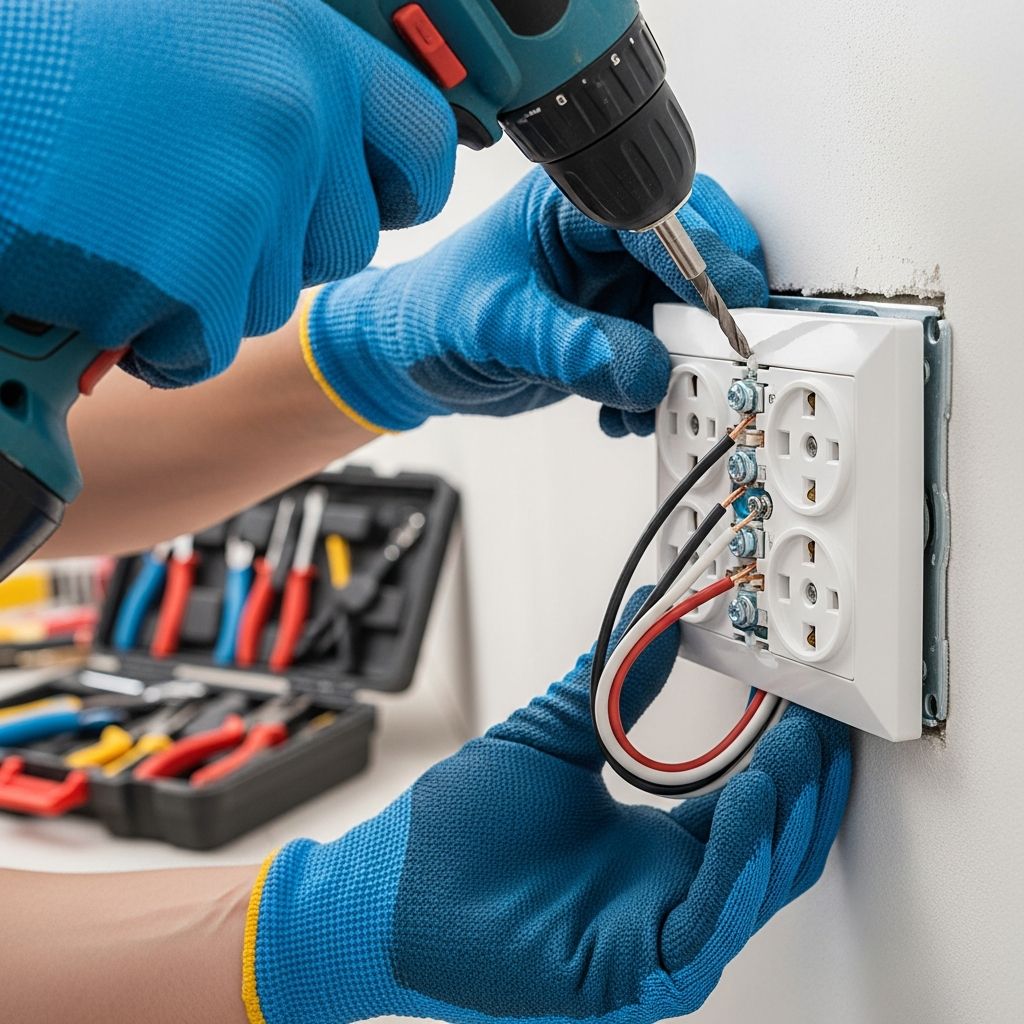
Quad electrical outlets, also known as quad receptacles or quadplex outlets, provide four receptacles in a single unit, doubling the capacity of standard duplex outlets. These are ideal for high-demand areas like kitchens, workshops, or home offices where multiple devices need simultaneous power. Proper installation ensures safety, code compliance, and optimal performance.
Understanding Quad Receptacles and Their Advantages
Quad outlets consist of two duplex receptacles wired together, offering four plug slots in one device. They address common issues with insufficient outlets by maximizing space and power availability. Key benefits include:
- Increased Capacity: Power up to four devices without extension cords, reducing clutter and fire risks.
- Space Efficiency: Fits in larger boxes but provides more outlets than separate units.
- Versatility: Suitable for residential and light commercial use, supporting 15-20 amp circuits.
According to electrical standards, these outlets must handle typical loads like chargers, appliances, and tools without overloading.
Types of Quad Outlets Available Today
Selecting the right type depends on location, amperage, and features. Common varieties include:
- Standard 15A/20A Quadplex: Basic models for indoor use, wired in parallel for independent receptacle operation.
- Tamper-Resistant (TR) Models: Required by NEC in homes with children; shutters block access unless plugs are inserted correctly.
- GFCI Quad Outlets: Essential for wet areas like bathrooms or outdoors, tripping on ground faults to prevent shocks.
- 4-in-1 Single-Gang Designs: Compact units fitting standard boxes, using push-in terminals or back-wiring for four outlets.
For new construction or rough-ins, use two-gang boxes with dual duplex receptacles forming a quad setup.
Essential Tools and Materials for Installation
Gather these before starting:
| Tool/Material | Purpose |
|---|---|
| Voltage Tester | Verify power is off |
| Wire Strippers | Prepare wire ends |
| Needle-Nose Pliers | Bend hooks on wires |
| Screwdrivers (Phillips/Flathead) | Secure connections |
| Two-Gang Box (or 4-in-1 adapter) | House the outlet |
| Quad Receptacle | Main component |
| Wire Nuts, Pigtails | Splice wires |
| Cover Plate | Finish installation |
Insulated tools prevent shocks; always wear safety glasses.
Preparation Steps: Safety First
Electrical work demands caution. Begin by:
- Turning off power at the breaker panel and verifying with a voltage tester at the outlet location.
- Removing the existing cover plate and outlet, if present.
- Checking wire colors: black (hot), white (neutral), green/bare (ground).
- Ensuring the box size suits the quad outlet—standard single-gang won’t suffice for full quadplexes; use two-gang or deep boxes.
Local codes may require permits; consult a licensed electrician if unsure.
Step-by-Step Wiring Instructions
Follow these for a standard two-duplex quad in a two-gang box:
1. Prepare the Wires
Strip 3/4 inch insulation from ends. For multiple wires, create pigtails: twist neutrals together with a pigtail using wire nuts, repeat for hots and grounds.
2. Connect Grounds
Attach all ground wires (green/bare) to the green ground screw on both receptacles. Use a single pigtail if needed, hooking clockwise.
3. Wire Neutrals
Connect white neutral pigtails to silver screws on each receptacle. For quad setups, jumper neutrals from a common splice to both units.
4. Attach Hots
Hook black hot wires clockwise to brass/gold screws. Split with pigtails for each duplex, ensuring line and load if daisy-chaining.
5. Mount and Secure
Fold wires neatly into the box, screw receptacles to box ears, attach the wide cover plate, and restore power.
For 4-in-1 single-gang models, use push-in holes or side terminals: insert hot into brass ports, neutral into silver, ground separately. Punch out dividers if combining into one unit.

Wiring Diagram Note: Always match line/load for circuits extending further.
Safety Protocols and Common Mistakes to Avoid
Prioritize these to prevent hazards:
- Never Skip Power-Off Test: Faulty testers cause injuries.
- Avoid Loose Connections: Tighten screws firmly; use hooks, not back-stabs which loosen over time.
- Overloading Prevention: Match outlet amp rating to circuit (15A or 20A).
- Code Compliance: NEC requires GFCI in kitchens/bathrooms; spacing every 12 feet max.
Common pitfalls: Undersized boxes leading to overheating, incorrect polarity (hot/neutral swapped), or omitting grounds.
Special Scenarios: New Construction vs. Replacement
New Builds or Rough-Ins
In rough-ins, run 12/2 or 14/2 NM cable into a two-gang box. Pigtail incoming power to both receptacles for independent operation.
Replacing Existing Outlets
Upgrade by expanding to two-gang if space allows, or use space-saving 4-in-1 for single-gang retrofits.
Outdoor or Damp Locations
Install weatherproof GFCI quads in extra-deep boxes with gaskets.
Troubleshooting Post-Installation Issues
If outlets don’t work:
- Test each receptacle individually.
- Check for tripped GFCI upstream.
- Inspect connections for corrosion or looseness.
- Use a receptacle tester for wiring faults like open grounds.
Partial power often indicates a bad pigtail splice.
Frequently Asked Questions (FAQs)
Can I install a quad outlet in a single-gang box?
Yes, with 4-in-1 compact models designed for standard boxes, using efficient terminal designs.
Does a quad outlet need a special breaker?
No, it uses the existing 15A or 20A circuit, but don’t exceed load capacity.
Is professional help required?
DIY is feasible for experienced users, but hire licensed electricians for complex jobs or code checks.
How many quad outlets per circuit?
Typically 8-10, depending on wire gauge and load; calculate per NEC 220.14.
Are quad outlets more expensive?
Slightly, due to size and materials, but save on multiple boxes and labor long-term.
Enhancing Your Electrical System with Quads
Integrate quads strategically: place in countertops (every 24 inches per code), garages for tools, or entertainment centers. Smart versions with USB ports add modern appeal. Regular inspections ensure longevity.
By following this guide, homeowners can safely expand power options, minimizing hazards and maximizing utility. Always verify local amendments to national codes.
References
- A Comprehensive Overview of Quad Outlets — Sagan Electric. 2023. https://saganelectric.com/blog/ultimate-guide-quad-outlets/
- Electrical Outlet – How to Wire a Outlet and Quadplex — YouTube (Electrician U). 2022-05-15. https://www.youtube.com/watch?v=GntV7T6Y4z8
- How To Install 4 Outlets Into A 1 Gang Electrical Box! DIY — YouTube (Everyday Home Repairs). 2023-08-10. https://www.youtube.com/watch?v=gAc3UbUzqHs
- Electrical 101: How To Rough In & Install A Quadplex (Residential) — YouTube (Everyday Home Repairs). 2022-11-20. https://www.youtube.com/watch?v=kJpqsl8gZq4
- Pass & Seymour Quad Receptacle Wiring Instructions — Legrand (PDF). 2021. https://cdn.adiglobaldistribution.us/pim/Original/10228/f325cfa92d3bc30841fb8fd7001cffb09833c029.pdf
Similar Articles






Read full bio of medha deb