Installing Tile Baseboards: Complete Guide
Transform your floors with durable tile baseboards using this step-by-step DIY guide for professional results at home.
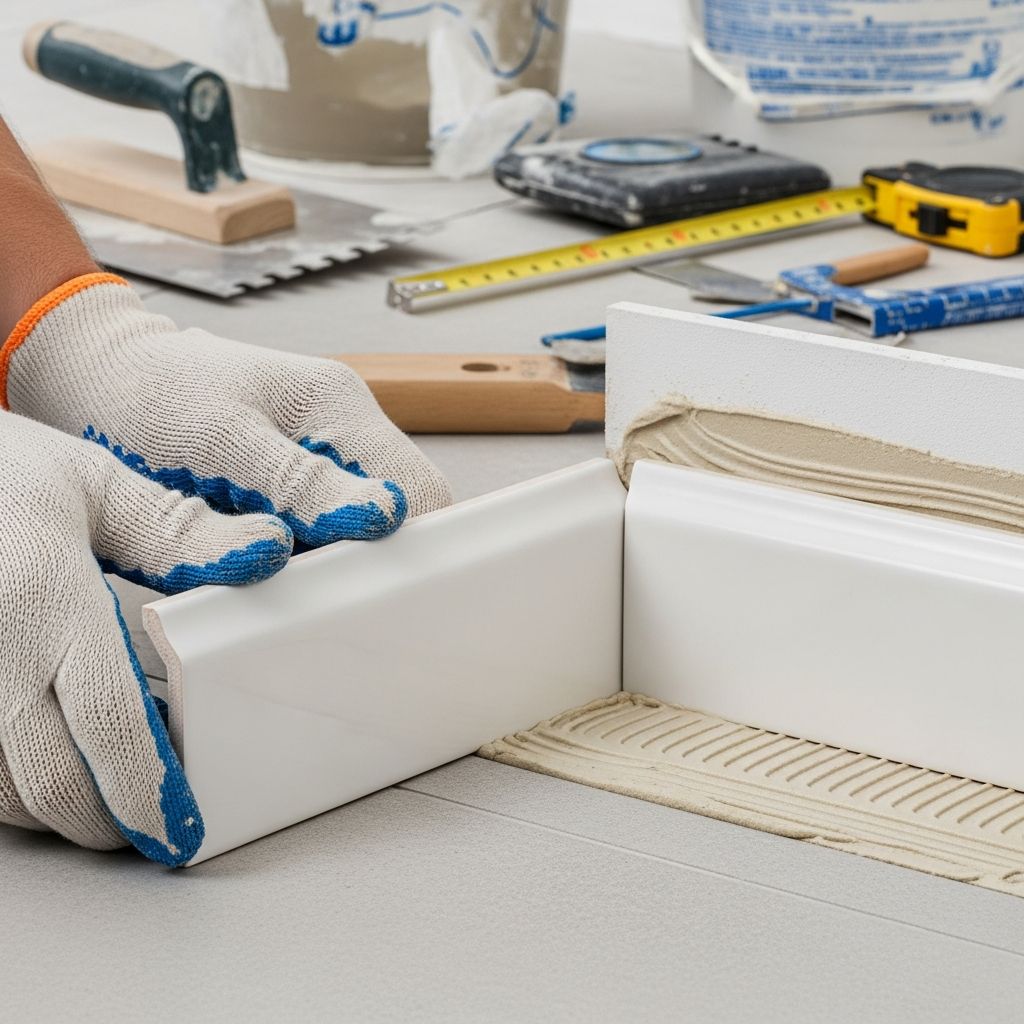
Tile baseboards offer a robust and stylish alternative to traditional wood or vinyl trim, providing superior moisture resistance and a cohesive look with tiled floors. This comprehensive guide walks you through every phase of the installation process, ensuring a professional outcome even for novice DIYers.
Why Choose Tile Baseboards?
**Tile baseboards** excel in high-moisture areas like bathrooms and kitchens, where they resist warping, mold, and water damage better than wood. They create a seamless transition from floor tiles to walls, enhancing visual continuity. Available in ceramic, porcelain, or natural stone, these trims come in various profiles such as bullnose, pencil round, or flat-back designs to suit different aesthetics.
Durability is a key advantage; tile baseboards withstand daily wear, cleaning chemicals, and impacts without chipping easily when properly installed. Unlike paintable wood trim, they require no finishing coats, saving time and maintenance. Cost-wise, they range from affordable ceramic options to premium stone varieties, offering long-term value through reduced repairs.
Essential Tools and Materials
Gathering the right supplies upfront prevents delays. Here’s what you’ll need:
- Ceramic or porcelain tile baseboards (measure room perimeter and add 10% extra for cuts and breakage)
- Tile cutter or wet saw for precise cuts
- Notched trowel (1/4-inch V-notch recommended)
- Tile adhesive or thin-set mortar (polymer-modified for porcelain)
- Grout (sanded for joints over 1/8-inch, unsanded for smaller gaps)
- Grout float, rubber mallet, and level
- Sponge, buckets, mixing paddle, and painter’s tape
- Caulk gun with silicone caulk for wall-floor gaps
- Safety gear: gloves, knee pads, eye protection
Pro tip: Mix tiles from multiple boxes to blend slight color variations from different production batches.
Planning Your Layout
Accurate measurements are the foundation of a flawless installation. Start by clearing the room and protecting floors with drop cloths.
- Measure the total linear footage of walls, subtracting doorways and excluding corners where outside miters meet.
- Sketch a layout diagram, noting obstacles like plumbing fixtures or outlets.
- Dry-lay tiles along the walls to visualize cuts, ensuring even spacing and alignment with floor tiles.
Use a chalk line snapped parallel to the floor at the desired baseboard height (typically 4-6 inches). Check for level across the entire perimeter to avoid wavy lines.
Surface Preparation Essentials
A clean, stable substrate ensures strong adhesion. Inspect walls for cracks, loose paint, or moisture issues.
- Remove old baseboards using a pry bar and utility knife to score paint lines.
- Clean surfaces thoroughly with TSP (trisodium phosphate) or a degreaser, then rinse and dry.
- Repair drywall imperfections with joint compound and sand smooth.
- For uneven walls, apply a cement backer board or leveling compound, securing with screws and thin-set.
If walls are painted glossy, scuff-sand for better bonding. Prime porous surfaces but avoid slick paints over tile adhesive.
Mixing and Applying Adhesive
**Thin-set mortar** bonds tiles securely. Premixed mastic works for dry areas, but use unmodified thin-set for wet zones.
In a clean bucket, combine powder with water per package ratios using a drill mixer. Let slake for 10 minutes, remix, and achieve a peanut butter-like consistency—holds peaks but spreads easily.
Spread adhesive on the wall backer with the trowel’s flat side at 45 degrees, then comb ridges with the notched side. Work in 3-4 foot sections to prevent premature drying.
Adhesive Tip: Dampen backer board lightly with a spray bottle; dry boards absorb moisture too quickly, weakening the bond.
Cutting Tile Baseboards Precisely
Custom fits around corners, doors, and fixtures demand accurate cuts.
| Cut Type | Tool | Technique |
|---|---|---|
| Straight cuts | Manual tile cutter | Score and snap for ceramic; use wet saw for porcelain |
| Miter corners (45°) | Wet saw with diamond blade | Outside miter for convex corners; inside coping for concave |
| Notches for pipes | Nippers or angle grinder | Cut relief, test-fit, smooth edges |
| Scarfed ends | Wet saw | 45° bevel for tight joints |
Always cut from the front face to avoid chipping glazed edges. Wear a mask to avoid silica dust.
Setting the Tiles in Place
Begin at a straight wall section, pressing tiles into ridges at a slight twist-and-push motion. Butt joints tightly for pencil rounds or use spacers for wider profiles.
- Tap gently with a rubber mallet to seat fully; check back coverage by lifting a test tile (90% minimum).
- Use a 4-foot level every few tiles to maintain plumb.
- Work around obstacles, marking and cutting as needed.
For inside corners, cope the profile by grinding to match the adjoining tile. Outside corners get mitered returns. Step back frequently to verify alignment before mortar skins over.
Grouting for a Seamless Finish
Allow 24 hours for adhesive to cure before grouting. Mix grout to a smooth paste, letting it rest 5-10 minutes.
Apply with a float at 45 degrees, forcing into joints diagonally. Work small areas (5×5 feet), wiping excess immediately with a damp sponge in circular motions.
After 20-30 minutes (haze stage), buff with a dry microfiber cloth. Avoid over-wetting to prevent color leaching.
Sealing and Caulking Details
Seal grout lines with penetrating sealer after 72 hours, applying two coats for moisture protection. Use silicone caulk in expansion gaps at floor-wall junctions (1/4-inch bead, tool smooth).
Match caulk color to grout. For transitions to other flooring, install T-molding or Schluter strips.
Common Mistakes and Fixes
- Uneven lines: Double-check level during dry layout.
- Poor adhesion: Ensure proper thin-set consistency and wall dampening.
- Chipped edges: Use wet saw lubrication and cut face-up.
- Grout haze: Clean promptly; use acid wash only as last resort.
Maintenance for Longevity
Clean with pH-neutral cleaners; avoid abrasives. Re-seal grout annually in wet areas. Inspect for loose tiles quarterly, re-adhering with fresh thin-set.
Frequently Asked Questions (FAQs)
Can I install tile baseboards over existing wood trim?
No, remove old trim for direct wall adhesion. Overlay risks failure from flexing.
What’s the best adhesive for porcelain tile baseboards?
Polymer-modified thin-set mortar ensures a strong, flexible bond.
How do I handle uneven floors?
Level with self-leveling compound before tiling; shim walls if needed.
Should I grout inside or outside corners?
Caulk corners with flexible silicone; grout only straight joints.
How long until I can walk on it?
24 hours post-grout; full cure in 72 hours. Avoid heavy traffic for a week.
References
- Tile Council of North America Handbook for Ceramic, Glass, and Stone Tile Installation — Tile Council of North America. 2024-05-15. https://www.tcnatile.com/resource-center/tile-installation-handbook/
- Ceramic Tile Installation Manual — National Tile Contractors Association. 2023-11-20. https://www.tileusa.org/resources/installation-manual
- Residential Tile Council Specification Guide — Resilient Floor Covering Institute. 2025-01-10. https://www.rfci.com/residential-tile-council/
- How to Install Tile on Walls — The Home Depot. 2024-08-12. https://www.homedepot.com/c/ah/how-to-install-tile-on-walls/9ba683603be9fa5395fab909b1ae90d
Similar Articles





Read full bio of medha deb