Complete Guide to Installing Interior Door Hardware
Master the art of replacing interior door knobs with professional techniques
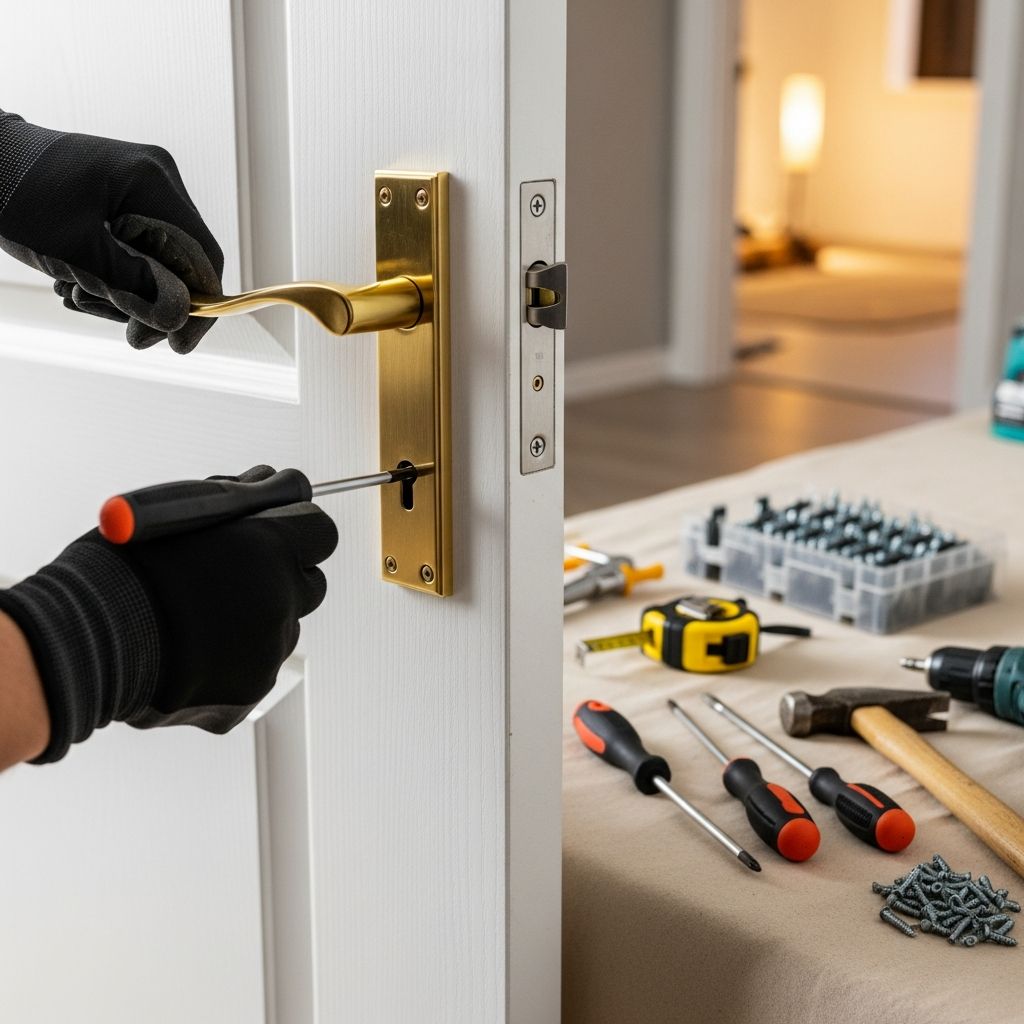
Replacing an interior door knob is one of the most accessible home improvement projects for homeowners and renters alike. Whether you’re updating your home’s aesthetic or fixing a malfunctioning latch, installing a new door knob and latch assembly requires minimal technical expertise and can typically be completed in under an hour. This comprehensive guide walks you through every stage of the process, from preparation through final testing.
Assembling Your Tools and Materials
Before beginning any door hardware installation project, gathering the appropriate tools ensures the process runs smoothly and reduces frustration. Having everything within reach prevents unnecessary delays and allows you to work efficiently without interruption.
Essential tools for this project include:
- Phillips head screwdriver for fastening hardware components
- Flathead screwdriver for prying and adjusting
- Tape measure for accurate spacing measurements
- Drill with appropriate bits for creating entry holes
- Chisel for recessing strike plates when necessary
- Hammer for striking the chisel
- Pilot hole bit for preventing wood splitting
When selecting a new door knob and latch assembly, verify that the hardware matches your door’s thickness and specifications. Most interior doors accommodate standard backset measurements of 2.375 inches, but confirming this detail prevents purchasing incompatible components. The backset refers to the distance from the door’s edge to the center of the knob hole.
Removing Existing Hardware
If you’re replacing an old knob, the removal process differs slightly depending on the knob’s design. Most interior door knobs attach via simple screw mechanisms that release the knob halves from the spindle.
To remove existing hardware:
- Locate the set screws holding the interior knob in place, typically found on the shaft or beneath decorative covers
- Unscrew these fasteners using your Phillips head screwdriver
- Gently pull the interior knob away from the door
- Repeat the process for the exterior knob
- Remove the latch mechanism by unbolting it from the door’s edge
- Detach the strike plate from the door frame by removing its fasteners
Take a moment to inspect the door for any damage to the mounting holes or surrounding wood. Small dents or cosmetic imperfections won’t affect functionality, but significant splintering may require patching before proceeding with new installation.
Measuring and Marking Installation Points
Accurate measurements are the foundation of successful door hardware installation. Improper spacing results in misaligned components that either won’t function or create visible gaps in the installation.
Begin by measuring the desired height for your knob. Standard residential practice places the knob center 36 inches from the floor, though accessibility requirements or personal preference may warrant adjustment. Use your tape measure to identify this height on both sides of the door, marking lightly with a pencil.
Next, measure the backset distance from the door’s leading edge to where your knob hole should be drilled. Mark this point clearly on the door face. If you’re drilling new holes rather than reusing existing ones, use a combination square to ensure your marks are perfectly perpendicular to the door’s edge.
For the strike plate, measure from your knob height along the door jamb to locate where the strike plate fasteners should penetrate. The strike plate should align with your latch mechanism’s path to ensure proper engagement when the door closes.
Creating the Latch and Knob Openings
With your measurements complete and clearly marked, you’re ready to create the necessary openings. Most modern door knob kits include a drilling template that guides hole placement, significantly simplifying this step.
If using a template:
- Position the template at your marked height and backset distance
- Secure it with tape or clamps to prevent shifting during drilling
- Using your appropriate drill bit, create pilot holes through the template’s guide holes
- Remove the template and complete the holes to full diameter
For the primary knob hole, a standard 2.125-inch spade bit or hole saw creates the appropriate opening. When drilling through the door, begin from one side and carefully break through to the opposite side to prevent wood splintering on the exit side.
The latch mechanism requires a rectangular hole along the door’s edge. Using your drill, create two or three holes along the latch path, then use a chisel to remove material between them and square off the opening. The latch should fit snugly in this opening without excessive play.
Installing the Latch Mechanism
The latch mechanism is the heart of your door hardware system. It retracts when you turn the knob and extends to engage the strike plate when released, holding the door closed.
Proper latch orientation is critical. The beveled or angled side of the latch must face the direction your door closes. If installed backwards, the latch won’t retract smoothly and may stick or jam. Most latch mechanisms include an arrow or marking indicating the correct directional orientation.
To install:
- Align the latch with the opening you’ve prepared on the door edge
- Verify the beveled edge faces the closing direction
- Slide the latch fully into the opening until the faceplate sits flush against the door edge
- Mark the fastener holes through the faceplate onto the door
- Create pilot holes at these marks
- Install fasteners snugly, taking care not to overtighten and deform the faceplate
Test the latch mechanism by pressing the knob side with your finger. It should retract smoothly and spring back when released. Any sticking or binding indicates misalignment that should be corrected before proceeding.
Attaching the Knob Assembly
With your latch mechanism secured, you’re ready to install the knob components. Most interior door knob sets consist of two matching halves connected by a spindle that passes through the latch mechanism.
The installation sequence matters:
- Identify which knob half is designed for the exterior and which for interior, usually indicated by packaging or manufacturer instructions
- Align the exterior knob with the main hole you drilled
- Thread the spindle through the latch mechanism, ensuring it passes cleanly without binding
- Position the interior knob to align with the spindle
- The two knob halves should mate together with the spindle fully engaged
- Install the provided fastening screws, typically two per side
- Tighten screws gradually in a cross pattern to ensure even pressure
Avoid over-tightening these fasteners. Excessive force can strip the threads or deform the knob material. The knob should be secure and free of wobbling, but you shouldn’t need tremendous force to achieve this. A quarter to half turn beyond hand-tight is usually sufficient.
Installing the Strike Plate
The strike plate mounted on the door jamb is what receives your extended latch, keeping the door closed and secure. Proper strike plate alignment prevents latch binding and door misalignment issues.
Position the strike plate on the jamb so it aligns with your latch mechanism. When the door closes, the latch should enter the strike plate’s opening smoothly. The beveled edge of the strike plate should angle toward the door for smooth engagement.
If the existing strike plate hole is in good condition:
- Position the new strike plate to use existing fastener holes when possible
- This maintains structural integrity and reduces wood damage
- Secure with provided screws, tightening firmly but not excessively
If the strike plate requires a recessed installation for proper seating:
- Mark the area where the plate’s protruding section will sit
- Use a chisel to carefully remove wood to create a recessed pocket
- The strike plate should sit flush or nearly flush when installed
- This prevents gaps and ensures the latch engages fully
Testing and Fine-Tuning Your Installation
Before considering your project complete, thorough testing ensures everything functions as intended. This final step catches minor issues that are easily corrected now but problematic later.
Test your installation by:
- Turning the knob smoothly in both directions without resistance
- Verifying the latch retracts completely when the knob is turned
- Confirming the latch extends fully when the knob is released
- Opening and closing the door multiple times, checking for smooth operation
- Ensuring the door latches securely and stays closed when released
- Testing any privacy lock or locking mechanism if applicable
Common issues and solutions:
| Problem | Cause | Solution |
|---|---|---|
| Latch doesn’t fully engage in strike plate | Misaligned strike plate or latch | Loosen strike plate and reposition slightly, or adjust latch spacing |
| Knob turns but doesn’t retract latch | Spindle not properly engaged with latch | Remove knob and rethread spindle through latch mechanism |
| Knob feels loose or wobbles | Fasteners insufficiently tightened | Tighten all set screws evenly without over-tightening |
| Door won’t close or latch sticks | Latch installed backwards or door frame misalignment | Verify bevel direction and check door frame with level |
Maintenance Recommendations
Once your new door hardware is installed and functioning properly, simple maintenance extends its lifespan and keeps it operating smoothly. Interior door mechanisms rarely require extensive care, but a few preventive measures help maintain functionality.
Periodically:
- Check all fasteners to ensure they remain tight, as vibration from daily use may loosen them slightly
- Lubricate the latch mechanism with a light machine oil if it becomes stiff or sticky
- Wipe down the knob surface with a soft cloth to prevent dirt buildup
- Inspect around fasteners for any signs of wood splitting or damage
Frequently Asked Questions
Can I install a new knob without removing the old one?
No, you must remove the existing hardware first. The old latch mechanism and strike plate must be completely removed before installing new components. Attempting to install over existing hardware results in misalignment and poor function.
What if my door is thicker or thinner than standard?
Most door knob kits accommodate doors between 1.25 and 1.75 inches thick. Before purchasing, measure your door thickness and verify the kit specifications. Some specialty knobs accommodate unusual thicknesses if needed.
Do I need a privacy lock for bedroom doors?
This depends on personal preference and local building codes. Privacy locks are common in bedrooms and bathrooms. Ensure any locking mechanism you choose matches your door opening style and includes a method for emergency access if needed.
Why is my latch binding or sticking?
Binding usually indicates misalignment between the latch and strike plate, or that the latch was installed backwards. Verify the beveled side faces the closing direction and that the strike plate aligns with the latch path.
How do I know if my installation is complete?
Your installation is complete when the door opens, closes, and latches smoothly without requiring excessive force or producing grinding sounds. Test multiple times to ensure consistent operation before finishing.
References
- How To Install a Door Knob: Your Complete Guide — Milcasa Store. https://milcasastore.com/blogs/posts/how-to-install-a-door-knob
- How to Install Door Knobs and Levers – Level Lock — Level. https://level.co/stories/install-doorknobs-levers/
- Door Knob Installation — Materials Market. https://materialsmarket.com/articles/door-knob-installation/
- How To Install New Interior Doorknobs — Young House Love. https://www.younghouselove.com/come-and-knob-on-our-door/
- How to Install Door Hardware the Right Way — ABI Interiors. https://www.abiinteriors.com.au/the-interior-edit/how-to-install-door-hardware-the-right-way/
Similar Articles



Read full bio of Sneha Tete