June Bugs: Biology, Behavior & Seasonal Patterns
Comprehensive guide to understanding June bugs and their life cycles
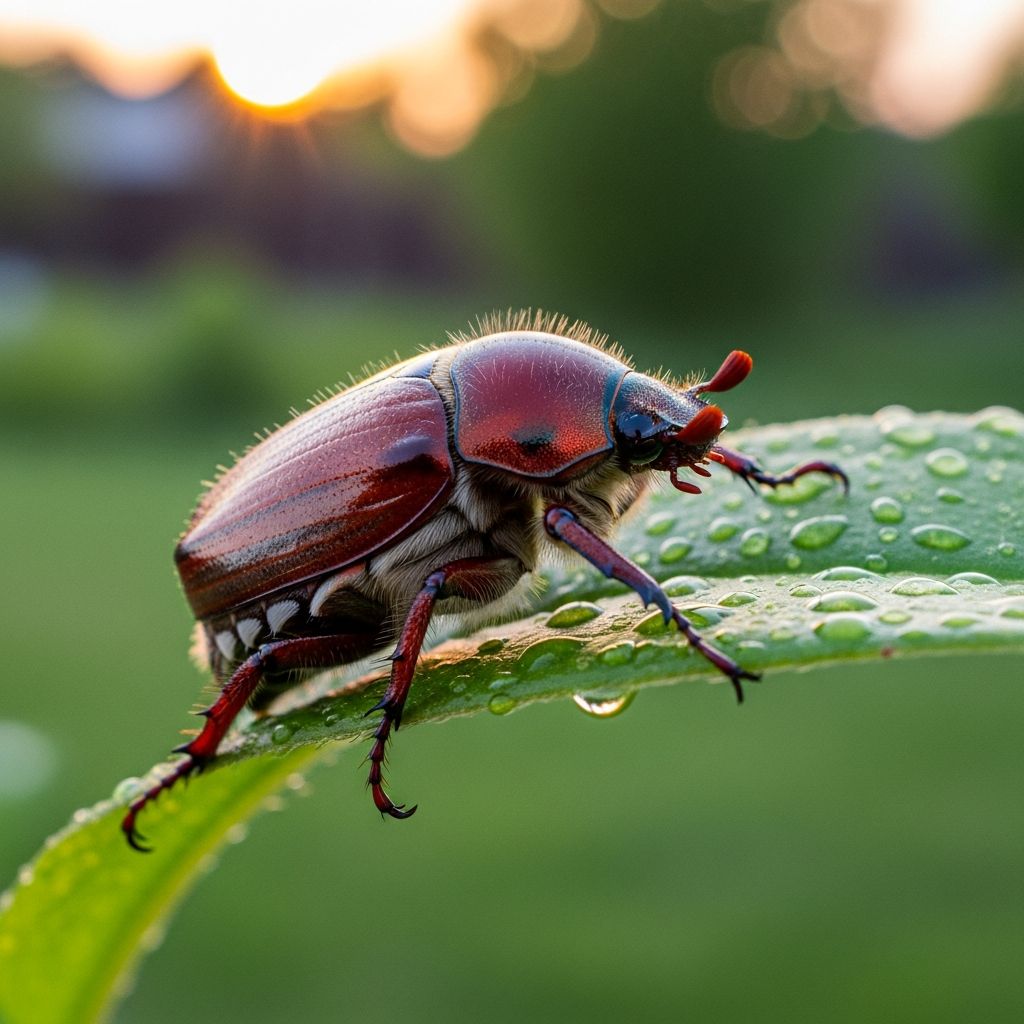
During the warm evenings of late spring, many homeowners and outdoor enthusiasts notice unusual flying insects congregating around outdoor lighting. These are June bugs, a common group of beetles that have earned their name due to their peak activity period. Understanding these insects—their biology, behavior, and lifecycle—can help property owners better manage potential infestations and protect their lawns and gardens from damage.
What Are June Bugs?
June bugs, scientifically belonging to the genus Phyllophaga, represent a diverse group comprising nearly 300 species of plant-eating beetles. These insects are classified within the family Scarabaeidae, which includes many economically significant beetle species. While the term “June bug” is commonly used across North America, these insects are also referred to as May beetles or July bugs, depending on their emergence timing in different geographical regions.
These beetles are native to North America and are particularly abundant in the Northern Hemisphere, where they thrive during warmer months. The genus includes some of the most recognizable and problematic beetles for homeowners, as both adult and larval stages can cause substantial damage to lawns, gardens, and crop systems.
Physical Characteristics and Identification
June bugs possess several distinctive physical features that make identification relatively straightforward for most observers. Adult beetles typically range in size from 0.5 to 1 inch in length, with most specimens measuring between 12 to 25 millimeters. Despite their modest size, they have a notably robust, heavily-built structure with an oval-shaped body design.
The coloration of adult June bugs varies considerably among species and individuals. Most commonly, they display a reddish-brown coloration, though some specimens exhibit dark green or metallic green hues. Their most distinctive visual feature is their shiny wing covers, scientifically called elytra, which give the insects a lustrous appearance. These wing covers are proportionally thick relative to their body size, contributing to their somewhat clumsy appearance in flight.
An additional identifying characteristic is their segmented antennae, which are clubbed in structure and can either be pressed tightly together or fanned open like a feather. This antenna design is typical of scarab beetles and serves sensory functions essential to the insect’s survival and reproduction.
Larval Stage Characteristics
The larval form of June bugs, commonly known as white grubs, looks dramatically different from their adult counterparts. These grubs are distinctly C-shaped, measuring approximately 0.75 to 2 inches in length. Their coloration is characteristically cream or white, with a reddish-brown head capsule that contrasts sharply with their body color.
Grubs possess three pairs of legs located on each of the first three body segments behind the head. These relatively short appendages provide limited mobility, as grubs are primarily adapted for underground existence. Their strong mandibles, or mouth parts, allow them to chew efficiently through plant roots and soil material.
Geographic Distribution and Habitat Preferences
June bugs are widely distributed throughout North and South America, with particular abundance in the Northern Hemisphere. In the United States, these beetles are found across diverse regions, though certain areas experience higher concentrations depending on local environmental conditions and seasonal weather patterns.
Recent observations have documented significant June bug activity in Texas and the Houston area, indicating their continued prevalence in traditional habitats. Additionally, Wisconsin and other northern states host numerous species, with 29 distinct species documented in Wisconsin alone, despite over 200 species being recognized throughout North America.
These insects prefer temperate climates where soil conditions remain suitable for larval development and where appropriate vegetation exists for adult feeding. The availability of suitable host plants—particularly deciduous trees and grasses—strongly influences their distribution patterns within specific regions.
Life Cycle and Development Stages
The complete lifecycle of June bugs typically spans one to two years, encompassing four distinct developmental stages: egg, larva (grub), pupa, and adult.
Egg Stage
The lifecycle begins when adult female beetles emerge from soil and burrow back underground during mid-summer months, specifically July and August, to deposit their eggs. Female beetles are prolific egg-layers, producing between 50 and 200 small, pearl-like eggs per individual. These eggs are buried 2 to 5 inches deep within the soil, creating a protected environment for development.
Larval Development
After an incubation period of approximately 3 to 4 weeks, the eggs hatch into larvae, or white grubs. These larval stages are the most extended phase of the June bug lifecycle, with most species spending approximately 10 months underground, though some species remain in larval form for up to two years.
During the larval stage, grubs undergo three distinct developmental phases called instars, during which molting occurs. Throughout these molting events, the grub sheds its exoskeleton to accommodate growth. During this extended underground period, grubs feed voraciously on grass roots and other plant roots, accumulating the nutrients necessary for subsequent developmental stages.
Pupal Transformation
After approximately 9 to 10 months of larval feeding and development, the grub enters the pupal stage, typically occurring around May or June. During pupation, the larva forms an exterior shell that encases and protects the transforming insect. This pupal stage lasts approximately three weeks, during which the grub undergoes complete metamorphosis, reorganizing its body structure into the adult beetle form.
Adult Emergence and Reproduction
Adult beetles emerge from the soil in late May through early June, coinciding with warming temperatures and longer daylight hours. By late June or early July, the transformation is complete, and adult beetles exhibit their characteristic reddish-brown or metallic green coloration.
Once emerged, adult beetles have a relatively short lifespan of less than one year. During this brief adult period, they focus primarily on feeding and reproduction. Mating occurs shortly after emergence, and females begin the egg-laying process by July and August, thus completing the cycle.
Behavioral Patterns and Activity Cycles
June bugs exhibit distinctive behavioral patterns that make them particularly noticeable to humans, especially during their active season. Understanding these behaviors can aid in predicting their appearance and managing potential pest issues.
Nocturnal Activity and Light Attraction
Adult June bugs are predominantly nocturnal insects, meaning they are most active during nighttime hours. They are strongly attracted to artificial lighting sources and can frequently be observed swarming around outdoor lighting fixtures, window screens, and illuminated building areas during warm evenings.
This attraction to lights is so pronounced that homeowners often report June bugs congregating in large numbers around porch lights and exterior illumination. They may be heard audibly striking window screens and glass surfaces as they navigate toward light sources, particularly during early summer evenings.
Seasonal Underground Behavior
During daylight hours and cooler months, June bugs exhibit a burrowing behavior, retreating underground where they remain hidden. This subterranean preference protects them from predators and environmental stress. During fall and winter months, both larval and adult forms remain buried in the soil, entering a state of reduced metabolic activity.
As temperatures warm in spring and early summer, both developmental stages move to the upper soil layers, preparing for their respective roles in reproduction or continued development. This seasonal movement pattern is synchronized with ambient temperature changes and photoperiod (daylight duration), ensuring that beetle emergence coincides with optimal feeding and breeding conditions.
Dietary Preferences and Feeding Behavior
June bugs are plant-eating specialists, with both adult and larval forms causing damage through their feeding activities, though through different mechanisms and on different plant parts.
Adult Feeding Preferences
Adult June bugs feed on foliage and flowers at night, demonstrating a strong preference for deciduous tree species. Their preferred food sources include leaves from oak, walnut, and maple trees, representing common shade and landscape trees found throughout North America. They also feed on leaves from certain fruit trees, including apple and peach species, making them potential agricultural pests in orchard environments.
Adult feeding activity can sometimes cause considerable damage to vegetation, particularly when large populations converge on specific host plants. Young or stressed plants are especially vulnerable to defoliation from heavy beetle feeding pressure.
Larval Root Damage
While adult feeding occurs on above-ground plant parts, larval damage is confined to underground root systems. White grubs feed on grass roots and other plant roots during their extended underground development. This root feeding disrupts the plant’s ability to absorb and transport water and nutrients from soil.
The damage caused by grub feeding is particularly significant in agricultural and turf settings. Grubs can destroy crops including corn, small grains, potatoes, and strawberries. In residential settings, they can kill lawns and pastures by severing grasses from their roots, creating dead patches and weak turf areas. The initial symptoms of grub damage mimic drought stress, including yellowing, wilting foliage, and stunting of plant growth.
Signs and Symptoms of Infestation
Identifying a June bug infestation early allows homeowners to take appropriate management measures before significant damage occurs. Several observable signs indicate the presence of June bug populations.
- Brown patches in lawns: Irregular dead or brown areas indicate grub damage from feeding on grass roots
- Evidence of animal digging: Small holes and disturbed soil areas suggest secondary predation by birds or moles seeking grubs as food sources
- Chewed leaf damage: Holes in the leaves of plants, shrubs, and trees indicate adult beetle feeding activity
- Dead plant spots: Dead or yellowed areas on lawns or near plant roots signal root system damage from grub feeding
- Evening beetle sightings: Observing numerous June bugs flying around outdoor lights during warm evenings indicates active adult populations
Distinguishing June Bugs from Similar Insects
Several other insects superficially resemble June bugs, and proper identification is essential for appropriate pest management. June bugs differ significantly from cockroaches in both lifecycle and dietary habits. June bugs undergo complete metamorphosis with larval stages that live in soil, while cockroach nymphs resemble smaller versions of adult cockroaches and do not undergo complete metamorphosis.
Additionally, June bugs are primarily herbivorous, feeding on vegetation, whereas cockroaches are omnivorous scavengers consuming diverse materials from food scraps to paper products. These fundamental differences in biology and behavior make the pest management approaches for each species distinct and species-specific.
Temporal Emergence Patterns
June bugs earn their common name due to their emergence timing, though the exact timing varies based on geographic location and local weather conditions. They typically emerge in late spring, with peak activity occurring from late May through early June.
The timing of emergence is directly correlated with soil temperature and cumulative warm days. In some regions or during warmer springs, emergence may occur earlier in May, while in cooler climates, activity may extend into July. These temporal variations explain why alternative common names—May bugs or July bugs—are regionally appropriate.
References
- June Bug | Life Cycle, Facts & Characteristics — Study.com. Accessed April 2026. https://study.com/learn/lesson/video/june-bug-life-cycle-facts-characteristics.html
- What is a June Bug? Different Types | Lifecycle | Habits | Myths — Mr. Buggs. Accessed April 2026. https://www.mrbuggs.com/the-june-bugs-are-coming/
- June beetle — Britannica Encyclopedia. Accessed April 2026. https://www.britannica.com/animal/June-beetle
- May/June Beetles — Wisconsin Horticulture, University of Wisconsin Extension. Accessed April 2026. https://hort.extension.wisc.edu/articles/mayjune-beetles/
- June Beetle – Field Guide to Common Texas Insects — Texas A&M AgriLife Extension. Accessed April 2026. https://texasinsects.tamu.edu/june-beetle/
Similar Articles







Read full bio of Sneha Tete